Land threats bring a potato planting dispute to prosecutors
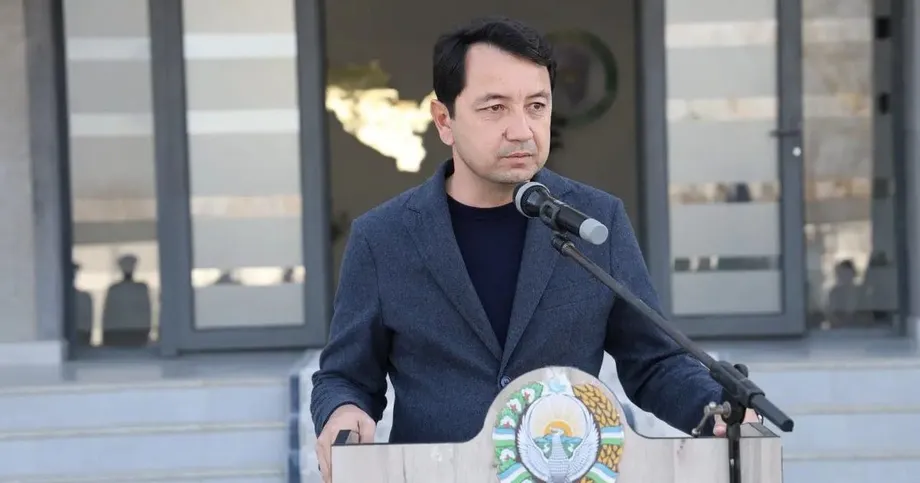
The Council of Farmers of Uzbekistan appealed to prosecutors on October 9, 2026, seeking a legal assessment of allegations that Piskent district governor Muzaffar Aripov insulted farmers and threatened to take their land during a meeting about potato cultivation. The Business Ombudsman also said it had taken the case under supervision and would provide a legal assessment.
Contents
- Land threats bring a potato planting dispute to prosecutors
- What the recording reportedly captured
- A seminar, a confrontation and an October appeal
- The allegation about a particular supplier
- Why the district wanted nearly 1,000 hectares planted
- Land obligations do not settle the conduct complaint
- The legal protections cited by the Farmers' Council
- The Ombudsman's intervention and complaint channels
- Comparable cases show different official responses
- Key Points
The dispute concerns a July 18 meeting in Piskent, in Tashkent region, and a district plan to plant late potatoes on nearly 1,000 hectares after the wheat harvest. Farmers alleged that Aripov pressured them to buy seed potatoes from a particular company. The district administration offered a different explanation: some farmers had failed to plant the required crop and had sold plots to other people who also did not plant potatoes.
Those competing accounts put two separate issues before authorities: whether farmers breached land use obligations, and whether officials used unlawful pressure to enforce planting instructions. The administration said the urgency of agricultural tasks did not justify every form of conduct at the meeting and called for an objective examination of complaints about farmers' treatment and the confiscation of their phones.
No prosecutorial finding, court decision or disciplinary outcome in the Piskent case has been announced in the accounts describing the appeal. The Council's request and the Ombudsman's intervention represent steps toward scrutiny, not a determination that the alleged misconduct has been proved.
What the recording reportedly captured
An audio recording reportedly made at the July 18 meeting became public in October. Accounts describe Aripov calling farmers from a list, ordering them to stand and directing insults and threats at some attendees. Women were also reportedly present.
Uzbek Forum's October 9 account of the meeting reproduces words attributed to Aripov, the district governor, threatening the loss of farmers' land:
If I take your land away tomorrow, you'll see what happens.
The recording is also reported to contain a threat against farmers' lives. That allegation makes the dispute more serious than a disagreement over missed planting targets, although the legal meaning and consequences of the reported words still require assessment.
The district prosecutor and the head of the district police department were reportedly in the room. Their alleged attendance is relevant to establishing the circumstances of the meeting, but it does not by itself establish that either official endorsed the governor's words or took action against farmers.
Farmers were reportedly admitted after their phones had been taken away. A recording nevertheless emerged. The district administration said the phone confiscation allegation should be examined separately on the evidence, leaving unresolved who ordered it, why it occurred and how it was carried out.
A seminar, a confrontation and an October appeal
The administration describes the meeting as a response to failed planting instructions following an earlier seminar. The chronology places 16 days between that seminar and the critical meeting, followed by a gap of almost three months before the Council's appeal.
- April 2024: Muzaffar Aripov became governor of Piskent district. He previously headed the organizational and personnel group at the Tashkent regional administration.
- July 2, 2026: The district administration held a practical seminar for farm managers on planting potatoes, choosing productive varieties and carrying out assigned tasks.
- July 18, 2026: A meeting took place about planting a second crop on land released after the wheat harvest. The disputed recording reportedly comes from this meeting.
- October 9, 2026: Reports about the recording appeared, the Farmers' Council appealed to prosecutors, and the district administration issued its explanation.
The date of the meeting matters when reading farmers' later complaints about interference with wheat sowing. The July meeting concerned potatoes after the wheat harvest; a farmer's subsequent account described problems with sowing wheat again. These are different stages of the crop cycle, rather than necessarily conflicting descriptions of the same planting task.
The allegation about a particular supplier
A farmer who attended the meeting alleged that the governor was trying to take land from people who had not bought potatoes from a particular company and was using the prosecutor's office as a threat. The company is not identified in these accounts, and no purchasing contract or written instruction naming a supplier is described.
The unnamed attendee, identified as a farmer, described both the alleged purchasing pressure and its effect on farm work. Uzbek Forum reproduced the account in English:
Now he is trying to take land away from those who did not buy potatoes from that company, threatening them with the prosecutor's office. It has become impossible to work. We need to sow wheat now, but he is obstructing that too.
This allegation is distinct from the administration's claim that farmers simply failed to plant potatoes. An instruction to grow a crop and pressure to purchase planting material from one business are separate matters. Establishing whether a specific supplier was imposed would help determine whether the dispute involved crop planning alone or interference in farmers' commercial decisions.
The administration's explanation does not resolve that allegation. It discusses the planting plan, land use responsibilities and alleged transfers of plots, but gives no detailed answer about a required supplier. There is also no reported finding establishing that land was actually taken from any farmer because of a refusal to buy potatoes.
Why the district wanted nearly 1,000 hectares planted
Piskent's administration said its late potato plan was intended to support domestic supply, keep prices stable and build reserves for winter. The proposed crop would use nearly 1,000 hectares left available after grain cultivation. A second crop means growing another crop on the same land after the first has been harvested.
Officials said the July 2 seminar introduced farm managers to potato varieties and covered planting methods, productive varieties and the tasks they were expected to complete. According to the administration, some farmers subsequently failed to follow the plan and sold the released plots to others, who also left them without potatoes.
The administration further reported a separate first season potato target of 650 hectares: 520 hectares on farmer holdings and 130 hectares on dehqan holdings, a category of smaller agricultural holdings. The intended harvest from that first season area was 20,800 tonnes.
Those figures put 80 percent of the first season planting target on farmer holdings and 20 percent on dehqan holdings. Dividing the planned 20,800 tonnes by 650 hectares gives a target average yield of 32 tonnes per hectare. These are planning figures, not evidence of the harvest actually achieved.
The nearly 1,000 hectare late potato plan was about 350 hectares larger than the 650 hectare first season target. The two numbers describe different seasonal plans, so they should not be treated as contradictory estimates of one planting area. No figure is given for how much of the late potato target was ultimately planted or how much production was lost.
Land obligations do not settle the conduct complaint
The district administration stressed that the land was not farmers' private property and that its use had to follow procedures established by law. It argued that farmers had responsibilities to use land according to its designated purpose and obligations, rather than solely according to personal preference.
That position explains the administration's stated concern about missed planting and alleged plot sales. It does not establish that every instruction issued at the meeting was lawful, or that a governor could remove land simply by announcing an intention to do so. No specific land recovery order or completed legal procedure is identified in the accounts of this dispute.
The alleged sales also need clarification. The administration says farmers sold land plots, while stressing that those plots were not private property. Without contracts or other records, it is not possible to determine what was transferred, on what terms, or whether a prohibited transaction occurred.
The administration itself separated the agricultural objective from the manner of enforcement. It said farmers' rights and the public interest both had to be respected, and that the importance of the assigned tasks did not automatically justify conduct at the meeting. That concession leaves the treatment complaint open even if authorities later establish failures by some farmers.
The legal protections cited by the Farmers' Council
The Farmers' Council based its appeal on protection of personal honor and dignity. It cited Article 26 of Uzbekistan's Constitution, which it said makes human honor and dignity inviolable and allows no justification for degrading them.
The Council also cited Article 41 of the Code of Administrative Responsibility. According to its statement, intentional humiliation of a person's honor and dignity, constituting insult, carries a fine of 20 to 40 times the base calculation amount. The base calculation amount is a statutory unit used to calculate fines and other payments.
No monetary equivalent should be inferred from that range without the applicable value of the unit. More importantly, citing the provision does not mean that a fine has been imposed. Authorities would first have to assess the facts and decide whether the legal requirements for liability were met.
The Council said conduct of this kind could be considered unlawful interference in a business entity's activities and could damage Uzbekistan's international image. Its appeal therefore goes beyond offensive language: it also seeks scrutiny of how official authority was allegedly used against agricultural businesses.
The Ombudsman's intervention and complaint channels
The Business Ombudsman said the case was under its supervision and would receive a legal assessment. It reminded entrepreneurs that their honor and dignity are protected by law and that intentional insult can lead to liability.
Farmers and entrepreneurs who believe they have been insulted or had their rights violated were directed to the short telephone number 1100. Other listed contact channels were +998712020898 and [email protected].
The Ombudsman's involvement and the Council's prosecutorial appeal are separate responses. Neither announcement specifies a hearing date, a deadline for a decision or the scope of any formal investigation. It is also not established whether the reported presence of the district prosecutor at the July meeting will affect how the appeal is handled.
Comparable cases show different official responses
The Piskent allegations follow reported disputes in other districts involving threats, production demands and access to land or farm machinery. Uzbek Forum described a July 2026 video appeal by Komiljon Ergashev, a farmer in Olot district of Bukhara region, who said governor Nargiza Nematova demanded another 20 tonnes of wheat after he had fulfilled his quota.
Ergashev alleged that, after he refused, the governor prevented combine harvesters from entering his fields. His account concerns an additional grain demand rather than potato purchasing, but it describes another alleged use of administrative power affecting a farmer's ability to carry out essential work.
Other reported recordings involved Quva governor Halimjon Umarov and Muzrabot governor Abdulla Mamatqulov. Umarov was accused of insulting a farmer and demanding that he surrender land after failing to attend a meeting. Mamatqulov was accused of threatening farmers over wheat production quotas, including at a June 15 meeting.
Reports say both district governors received reprimands after submissions by the Anti Corruption Agency. In a separate case involving insults directed at neighborhood youth leaders, Nurafshon youth affairs official Mirkarim Ahmadjonov had his employment contract terminated after an internal inquiry and an admission of wrongdoing.
These cases show that reported abusive conduct has prompted different employment and disciplinary responses. They do not establish what penalty, if any, would be appropriate in Piskent. The central unresolved matters remain the authenticity and full context of the recording, the alleged supplier requirement, the handling of phones and whether any threat was followed by an actual land decision.
Key Points
- The Farmers' Council appealed to prosecutors on October 9, 2026, seeking a legal assessment of Piskent governor Muzaffar Aripov's alleged conduct.
- The disputed meeting reportedly took place on July 18 and concerned potatoes planted after the wheat harvest.
- Farmers alleged insults, threats to land and lives, phone confiscation and pressure to buy seed potatoes from a particular company.
- The administration cited a late potato plan covering nearly 1,000 hectares and alleged that some farmers failed to plant and sold plots to others.
- A separate first season plan covered 650 hectares with a target harvest of 20,800 tonnes, equivalent to 32 tonnes per hectare.
- The administration said agricultural priorities did not justify every form of conduct and called for an objective examination of the complaints.
- The Business Ombudsman took the case under supervision. No final legal finding or decision deadline has been announced.