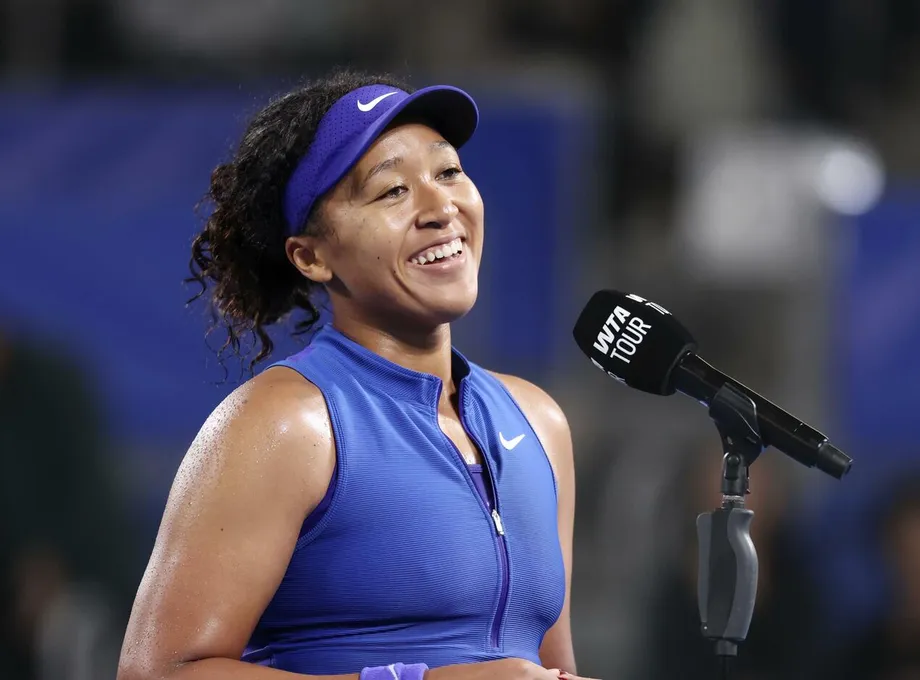
A tense finish to Osaka's Tokyo return
Naomi Osaka saved three consecutive set points before beating Jasmine Paolini 6-3, 7-6(4) at Tokyo's Ariake Tennis Park on Tuesday, turning her first Pan Pacific Open appearance in four years into a winning homecoming. The Japanese former world No. 1 completed the opening round victory in one hour and 37 minutes.
Contents
- A tense finish to Osaka's Tokyo return
- Paolini twice erased an early lead
- Three chances to force a deciding set
- A crane design with a family connection
- Why this return carried extra weight
- Motherhood has changed her outlook
- Pohankova gets her first Top 20 test
- Rybakina has a major target in reach
- Key Points
Osaka, 29, arrived wearing a blue and white cape embroidered with cranes, a tribute to Japan and her mother's home in Hokkaido. Once play began, the tournament's seventh seed needed both her attacking power and her composure against the Italian, who had won their only previous meeting.
The most dangerous moment came with Osaka serving at 5-6 in the second set. Paolini earned three straight chances to force a deciding set, but Osaka escaped and then won the tiebreak 7-4. The WTA match highlights confirm that the former champion advances to face Mia Pohankova for a place in the quarterfinals.
Osaka, ranked No. 18, hit seven aces against one from the No. 35 Paolini. That advantage on serve helped her finish in two sets against an opponent who repeatedly recovered from an early deficit.
Osaka, a four time Grand Slam champion, described the challenge and the pleasure of winning in Japan during her interview on court.
The match was really difficult. I played her once before and I lost, so I'm really glad to be on the home court and win.
Paolini twice erased an early lead
Osaka opened with a 3-0 lead, putting Paolini under immediate pressure. The Italian responded by taking three games in a row, then earned a break point that could have put her ahead 4-3. A break point is a chance for the receiving player to win the opponent's service game, usually a valuable opening because the server starts each point with an advantage.
Paolini sent a forehand long on that opportunity. Osaka held, then reclaimed control in the next game with forceful shots down the lines. A forehand winner secured the break for 5-3, leaving her to serve out the opening set.
The second set followed a similar pattern at first. Osaka broke to lead 3-2, but Paolini immediately broke back for 3-3. Neither of Osaka's early leads was enough to keep the Italian from returning to level terms.
Paolini, a two time Grand Slam finalist, required treatment on her left foot after moving ahead 4-3. She continued to compete strongly and eventually created the best opportunity either player had to change the direction of the match.
Three chances to force a deciding set
Paolini reached triple set point with Osaka serving at 5-6. Winning any one of the next three points would have given the Italian the set and sent the match into a third.
Osaka answered with attacking tennis, using her forehand and finding a backhand winner during the escape. On the third set point, a demanding exchange ended when Paolini put a forehand into the net. Osaka held serve to make it 6-6 and force a tiebreak.
The tiebreak was closer than the straight sets result might suggest. Only one point won against serve separated the players: Paolini missed a forehand to fall behind 5-3. Osaka protected that advantage and finished 7-4.
Osaka said afterward that she had felt confident entering the tiebreak. Her seven aces, six more than Paolini, gave her a concrete reason to trust her serve at the decisive stage.
Asked about that confidence, Osaka explained how she viewed the matchup.
I knew my serve was better than her serve. I felt like I knew what to do and what not to do.
The victory reversed the result of their only earlier encounter, at the previous year's Miami Open. Osaka also expressed concern for Paolini after speaking with her about the injury. No diagnosis or recovery timetable was given.
A crane design with a family connection
Osaka's entrance carried a personal message before she struck a ball. Tokyo designer Hana Yagi created the blue and white cape, which featured crane embroidery and long sleeves inspired by a kimono.
The crane pattern referred to Hokkaido, the northern Japanese island where Osaka's mother comes from. Cranes also represent peace in Japan. For Osaka, the design connected her family history with a tournament return she described as feeling like a homecoming.
Yagi had already worked with Osaka on an all white kimono gown for Wimbledon. Their collaboration in Tokyo brought a similar reference to Japanese clothing into a different setting, this time in front of a home crowd.
Osaka explained why she wanted to make the occasion special rather than reserve her most elaborate entrances for the four Grand Slam tournaments.
It felt like on the fashion side I was always giving these great moments to the Slams, and I felt like coming home I wanted to do something special here too.
Her appearances this season have included a jellyfish inspired design by Robert Wun at the Australian Open and golden sequins by Kevin Germanier at Roland Garros. The Tokyo outfit continued that creative approach while making her Japanese heritage the central theme.
Why this return carried extra weight
Osaka's history at the Pan Pacific Open includes a final in Tokyo, a title in her birth city and an unusually brief appearance four years before this victory. Her 2019 championship came when the event was staged in Osaka, rather than the Japanese capital.
Tokyo spectators last saw her complete a full campaign at this tournament in 2018, when she finished runner up to Karolina Pliskova. Her 2022 visit amounted to only one game before injury and illness interrupted her progress.
- 2018: Osaka reached the Pan Pacific Open final in Tokyo and lost to Karolina Pliskova.
- 2019: She won the tournament when it was held in the city of Osaka.
- 2021: She reached the third round of the Olympic tennis competition in Tokyo.
- 2022: Daria Saville retired with an ACL injury after one game of their opening match. Osaka then withdrew before facing Beatriz Haddad Maia because of abdominal pain.
- 2024: Osaka won a match in Tokyo during the Billie Jean King Cup qualifiers.
- This return: She completed a full opening round match against Paolini and advanced in straight sets.
The four year gap therefore refers to Osaka's absence from the Pan Pacific Open. Tuesday's victory gave the home crowd a sustained contest after her previous tournament appearance had ended almost before it began.
Motherhood has changed her outlook
Osaka said her life feels different from the period surrounding her last appearance at the tournament. Since then, she has become a mother to her daughter, Shai, and rebuilt her place near the top of the rankings.
The former world No. 1 described a calmer relationship with tennis, connecting that change directly to her daughter. Her explanation concerned the place the sport holds in her life as much as the results she produces on court.
Reflecting on her earlier state of mind, Osaka said:
In that period of my life I was not panicked but stressed all the time.
Osaka then explained how motherhood had changed that feeling.
Now I'm pretty calm, and I do think that has to do with my daughter. She balances me up and it's made me understand that this is my job.
Against Paolini, Osaka had to recover after losing an early advantage in each set, then play through three points that could have extended the match. She finished the contest without needing a deciding set and thanked the crowd for its support.
Pohankova gets her first Top 20 test
Osaka's next opponent is 18 year old Slovak wild card Mia Pohankova, ranked No. 144 and the 2025 Wimbledon junior champion. Pohankova reached the second round by defeating Czech qualifier Tereza Valentova 6-1, 6-4 in 70 minutes.
The victory improved Pohankova's record against players ranked in the Top 100 to eight wins and six losses. Facing Osaka will take her into new territory: she has never previously played an opponent ranked in the Top 20.
Osaka brings four major singles titles and experience of winning this tournament. Pohankova brings a junior Wimbledon title and a convincing opening victory over another teenager, the 19 year old Valentova.
A quarterfinal place is at stake. For Osaka, another win would extend a homecoming that has already included a demanding test. For Pohankova, the match offers a first chance to measure her game against a current member of the Top 20.
Rybakina has a major target in reach
Elsewhere in the Tokyo draw, qualifier Yulia Putintseva defeated Maria Sakkari 6-4, 3-6, 6-1 in two hours and 26 minutes. She advances to face top seed and world No. 1 Elena Rybakina in a meeting between players representing Kazakhstan.
Rybakina, who received a first round bye, will secure the year end No. 1 ranking if she beats Putintseva. That ranking identifies the player who finishes the season at the top, rather than someone who holds first place only during part of the year.
Their previous meetings are level at two wins each. Putintseva won at Rome in 2020 and Indian Wells in 2021, while Rybakina won their more recent encounters at Madrid in 2024 and Miami in 2026.
Putintseva's victory over Sakkari was her second against the Greek player and her first since their initial meeting in Tokyo in 2016. It set up another match with stakes extending beyond a place in the next round.
Key Points
- Naomi Osaka beat Jasmine Paolini 6-3, 7-6(4) in one hour and 37 minutes at the Pan Pacific Open.
- Osaka saved three consecutive set points at 5-6 in the second set and hit seven aces.
- Her crane embroidered entrance outfit, designed by Hana Yagi, paid tribute to Japan and her mother's home in Hokkaido.
- The 2019 champion will face Mia Pohankova for a quarterfinal place.
- Top seed Elena Rybakina can secure the year end No. 1 ranking by beating Yulia Putintseva.