Banks and digital platforms face a wider collection role
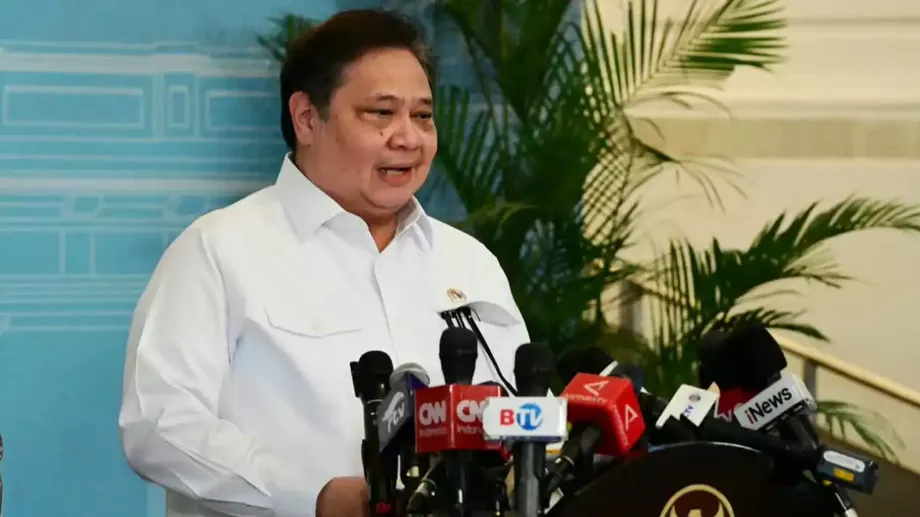
Indonesia plans to expand digital tax collection from November 9, 2026, involving banks, financial technology companies and online platforms in a drive to capture revenue from transactions that have escaped collection, according to Hashim Djojohadikusumo, chairman of the advisory board of the Indonesian Chamber of Commerce and Industry, or Kadin.
Contents
- Banks and digital platforms face a wider collection role
- What changes for online sellers?
- How overseas digital transactions fit in
- Early transactions show the scale of the task
- The dates behind the November announcement
- Why Hashim wants revenue to reach 18% of GDP
- The Rp10,000 trillion economy outside the records
- A Rp16 trillion estimate has a narrower scope
- What the revenue drive could mean for spending
- Key Points
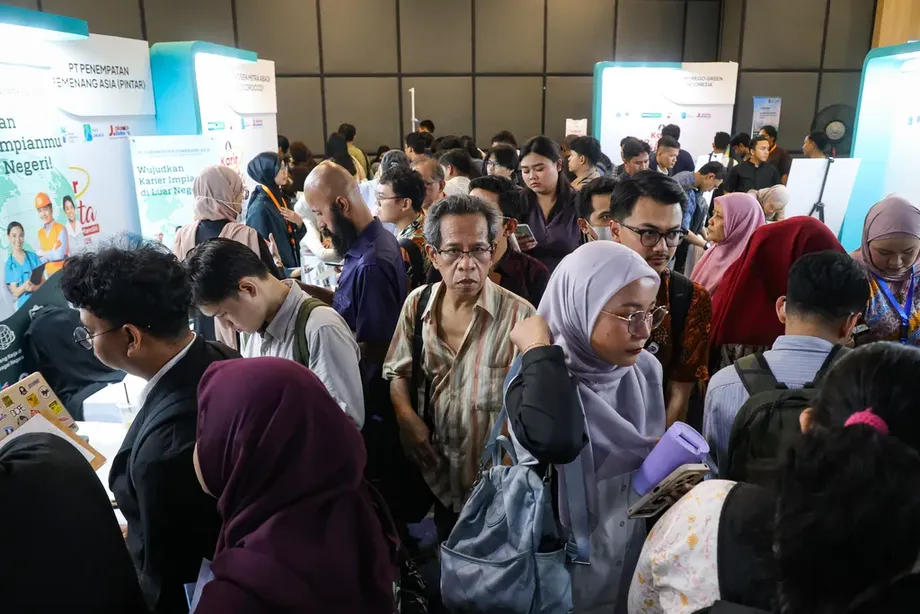
Hashim announced the date at the opening of Kadin's national leadership meeting at Hotel Borobudur in Central Jakarta on October 29. He named state banks, private banks, Shopee, Lazada and GoTo among the businesses expected to collect taxes and transfer the money to the government.
The announcement comes as the Directorate General of Taxes, known as DJP, develops two collection mechanisms with different purposes. One collects income tax from domestic sellers through marketplaces. The other, called SPP-TDLN, collects value added tax on digital transactions involving overseas providers through participating payment institutions.
Some collection has already begun. DJP Director General Bimo Wijayanto said four marketplaces started collecting income tax under Article 22 on October 1. Five banking platforms and one fintech platform had also started collecting through SPP-TDLN by late September.
November 9 is therefore the date Hashim gave for wider implementation, following earlier stages of collection. His announcement puts the payment system at the centre of an ambitious revenue agenda: raising total government receipts from about 12% of gross domestic product to 18% within two to three years.
What changes for online sellers?
Finance Minister Regulation No. 37 of 2025 provides the framework for marketplace collection of Article 22 income tax. Under the mechanism, appointed platforms collect 0.5% of domestic sellers' turnover, excluding value added tax and luxury goods sales tax from the calculation.
Turnover means sales revenue before business expenses are deducted. For a seller, the practical change is that the marketplace handles collection of the relevant income tax rather than leaving that collection step entirely to the merchant.
Bimo named Shopee, Tokopedia, Blibli and Lazada as the four appointed marketplace collectors. This list is more specific than Hashim's broader reference to banks, fintech companies and corporate groups such as GoTo.
DJP says the marketplace mechanism changes how merchants' income tax is collected. Bimo also said it introduces no new tax category and leaves the value added tax rate unchanged.
Individual taxpayers with annual turnover of up to Rp500 million can receive an exemption from marketplace collection if they submit the declaration required under the rules. That paperwork matters for small sellers: the exemption depends on both the turnover threshold and the required statement.
How overseas digital transactions fit in
SPP-TDLN is the Indonesian acronym for a system to collect tax on overseas digital transactions. Its focus is value added tax, commonly called VAT, rather than the income tax collected from domestic marketplace sellers.
VAT is a tax charged on taxable purchases. Income tax concerns income earned by a person or business. A bank or platform can act as the collection point for either mechanism, but the underlying taxes apply to different things.
Bimo said on October 15 that DJP had met 30 potential banking and fintech participants and had given them until November to prepare. The work includes making their infrastructure and payment systems ready to perform collection.
DJP is coordinating with the Financial Services Authority, or OJK, and Bank Indonesia. Preparations also involve integration with international payment networks, including Mastercard and Visa. A payment issuer is the institution that provides a payment instrument, such as a card, to its customer.
The final number of payment issuers to be formally appointed, the full transaction coverage and the detailed operating rules for the wider November rollout were not specified in the announcement. Bimo tied appointments to the readiness of each institution's infrastructure and systems.
Early transactions show the scale of the task
DJP recorded 5.5 million transactions between September 25 and October 11 during the early operation of SPP-TDLN. The potentially taxable transaction value was approximately Rp10 trillion.
Using an assumed VAT rate of 11%, Bimo put the associated potential tax at Rp1.1 trillion. The calculation is straightforward: 11% of Rp10 trillion equals Rp1.1 trillion.
Bimo described those figures as provisional while the system was being stabilised and more platforms were preparing to join. The Rp10 trillion figure refers to transaction value; the Rp1.1 trillion figure is the estimated tax associated with that value, rather than money already confirmed as received by the treasury.
Five banking platforms and one fintech platform were already operating the mechanism by late September. Their participation gives DJP an initial set of transactions to assess while preparing a larger network of collectors.
For participating institutions, the immediate work is technical and administrative: connecting payment infrastructure to collection processes and preparing to transfer the tax collected. For customers and businesses, the financial effect will depend on which transactions fall within the applicable rules.
The dates behind the November announcement
The digital tax programme has developed through several stages, with marketplace income tax collection and overseas digital VAT collection moving on parallel tracks.
- Late September 2026: Five banking platforms and one fintech platform began collection through SPP-TDLN.
- September 25 to October 11: DJP recorded 5.5 million transactions with approximately Rp10 trillion in potentially taxable value.
- October 1: Bimo said Shopee, Tokopedia, Blibli and Lazada began collecting Article 22 income tax from marketplace transactions.
- October 15: Bimo discussed preparations with 30 potential banking and fintech participants and gave them until November to prepare.
- October 29: Hashim announced the November 9 expansion date at Kadin's national leadership meeting in Jakarta.
- November 9: The date Hashim set for wider digital tax collection involving banks, fintech companies and online platforms.
Hashim also said the government had taken steps through a presidential regulation to address revenue collection. His remarks placed the digital programme within a broader effort to improve tax and customs administration.
Why Hashim wants revenue to reach 18% of GDP
Hashim's central argument is that Indonesia collects too little government revenue compared with the size of its economy. He put total receipts, including taxes, excise and revenue outside taxation, at about 12% of GDP.
GDP measures the value of goods and services produced in an economy. A revenue ratio of 12% means the government receives about Rp12 for every Rp100 of economic output. Hashim wants that figure to rise to Rp18.
Using recorded GDP of Rp25,000 trillion, the arithmetic behind his target is substantial. Revenue equal to 12% would be Rp3,000 trillion, while 18% would be Rp4,500 trillion. The difference is Rp1,500 trillion a year.
That is an increase of six percentage points in the revenue ratio and a 50% increase in receipts relative to the starting figure, if GDP stays the same. Hashim presented the calculation as the country's revenue potential.
His benchmark was Cambodia, whose revenue ratio he put at 18%. He also cited India at 20% and Vietnam at 23%. Those country figures were comparisons made by Hashim in support of his target.
Hashim, who also serves as President Prabowo Subianto's special envoy for climate and energy, said Indonesia should reach Cambodia's level within two to three years. His argument places responsibility on improving collection by tax and customs authorities rather than on a lack of economic activity.
The Rp10,000 trillion economy outside the records
Hashim estimated that around Rp10,000 trillion in economic activity operates outside official records and the reach of tax collection. He attributed an estimate of 35% to 40% of unrecorded economic activity to the World Bank.
His examples were familiar services: a barber visiting his apartment, a massage provider receiving payment directly, food stalls and beauty salons. He described payments made in cash without receipts.
Hashim said this activity includes ordinary, legal work. The challenge he described is the absence of transaction records that would help authorities identify economic activity and apply the relevant tax rules.
Hashim said electronic systems, information technology and artificial intelligence would be used to improve collection under existing law. In practical terms, digital transaction records can give tax authorities more information about payments moving through participating institutions.
His examples explain why the government is looking beyond businesses already filing detailed accounts. The plan seeks to bring more transactions into a collection system through institutions that process payments, while tax obligations remain governed by the applicable rules.
A Rp16 trillion estimate has a narrower scope
Bimo's estimate for tax receipts from digital economic activity was around Rp16 trillion, with potential growth of roughly 50%. He described the estimate as cautious and said receipts during the previous three years had been in a range of Rp8 trillion to Rp12 trillion.
The activities he discussed included digital commerce, currency transactions, crypto assets and investment. He identified domestic electronic commerce policies and SPP-TDLN as measures that could support additional receipts.
Hashim's Rp1,500 trillion ambition covers a much broader increase in government revenue. Bimo's Rp16 trillion estimate concerns digital economic activity. The difference in scale is large: Rp16 trillion is approximately 1.1% of Rp1,500 trillion.
Digital collection is therefore one part of the revenue programme Hashim described. Reaching his national target would require gains across the wider tax, customs and other government revenue systems, alongside the digital measures.
Bimo's figures also show why transaction totals and government receipts need separate accounting. A large volume of digital payments produces tax revenue according to the applicable tax base, rate and collection rules.
What the revenue drive could mean for spending
Hashim linked stronger collection to financing government priorities, including the free nutritious meals programme, known as MBG, and the Merah Putih village and urban neighbourhood cooperatives.
He put the state budget deficit at approximately Rp500 trillion to Rp600 trillion. A deficit means government spending exceeds revenue, leaving a gap that needs financing.
Against the upper end of that range, an additional Rp1,500 trillion would leave Rp900 trillion after covering a Rp600 trillion gap, assuming spending and other conditions stayed unchanged. Hashim used that calculation to argue that better collection could move the budget into surplus.
Hashim, speaking as Kadin advisory board chairman and presidential envoy, rejected the idea that Indonesia's finances reflect an inherently weak economy:
Indonesia tidak lemah.
His statement means "Indonesia is not weak." His proposed remedy is to collect more of the revenue he believes the existing economy can generate, using banks, platforms and digital systems as collection channels.
The next practical milestone is November 9, following the preparation period Bimo gave participating institutions. Sellers already covered by marketplace collection face a separate immediate concern: checking the applicable income tax rules and, where eligible, completing the declaration for the small seller exemption.
Key Points
- Hashim Djojohadikusumo announced wider digital tax collection from November 9, 2026, involving banks, fintech companies and online platforms.
- Shopee, Tokopedia, Blibli and Lazada began marketplace income tax collection on October 1, according to DJP.
- The marketplace rate is 0.5% of domestic sellers' turnover, excluding VAT and luxury goods sales tax from the calculation.
- Individual taxpayers with annual turnover up to Rp500 million can qualify for an exemption by submitting the required declaration.
- SPP-TDLN concerns VAT on overseas digital transactions. Its early figures showed Rp10 trillion in potentially taxable transactions and estimated tax potential of Rp1.1 trillion.
- Hashim wants total government revenue to rise from 12% to 18% of GDP within two to three years, representing Rp1,500 trillion more annually using his GDP figure.
- Bimo's approximately Rp16 trillion digital tax estimate covers a narrower set of receipts than Hashim's national revenue target.