Indonesia Keeps Its FTSE Status, With Another Review Ahead
Indonesia remains a secondary emerging market under FTSE Russell's classification and has stayed off its watch list, giving the country's stock exchange a measure of reassurance as another global index provider, MSCI, considers moving it into a standalone category.
Contents
- Indonesia Keeps Its FTSE Status, With Another Review Ahead
- What FTSE's Official Decision Says
- Why the Postponed Index Changes Matter
- What Indonesia Is Changing
- Why MSCI Is Considering a Different Outcome
- How the Two Providers Assess Markets
- What Standalone Status Could Mean for Investors
- A Large Market Faces a Test of Trust
- The Dates That Shape the Next Decisions
- Key Points
The confirmation comes with a deadline investors will need to watch: FTSE Russell will issue an update on its treatment of Indonesian securities before its December 2026 index review. Certain Indonesian index changes were postponed at the March, June and September reviews while the provider assessed reforms to market transparency and trading practices.
Indonesia Stock Exchange President Director Jeffrey Hendrik said on October 26 that FTSE Russell reaffirmed its position during an online meeting with the exchange on October 23. The classification had already been set out in FTSE Russell's announcement dated October 6.
Jeffrey described the message from the index provider:
FTSE continues to classify Indonesia as a secondary emerging market, and Indonesia has not been placed on the watch list.
MSCI, meanwhile, opened a consultation on October 15 on whether Indonesia should move from emerging market to standalone status. Its final decision is due by June 30, 2027, with possible updates before then.
The two processes matter because international investment funds use these providers' indexes to decide which markets and shares to hold. FTSE Russell has kept Indonesia's country classification unchanged while continuing to examine reforms. MSCI is considering a change that could alter Indonesia's place in its global equity benchmarks.
What FTSE's Official Decision Says
FTSE Russell's October classification announcement states that Indonesia's secondary emerging market status remains unchanged and that the country is not being placed on the watch list. It also says the provider continues to monitor Indonesia's capital market integrity reforms.
The watch list gives investors advance notice that a market is under review for a possible move between classifications. It can cover a potential promotion or demotion. Indonesia's absence means FTSE Russell has not put it into that formal process.
FTSE Russell nevertheless plans to keep gathering feedback from market participants and examining how reforms work in practice. Its stated task is to assess whether the changes support an orderly and stable return to standard index review processes.
The announcement makes a practical distinction between Indonesia's country classification and the handling of individual securities in index reviews. The classification is unchanged, while decisions about previously postponed index changes remain subject to further assessment.
Why the Postponed Index Changes Matter
FTSE Russell postponed certain Indonesian index changes at three reviews in 2026: March, June and September. Its October announcement ties the next steps to the effectiveness of recently introduced reforms and feedback from investors and other market participants.
An index is a basket of securities used to represent a market or investment category. At an index review, a provider can change which shares belong in that basket or how much weight they receive. Funds that track the index then need to adjust their holdings.
For those funds, accurate ownership information and enough shares available for trading are practical requirements. A fund needs to be able to buy and sell the shares required by its benchmark. FTSE Russell describes the Indonesian reforms as addressing concerns about data transparency and replicability, meaning the ability of investors to reproduce an index's holdings.
The December review is therefore the next immediate checkpoint for the treatment of Indonesian securities. FTSE Russell has promised an update beforehand, but has not given an exact publication date or specified which postponed changes will proceed.
What Indonesia Is Changing
Indonesian regulators and the stock exchange have focused their reforms on transparency, liquidity and trading surveillance. Jeffrey said these were the three groups of measures presented to FTSE Russell during the October 23 meeting.
FTSE Russell identifies four specific changes: better shareholder disclosure, expanded investor classification categories, minimum free float requirements and stronger market surveillance tools. Together, they concern who owns shares, how much stock investors can actually trade and how suspicious activity is detected.
Shareholder disclosure helps investors understand ownership structures. More detailed investor categories can give a clearer picture of the participants holding and trading securities. Both are relevant when investors are trying to judge whether a share's apparent availability matches conditions in the market.
Free float means the portion of a company's shares available for public trading, rather than shares held in stakes that are not normally traded. Minimum free float requirements aim to ensure that a listed company has a sufficient pool of shares available to investors.
Liquidity describes how easily investors can buy or sell without causing a large price movement. Surveillance is the monitoring of trades and trading patterns for possible misconduct. Stronger surveillance tools give authorities more ways to identify activity that warrants investigation.
The Financial Services Authority, known as OJK, and the exchange are continuing work on ownership transparency, trading supervision and corporate governance. FTSE Russell's next assessment will examine the implementation and effectiveness of these measures, alongside feedback from market participants.
Why MSCI Is Considering a Different Outcome
MSCI's consultation concerns a proposed move from emerging market to standalone status. It follows concerns about limited transparency in share ownership structures, suspected coordinated trading and the strength of enforcement.
Coordinated trading involves participants acting together. The concern in this review is suspected activity that can distort trading and prices, making it harder for other investors to judge genuine supply and demand.
MSCI set out its concern about progress in a statement accompanying the consultation:
Despite announced reforms, significant concerns remain regarding market dysfunction, including ongoing suspected coordinated trading and a lack of evidence of meaningful enforcement.
The Indonesia Stock Exchange contacted MSCI on October 19 to seek clarification about the basis for its assessment and changes in its approach to evaluating the Indonesian market. The exchange's discussions with FTSE Russell form part of its regular communication with global index providers.
MSCI's final decision is scheduled for no later than June 30, 2027. The consultation gives market participants an opportunity to provide feedback before that decision, and MSCI may publish interim updates.
How the Two Providers Assess Markets
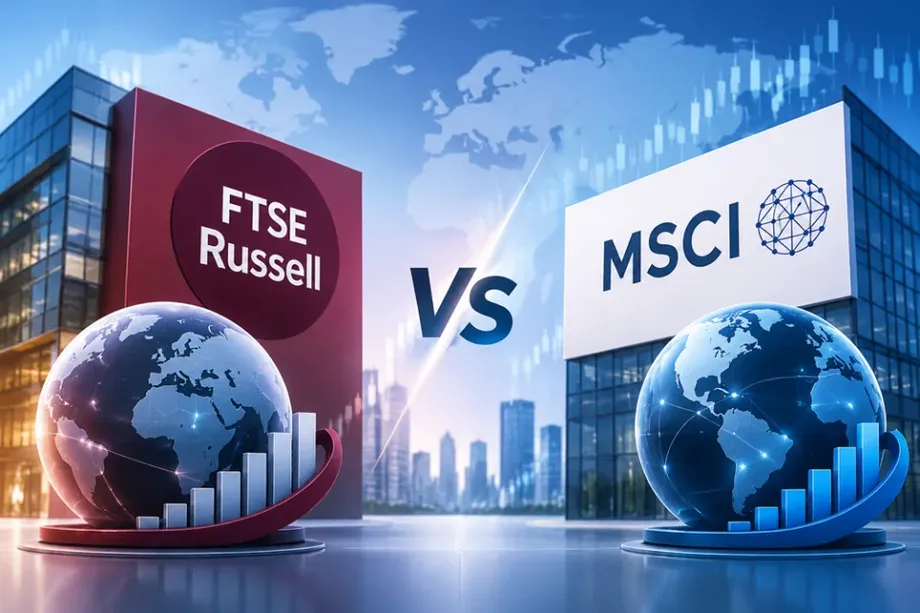
FTSE Russell and MSCI operate independent classification systems. Their decisions depend on their own criteria, review processes and investor feedback, so Indonesia can retain its FTSE classification while facing a proposed change at MSCI.
FTSE Russell uses its Quality of Markets Assessment Matrix. It examines regulation, restrictions on foreign ownership, foreign exchange transactions, trading systems, custody and settlement, as well as market size and the number of eligible securities. Custody means holding securities safely for investors; settlement is the completion of a trade through the exchange of shares and payment.
FTSE Russell divides markets into developed, advanced emerging, secondary emerging and frontier categories. It conducts an annual assessment with interim updates, allowing it to review changes in market rules and the experience of investors.
MSCI examines market size and liquidity, access for international investors and economic development, with the economic development test applying to developed market status. Its accessibility assessment includes foreign ownership, movement of capital, operational processes, investment instruments and the stability of the legal and institutional framework.
Both providers therefore look beyond whether company profits or share prices are rising. An international fund also needs reliable information, workable trading arrangements and confidence that it can move money into and out of a market.
What Standalone Status Could Mean for Investors
MSCI uses the standalone category for markets outside its investable market classifications, including markets downgraded after an exceptional deterioration in accessibility, size or liquidity. Examples include Argentina, Jamaica, Nigeria, Ukraine and Zimbabwe.
A move into that category could change Indonesia's representation in MSCI's global equity indexes. Funds that follow affected benchmarks could then need to adjust their Indonesian holdings. Other managers use the same indexes to compare performance or set investment allocations, making classification relevant beyond funds that copy an index exactly.
For Indonesian companies, those decisions can influence participation by international portfolio investors. For shareholders, changes to index membership or weighting can affect trading as funds rearrange their portfolios.
No final MSCI decision has been made. The current position is that FTSE Russell retains Indonesia in its secondary emerging category, while MSCI is consulting on a different classification.
A Large Market Faces a Test of Trust
OJK Board of Commissioners Chair Friderica Widyasari Dewi has said reforms must produce real, measurable results and build investor confidence through action. She has described the regulator's goal as a fair, transparent and competitive capital market with global credibility.
Friderica put Indonesia's stock market capitalisation at about $589 billion, the second largest in the Association of Southeast Asian Nations, and the number of investors at 31.1 million. Market capitalisation is the combined stock market value of listed companies.
She also cited revenue growth of 15.9% and net profit growth of 16.3% among listed companies over the 12 months through June 2026. Profit growth exceeded revenue growth by 0.4 percentage points.
Those figures show the scale of the market and the growth recorded by its listed businesses. The classification reviews focus on another part of the investment experience: whether investors have enough information, access to tradable shares and confidence in trading oversight.
Vietnam provides a nearby comparison within FTSE Russell's system. Its move from frontier to secondary emerging status began on September 21, 2026, with an initial 10% implementation. Further stages are scheduled for March, June and September 2027. Indonesia already holds that classification and is seeking to return to standard index review processes.
The Dates That Shape the Next Decisions
Indonesia's classification story spans several separate announcements and meetings. The October 23 discussion reaffirmed FTSE Russell's existing position, while the December review and MSCI's June deadline remain the next major checkpoints.
- March, June and September 2026: FTSE Russell postponed certain Indonesian index changes while assessing market integrity reforms.
- October 6, 2026: FTSE Russell confirmed Indonesia's secondary emerging classification and kept it off the watch list.
- October 15, 2026: MSCI launched its consultation on moving Indonesia from emerging market to standalone status.
- October 19, 2026: The Indonesia Stock Exchange contacted MSCI for clarification about its assessment.
- October 23, 2026: The exchange briefed FTSE Russell online about reforms to transparency, liquidity and surveillance.
- October 26, 2026: Jeffrey publicly described FTSE Russell's confirmation.
- Before the December 2026 index review: FTSE Russell will update its treatment of Indonesian securities.
- By June 30, 2027: MSCI is scheduled to announce its final classification decision.
FTSE Russell's next broader interim country classification announcement is scheduled for April 6, 2027. For Indonesia, the more immediate task is to demonstrate how the reforms are working before the December securities update, while responding to the concerns under MSCI's consultation.
Key Points
- FTSE Russell has retained Indonesia as a secondary emerging market and kept it off its watch list.
- Certain Indonesian index changes were postponed at three reviews in 2026. A further update is due before the December review.
- Reforms cover shareholder disclosure, investor categories, free float requirements and trading surveillance.
- MSCI is consulting on moving Indonesia to standalone status over transparency, trading and enforcement concerns.
- MSCI's final decision is due by June 30, 2027. The two providers make their assessments independently.