A major Sumatra discovery moves toward drilling
Indonesia's state energy company Pertamina is accelerating work at Padang Pancuran in South Sumatra, where it estimates oil potential at more than 1 billion barrels, with an earlier estimate reaching 1.4 billion barrels. The discovery in the Jambi Merang working area is part of a broader investment push supporting Indonesia's target of producing 1 million barrels of oil a day by 2030.
Contents
- A major Sumatra discovery moves toward drilling
- What the billion barrel estimate means
- From permits to a producing field
- Why three quarters of investment goes upstream
- Rokan needs a network of service companies
- Existing fields remain part of the production push
- Java and eastern Indonesia broaden the search
- Reading the production and refinery numbers
- The financial scale behind the projects
- Key Points
Pertamina Deputy President Director Oki Muraza said the company was working to advance development before production begins. Permits are being processed so that several wells can be drilled as soon as possible. Pertamina has not announced a production start date, a daily output forecast or a final development budget for Padang Pancuran.
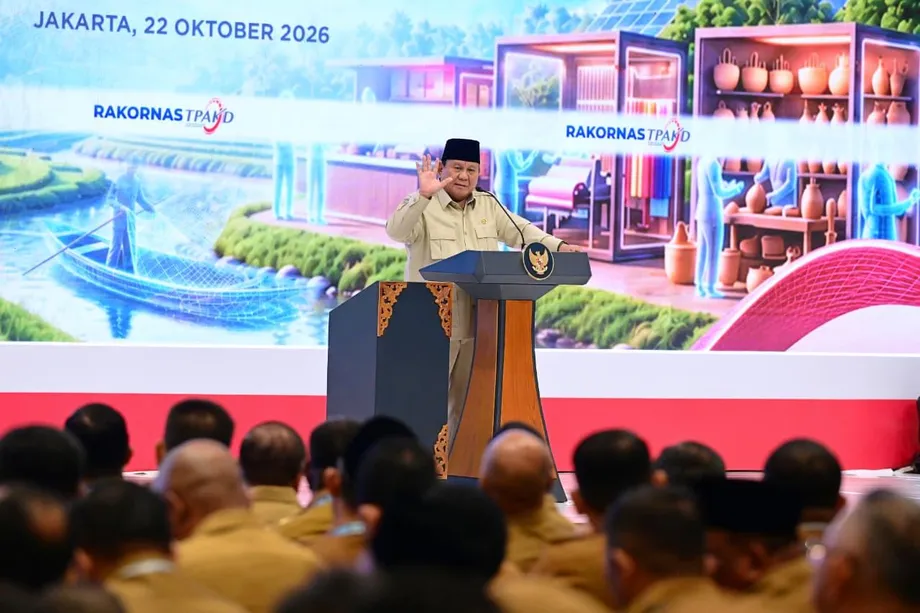
Oki outlined the investment strategy at the 51st ASEAN Council on Petroleum and Energy conference in Denpasar, Bali, on October 27, 2026. Further remarks about accelerating Padang Pancuran's development were attributed to him at the same conference on October 28.
The project sits alongside another large opportunity in Sumatra: more than 11 billion barrels of hydrocarbon potential associated with unconventional oil and gas development in the Rokan Block in Riau. Pertamina is seeking a network of around 50 service providers there to help bring down costs for each well.
What the billion barrel estimate means
Padang Pancuran's estimated size describes a volume underground, while Indonesia's 2030 target describes the amount of oil produced each day. Connecting the two requires successful drilling, an assessment of how much oil can be recovered and facilities capable of bringing it to the surface.
Oki described the scale of the opportunity and the company's development efforts:
"We are also trying to accelerate development at Padang Pancuran, which has very substantial potential, possibly exceeding 1 billion barrels," Oki said.
Pertamina's earlier estimate, presented by Oki at a parliamentary hearing in August, put the potential at up to 1.4 billion barrels. His later description of more than 1 billion barrels gives a broader statement of scale. The amount ultimately recoverable will depend on the reservoir's characteristics, drilling results, technology and costs.
Oil resources are estimates of what may exist underground. Reserves generally refer to quantities assessed as commercially recoverable under specified conditions. For readers following Padang Pancuran, the next useful measures will be results from additional wells, a recoverable volume assessment and a production plan.
From permits to a producing field
Pertamina is working on permits to begin drilling at Padang Pancuran and wants to drill several wells promptly. Those wells will help the company understand how the reservoir behaves across the discovery, including how readily oil flows and how production might change over time.
A discovery needs more than a successful well to become a producing field. Engineers must decide where to place additional wells and how to collect, process and transport the oil and any associated gas. The work also needs to fit within the company's investment priorities.
The announcements place Padang Pancuran within the following sequence:
- August 2026: Oki presented an estimate of up to 1.4 billion barrels of potential at a parliamentary hearing.
- October 27, 2026: Oki discussed Pertamina's upstream investment strategy and Padang Pancuran at the ASCOPE event in Bali.
- October 28, 2026: Further conference remarks described efforts to accelerate development of potential exceeding 1 billion barrels.
- 2030: Indonesia aims to reach national crude oil production of 1 million barrels a day.
Why three quarters of investment goes upstream
Pertamina allocates about 75% of its capital expenditure to upstream operations, the part of the energy business that searches for oil and gas and produces them. Capital expenditure means spending on assets and projects expected to operate for years, such as wells, equipment and production facilities.
Oki linked that allocation to the government's production mandate. The investment has two jobs: finding and developing new supplies, and slowing the natural decline of fields already producing. As oil leaves a reservoir, pressure can fall and the remaining oil can become harder to extract.
At 75%, upstream receives roughly three dollars out of every four in Pertamina's capital spending allocation. That leaves about one dollar in four for other parts of the company. A monetary value for the upstream allocation was not specified in the conference remarks.
Pertamina has contributed around 65% of Indonesia's crude oil production since 2021, according to the figures accompanying its development plans. Its ability to maintain existing fields and bring new ones into production therefore carries considerable weight in the national effort to reach the 2030 goal.
Rokan needs a network of service companies
Pertamina's Rokan strategy focuses on building the services needed to develop unconventional oil and gas. These resources generally require more specialized extraction methods because hydrocarbons do not flow easily through the rock. A large volume underground can require many wells and repeated technical work to produce economically.
Oki put Rokan's hydrocarbon potential at more than 11 billion barrels and pointed to the Permian Basin in Texas as a model for the supporting industry. Pertamina wants around 50 vendors, or service providers, to help reduce costs per well.
Such companies supply equipment, drilling services and other technical work. A broader pool of capable providers can give an operator more choices, improve access to equipment and help organize repeated drilling activity. Pertamina's proposal makes the availability and cost of those services part of the development strategy.
Padang Pancuran and Rokan require different immediate steps. At Padang Pancuran, Pertamina is advancing permits and further drilling around a discovery. At Rokan, it is also trying to establish the industrial support needed to develop unconventional resources at an affordable cost.
Existing fields remain part of the production push
Pertamina is also using enhanced oil recovery technologies in areas including the Rokan Block. Enhanced oil recovery means using additional methods to move oil toward producing wells after ordinary extraction becomes less effective. The method chosen depends on the reservoir and the oil it contains.
New discoveries and recovery work serve different purposes within the same production plan. Padang Pancuran could add a new source of supply, while work at existing fields seeks to extract more oil from assets that already have wells and infrastructure.
The national target depends on the balance between those additions and declines elsewhere. If older fields produce less each year, some new output first replaces that lost production. Raising the national daily total requires additions large enough to cover the decline and then deliver further growth.
Java and eastern Indonesia broaden the search
Pertamina's exploration plans extend beyond Sumatra to Java and eastern Indonesia. The company organizes its domestic upstream business into four regions and its international operations into a separate region.
Oki described domestic Region 4, covering eastern Indonesia, as an area with extensive exploration opportunities. It has both oil and gas potential, with gas accounting for the larger share.
That mix matters for the national production goal. Oil and natural gas supply different energy needs and require different processing and transport arrangements. Gas discoveries can expand Indonesia's energy supply, while the target of 1 million barrels a day specifically calls for more crude oil production.
Pertamina is therefore pursuing several kinds of growth at once: potential oil development at Padang Pancuran, unconventional resources and recovery work at Rokan, and exploration with a stronger gas component in eastern Indonesia.
Reading the production and refinery numbers
Pertamina reported oil and gas production above 1 million barrels of oil equivalent a day during its 2025 financial year. A barrel of oil equivalent is a common energy unit that allows oil and gas to be added together according to their energy content.
The company's combined production figure counts both fuels. Indonesia's 2030 target counts crude oil alone, so progress toward that goal needs to be measured using the oil component of production.
Pertamina's refineries processed 333 million barrels of intake in 2025. Spread across the year, that works out to approximately 912,000 barrels a day. Refinery intake measures material entering processing plants, whereas upstream production measures oil and gas extracted from fields.
The company also reported a valuable product yield of 83.7%, an improvement from the previous year. In simple terms, the measure tracks how much refinery input becomes products classified as valuable. Pertamina did not provide the previous year's percentage in the figures accompanying these results.
The financial scale behind the projects
Pertamina reported net profit of US$3.35 billion on revenue of US$70.89 billion for 2025. Its earnings before interest, taxes, depreciation and amortization, commonly called EBITDA, reached US$11.43 billion. EBITDA gives another view of business earnings before financing, tax and certain accounting charges.
The figures put net profit at approximately 4.7% of revenue, or about US$4.70 for every US$100 in sales. Pertamina also reported US$5.9 billion in domestic investment, covering its broader activities in Indonesia. That amount was not identified as spending solely on Padang Pancuran or upstream development.
President Director Simon Aloysius Mantiri described the company's responsibilities as maintaining reliable energy supplies for households, industry and other strategic sectors. The investment decisions connect exploration underground with the practical task of keeping fuel and energy available.
Pertamina also reported emissions reductions of 2.27 million tonnes of carbon dioxide equivalent in 2025. Carbon dioxide equivalent is a unit that expresses the warming effect of different greenhouse gases on a common scale. Alongside its production expansion, the company is pursuing emissions reduction measures as part of Indonesia's net zero agenda.
Key Points
- Pertamina estimates Padang Pancuran's oil potential at more than 1 billion barrels, with an earlier estimate of up to 1.4 billion barrels.
- The company is processing permits and preparing further drilling; a production start date has not been announced.
- About 75% of capital expenditure goes to upstream operations, supporting Indonesia's oil production target for 2030.
- Rokan holds more than 11 billion barrels of hydrocarbon potential, with around 50 service providers sought to help lower costs per well.
- Eastern Indonesia's exploration prospects contain more gas than oil.
- Pertamina's 2025 production above 1 million barrels of oil equivalent a day includes both oil and gas.