A seismic data scandal becomes a major financial loss
Chubu Electric Power has booked an extraordinary loss of 370.3 billion yen in its interim accounts after withdrawing applications to restart two reactors at its Hamaoka nuclear power plant. The utility now expects a record annual net loss as the earthquake data scandal puts the future of the plant in Omaezaki, Shizuoka Prefecture, into doubt.
Contents
- A seismic data scandal becomes a major financial loss
- What the 370.3 billion yen charge means
- How earthquake assumptions undermined the applications
- Warnings were raised years before the scandal became public
- A review stretching back to 2014 is reset
- New leadership inherits the repair work
- Hamaoka has not been designated for closure
- A setback within Japan's nuclear restart programme
- Key Points
The company announced on October 29, 2026, that its consolidated net loss for the six months through September reached 280.4 billion yen. A year earlier, it had recorded a net profit of 166.3 billion yen. Revenue still rose 11.3% to 1.9452 trillion yen, showing how the nuclear losses overwhelmed a period of rising sales.
For the financial year ending March 2027, Chubu expects extraordinary losses related to Hamaoka of about 380 billion yen and a net loss of 215 billion yen. Its previous forecast had been for a net profit of 160 billion yen. The revised outlook represents a deterioration of 375 billion yen and would produce the largest annual deficit in the company's history.
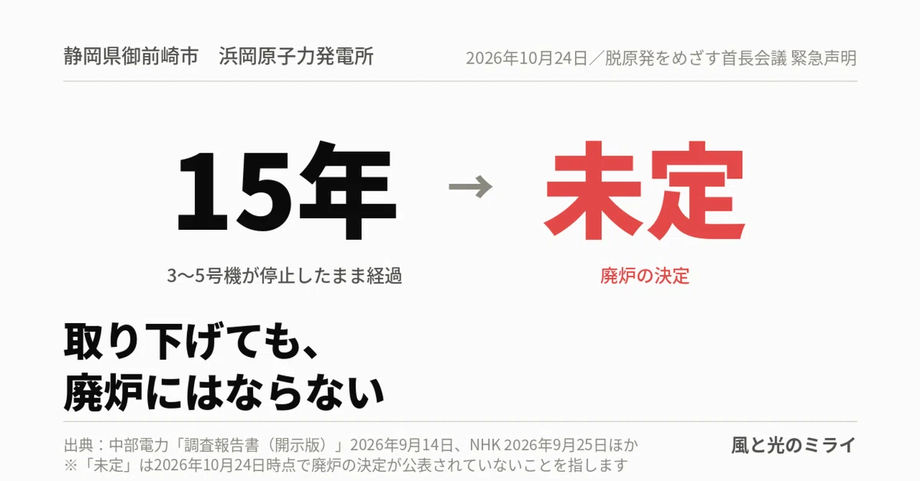
The financial damage follows Chubu's September 25 withdrawal of applications for regulatory reviews of Hamaoka reactors No. 3 and No. 4. Investigators found that earthquake data had been manipulated amid pressure to avoid delays in the restart process. A review lasting more than 12 years has effectively been reset, and the utility has replaced its president as it tries to rebuild confidence in its safety submissions.
What the 370.3 billion yen charge means
Chubu recorded the 370.3 billion yen extraordinary loss in its accounts covering April through September 2026. Its estimate of about 380 billion yen concerns Hamaoka losses for the full financial year ending in March 2027.
The company booked impairment losses on related assets because withdrawing the applications made future business prospects uncertain. An impairment means reducing the value of an asset in the accounts when the income expected from it no longer supports its recorded value.
A power plant can involve years of investment before it generates electricity. When its route to restarting becomes uncertain, the company must reassess how much those investments are worth. That accounting reduction lowers reported profit, even though the charge itself need not represent an equivalent cash payment during the same period.
Chubu also expects higher costs for safety work at Hamaoka. The company therefore faces both a reduction in the recorded value of existing assets and the prospect of further spending. The revised annual forecast captures the financial consequences of a restart process that can no longer proceed on its previous basis.
How earthquake assumptions undermined the applications
Hamaoka's restart reviews required Chubu to demonstrate that the reactors met Japan's new nuclear safety standards. The disputed information concerned the design basis ground motion, which is the level of earthquake shaking used to assess whether a nuclear plant's structures and equipment can withstand a major earthquake.
Engineers use that assumed shaking when examining the strength of buildings, machinery and other safety equipment. Underestimating it can make the requirements appear easier to meet. Reliable earthquake calculations are therefore a central part of deciding what protection a plant needs.
Chubu disclosed inappropriate handling of these calculations on January 5. An independent committee of outside experts subsequently investigated the facts, the causes and measures to prevent a recurrence. Its findings described suspected underestimation of possible earthquake vibrations in information submitted to the Nuclear Regulation Authority, or NRA.
Chubu said the problems extended beyond the reliability of the application documents to its own handling of the regulatory review. In explaining the decision to withdraw, the company stated:
Given the serious doubts that have arisen regarding the reliability of the application documents and the company's subsequent handling of matters in the review process, it would not be appropriate to maintain the existing applications.
Warnings were raised years before the scandal became public
The independent committee's report, released on September 14, found that manipulation dated back to at least around 2012. That places its origins before either of the two restart applications was submitted.
Workers felt pressure from senior management over delays in the schedule toward restarting the reactors, according to the investigation. The committee also identified an organisational culture that tolerated improper practices and allowed employees to justify them.
Whistleblowers raised concerns about falsified data in 2019 and again in 2021. Senior management dismissed those concerns, the investigation found. Those missed warnings are a central part of the company's governance failure: employees had raised the issue years before Chubu publicly disclosed it.
The findings connect the technical misconduct to decisions about schedules, supervision and internal reporting. Correcting the earthquake calculations is one task. Making sure employees can challenge questionable work, and that managers act on those warnings, is another.
A review stretching back to 2014 is reset
Chubu applied for the safety assessment of Hamaoka No. 4 in February 2014 and No. 3 in June 2015. Both are boiling water reactors, which use heat from nuclear fuel to boil water and produce steam that drives turbines.
The NRA said the withdrawal was the first time a reactor screening application had been pulled because of corporate misconduct. Chubu initially announced that it would withdraw the applications and submit the paperwork when preparations were complete. It formally withdrew them on September 25.
The main events span more than a decade:
- By around 2012: Earthquake data manipulation had begun, according to the independent investigation.
- February 2014: Chubu applied for the regulatory review of Hamaoka No. 4.
- June 2015: The company applied for the review of Hamaoka No. 3.
- 2019 and 2021: Whistleblowers raised concerns that senior management dismissed.
- January 5, 2026: Chubu publicly disclosed problems with the earthquake calculations.
- September 14, 2026: The independent committee released its findings.
- September 25, 2026: Chubu formally withdrew both applications.
- October 29, 2026: The company announced its interim loss and revised annual outlook.
The withdrawal ends the applications that had carried the reactors through years of scrutiny. No date has been given for a new application or a restart, leaving Chubu without a defined timetable for bringing either unit back into operation.
New leadership inherits the repair work
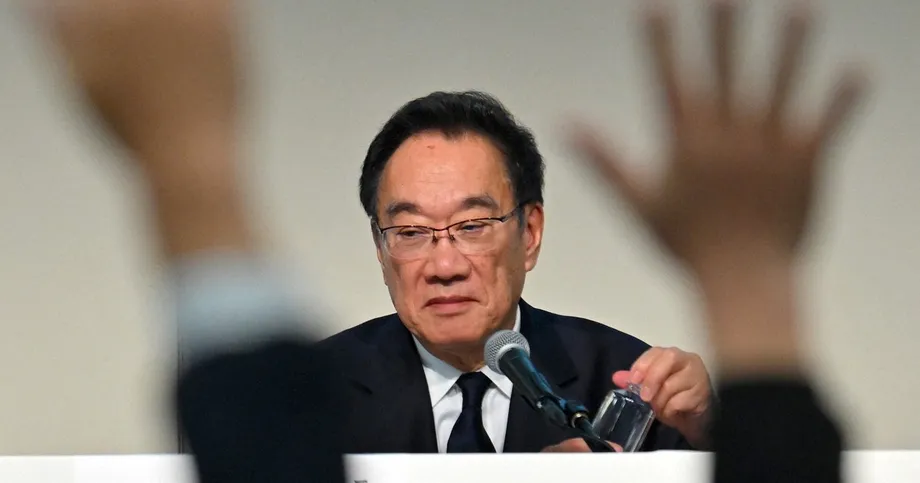
President and chief executive Kingo Hayashi and Chairman Satoru Katsuno announced their resignations effective September 30, taking responsibility for the manipulation of seismic data. Director Minoru Yasui succeeded Hayashi as president on October 1.
Yasui took office less than a month before the results announcement exposed the scale of the financial damage. His immediate responsibilities include addressing the investigation's findings while managing a company now forecasting its largest annual net loss.
Chubu has pledged changes in employee behaviour, organisational culture, governance and oversight. Those commitments address the weaknesses described by the committee, including management pressure and the failure to respond to internal warnings.
The company said its reforms would aim to prevent another incident and restore lost trust. For the restart process, the practical task is to produce reliable safety information under management arrangements that allow technical concerns to be raised and resolved.
Hamaoka has not been designated for closure
Yasui said at the results briefing that the impairment loss did not mean Hamaoka would be abolished. The company has therefore left open the possibility of pursuing a future for the plant despite the withdrawal of the current applications.
An asset valuation and a decision about a plant's future serve different purposes. The accounts now reflect reduced expectations about the value of Hamaoka investments. A permanent closure would be a separate decision about what happens to the facility.
Chubu's financial outlook shows the size of the immediate change. The expected annual result has moved from a profit of 160 billion yen to a loss of 215 billion yen. In the first half alone, the change from a profit of 166.3 billion yen to a loss of 280.4 billion yen amounts to a deterioration of 446.7 billion yen.
Revenue growth offers another useful comparison. Sales rose 11.3%, yet the company fell deeply into loss because of the Hamaoka charges. Readers looking only at electricity sales would miss the accounting impact of the failed restart applications.
A setback within Japan's nuclear restart programme
Japan's seventh Basic Energy Plan, adopted in February 2025, calls for maximum use of nuclear power. Hamaoka's stalled applications sit within that wider effort to return more reactors to service after the Fukushima Daiichi accident of March 2011.
Before that accident, Japan's 54 reactors supplied around 30% of the country's electricity. Within 14 months, nuclear generation had stopped as the country changed its regulatory system. Fifteen reactors have since resumed operation, while Hamaoka No. 3 and No. 4 had been among 17 reactors at various stages of restart review.
Chubu's experience shows how closely the financial value of a nuclear investment depends on the quality of the evidence supporting regulatory approval. Years spent in a review cannot compensate for unreliable calculations. For Hamaoka, the consequences now include withdrawn applications, a change in leadership and hundreds of billions of yen in losses.
The company's next financial milestone is the close of the year in March 2027, for which it forecasts a net loss of 215 billion yen. Its stated intention to retain a future for Hamaoka now sits alongside the work of correcting safety information and rebuilding its internal controls.
Key Points
- Chubu booked a 370.3 billion yen extraordinary loss in its April to September 2026 accounts after withdrawing Hamaoka restart applications.
- The company forecasts a record net loss of 215 billion yen for the year ending March 2027, replacing a projected profit of 160 billion yen.
- Its interim net loss reached 280.4 billion yen despite revenue rising 11.3% to 1.9452 trillion yen.
- Investigators traced earthquake data manipulation to at least around 2012 and found that internal warnings in 2019 and 2021 were dismissed.
- Applications for reactors No. 3 and No. 4 were formally withdrawn on September 25, resetting years of regulatory review.
- Minoru Yasui became president on October 1 and said the impairment did not mean Hamaoka would be permanently closed.