A new boundary for Indonesia's main stock index
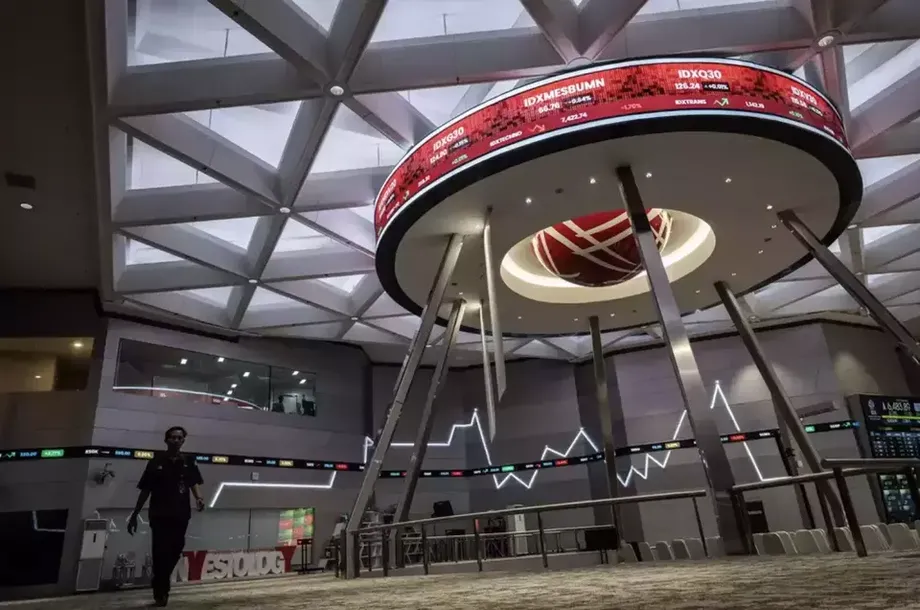
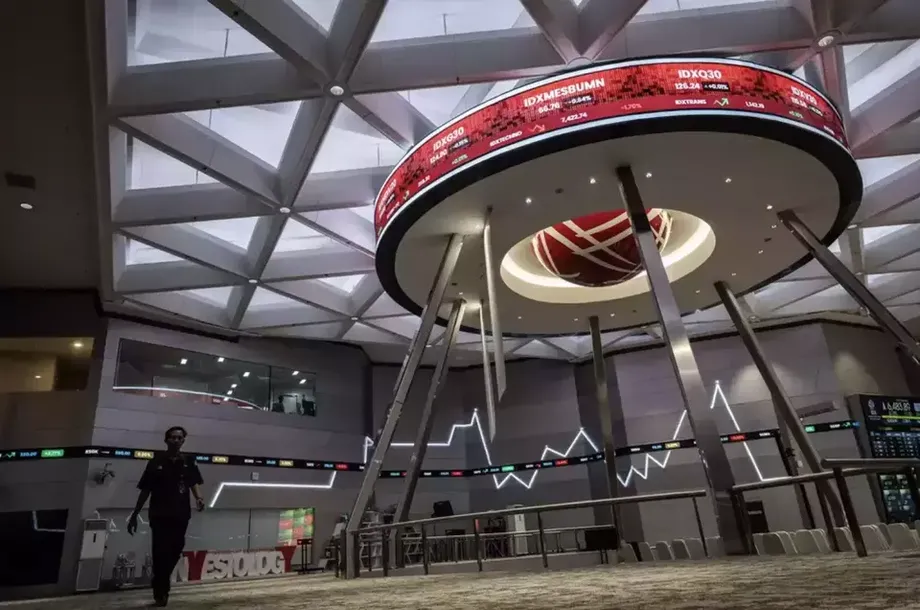
The Indonesia Stock Exchange (BEI) will exclude shares classified as having high shareholding concentration (HSC) from the Jakarta Composite Index (IHSG) starting November 2, 2026. The change affects a group of 80 stocks estimated to represent about 18% of the benchmark's weight, while allowing those shares to remain listed and traded.
Contents
- A new boundary for Indonesia's main stock index
- What makes a stock HSC?
- Large companies, limited public availability
- How the calculation will work
- The review calendar moves
- From April disclosure to November exclusion
- Why estimates point in different directions
- Most of the year's losses came from other stocks
- Banks may gain influence, with larger swings
- What changes for funds and shareholders?
- The MSCI timetable extends into 2027
- Key Points
BEI's announcement No. Peng-00201/BEI.POP/10-2026, dated October 21, changes which stocks qualify for inclusion and moves the quarterly review calendar. Shares on the Acceleration Board were already excluded. Shares carrying the HSC designation will now join that exclusion.
The exchange will retain its existing calculation method, which adjusts company values for shares available to public investors and caps an individual stock's weight at 9%. The change therefore adds an eligibility rule rather than replacing the entire index formula.
BEI President Director Jeffrey Hendrik presented the initiative after an online meeting with global index provider MSCI on October 19. He described it as part of efforts to strengthen market transparency, integrity and the credibility of Indonesia's main stock market benchmark.
The decision comes during severe market pressure. IHSG fell 11.6% on October 16 and more than 3% on October 19, reaching its lowest level in six years. Removing HSC stocks will change which companies drive the headline index, with research pointing to greater influence for large banks and potentially larger swings in the remaining benchmark.
For shareholders, the immediate practical change concerns index membership: investors can continue buying and selling HSC shares, but movements in those prices will stop contributing to IHSG once the exclusion takes effect.
What makes a stock HSC?
BEI began publishing its HSC list on April 2, 2026. The designation describes a shareholding structure in which a limited group of investors controls a large proportion of a company's shares.
Some disclosed concentration figures are close to total ownership. They include 96.68% for PT Bank Mayapada Internasional Tbk (MAYA), 95.76% for PT Dian Swastatika Sentosa Tbk (DSSA), 97.31% for PT Barito Renewables Energy Tbk (BREN), and 98.06% for PT Indoritel Makmur Internasional Tbk (DNET).
BEI Trading and Membership Regulation Director Irvan Susandy said a special committee involving BEI and the Indonesian Central Securities Depository (KSEI) assesses potentially concentrated shareholding structures. Companies can improve their ownership structure, undergo another assessment and leave the list.
Development Director Iding Pardi said the assessment considers ownership concentration, a price impact ratio (PIR), and concerns arising from market surveillance. PIR concerns the effect trading has on prices. Jeffrey said the detailed HSC methodology is kept confidential to prevent participants from tailoring their arrangements around the assessment.
Market observer Hans Kwee described HSC as an ownership characteristic and supported greater disclosure, drawing a comparison with practices in Hong Kong. BEI says the designation carries no additional sanction by itself. Its immediate purpose is to make concentrated ownership visible to investors.
Large companies, limited public availability
Five of the largest HSC companies had a combined market value of Rp1,679.65 trillion at the end of the third quarter of 2026. Each ranked among BEI's 10 largest listed companies by market capitalisation, meaning the value of all its outstanding shares at market prices.
- PT DCI Indonesia Tbk (DCII): Rp471.98 trillion.
- PT Bayan Resources Tbk (BYAN): Rp393.33 trillion.
- PT Barito Renewables Energy Tbk (BREN): Rp387.98 trillion.
- PT Ekamas Mora Republik Tbk (MORA): Rp220.24 trillion.
- PT Dian Swastatika Sentosa Tbk (DSSA): Rp206.12 trillion.
Those figures describe company values at the end of September, before the sharp October market decline. An index designed around shares accessible to independent investors also needs to account for how much of each company is available for public trading.
How the calculation will work
IHSG will continue using the Capped Free Float Adjusted Market Capitalization Weighted method. In simple terms, larger companies receive more influence, but that influence is adjusted for their free float, the shares considered available for public trading. A 9% ceiling limits the weight assigned to any single constituent.
HSC screening adds another step. A stock must first qualify for the index before its free float and weight are calculated. From November 2, an HSC designation will make a stock ineligible, even if the company has a large market value.
Mirae Asset Sekuritas Indonesia Chief Economist and Head of Research Rully Arya Wisnubroto said the change could make IHSG better reflect stocks genuinely available to independent investors. His October 20 research described the initiative as a constructive adjustment to the benchmark's methodology.
The size of the excluded group varies with the calculation used. BEI estimated its index weight at about 18%, while Korea Investment & Sekuritas Indonesia (KISI) put it at 18.1%. A calculation using October 19 data valued the group's free float at Rp424.33 trillion against Rp2,162 trillion for IHSG, giving a larger share of 19.63%.
The last figure measures a share of free float market value, while the first figures describe estimated index weight under the weighting framework. That difference matters when estimating how the remaining constituents will be redistributed.
The review calendar moves
BEI will move regular IHSG evaluations from March, June, September and December to January, April, July and October. Changes will take effect on the first exchange trading day of February, May, August and November, replacing the previous effective months of January, April, July and October.
The announcement also provides for adjustments outside the regular calendar. When a stock enters or leaves the HSC list between scheduled reviews, its treatment in IHSG will be adjusted promptly. Investors will therefore need to watch ownership classification announcements as well as quarterly index reviews.
Iding said HSC assessments based on PIR would take place every three months, aligned with reviews of IHSG and other main BEI indices. Stocks can return to IHSG when they cease to meet the HSC criteria.
From April disclosure to November exclusion
The November start date turns a policy proposal into a scheduled index change. Statements on October 19 and 20 had described the plan while leaving its implementation date open; the October 21 announcement set November 2.
- April 2, 2026: BEI began announcing HSC classifications.
- July 2: PT Lima Dua Lima Tiga Tbk (LUCY) left the HSC list.
- October 12: PT Panca Anugrah Wisesa Tbk (MGLV) and PT MD Entertainment Tbk (FILM) left the list.
- October 15: MSCI's consultation on a possible change in Indonesia's market classification began.
- October 19: BEI met MSCI online and announced its plan to remove all 80 HSC stocks from IHSG.
- October 21: BEI dated the announcement establishing the revised selection rules and review schedule.
- November 2: The new IHSG rules take effect.
The departures of LUCY, MGLV and FILM show that HSC membership can change. For companies seeking a return to IHSG, the route described by BEI is to cease meeting the concentration assessment criteria and have their changed status announced.
Four BEI officials signed the index announcement: Pande Made Kusuma Ari A., head of Trading Regulation and Operations; Heidy Ruswita Sari, head of Research; Firza Rizqi Putra, head of Business Development 1; and Pradapaningsih, acting head of Business Development 2.
Why estimates point in different directions
KISI Head of Research Muhammad Wafi examined how IHSG would have performed if the 80 HSC stocks had been excluded from December 31, 2025. His simulation put the index at about 5,200 on October 19, roughly 4% above its actual level.
A different calculation, which removed the group's share of free float market value from the prevailing benchmark, suggested a level near 4,020. The two exercises answer different questions: Wafi reconstructed performance over time, while the latter calculation subtracted a capitalisation share at one point in time.
BEI's announcement specifies eligibility, weighting and review arrangements. The operational details needed to calculate the exact index level at implementation were not set out in the information announced.
Most of the year's losses came from other stocks
KISI's research helps explain why removing HSC shares changes the benchmark's composition more than it changes the forces behind the market decline. Its figures show that the 80 HSC stocks fell 52% during 2026 up to the period examined, yet contributed about 970 points to IHSG's total decline of 3,700 points.
Dividing 970 by 3,700 gives approximately 26%. The remaining stocks accounted for about 74% of the lost index points. Wafi attributed much of the broader decline to foreign investors selling large companies and cited Bank Central Asia (BBCA) as contributing roughly 300 points.
His simulation also changed the benchmark's valuation. The historical price to earnings ratio fell from 10.9 times to 9.4 times when HSC stocks were removed. This ratio compares the market value of shares with the profits behind them. Changing the companies in the calculation changes that measure even when individual share prices stay the same.
These figures leave investors with two tasks after implementation: follow the revised headline benchmark and continue assessing the businesses and prices of shares outside it. HSC stocks will still have their own trading activity, shareholders and financial results.
Banks may gain influence, with larger swings
Rully estimated that the combined weight of Indonesia's four largest banks could rise from 16.1% to about 22.4%. That is an increase of 6.3 percentage points, calculated using the full market capitalisation shares of the remaining companies.
His estimate points to a stronger financial sector influence, although the final weights will reflect BEI's free float adjustments and 9% cap. Foreign trading in large bank shares could consequently become more visible in daily IHSG movements.
Wafi's simulation found that volatility could rise as well. Using the previous three months of historical data, annualised volatility reached 31% without HSC stocks, compared with 29% for the actual index. Volatility measures how widely prices fluctuate; a higher number means larger swings.
Wafi explained that stocks with limited trading had previously dampened index movement. Removing them places more weight on liquid shares that respond frequently to investor buying and selling.
What changes for funds and shareholders?
Iding said BEI had no rule or policy plan setting a maximum HSC allocation or weight across mutual fund portfolios. Funds that track the exchange's main indices, however, would exclude HSC stocks from their investment reference. BEI had already removed HSC shares from IDX30, LQ45 and IDX80.
A fund tracking an index seeks to reproduce its composition or performance. A manager with a broader investment mandate can make different choices, so any selling pressure on excluded stocks will depend on individual fund rules and strategies.
Avere Investama Director Teguh Hidayat expected HSC prices to move independently of the revised benchmark and warned that IHSG could fall further. He also called for stronger enforcement through June 2027, including possible involvement by the police Criminal Investigation Agency or the Attorney General's Office. Teguh referred to administrative fines against three companies on the list, without naming them.
RHB Sekuritas Head of Research Andrey Wijaya supported a more representative benchmark and called for transparent transition arrangements. He advised investors to examine the number of rising and falling stocks, transaction values and sector indices alongside IHSG. Together, those measures show how widely a market move is being shared.
The MSCI timetable extends into 2027
MSCI's consultation considers moving Indonesia from its Emerging Market category to Standalone Market status. The consultation runs from October 15, 2026, through April 2027, with a final decision scheduled no later than June 30, 2027.
Market classifications help determine which countries enter international investment benchmarks. A change can affect funds whose mandates are tied to those benchmarks, making the consultation consequential for Indonesia's access to international portfolio investment.
MSCI has sought consistent implementation of reforms and evidence of lasting results. It has also frozen some index changes involving Indonesian stocks until further notice. BEI's November index revision sits within that broader reform timetable.
BEI also plans to label shareholders owning more than 1% as affiliated or unaffiliated in ownership disclosures. Alongside the HSC list, that information would give investors more detail about connections among holders. November 2 is the immediate implementation date for IHSG; April and June 2027 are the next stated milestones in MSCI's classification process.
Key Points
- BEI will exclude HSC stocks from IHSG starting November 2, 2026.
- The 80 stocks represent an estimated 18% of index weight and remain listed and tradable.
- The free float adjusted weighting method and 9% individual stock cap remain.
- Reviews move to January, April, July and October, with changes effective the following month.
- Stocks leaving HSC status can return to IHSG, including through adjustments between regular reviews.
- Research suggests greater bank influence and potentially higher volatility after the change.
- MSCI's consultation runs through April 2027, with a final decision due by June 30, 2027.