Four scorers send Bangladesh through in Dhaka
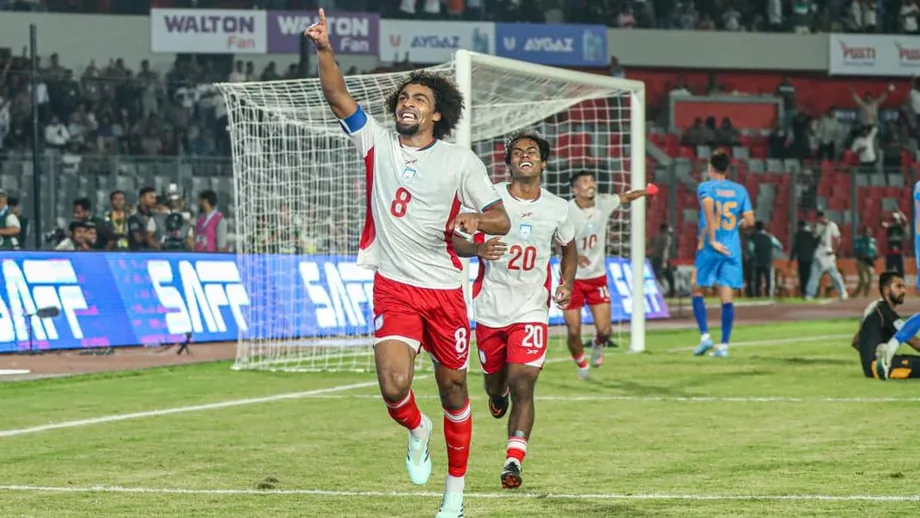
Bangladesh scored four goals through four different players to beat Sri Lanka 4-0 at the National Stadium in Dhaka on Wednesday, November 11, finishing top of Group A in the SAFF Championship and setting up a semifinal against Pakistan on Saturday, November 14.
Contents
- Four scorers send Bangladesh through in Dhaka
- A fast start puts Sri Lanka under pressure
- Hamza makes his first captaincy count
- Farhaan's solo run opens a decisive gap
- How Bangladesh shared the scoring work
- Why Bhutan advanced and Sri Lanka went out
- A result with a long historical reach
- Pakistan next as the title pursuit continues
- Key Points
Shamit Shome, Hamza Choudhury, Farhaan Ali Wahid and Rakib Hossain supplied the goals as coach Thomas Dooley's team completed the group stage with six points from two matches, five goals scored and none conceded. Bangladesh had opened their campaign with a 1-0 victory over Bhutan.
The result matched Bangladesh's 4-0 win over Pakistan in Margao, India, in April 1999, giving the hosts their biggest winning margin in a recognised international in 27 years. Bangladesh also beat the Northern Mariana Islands 4-0 in 2013, but that game was outside FIFA recognition.
Hamza marked his first match as Bangladesh captain with a goal before the interval. Farhaan then produced the most eye-catching individual move of the evening, carrying the ball past three defenders before scoring after the restart. Rakib completed the victory with a lifted finish over Sri Lanka goalkeeper Sujan Perera.
Sri Lanka, coached by Abdullah Al Mutairi, were eliminated. Bhutan advanced as Group A runners-up and will face India in Saturday's first semifinal, before Bangladesh take on Pakistan in the second. For the hosts, the group stage delivered both a place in the last four and an answer to a persistent concern: where their goals would come from.
A fast start puts Sri Lanka under pressure
Bangladesh threatened almost immediately. Rakib supplied a cross in the opening minute and won a free kick just outside the penalty area soon afterwards. Hamza missed the target from that opportunity, but his delivery from the right helped create the breakthrough.
Perera could not clear the cross securely, leaving Shome with a chance inside the box. Christopher Kelly blocked his first attempt, but the midfielder reacted to the loose ball and scored. The opening goal was recorded in the eighth minute in some match chronologies and the ninth in others.
Shome's goal was his second for Bangladesh, with both coming at the National Stadium. His movement mattered as much as his finish: he arrived from midfield to reach a ball that Sri Lanka's defence had failed to clear.
Sri Lanka attempted to respond, but Bangladesh continued to create opportunities while protecting their lead. Shome also contributed at the other end, tracking back in the 11th minute to stop Adhavan Rajamohan after the Sri Lankan attacker found space through the middle.
Hamza makes his first captaincy count
Hamza played in an advanced central midfield position and was involved throughout the opening half. He urged teammates to increase their intensity, tried his luck from distance and repeatedly moved into areas where he could support the attack.
Bangladesh nearly added a spectacular goal when a headed ball reached Hamza inside the penalty area and he attempted a flick with his heel. The effort went over the crossbar with Perera out of position. His next decisive contribution gave the hosts a much firmer advantage.
Mohammad Ibrahim helped supply Hamza before the interval, and the captain beat a defender before driving the ball towards goal. Perera made contact, with the shot going in off his knee. Bangladesh reached the break leading 2-0, and Hamza had the fifth goal of his international career.
The second goal changed Sri Lanka's task. A single equaliser would no longer be enough to rescue their evening, while Bangladesh could begin the second half with a cushion and continue looking for space as the visitors pushed forward.
Farhaan's solo run opens a decisive gap
Farhaan extended Bangladesh's lead early in the second half with a run that combined close control, changes of direction and a willingness to take on defenders. Starting from the left, he beat his marker, moved past two more opponents and brought the ball onto his right foot.
His shot took a slight deflection before finding the net. The goal, placed around the 53rd minute, made it 3-0 and rewarded a player whose direct running had troubled Sri Lanka throughout the match.
Farhaan had already contributed to Bangladesh's attacks before scoring. His movement stretched the visitors across the pitch, while his combinations with Shome gave the hosts another route forward on the left. He also headed a diagonal delivery back into a dangerous area during the first half.
Saad Uddin and other Bangladesh players lifted Farhaan onto their shoulders during the celebrations. His goal gave the home side a three-goal advantage with much of the second half still to play.
Rakib supplied the final finish on a counterattack, running through and lifting the ball over the advancing Perera. Most detailed timings placed the goal in the 87th minute, although another chronology listed it in the 83rd. Bangladesh finished with two goals in each half.
How Bangladesh shared the scoring work
Bangladesh entered the tournament with a familiar concern about the absence of a prolific centre-forward, often called a number nine. That is the attacker who usually plays closest to the opposing goal and is expected to convert chances regularly.
Ibrahim had scored the winner against Bhutan, but the Sri Lanka match showed how he could contribute even without scoring. His physical presence kept central defenders occupied, creating room for teammates arriving from midfield or moving in from wider positions. His involvement in Hamza's goal also gave him a direct part in the scoring.
Shome and Quazem Shah Kirmanee operated as the two deeper central midfielders. This arrangement, sometimes called a double pivot, gives a team two players who can protect the defence and help move the ball forward. Shome added another responsibility by choosing moments to join attacks.
The four goals came in different ways: Shome reacted to a rebound, Hamza finished an attack involving Ibrahim, Farhaan created room through dribbling, and Rakib scored after breaking into space. Sri Lanka had to contend with several players and several types of threat.
Bangladesh scored four times against Sri Lanka after scoring once against Bhutan. Across the two matches, five different players supplied the five goals. That spread gives Dooley more attacking options as he prepares for the semifinal, while Ibrahim's contribution shows why a forward's work can matter beyond the scoresheet.
Why Bhutan advanced and Sri Lanka went out
Bhutan's place in the semifinals depended on the result in Dhaka. After losing 1-0 to Bangladesh, Bhutan drew 2-2 with Sri Lanka. That left both teams with one point before Sri Lanka faced the hosts.
Sri Lanka needed to avoid defeat to qualify. A draw would have taken them to two points, above Bhutan. Instead, the 4-0 loss left Sri Lanka level with Bhutan on points and behind them on goal difference.
Goal difference is the number of goals a team scores minus the number it concedes. Bhutan finished with two goals scored and three conceded, a goal difference of minus one. Sri Lanka finished with two scored and six conceded, a goal difference of minus four.
Bangladesh ended the group with a goal difference of plus five. Their six points came from two wins, worth three points each, while their two clean sheets meant neither group opponent scored against them. The top two teams in each group qualify for the semifinals. The final Group A table placed Bangladesh first with six points, Bhutan second with one point and Sri Lanka third with one point. The final standings sent Bangladesh and Bhutan through and ended Sri Lanka's tournament.
A result with a long historical reach
Bangladesh's previous recognised international victory by at least four goals came against Pakistan at the SAFF Championship in April 1999. That match in Margao also ended 4-0, making Pakistan both the opponent in the historical comparison and the next team Bangladesh must face.
The 2013 victory over the Northern Mariana Islands carried the same scoreline, but its status outside FIFA recognition places it separately in Bangladesh's international record. The Sri Lanka result restored a winning margin that the recognised record had not seen for 27 years.
Bangladesh are pursuing a second SAFF title after a wait of 23 years. Their group performance gives that ambition substance: they won both matches, kept both opponents from scoring and produced a much larger attacking return in the second game.
The key dates surrounding the result are:
- April 1999: Bangladesh beat Pakistan 4-0 at the SAFF Championship in Margao, India.
- 2013: Bangladesh beat the Northern Mariana Islands 4-0 in a match outside FIFA recognition.
- November 11: Bangladesh beat Sri Lanka 4-0 in Dhaka to finish top of Group A.
- November 14: Bhutan face India in the first semifinal, followed by Bangladesh against Pakistan.
Pakistan next as the title pursuit continues
Dooley takes Bangladesh into the semifinal with contributions from across his attack and midfield. Hamza provided leadership and a goal, Shome combined defensive work with timely attacking support, Farhaan repeatedly challenged defenders, and Rakib finished the match's final scoring move.
Bangladesh's defensive record is just as useful heading into the next round. Five goals scored across two matches would have been less valuable without the organisation that kept Bhutan and Sri Lanka from replying. Against Sri Lanka, the hosts maintained that protection while sending players forward.
Saturday brings a different tournament demand. Group points have secured Bangladesh's place in the last four; now a place in the final depends on getting past Pakistan. India and Bhutan contest the other semifinal earlier that day. Kickoff times were not specified.
For Bangladesh, the immediate task is to carry the same range of contributions into that match. The victory over Sri Lanka gave the hosts a historic scoreline, a perfect group record and several players capable of supplying the next goal in their pursuit of the title.
Key Points
- Bangladesh beat Sri Lanka 4-0 at the National Stadium in Dhaka on November 11.
- Shamit Shome, Hamza Choudhury, Farhaan Ali Wahid and Rakib Hossain scored.
- Bangladesh topped Group A with six points, five goals scored and none conceded.
- The winning margin matched Bangladesh's recognised international victory over Pakistan in April 1999.
- Bhutan and Sri Lanka finished with one point each; Bhutan advanced on goal difference, minus one against Sri Lanka's minus four, as the top two teams qualified.
- Bangladesh face Pakistan in the second semifinal on November 14, after Bhutan play India.