Hosts secure another meeting with unbeaten India
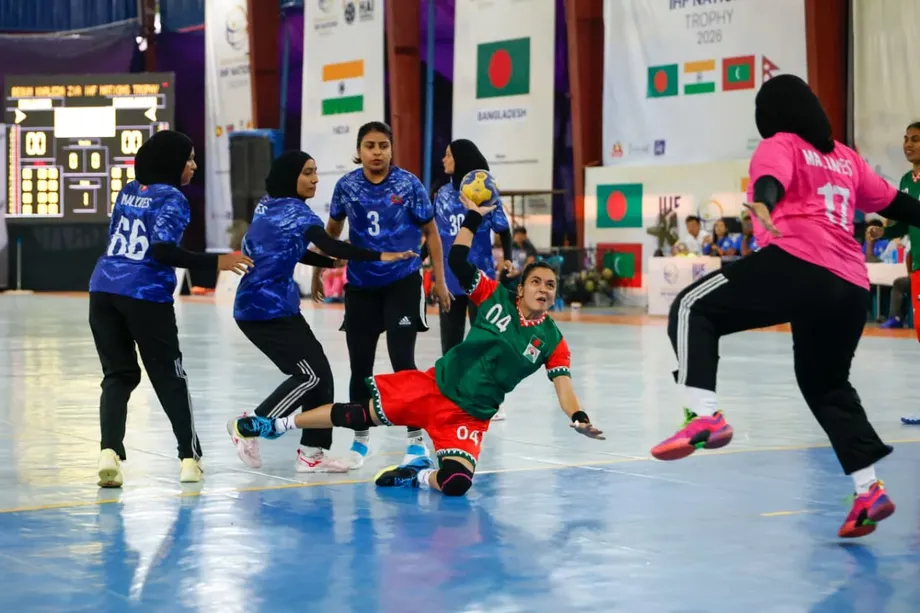
Bangladesh reached the Begum Khaleda Zia IHF Nations Trophy final with a 33-20 victory over Maldives in Dhaka on Tuesday, October 20, 2026, earning a second meeting with an Indian team that beat them by 34 goals earlier in the competition.
Contents
- Hosts secure another meeting with unbeaten India
- Early pressure gives way to Bangladesh's counterattacks
- Sanjida leads the scoring, with support across the team
- How the four teams reached the medal matches
- India's first victory sets a demanding standard
- Players point to a shortage of international matches
- Preparation time is another part of the gap
- A final built around a more competitive performance
- Key Points
Mosammat Sanjida Akter scored eight goals and was named player of the match at Shaheed Captain M Mansur Ali Handball Stadium in Paltan. The hosts needed to win their final league fixture to advance, and a commanding first half gave them enough room to withstand a stronger Maldives performance after the interval.
The final is scheduled for Thursday, October 22, at the revised starting time of 3pm. Maldives and Nepal will contest the bronze medal match on Wednesday, October 21, at 2pm. Both times are local to Bangladesh.
India completed the league stage with three wins from three matches, finishing with a 26-11 victory over Nepal on Tuesday. Bangladesh qualified with two victories and one defeat, having beaten Nepal by the same 33-20 score before losing 47-13 to India on Monday.
For coach Ana Alonso Fragua and her players, Tuesday's result kept the host country's title hopes alive. Thursday brings a much harder task: finding a way to compete with opponents whose speed, preparation and regular access to international matches have already made a substantial difference on court.
Early pressure gives way to Bangladesh's counterattacks
Maldives scored first and initially tried to put Bangladesh under pressure. Nepal's players, watching from the stands, welcomed the early breakthrough because a Bangladesh defeat would have kept their own route to the final open.
Bangladesh soon took control through quick counterattacks, moving rapidly from defending their own goal to attacking the other end. Their pace repeatedly opened up the Maldives defence, allowing the hosts to build a large advantage before the break.
The interval score was given as both 17-5 and 16-5, with Bangladesh's second half total correspondingly listed as 16 or 17 goals. The final score of 33-20 and Maldives' second half tally of 15 were consistent. Bangladesh therefore entered the break at least 11 goals ahead and finished with a winning margin of 13.
Maldives improved sharply after the interval, increasing their scoring from five goals in the first half to 15 in the second. Bangladesh continued scoring at almost the same rate as their opponents, keeping the visitors from closing the large gap built before halftime.
The match gave Bangladesh a needed response to Monday's heavy defeat. Instead of allowing that result to carry into the decisive league fixture, the hosts regained their attacking rhythm and secured the victory required to progress.
Sanjida leads the scoring, with support across the team
Sanjida's eight goals accounted for almost a quarter of Bangladesh's total of 33. Her attacks from the right were a central part of the hosts' success, and her contribution brought her the player of the match award.
Mishti Khatun and Sakiba Shammi scored four goals each, while captain Ismetara Nishi added three. Together with Sanjida, those four players supplied 19 goals, more than half of Bangladesh's total.
Maldives' Fathimath Juna scored nine goals, the highest individual tally identified in the match. She contributed 45 percent of her team's 20 goals, giving the visitors a major attacking outlet even as Bangladesh maintained control of the score.
Bangladesh will now need to carry more of that attacking production into the final. Against India in the league stage, the entire team managed only 13 goals, five more than Sanjida alone scored against Maldives.
How the four teams reached the medal matches
The four participating teams played a round robin, meaning each team met every other team once. Bangladesh's final league match decided whether the hosts would join India in the title contest.
India had already secured a place in the final after winning their first two matches. Bangladesh's victory over Maldives completed the pairing, while Nepal and Maldives were left to compete for third place.
The key results and remaining fixtures are:
- Opening match: Bangladesh beat Nepal 33-20.
- Monday, October 19: India beat Bangladesh 47-13 and secured a place in the final.
- Tuesday, October 20: Bangladesh beat Maldives 33-20 to qualify; India beat Nepal 26-11 to complete an unbeaten league campaign.
- Wednesday, October 21, 2pm: Maldives face Nepal in the bronze medal match.
- Thursday, October 22, 3pm: Bangladesh face India in the final.
Bangladesh's two victories each came by 13 goals. Their defeat by India came by 34, showing the sharp difference between the challenge posed by the finalists and the hosts' other league opponents.
India's first victory sets a demanding standard
India led Bangladesh 24-8 at halftime on Monday and went on to win 47-13. Bhawana scored 13 goals, matching Bangladesh's total, and received the player of the match award.
The scoring gap widened after the break. India added 23 goals in the second half while Bangladesh scored five. For the hosts, improving the final will require both slowing India's attacks and finding more reliable ways to score themselves.
India followed that performance with Tuesday's 26-11 win over Nepal. Their three victories made them the only unbeaten team entering the medal matches.
Bangladesh's players have acknowledged the strength of their opponents rather than promising a reversal. Sanjida said the team's aim was to give its best performance at home and continue fighting until the final minute. Sakiba Jannat Shammi also identified a competitive match against India as the immediate target, while expressing hope that Bangladesh could beat them in the future.
Players point to a shortage of international matches
Goalkeeper Sumaiya Banu identified limited international competition as a central problem after Monday's defeat. She said Bangladesh had faced a stronger, faster and more experienced Indian side, despite beginning the tournament with a convincing win over Nepal.
Sumaiya described the difference in opportunities to compete:
We all know that the Indian team has always been good, but our expectation was to play well. They participate in tournaments much more frequently. We don't get to play that many tournaments in Bangladesh.
She cited rankings of 10th for India and 48th for Bangladesh when discussing the gap between the teams. Sakiba similarly pointed to India's greater international experience and higher ranking, saying Bangladesh had fewer chances to play against other countries.
Sumaiya also described a long interruption in senior international competition following earlier appearances at the South Asian Games and Islamic Solidarity Games:
We play very few tournaments. Back in 2019, we had an international tournament, the SA Games, and then there was the Islamic Solidarity Games. After that, there haven't been any senior-level games, so we have a massive gap.
Regular matches give players repeated practice at making decisions against unfamiliar opponents under pressure. Sumaiya's concern is concrete: Bangladesh's players have fewer opportunities to develop that experience between tournaments.
Preparation time is another part of the gap
Fragua said India had trained intensively throughout the year, while Bangladesh had about three months of preparation for the competition. Sanjida described Bangladesh's usual preparation camps as lasting four to five months, compared with India's access to camps and training throughout the year.
Both descriptions point to Bangladesh preparing in shorter blocks before competitions. Sanjida said the team also played too few competitive matches, leaving players with less time to apply their training against opponents.
Fragua, the Spanish coach leading Bangladesh, identified physical condition and handball skills as areas where her players trailed India. After Monday's defeat, she said the difference in preparation between the two countries was reflected in the match.
Her stated aim was to improve over the coming months and years so Bangladesh could compete more closely with India. Thursday's final gives the team an immediate opportunity to measure progress within this tournament, although the wider changes she described depend on sustained training and more competition.
A final built around a more competitive performance
Bangladesh's recovery against Maldives has secured a place in the title match, but the players' own comments set a measured target for Thursday. Sanjida said they wanted to produce their best handball on home ground and uphold the country's standing through their performance.
Monday's score identifies the scale of the task. Bangladesh conceded 47 goals and scored 13 against India; against Maldives, they scored 33 and conceded 20. The final will demand a more effective performance at both ends of the court than the hosts managed in their first meeting with India.
Sumaiya had urged the team to turn its attention to the next match immediately after the Indian defeat:
Whatever happened today is in the past; we will focus on tomorrow's match. If we win tomorrow, we will definitely play in the final.
Bangladesh delivered that win on Tuesday. Their next assignment is to turn the confidence gained against Maldives into a stronger contest against the tournament's unbeaten side, with the trophy to be decided on Thursday afternoon.
Key Points
- Bangladesh beat Maldives 33-20 in Dhaka on October 20 to reach the IHF Nations Trophy final.
- Mosammat Sanjida Akter scored eight goals and was named player of the match.
- India enter the final unbeaten after three league victories, including a 47-13 win over Bangladesh.
- The final starts at 3pm Bangladesh time on Thursday, October 22.
- Maldives and Nepal contest bronze at 2pm on Wednesday, October 21.
- Bangladesh's players and coach identified limited international matches and shorter preparation periods as major challenges.