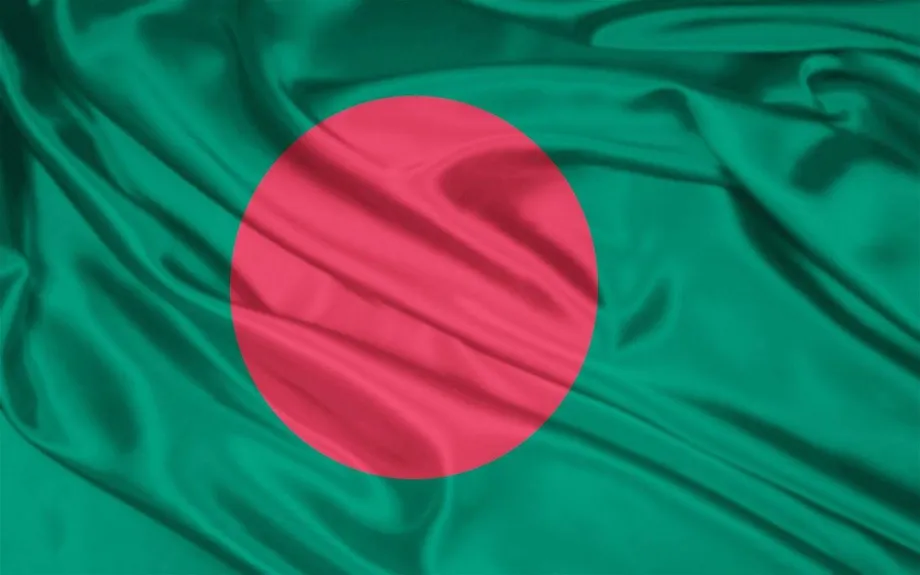
Fourteen players, five group opponents and a new global stage
Bangladesh will begin their first FIFA U-15 World Cup and Festival campaign against Wales in Baku on October 24, 2026, sending 14 locally developed players into a competition designed to keep every team playing until the final day. Coached by Akbar Hossain Ridon, Bangladesh face Burundi, Fiji, Indonesia, Portugal and Wales in Group G.
Contents
- Fourteen players, five group opponents and a new global stage
- How Bangladesh chose its squad
- What the five group games will test
- Smaller teams, different decisions
- Why teams keep playing after the group stage
- The dates families and supporters need
- A tournament built around repeated opportunities
- How Baku will handle hundreds of matches
- What follows the first edition
- Key Points
FIFA has scheduled matches from October 24 to 30, with 950 games across six matchdays. Each team is scheduled to play at least nine matches, giving Bangladesh repeated opportunities to compete internationally rather than face an early journey home after a few defeats.
The Football Association of Wales has confirmed the opening fixture for 9am in Baku, equivalent to 11am in Bangladesh. Its Group G announcement also says matches will be streamed on FIFA+.
Bangladesh Football Federation vice president Nasser Shahriar Zaheedi has placed dignity and fair play ahead of an exclusive focus on results. That approach fits a tournament where the opening group standings determine the level of opposition teams face next, while every squad continues competing through October 30.
For the players, the immediate challenge is practical: adapt to eight players per side, shorter matches and unfamiliar opponents, then recover quickly enough to perform repeatedly during a crowded week. For the federation, the campaign offers a chance to see how footballers developed in Bangladesh respond to teams drawn from several continents.
How Bangladesh chose its squad
BFF president Tabith Awal said the squad was selected from players at Bangladesh Krira Shikkha Protishtan, the national sports training institution, and last year's BFF U-15 National Championship. The federation chose homegrown footballers despite receiving interest from players living abroad.
The selection process began with a wider pool. Following the federation leadership change in October 2024, a nationwide tournament helped identify 25 promising players. During an earlier planning stage, U-15 committee chairman Manzurul Karim said those players would be considered alongside newcomers attending trials.
Interest from abroad included two players in the United States, others in Australia and the younger brother of Bangladesh international Jayan Ahmed. Karim said Jayan's brother, then described as 14 years old and 5 feet 10 inches tall, wanted to earn selection through trials. The eventual decision to field locally developed players means Bangladesh's campaign will draw on its domestic training and competition system.
Ridon has now been named as coach, following an earlier period when the coaching and management appointments were still awaiting a decision by Awal. Bangladesh head youth and development coach Gerard Jones also welcomed FIFA's confirmation of the competition on social media.
What the five group games will test
Group G brings Bangladesh together with opponents from Europe, Asia, Africa and Oceania. Wales and Portugal provide European opposition, Indonesia another Asian side, Burundi an African opponent and Fiji a team with recent experience in an Oceania development tournament.
Wales, coached by Drew Sherman, have selected players attached to clubs including Fulham, Brentford, Swansea City, Cardiff City and Tottenham Hotspur. Their published schedule puts all five group fixtures between October 24 and 26, including two games on October 25 and two on October 26.
Fiji arrive after recording two wins, two draws and one defeat at the OFC Under-15 Development Tournament in Auckland. They beat Tonga 4-0 and the Cook Islands 2-0, drew 2-2 with New Caledonia and 0-0 with Samoa, and lost 3-0 to Tahiti.
Fiji's 14 players include Jaiveer Sharma and Ryan Swami, who are based in New Zealand, alongside 12 locally based footballers. Rajneel Kumar and FIFA talent coach Talal Safar lead the coaching team, with Shamal Kumar working with the goalkeepers. Bangladesh will therefore encounter an opponent that has already tested its squad against several national teams in a short tournament.
Smaller teams, different decisions
Matches will last 40 minutes, divided into two halves of 20 minutes, with eight players on each side. The pitches measure 68 metres by 47 metres, while the goals retain their full dimensions of 7.32 metres by 2.44 metres.
FIFA's tournament format explainer, published on October 1, sets out further changes: kick-ins replace throw-ins, substitutions are unlimited and offside applies only beyond marked lines 14 metres from each goal line. Players must have been born in 2011 or 2012.
Kick-ins mean a player restarts play with a foot rather than throwing the ball from the touchline. Restricting offside to the area near goal changes where attackers can position themselves. Unlimited substitutions allow coaches to rotate players repeatedly as the matches progress.
FIFA says the smaller teams and playing areas are intended to give each player more involvement with the ball and more decisions to make. Bangladesh's preparation must therefore cover the rules as well as fitness and technique. Players will have less time to settle into individual matches, while coaches will have frequent opportunities to change the team on the pitch.
Why teams keep playing after the group stage
The opening round is called a qualification stage, but its purpose is to sort teams into the next phase. Teams play their group opponents in a round robin, meaning each side meets every other side in its group. Bangladesh's six team group gives them five opening matches.
Results then place countries into six performance tiers. Each tier has its own winner, and the winner of Tier A becomes the inaugural FIFA U-15 World Cup and Festival champion. All teams continue to the final matchday, with four or five further matches planned in the second phase.
FIFA formed the opening groups using a ranking that combines senior national team performance with recent youth participation and results. Each group includes teams from at least three continental confederations. The first stage offers varied opposition; the second is designed to match teams more closely by their performances in Baku.
Bangladesh can therefore use the opening games to measure themselves against a broad range of opponents, then face another series of matches at the level their results determine. Across nine or ten games, a team would play 360 or 400 minutes of scheduled football, calculated from the 40 minute match length.
The dates families and supporters need
FIFA's match programme runs from October 24 to 30, while earlier announcements described a broader tournament period of October 22 to 31. The confirmed Bangladesh opener falls on October 24; the other four Bangladesh group kickoff times have not been specified here.
The published schedules for Wales and Benin help map the week. Group matches take place over the opening three days, October 27 is a general rest day, and the second phase runs from October 28 to 30.
- December 2025: The FIFA Council approved new U-15 festival tournaments for boys and girls.
- October 24, 2026: Bangladesh open against Wales at 9am in Baku, or 11am in Bangladesh.
- October 24 to 26: Teams play the opening group stage.
- October 27: A general rest day is scheduled.
- October 28 to 30: Teams compete in six performance tiers.
- October 30: Tier finals are scheduled at Crystal Hall.
Other countries face similarly concentrated schedules. Nigeria, coached by Patrick Bassey, are scheduled to play twice on October 25 and twice on October 26 against a group containing South Sudan, Jordan, Gambia, Cyprus and Pakistan. Benin also have five group games in three days, facing Qatar, the Cook Islands, Hong Kong, Italy and Turkmenistan.
A tournament built around repeated opportunities
Arsène Wenger, FIFA's Chief of Global Football Development, has described regular competition against varied opponents as the central reason for creating the event. In FIFA's explanation of the format, he connected the number of matches directly to player development.
At this age, the most important thing is to play. Young players need meaningful matches, different opponents and different football experiences in order to develop.
Wenger also addressed the unequal opportunities available to children in different football systems.
Talent exists everywhere, but the opportunities available to young players are not always the same. This tournament gives players from across the world the chance to compete, to learn and to grow.
Bangladesh's emphasis on fair play and dignified representation fits that purpose. Results still decide the tiers and championship, but a difficult opening round is followed by more football. Coaches can assess how players respond to defeat, adjust to different styles and apply lessons in their next matches.
Pakistan's selection illustrates another route into the event. Its 14 players were chosen through performances in the PFF National U-17 Championship 2026, with coach Ihsanullah Khan scheduled to lead the delegation to Baku on October 20. Bangladesh and Pakistan will both bring players identified through domestic competitions into a much wider international setting.
How Baku will handle hundreds of matches
FIFA's event announcement identifies the Hovsan Competition Complex as the main venue, with capacity for 20 matches to take place simultaneously and up to ten games per pitch each day. Crystal Hall is scheduled to host the opening match and the tier finals.
FIFA's October 1 explainer gives a participation figure of 190 member associations, while the Football Association of Wales lists 191 countries. Other announcements have used figures ranging from 189 to 194. FIFA places the event's scale at about 3,000 players, coaches and officials, with 950 matches across six matchdays.
Each delegation may include 14 players and up to six staff members. Approximately 250 volunteers are expected to help deliver the tournament, through a programme organised by FIFA and the Association of Football Federations of Azerbaijan.
The travel demands are substantial for some teams. Belize selected 14 players from more than 30 candidates and planned a journey lasting three days to reach Azerbaijan. Some squad members will be travelling abroad for the first time. Trinidad and Tobago coach Randolph Boyce is expected to miss at least four matches with his school team, St Benedict's, while taking charge of his country's squad in Baku.
What follows the first edition
FIFA plans the first girls' edition for 2027, followed by separate annual boys' and girls' competitions from 2028. All 211 member associations will be invited to enter both categories from that point.
Azerbaijan will also co-host the FIFA U-20 World Cup in 2027. For Bangladesh's current squad, however, the immediate opportunity is a week of matches against players of the same eligible birth years, under conditions designed to give them repeated involvement.
Other countries are drawing on different development systems. New Zealand's squad includes six players from Wellington Phoenix, three from Auckland United, two from Christchurch United and one each from three other clubs. Coached by Cam Grieve, they face Madagascar, Mozambique, Puerto Rico, Somalia and Venezuela in Group T.
Bangladesh will bring its own domestic pathway to that gathering. The selection from the national sports institution and the BFF youth championship gives Ridon a specific group to assess: players trained at home, now asked to adapt to international opposition. Their campaign begins with Wales on October 24 and continues, whatever their opening results, through the final matchday.
Key Points
- Bangladesh will send 14 players, coached by Akbar Hossain Ridon, to Baku for matches from October 24 to 30, 2026.
- The opening game against Wales is scheduled for October 24 at 11am Bangladesh time.
- Group G also includes Portugal, Indonesia, Burundi and Fiji.
- Matches use eight players per side, two halves of 20 minutes, unlimited substitutions and modified restart and offside rules.
- Teams continue into six performance tiers, with at least nine matches scheduled for each team and the Tier A winner crowned champion.
- Matches will be streamed on FIFA+, according to the Football Association of Wales.
- A girls' edition is planned for 2027, with separate annual boys' and girls' competitions from 2028.