One charge remains, with a November defense hearing ahead
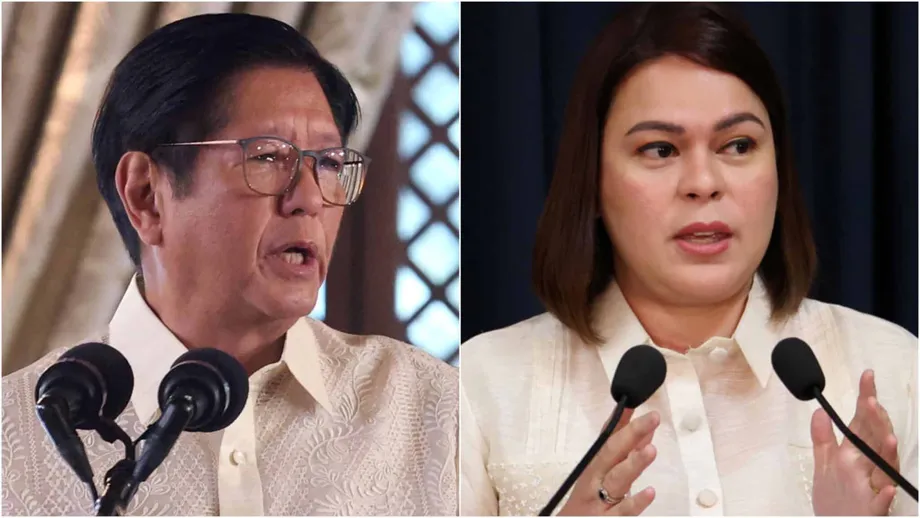
Philippine Vice President Sara Duterte's impeachment trial now rests on an allegation that she and her husband, lawyer Manases Carpio, held P817.87 million in unexplained or undeclared assets and income from 2022 to 2025. Prosecutors face an October 23, 2026 deadline to formally submit their evidence, before the defense is expected to begin presenting its case on November 9.
Contents
- One charge remains, with a November defense hearing ahead
- Why prosecutors chose a single article
- What makes up the P817.87 million estimate?
- Corporate ownership becomes a central dispute
- Tax records bring other companies into focus
- Why the new property findings arrived too late
- Withdrawn allegations may continue elsewhere
- Fairness objections and the Corona comparison
- Will Duterte testify, and when could the trial end?
- The dates that shape the next stage
- Key Points
House prosecutors have withdrawn three other articles concerning alleged misuse of P612 million in confidential funds, bribery of Department of Education officials and grave threats. The remaining Article II covers alleged unexplained wealth, inaccurate financial declarations and prohibited business interests. The Senate impeachment court has yet to decide the charge.
Duterte denies wrongdoing and says the prosecution has failed to establish an impeachable offense. Her lawyers challenge the assumptions behind financial forensic analyst Alexander Cabrera's calculations, particularly his treatment of corporate income and its attribution to Duterte and Carpio.
The immediate contest concerns which documents the court will admit. Prosecutors must identify the records they want senator judges to consider and explain their purpose. The defense then has 10 days to comment before the court rules on admissibility.
New allegations about properties in Davao City have added another dispute. National Bureau of Investigation Director Melvin Matibag says investigators matched properties with Duterte's financial declarations and land records. Duterte denies owning the properties shown. Lead House prosecutor Gerville "Jinky" Luistro said on October 20 that the findings arrived after the prosecution had completed its evidence presentation, leaving other agencies to pursue them.
Why prosecutors chose a single article
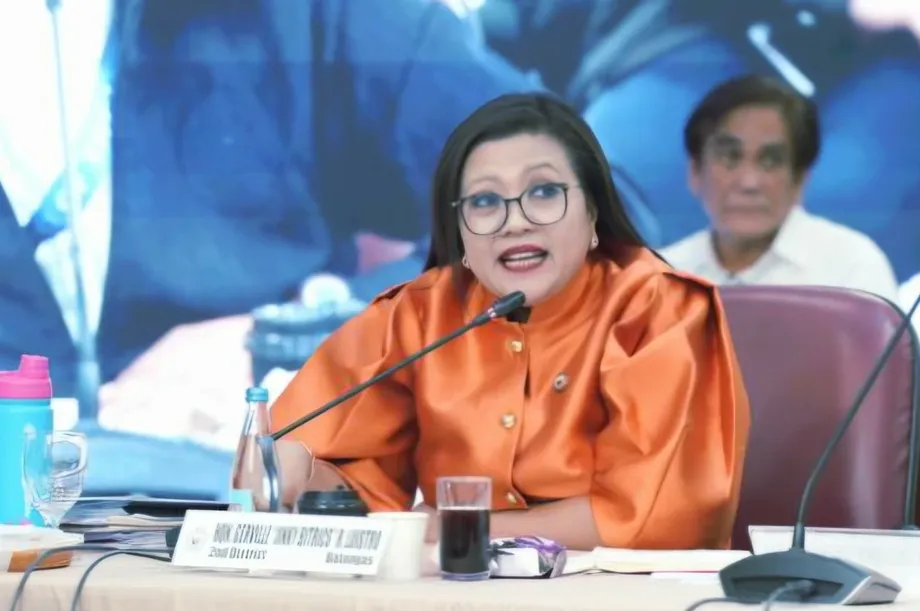
Luistro, a Batangas representative, says concentrating on Article II narrows the documents, objections and arguments the Senate must assess. The prosecution rested on October 13 after using 39 of its 62 allotted trial days, leaving 23 unused.
The decision followed the withdrawal of three articles, which the Senate impeachment court accepted on October 13. Prosecutors had already notified the court on October 6 that they intended to withdraw the bribery allegation.
Luistro said the prosecution considered the financial evidence strong enough to support removal for culpable violation of the Constitution and betrayal of public trust. She also acknowledged the consequence of relying on one article: losing it would end this impeachment process.
House prosecutor Terry Ridon, a Bicol Saro representative, expressed the panel's position at a press conference:
We will rise or fall on the basis of unexplained wealth.
Prosecutors presented 11 of 27 listed witnesses on confidential funds and three of 10 on grave threats. None of the five listed bribery witnesses testified. Luistro said about 32 witnesses would no longer be called following the narrower approach.
The defense gives the withdrawals a different meaning. Duterte spokesperson Salvador Paolo Panelo Jr. said in a statement:
The withdrawal is an admission that the allegations lacked basis from the very beginning.
What makes up the P817.87 million estimate?
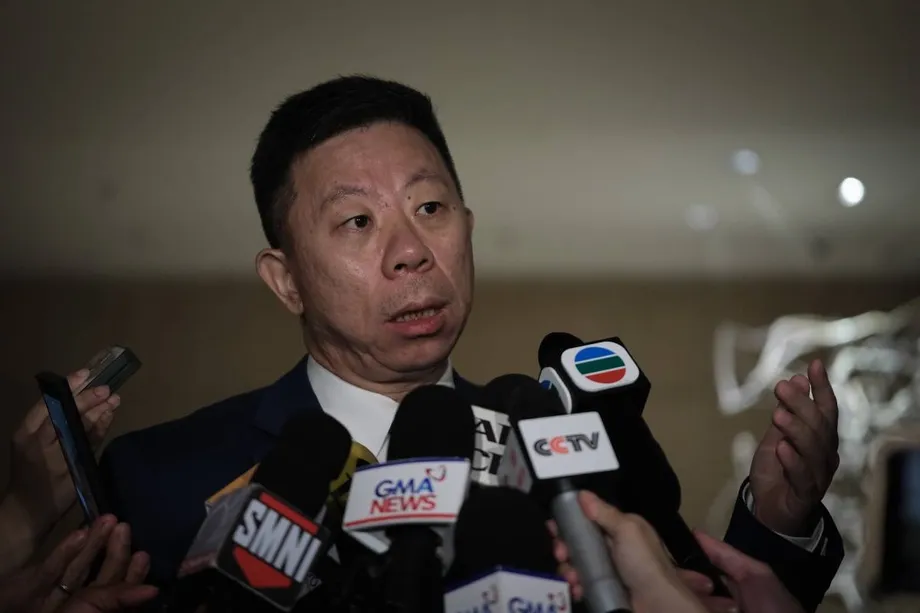
Cabrera, a lawyer and accountant who is chairman emeritus of Isla Lipana & Co., PwC's Philippine member firm, testified on October 9 about records obtained through court subpoenas. His assessment drew on banking, tax, corporate and Anti-Money Laundering Council records, excluding documents held by Duterte and Carpio themselves.
His P817.87 million calculation combined four categories: bank balances allegedly missing from financial declarations, undeclared property, deposits he classified as income beyond declared earnings, and a share of allegedly undeclared corporate income.
Duterte declared a net worth of P98.66 million in 2025. Cabrera's estimate is about 8.3 times that figure, although his calculation combines assets and income across four years, while net worth measures assets minus debts at a particular point.
Cabrera said allegedly undeclared bank balances ranged from P23.17 million to P80.70 million annually, mostly in Carpio's accounts. He identified P174.96 million in deposits that he counted as income from 2022 to 2025, compared with P63.11 million declared in the couple's tax returns, a difference of P111.85 million.
The analyst also cited 17 insurance policies, firearms, real estate and business interests among allegedly undeclared property. He described P96 million in manager's checks moving through the couple's joint account over several years, followed by P80 million placed in four life insurance policies. He said he counted each asset once and excluded most dollar accounts.
During questioning on October 12, Cabrera said the alleged total could reach about P1.5 billion under less conservative assumptions involving financial transactions and corporate income. The prosecution has used that higher figure alongside his initial P817.87 million estimate.
Anti-Money Laundering Council Executive Director Ronel Buenaventura had testified on October 6 about approximately P4.4 billion in covered and suspicious transactions involving the couple from 2007 to 2025. Covered transactions meet reporting thresholds, while suspicious transactions are flagged for features requiring examination. That figure measures financial activity over a much longer period; Cabrera's estimate concerns alleged unexplained or undeclared wealth during 2022 to 2025.
Corporate ownership becomes a central dispute
Gencorp is at the center of the disagreement over how corporate records should affect Duterte's personal financial position. Cabrera alleged that the company left more than P1 billion in bank inflows off its books from 2023 to 2025. He attributed 20% of its allegedly undeclared income to Duterte, using her stake in Metro City Chow Foods Corporation, which shares directors with Gencorp.
Cabrera said Duterte listed a Gencorp shareholding in her statement of assets, liabilities and net worth, or SALN, although the company's corporate filings did not name her. A SALN is a public official's declaration of property, debts, net worth and relevant business interests.
The defense disputes the corporate income calculation. During testimony by a Bureau of Internal Revenue official, defense lawyers established that corporations have legal identities separate from their shareholders. A company's revenue belongs to the company; the contested issue is how its records relate to the couple's ownership, income and disclosure duties.
Duterte addressed the franchise allegation in an October 17 statement:
I do not own a Jollibee franchise or any other franchise. I previously invested in a company that is part of a legitimate business organization owned and operated by individuals with an established reputation for integrity and good standing.
Cabrera testified that Gencorp operated five Jollibee branches in Davao City. Duterte said she did not own, manage or operate the individual businesses or franchises within the organization in which she had invested. She also warned that accusations could damage legitimate businesses.
Davao City Mayor Sebastian Duterte testified that the city awarded Gencorp 19 contracts worth about P33.2 million. He said he would not have allowed them had he known of his sister's stake. Luistro says Duterte acknowledged being a shareholder, while Ridon has rejected her explanation about the corporate structure.
Tax records bring other companies into focus
Gencorp's financial filings drew questions from senator judges. Senator Panfilo Lacson cited P520.67 million in reported sales for 2025 alongside P777,093 in income tax. Senator Francis Pangilinan questioned why bank records showed P46.19 million at the end of 2023 while audited statements showed P924,695.
Cale 88 Foods Corporation, a banana chip exporter linked to Carpio, also appeared in Cabrera's analysis. He alleged that it understated revenue by an annual average of 51% and received P193.95 million in remittances from Chinese companies, representing more than 80% of its foreign remittances.
Senator Risa Hontiveros said her team's research linked a Ukrainian remitter to a company under investigation in Kyiv for fraud and money laundering. Senator Joel Villanueva questioned how Cale 88 reported P150 million in sales in 2024 with only two employees on record.
A Bureau of Internal Revenue official confirmed audits of Duterte and Carpio under authorizations covering up to 20 years of taxes, as well as an audit of Cale 88. The agency will examine possible undeclared sales, which could lead to additional tax assessments or criminal proceedings if tax evasion is established.
Duterte said on October 20 that the government was shifting its case toward a national security narrative. She disputed allegations involving Chinese business funding, a drug seizure in Laos and a purported Mindanao-Davao conspiracy. She also said a purported Laos travel authorization appeared fabricated and had never been confirmed by the Office of the President.
Why the new property findings arrived too late
Matibag publicly presented property findings on October 12, the day Cabrera completed his testimony. Prosecutors rested the following day. On October 19, Ridon said the panel was examining whether the findings could enter its formal evidence submission; Luistro said on October 20 that the evidence presentation had already concluded.
The NBI director presented photographs of two properties in Barangay Catigan, Davao City, which he identified as items six and seven in Duterte's 2025 SALN. He said investigators checked Land Registration Authority records and visited the locations.
The bureau described a mansion, swimming pools, a helipad and an internal road network on land declared as agricultural. It valued one property, declared at about P890,000, at between P14 million and P61 million based on appraisals and inspections. The NBI subsequently identified three additional properties with alleged declaration discrepancies.
Duterte denied owning the properties shown and accused the bureau of public deception. Prosecutors Joel Chua and Luistro demanded fuller explanations and argued that the NBI's description conflicted with the family's image of simple living.
The NBI inquiry followed dismissed policeman Rodulfo Gracioso Jr.'s allegation that he delivered cash to Sara Duterte, Representative Paolo Duterte and former president Rodrigo Duterte on instructions from former House speaker Lord Allan Velasco. Duterte and Velasco's camp denied those claims.
Withdrawn allegations may continue elsewhere
Luistro says evidence concerning the withdrawn articles can be shared with government agencies for possible criminal cases, subject to legal requirements. The prosecution is prepared to provide trial records and material gathered by the House Committee on Good Government and Public Accountability.
The lead prosecutor said the panel would wait for an Ombudsman subpoena before handing over evidence concerning graft and bribery. The Office of the Ombudsman investigates alleged misconduct by public officials and can pursue cases when the legal requirements are met.
A grave threats case brought by the Department of Justice is pending before the Quezon City Regional Trial Court. The court found probable cause to hold Duterte for trial over alleged threats against President Ferdinand Marcos Jr., First Lady Liza Araneta-Marcos and former House speaker Martin Romualdez. Probable cause is the preliminary legal threshold for proceeding to trial; guilt is decided through the trial itself.
Impeachment and criminal proceedings address different consequences. The Senate case concerns whether Duterte should be removed from office. Criminal courts consider alleged crimes and the penalties attached to them. Luistro says the NBI property findings can be pursued through the Justice Department and Ombudsman even though the prosecution's impeachment evidence presentation has ended.
Fairness objections and the Corona comparison
Defense counsel Sheila Sison objected that withdrawing allegations after publicly presenting evidence would leave Duterte without an equivalent opportunity to answer them in the impeachment court. Prosecutors countered that defense lawyers had cross examined their witnesses extensively.
Presiding officer Francis Escudero lifted the restriction on public discussion of the withdrawn articles, known as the sub judice rule. The ruling was subject to challenge by senator judges. The defense may also seek a mistrial or file a demurrer to evidence, asking the court to dismiss the remaining case because the prosecution's evidence is insufficient.
The Senate court cited the 2012 impeachment of chief justice Renato Corona when allowing the withdrawals. Prosecutors in that trial dropped five of eight articles after presenting evidence on three. Corona was convicted 20-3 on May 29, 2012, for incomplete SALN disclosures, having acknowledged undeclared deposits of about $2.4 million and P80 million.
House prosecutor Joel Chua has invoked Corona's conviction in arguing the Duterte case. The comparison places financial disclosure at the center of the prosecution's argument, while Duterte's lawyers contest the financial analysis and attribution of corporate income.
Chua also questioned whether gifts could explain disputed assets. Republic Act No. 6713 prohibits gifts connected to an official's duties or transactions affected by the office. Legitimate gifts from family members are among gifts the law permits, making their origin and circumstances relevant to any explanation.
Will Duterte testify, and when could the trial end?
Senate court spokesman Reginald Tongol says Duterte would need no subpoena if her defense voluntarily called her to testify. Her lawyers have given no formal notice that she will appear as a witness. Senate rules allow her to participate personally or through counsel.
A Pulse Asia survey conducted from September 17 to 24 found that 51% of Filipino adults wanted Duterte to testify, while 34% opposed it, 14% were undecided and 1% declined to answer. The survey interviewed 2,400 adults in person and had a margin of error of two percentage points at 95% confidence.
Support for testimony reached 66% in the National Capital Region and 61% elsewhere in Luzon. The Visayas split evenly at 43% for and against, while Mindanao recorded 32% in favor and 61% opposed. On the wealth allegations, 29% thought they could be true in September, compared with 27% in July; 30% considered them untrue, down from 38%, while uncertainty rose from 32% to 39%.
Senate President Sherwin Gatchalian hopes to finish the trial before the end of 2026, depending on the defense witness list. He said political uncertainty could affect business investment. Makati Business Club chairman Edgar Chua also urged a prompt but fair conclusion as senators review the proposed P7.2 trillion national budget for 2027.
The current trial follows the archiving of impeachment proceedings in August 2025 after the Supreme Court invalidated the earlier process. Complaints began in December 2024, the House first impeached Duterte in February 2025, and fresh proceedings followed in 2026.
The dates that shape the next stage
The trial opened at 2 p.m. on July 6. Its next phase will move from the prosecution's financial claims to defense objections, admissibility decisions and, if proceedings continue as scheduled, defense testimony.
- October 6: Prosecutors notified the court of their intention to withdraw the bribery article.
- October 9 and 12: Cabrera presented his financial analysis and completed his testimony.
- October 13: Prosecutors rested and withdrew three articles, leaving Article II.
- October 23: Deadline for the prosecution's formal offer of evidence.
- Early November: Defense comments are expected around November 3 or 4, following the 10 day response period.
- November 9: Proceedings resume at 10 a.m., with the defense expected to begin its presentation.
- November 10, 12, 13, 19 and 20: Full day hearings are scheduled.
- November 11 and 23: Additional proceedings are scheduled, with November 23 limited to 10 a.m. to 2 p.m.
The court must first settle which prosecution documents become evidence for its decision. The defense's witness list and procedural motions will then help determine whether Gatchalian's target of finishing before the end of the year is achievable.
Key Points
- Article II is the sole remaining impeachment charge, covering alleged unexplained wealth, financial disclosure violations and prohibited business interests.
- Cabrera estimated P817.87 million in alleged unexplained or undeclared assets and income, potentially reaching P1.5 billion under different assumptions.
- Duterte denies wrongdoing, and her lawyers dispute the analyst's methods and attribution of corporate income.
- New NBI property allegations are contested and arrived after the prosecution completed its evidence presentation.
- The formal evidence deadline is October 23, and hearings resume November 9.
- Withdrawn allegations may be pursued by other authorities through separate legal proceedings.