A personal landmark in a fight to save the match
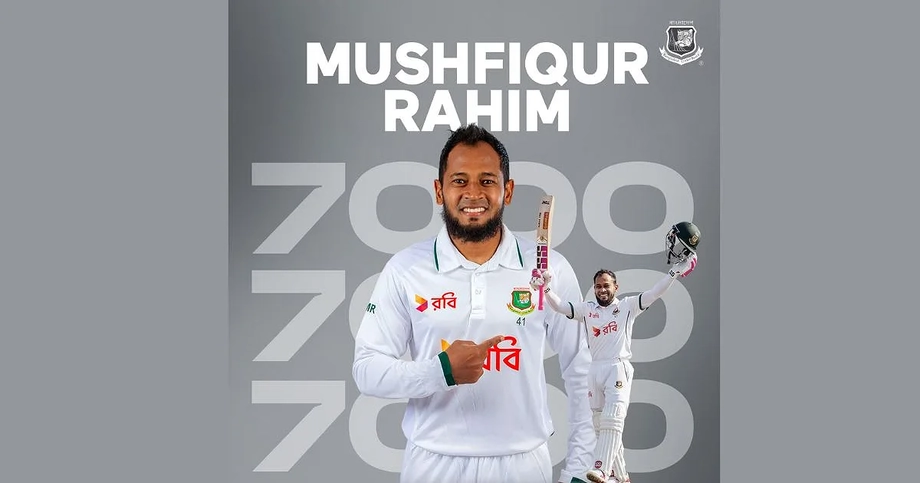
Mushfiqur Rahim became the first Bangladesh batter to reach 7,000 Test runs during the final day against West Indies in Sylhet, then helped his team secure a draw with 49 from 123 balls. Bangladesh finished on 184 for four while chasing 369, preventing a series whitewash, although West Indies won the two matches 1-0.
Contents
- A personal landmark in a fight to save the match
- How nine runs completed the journey to 7,000
- How Bangladesh kept West Indies from a clean sweep
- How far ahead is Mushfiqur?
- A career that gathered pace over time
- The milestones behind the record
- Hridoy takes one record while Mushfiqur extends another
- Test cricket remains Mushfiqur's international focus
- Key Points
The 39-year-old reached the landmark shortly after lunch when a single took his second innings score to nine. He initially appeared unaware of the achievement, acknowledging it after teammates stood to applaud him from the dressing room. He finished the match with 7,040 career runs in 107 Tests.
Mushfiqur had returned after a finger injury kept him out of the opening Test in Mirpur. His comeback brought both a national record and a substantial contribution under pressure: Bangladesh had slipped to 40 for two before he and Towhid Hridoy built a partnership of 135.
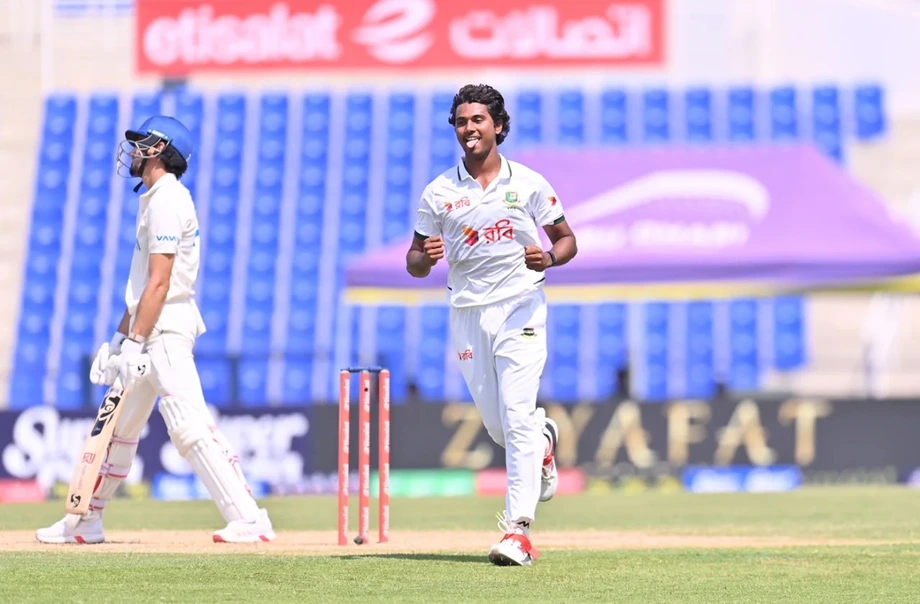
Hridoy supplied the other major achievement of the match. His unbeaten 242 in Bangladesh's first innings surpassed Mushfiqur's national record of 219 not out. He followed it with 82 in the second innings and received the Player of the Match award.
The match was played from November 5 to 9, 2026. The milestone's bowler has conflicting details. Roston Chase was widely identified as the bowler for the landmark single, although Jomel Warrican was also named. The shared central detail is that Mushfiqur reached 7,000 when his score reached nine after lunch.
For Bangladesh, the day brought two connected stories: their most experienced Test batter extended his career lead, while Hridoy produced the biggest individual innings in the country's Test history.
How nine runs completed the journey to 7,000
Mushfiqur entered the Sylhet Test with 6,957 runs, leaving him 43 short of the landmark. He scored 34 in the first innings, taking his career total to 6,991. That left nine to find when Bangladesh batted again.
His second innings eventually lasted 123 balls and ended one run short of a half century. He was bowled by Shamar Joseph. Those 49 runs took him to 7,040, exactly 40 beyond the milestone he had crossed earlier in the day.
Cricket records count runs across a player's entire Test career, rather than within a single series or season. A batter can have two innings in a Test, which explains why Mushfiqur could complete the same career milestone across Bangladesh's two turns at batting in Sylhet.
His record before the match stood at 6,957 runs from 195 innings in 106 Tests, with an average of 39.08. The two innings in Sylhet took his appearance count to 107 Tests and his batting innings count to 197. Batting average means total runs divided by the number of times a batter has been dismissed, so an unbeaten innings affects the calculation differently from one that ends with a wicket.
How Bangladesh kept West Indies from a clean sweep
West Indies made 356 in their first innings, and Bangladesh replied with 386. Hridoy's unbeaten double century helped the hosts establish a lead of 30 before the visitors batted again.
West Indies then made 398 for six declared. A declaration means the captain voluntarily ends the innings, usually to leave time to dismiss the opposition. Subtracting Bangladesh's lead of 30 left the hosts needing 369 to win.
Bangladesh's position became difficult at 40 for two. Mushfiqur and Hridoy then added 135 for the third wicket, moving the score to 175 before their partnership ended. Their stand accounted for nearly three quarters of Bangladesh's eventual 184.
Mushfiqur faced 123 deliveries for his 49, while Hridoy made 82. In a final innings where surviving mattered alongside scoring, their time at the crease helped Bangladesh reach the close with six wickets still standing.
Bad light ended play at 184 for four. A Test can finish as a draw when the allotted playing time expires without either side winning. West Indies therefore kept their victory from the opening match and took the series 1-0 rather than 2-0.
How far ahead is Mushfiqur?
Mushfiqur finished Sylhet 1,747 runs ahead of Mominul Haque, Bangladesh's second highest Test scorer on 5,293. At the moment Mushfiqur reached exactly 7,000, the gap had been 1,707 runs.
Bangladesh's leading career totals at the end of the match were:
- Mushfiqur Rahim: 7,040 runs.
- Mominul Haque: 5,293 runs.
- Tamim Iqbal: 5,134 runs.
- Shakib Al Hasan: 4,609 runs.
- Litton Das: 3,557 runs.
Mominul's 5,293 runs came from 82 Tests and 152 innings at an average of 37.53. He missed the Sylhet match under concussion protocol. Tamim, the former opener, accumulated his 5,134 runs across 70 Tests and 134 innings.
Mushfiqur also leads Bangladesh in Test centuries with 14, ahead of Mominul's 13 and Tamim's 10. A century is an innings of at least 100 runs. His record also includes 30 half centuries, compared with Mominul's 28 and Tamim's 31.
The figures show two parts of Mushfiqur's achievement. He has played more Tests than any other Bangladesh cricketer, and he has used that extended career to build the country's largest collection of Test runs and hundreds.
A career that gathered pace over time
Mushfiqur made his Test debut at Lord's in 2005, beginning as a wicketkeeper and a batter positioned in the lower middle order. Players batting there often arrive after several wickets have fallen, sometimes with fewer established teammates left to support them.
His first 1,000 Test runs took 20 matches. His responsibilities grew, including becoming Bangladesh captain in 2011, and his batting became a more substantial part of the team's performance.
The latest thousand came in 25 innings, from 6,000 to 7,000. That is a gain of 1,000 career runs over those innings, or 40 per innings. This is a different measure from batting average, which accounts for dismissals rather than simply counting innings.
Mushfiqur had already been Bangladesh's first batter to reach 5,000 Test runs in 2022 and 6,000 in 2024. By reaching 7,000, he extended a sequence of national firsts rather than passing a landmark another Bangladesh player had already set.
The milestones behind the record
Mushfiqur's progression stretches across more than two decades, from his debut in England to the latest achievement in Sylhet. Several dates mark how his place in Bangladesh cricket developed:
- 2005: Made his Test debut at Lord's.
- 2011: Became Bangladesh captain.
- 2013: Scored Bangladesh's first Test double century at Galle.
- 2018: Made an unbeaten 219 against Zimbabwe, setting the national individual Test record.
- 2022: Became the first Bangladesh batter to reach 5,000 Test runs.
- 2024: Became the first Bangladesh batter to reach 6,000 Test runs.
- November 2025: Became Bangladesh's first player to appear in 100 Tests, scoring 106 against Ireland in Dhaka.
- Sylhet, his 107th Test: Passed 7,000 runs and finished the match on 7,040.
His century in his 100th Test added another achievement to the appearance record. Scoring 106 against Ireland placed him among players, including Ricky Ponting, Joe Root and Javed Miandad, who made a century in that particular career appearance.
Hridoy takes one record while Mushfiqur extends another
Hridoy's unbeaten 242 exceeded Mushfiqur's previous national best of 219 not out by 23 runs. Both innings ended with the batter unbeaten, meaning neither player was dismissed before the team's innings finished.
His contribution in Sylhet went well beyond that first innings record. Adding 82 in the second gave Hridoy 324 runs for the match, making him the first Bangladesh batter to score 300 runs in a Test.
Hridoy accounted for 242 of Bangladesh's 386 first innings runs, nearly 63 percent. Across both innings, his 324 represented about 57 percent of the team's combined 570 runs. Those figures explain why he received the Player of the Match award.
Mushfiqur retained his career records for Bangladesh even as Hridoy moved above him for the highest individual innings. Their partnership in the final innings brought the two achievements together in practical terms: the new record holder and the career run leader helped prevent another defeat.
West Indies spinner Warrican received the Player of the Series award after taking 16 wickets across the two Tests. He took four for 104 and three for 44 in Sylhet. His award reflected the visitors' success across the series, while Hridoy's recognised his performance in Sylhet.
Test cricket remains Mushfiqur's international focus
Mushfiqur has retired from both shorter international formats. He finished with 6,697 runs in One Day Internationals and 1,495 in Twenty20 Internationals, leaving Test cricket as the international format he continues to play.
His 7,040 Test runs now exceed his ODI total by 343. Together, the three career totals amount to 15,232 international runs, with the Test figure still able to grow.
Sylhet showed what his continuing presence can mean for Bangladesh. Returning from injury, he supplied 34 in the first innings and 49 in the second, then spent more than 20 overs' worth of deliveries at the crease during the effort to save the match.
Bangladesh ended the series without a win, but avoided losing both Tests. Mushfiqur left with a new career milestone, Hridoy with a national innings record, and West Indies with the series trophy.
Key Points
- Mushfiqur Rahim became the first Bangladesh batter to reach 7,000 Test runs when his second innings score reached nine in Sylhet.
- He finished with 7,040 runs in 107 Tests, 1,747 ahead of Mominul Haque.
- His 49 from 123 balls helped Bangladesh draw at 184 for four while chasing 369.
- West Indies won the two Test series 1-0.
- Towhid Hridoy scored 242 not out and 82, breaking Bangladesh's individual Test innings record and winning Player of the Match.
- Jomel Warrican took 16 wickets across the series and received Player of the Series.