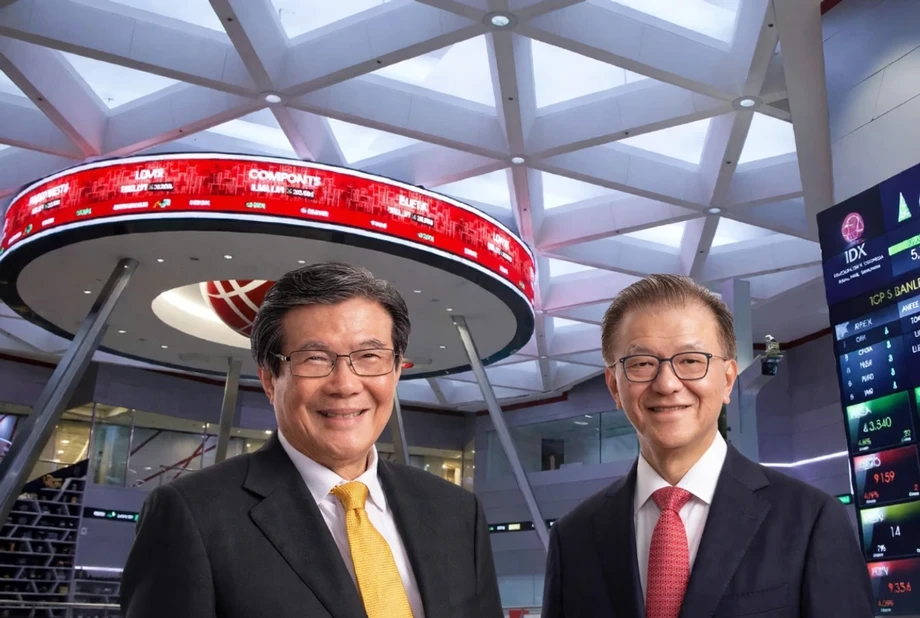
A record penalty built from three separate cases
Indonesia's Financial Services Authority (OJK) has announced Rp2.1 trillion in administrative fines connected to trading and share offering violations involving three prominent listed companies. OJK Chair Friderica Widyasari Dewi described the total as the largest fine in the history of Indonesia's capital market. The penalties were announced on 16 October 2026 and involve shares of PT Dian Swastatika Sentosa Tbk (DSSA), PT Barito Renewables Energy Tbk (BREN) and PT Petrindo Jaya Kreasi Tbk (CUAN).
Contents
- A record penalty built from three separate cases
- Why OJK says the investigations came first
- What standalone status would change
- The reforms behind the enforcement message
- Prabowo enters the discussion as FTSE Russell takes a different line
- Why Prajogo Pangestu and Franky Widjaja are in the spotlight
- The projects and business records behind the names
- What changes for investors and listed companies
- The dates that now matter
- Key Points
The total combines three cases against named parties, rather than one penalty charged jointly to the three issuers:
- PT Sinar Mas Tunggal received a Rp1.5 trillion fine in the DSSA case. OJK examined DSSA share trading during several periods from January 2024 to February 2026 over suspected violations of prohibitions on market manipulation.
- Anbo Holdings Ltd received a Rp500 billion fine concerning violations in BREN's public offering process.
- Tigonis Capital Pte Ltd received a Rp100 billion fine concerning violations in CUAN's public offering process.
The DSSA matter therefore accounts for Rp1.5 trillion of the Rp2.1 trillion total, or about 71 percent. The BREN and CUAN matters make up the remaining Rp600 billion. There is also a practical distinction between the cases: DSSA concerned trading in existing shares, while BREN and CUAN involved processes through which shares were offered to the public.
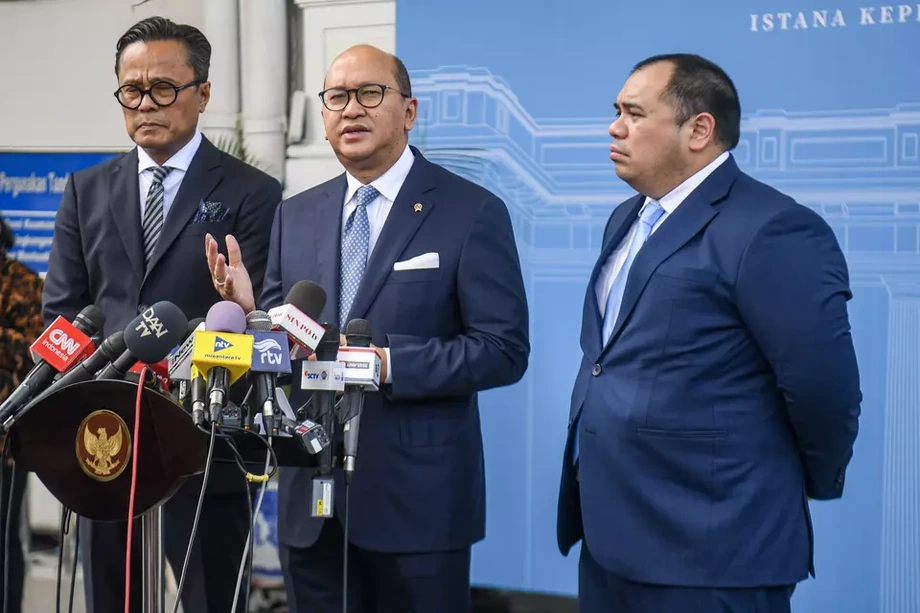
Speaking at the CORE Economic Outlook 2027 event in Jakarta, Friderica said OJK and market organizations were accelerating reforms through greater transparency, better governance, stronger market integrity and law enforcement. She presented the program as a commitment for the long term, not merely an answer to demands from index providers. She also made clear that financial penalties would not be the limit of enforcement.
Law enforcement will continue to be carried out firmly and impartially, including through criminal proceedings.
Administrative fines are penalties imposed by a regulator. Criminal proceedings are a separate legal process that can bring additional penalties when prosecutors and courts become involved.
Why OJK says the investigations came first
The sanctions landed one day after MSCI announced a consultation on 15 October 2026 over a proposal to move Indonesia from emerging market status to standalone market status. That proximity placed the fines at the center of an international debate about whether Indonesian shares are accessible, transparently owned and traded fairly.
OJK maintains that its examinations began well before MSCI's announcement and that the sanctions were not produced as a reaction to pressure from the index provider. The DSSA examination's coverage of trading periods beginning in January 2024 gives a sense of how far back the reviewed conduct extends. OJK's position separates the timing of an investigation from the timing of its public announcement.
MSCI's concerns include unclear share ownership structures and suspected coordinated trading. The provider has also said that announced reforms require consistent implementation and evidence of a real effect on the market. During the consultation, MSCI is keeping a freeze on additions of Indonesian securities to its indexes until further notice.
Agus Firmansyah, OJK's head of capital market, derivatives and carbon exchange regulation and development, addressed that remaining concern on 31 October. He said MSCI had acknowledged the reforms but still wanted stronger prevention and enforcement.
Although reforms have been announced, they still have concerns about market dysfunction.
His explanation shifts the focus from publishing rules to demonstrating their effect. For MSCI, reliable ownership information, workable trading conditions and penalties that discourage repetition are parts of the same test.
What standalone status would change
MSCI builds stock indexes that investment funds use to select holdings or measure performance. Its emerging market indexes are followed by funds investing across countries such as Indonesia. Standalone markets sit outside MSCI's emerging and frontier index products, so moving Indonesia into that category would remove its shares from those broader benchmarks.
The proposed MSCI downgrade went further than the possible move to frontier status discussed earlier in 2026. The change would matter most immediately to funds whose rules require them to follow particular indexes. Passive funds attempt to reproduce an index's holdings, while active funds give managers more freedom to choose investments.
UBS estimated that removal could prompt about US$4 billion of selling by passive funds and potentially another US$15 billion by active investors. The combined US$19 billion is an estimate of possible outflows, with the active investor estimate nearly four times the passive one. It is not money that has already left the country. Indonesia would also become the largest economy in MSCI's standalone group if the proposal were implemented.
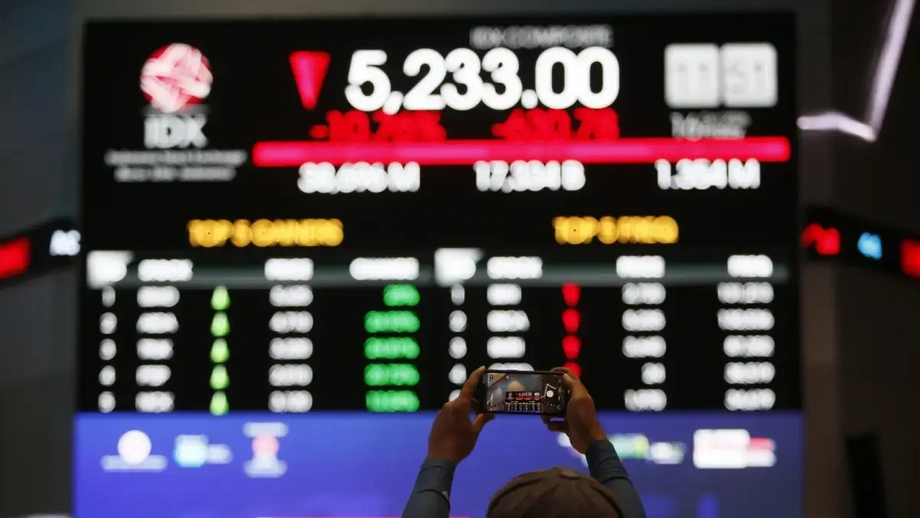
The review is unfolding during a severe market decline. The IDX Composite, Indonesia's benchmark share index, closed at 5,057.05 on 30 October 2026, down 41.52 percent since the beginning of the year. That figure measures the index's fall, rather than the loss experienced by every individual share or investor.
For an international fund manager, the immediate questions are practical: whether Indonesian securities can still be added to indexes, whether ownership information identifies who ultimately controls shares, and whether enough stock is available to trade without a small group dominating the market.
The reforms behind the enforcement message
OJK is working with the Indonesia Stock Exchange, the clearing and guarantee institution KPEI, and the central securities depository KSEI. The exchange operates the securities market, KPEI supports clearing and settlement guarantees, and KSEI holds records and provides depository services. Together with OJK, they form the institutional structure responsible for turning reform announcements into daily market practice.
One measure publishes ownership of more than 1 percent in listed companies. Another expands investor classification from nine categories to 39, adding 30 categories and providing more than four times as many classifications as before. The additional detail is intended to give regulators and investors a clearer picture of who holds shares.
Authorities are also publishing information on High Shareholding Concentration, a label for shares with highly concentrated ownership, and forming an Independent Committee for High Shareholding Concentration. Work on beneficial ownership disclosure is intended to identify the people ultimately behind shareholdings, rather than stopping at the name of an account or corporate vehicle.
A separate road map raises the minimum free float to 15 percent. Free float is the portion of a company's shares available for public trading, rather than held tightly by controllers or other restricted holders. When that portion is very small, limited trading can have a large effect on the quoted price, and outside investors may find it difficult to buy or sell in volume. The road map establishes the 15 percent direction; no completion date was given.
Enforcement measures include a Joint Task Force to handle capital market violations, including suspected price manipulation and coordinated trading. Regulators have also conducted more targeted investigations and frozen securities accounts suspected of involvement in violations.
From 2 November 2026, shares with highly concentrated ownership are to be excluded from calculation of the IDX Composite. This changes the composition of the benchmark itself. Alongside the ownership disclosures and account actions, it shows that the response extends beyond the Rp2.1 trillion in fines.
Prabowo enters the discussion as FTSE Russell takes a different line
President Prabowo Subianto met MSCI representatives on the sidelines of an ASEAN summit in the Philippines. MSCI pressed for stronger enforcement, including criminal action against market manipulation, as Indonesia seeks to preserve its emerging market classification. Friderica separately said OJK was preparing new sanctions to follow up enforcement against stock market manipulators, but no date or detailed form for those sanctions was given.
FTSE Russell, another major index provider, has reached a different interim conclusion. It retained Indonesia's classification as a Secondary Emerging Market and did not place the country on its watch list. At the same time, it postponed additions and increases in the weight of Indonesian shares until its review in March 2027.
An index weight helps determine how much money an index tracking fund allocates to a market. FTSE Russell's decision therefore avoids an immediate reclassification while still delaying changes that could increase Indonesia's presence in its indexes.
The two providers now operate on different schedules. FTSE Russell's March review comes before MSCI's 30 April deadline for consultation input and its final decision due by the end of June 2027. Investors consequently face different classifications and different pauses, rather than one coordinated international decision.
Why Prajogo Pangestu and Franky Widjaja are in the spotlight
Public attention has also settled on Prajogo Pangestu and Franky Oesman Widjaja because of the business groups surrounding the companies and sanctioned parties. The administrative penalties themselves name PT Sinar Mas Tunggal, Anbo Holdings and Tigonis Capital. They were not imposed as personal fines on either businessman.
Franky is a leading figure in Sinar Mas, the conglomerate founded by his father, Eka Tjipta Widjaja. He serves as Chairman and CEO of agribusiness company Golden Agri-Resources and as Executive Chairman of Sinar Mas Land. He also served as President Commissioner of DSSA from 2011 until resigning in September 2026.
Prajogo founded the Barito Pacific business group. Its interests have expanded from timber into petrochemicals, energy, mining and renewable energy. Companies in the wider group include PT Barito Pacific Tbk, PT Chandra Asri Pacific Tbk, BREN and CUAN. The last two are the issuers whose public offering processes gave rise to the Rp500 billion and Rp100 billion cases.
The breadth of these businesses explains why the sanctions attracted attention beyond specialist market circles. It also makes the distinction between an issuer whose shares were examined, an entity ordered to pay a fine and a prominent person associated with a wider group essential to understanding the announcement.
The projects and business records behind the names
Franky's business record includes Sinar Mas Land's involvement in the Bumi Serpong Damai (BSD) development. In March 2024, the government designated part of the integrated BSD area as a new National Strategic Project. The project, managed through PT Bumi Serpong Damai Tbk, carries an estimated investment of Rp18.54 trillion.
The designation covered about 59.6 hectares rather than the entire BSD area. Its focus includes education, biomedical activity and digital development, with plans for health research, technology and biomedical services. The government estimated that it could absorb around 10,065 workers directly and indirectly.
Sinar Mas and Barito Pacific also participated in the Nusantara Consortium investing in Nusantara, the new capital city known as IKN. The consortium is led by businessman Sugianto Kusuma, also known as Aguan. Its commercial projects include hotels, shopping areas and offices.
At the Hotel Nusantara groundbreaking on 21 September 2023, then President Joko Widodo publicly identified Franky and Prajogo as members of the investor group. Sinar Mas separately supported the Nusantara Botanical Garden through corporate social responsibility funding. Joko Widodo attended the groundbreaking for that garden and the Astra Biz Center on 4 June 2024.
Prajogo's business career began on a different path. Born in Bengkayang, West Kalimantan, on 13 May 1944, he joined Djajanti Group in 1969. He later developed Pacific Lumber Company in 1977, the business that grew into Barito Pacific. In 2019, Joko Widodo presented him with the Bintang Jasa Utama, a state honor recognizing service to the nation.
Both businessmen attended the 79th Indonesian Independence Day ceremony at IKN on 17 August 2024. These roles, projects and appearances record their business presence during Joko Widodo's presidency. OJK's sanctions concern the specific securities conduct and named entities set out in its three cases.
What changes for investors and listed companies
For listed companies, ownership disclosure above 1 percent, stronger beneficial ownership information and the free float road map point toward greater visibility into control and a larger portion of shares available to public investors. For market users, the 39 investor categories and concentration warnings provide more detail, while the exclusion of concentrated shares changes what the IDX Composite represents.
For domestic investors, the enforcement question is whether information can be trusted and whether violations carry consequences strong enough to deter repetition. Account freezes, targeted investigations and the possibility of criminal proceedings give regulators tools beyond administrative fines. The Joint Task Force adds a mechanism for coordinating action across institutions.
OJK continues to argue that Indonesian equities have underlying strengths. Friderica cited solid issuer performance, rising domestic participation and dividend yields that are competitive within the region. Dividend yield compares a company's annual dividend with its share price, giving investors one way to assess cash returns alongside changes in the share price.
OJK put the number of capital market investors at 34 million Single Investor Identification numbers, known as SIDs. An SID is a unique identifier used for an investor in the capital market. The 34 million figure describes the registered base, rather than the number of people trading on any particular day.
Those domestic strengths sit beside immediate international constraints: MSCI's freeze on additions, FTSE Russell's postponement and the possibility of a standalone classification. The practical test for the reform package is whether it produces reliable disclosures, broader and more dependable trading, and consistent enforcement before the scheduled reviews.
The dates that now matter
No final MSCI classification decision has been issued, and OJK has not announced a date for its planned additional sanctions. The consultation and review calendar provides the clearest sequence of what has happened and what remains pending.
- January 2024 to February 2026: OJK examined DSSA trading across several periods within this range.
- 15 October 2026: MSCI announced its consultation on moving Indonesia from emerging market to standalone market status.
- 16 October 2026: OJK announced the three groups of administrative fines totaling Rp2.1 trillion.
- 2 November 2026: Shares with highly concentrated ownership are scheduled to be excluded from IDX Composite calculations.
- March 2027: FTSE Russell is due to review Indonesia after postponing additions and increases in index weight.
- 30 April 2027: The deadline for submitting input during MSCI's consultation.
- By the end of June 2027: MSCI is scheduled to announce its final classification decision.
The April deadline closes the input period; it is not the date of a final downgrade. Until MSCI announces its decision, Indonesia's classification remains under consultation and the freeze on additional Indonesian securities remains subject to further notice.
Key Points
- OJK announced a record Rp2.1 trillion in administrative fines on 16 October 2026.
- PT Sinar Mas Tunggal was fined Rp1.5 trillion in the DSSA case, Anbo Holdings Rp500 billion over BREN, and Tigonis Capital Rp100 billion over CUAN.
- OJK says the investigations preceded MSCI's consultation and were not a response to index provider pressure.
- MSCI is considering standalone status for Indonesia and has frozen additions of Indonesian securities during the consultation.
- Reforms include ownership disclosure above 1 percent, 39 investor categories, a 15 percent free float road map and exclusions of concentrated shares from the IDX Composite.
- FTSE Russell retained Indonesia as a Secondary Emerging Market but postponed additions and weight increases until March 2027.
- MSCI's input deadline is 30 April 2027, with a final decision due by the end of June 2027.