A groundbreaking with a political audience
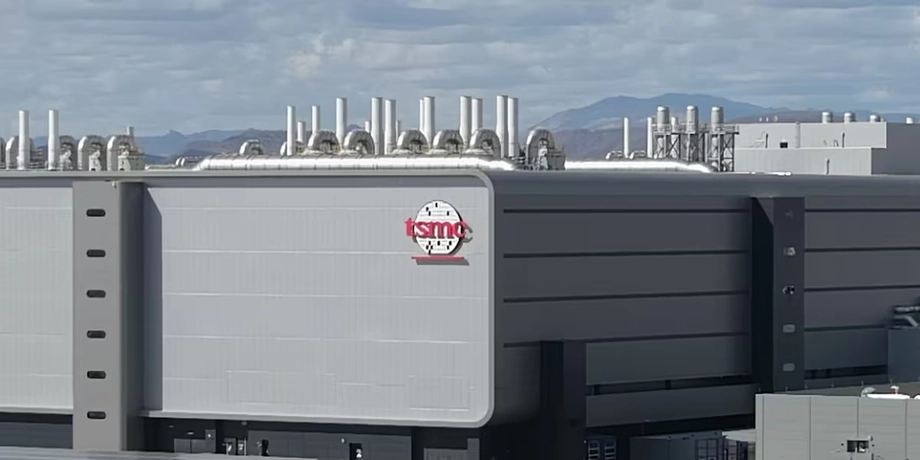
President Donald Trump is scheduled to speak on December 4, 2026, at the groundbreaking for the fifth phase of Taiwan Semiconductor Manufacturing Company's expansion in north Phoenix, Arizona. The White House and TSMC have both confirmed his participation. The visit will be his first to the Arizona campus and will place the president at a construction site that has become central to US plans for producing more advanced chips domestically.
Contents
- A groundbreaking with a political audience
- How the investment reached $265 billion
- What is already running, and what comes next
- Jobs and money for Phoenix
- Two presidencies, one construction site
- Arizona profits and the cost of making chips abroad
- Nvidia's leadership crisis shadows the ceremony
- Texas could become the next US chip site
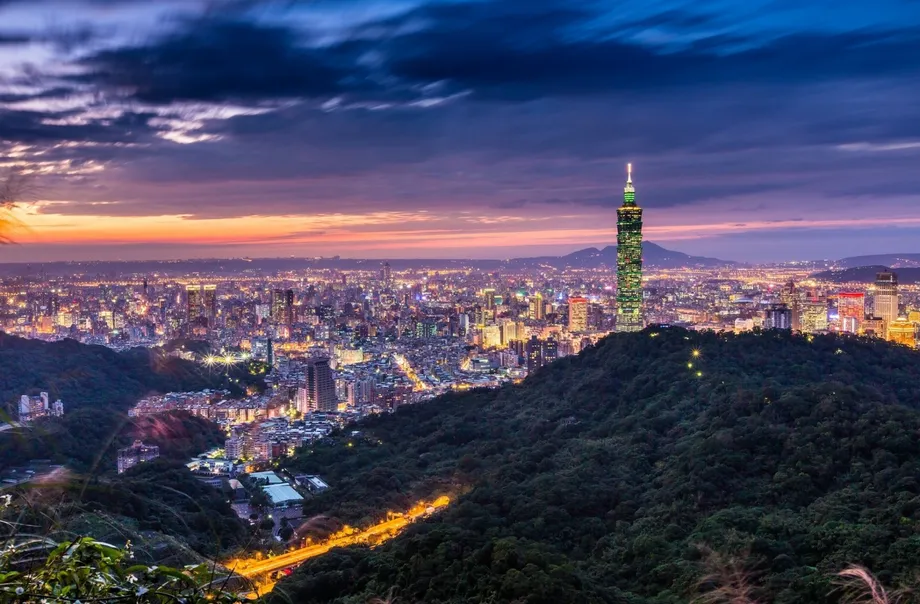
- Taiwan remains TSMC's research and production center
- The next dates and the details still missing
- Key Points
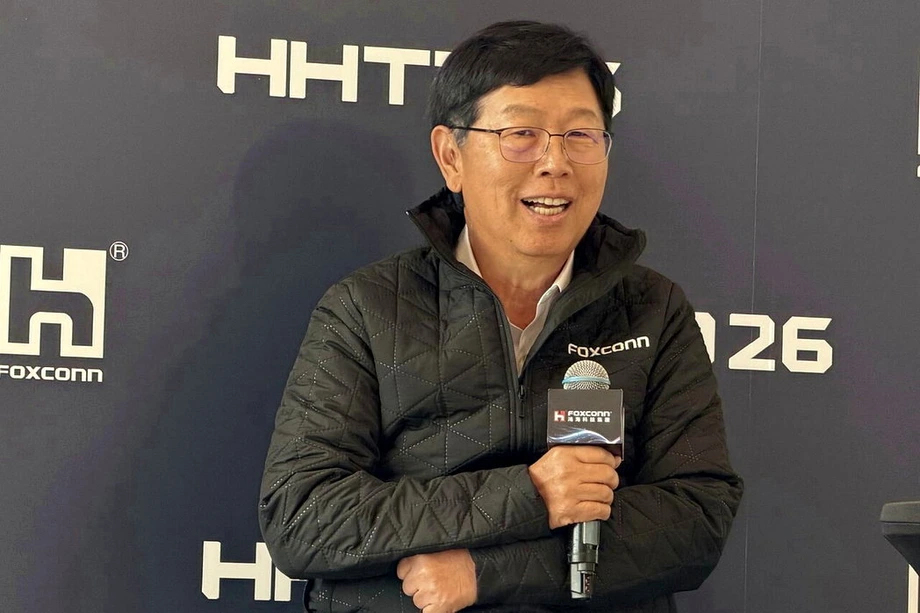
TSMC Chairman and Chief Executive C.C. Wei is expected to attend, along with company executives, suppliers, customers and business partners. The Phoenix operation already manufactures Nvidia's Blackwell chips and produces semiconductors for Apple, AMD, Broadcom and Qualcomm. Nvidia Chief Executive Jensen Huang's attendance has not been confirmed. He is scheduled to testify before the Senate Banking Committee on December 3, one day before the ceremony.
The event will initiate development of southern land that TSMC acquired earlier in 2026. In the invitation, Wei said the company would integrate its property south of Arizona State Route 303 with the existing northern campus, creating a site covering 2,000 acres. The ceremony marks another construction stage within an existing investment plan, rather than a new financial pledge. TSMC has not disclosed the production capacity of the fifth phase or when that phase will begin operating.
How the investment reached $265 billion
TSMC selected Phoenix in 2020 for its first advanced semiconductor manufacturing site in the United States, initially committing $12 billion. The company's TSMC Arizona overview now puts its US commitment at $265 billion and describes it as the largest foreign direct investment in a greenfield project in American history. A greenfield project is one built on a new site rather than created by purchasing or expanding an existing factory.
The increase came in several stages. TSMC had announced more than $65 billion for three Arizona fabs when it added $100 billion in March 2025, bringing the planned total to $165 billion. Wei said that expansion covered three more chip manufacturing plants and two packaging facilities. A further $100 billion announcement in July 2026 raised the total to $265 billion and signaled additional factories using technology at the 2 nanometer generation and beyond.
- 2020: TSMC chooses Phoenix and announces an initial $12 billion investment.
- Fourth quarter of 2024: The first fab begins volume production using the N4 process.
- March 2025: An additional $100 billion takes the planned US total to $165 billion.
- April 2025: TSMC breaks ground on its third Arizona fab, intended for N2 and A16 production.
- Early 2026: Initial construction starts on the fourth fab and the first advanced packaging facility.
- July 2026: Another $100 billion commitment raises the US total to $265 billion.
- December 4, 2026: The fifth phase groundbreaking is scheduled to take place with Trump attending.
TSMC's public plan currently lists six semiconductor logic wafer fabs, two advanced packaging facilities and a research and development center in Arizona. Its July announcement opened the way to several more logic and packaging plants. Planning described around the December ceremony puts the eventual Arizona ambition at 10 wafer fabs and two advanced packaging plants.
What is already running, and what comes next
The first Arizona fab has been producing chips with the N4 process since the fourth quarter of 2024. Process names such as N4, N3 and N2 identify successive generations of manufacturing technology. In practical terms, later generations can provide more computing performance, greater energy efficiency or both, allowing companies such as Nvidia and Apple to design more capable processors.
Construction of the second fab's structure was completed in 2025, with production equipment scheduled for installation during 2026. TSMC's official target for N3 volume production is the second half of 2027, while planning cited before the ceremony gives a more specific target of the third quarter. The third fab, which broke ground in April 2025, is intended for N2 and A16 technology and is targeting volume production by the end of the decade.
The fourth fab and the first advanced packaging facility entered the initial stages of construction in early 2026. Packaging is the work that protects chips and connects them to other components. It has become especially valuable for AI processors, which may combine several pieces of silicon and memory in one package. Adding packaging capacity in Arizona means that more of the manufacturing process can occur near the wafer fabs instead of requiring every unfinished product to travel elsewhere.
For US customers, the campus therefore offers more than a single operating factory. N4 production is already underway, N3 equipment installation is approaching, and later fabs are intended to support more advanced generations. Construction schedules for subsequent fabs and packaging facilities are expected to be a major focus of the December 4 event.
Jobs and money for Phoenix
A White House official estimated that 12,000 to 15,000 construction workers are currently employed at the site, alongside several thousand other personnel. The White House expects the completed expansion to support more than 10,000 direct jobs and approximately 11,000 indirect jobs in surrounding communities. Indirect employment includes work generated through suppliers and through spending by employees at businesses such as restaurants, shops and housing providers.
TSMC gives a narrower figure for an earlier portion of the project. It says the first three fabs will create 6,000 direct technical jobs, as well as tens of thousands of construction and supplier jobs. The company and White House figures cover different scopes: the company number concerns the first three fabs, while the White House estimate refers to the larger expansion.
The Greater Phoenix Economic Council says the metropolitan area already has more than 140,000 jobs in occupations relevant to semiconductors. Its April 2024 analysis examined only the first three fabs and their then planned $65 billion investment. It estimated $1.4 billion in tax revenue for Arizona over 13 years, $9.3 billion in personal income and $32.9 billion in economic output. Those estimates do not measure the entire $265 billion program.
Danny Seiden, president of the Arizona Chamber of Commerce, described the March 2025 expansion as a source of demand for housing and local businesses as well as factory employment. He summarized its scale for the state in direct terms.
This is $100 billion to our state.
Phoenix Mayor Kate Gallego said the expansion would strengthen domestic manufacturing and reduce dependence on foreign supply chains. Senator Mark Kelly of Arizona emphasized that many of the expected jobs would not require a university degree and credited years of cooperation among federal, state and local leaders.
Two presidencies, one construction site
The project's political history spans several administrations. TSMC announced the Arizona plan near the end of Trump's first term, selected Phoenix in 2020 and began construction while Joe Biden was president. Financial support also came through the bipartisan CHIPS and Science Act, which Biden signed. The broader $280 billion law combined semiconductor incentives with support for scientific research.
The Commerce Department announced in 2024 that TSMC's Arizona subsidiary could receive a grant of up to $6.6 billion, with as much as $5 billion in proposed loans also included in the program. Trump has presented later investment commitments as a result of his tariff policy. The construction record shows that private investment and federal support were already underway before his return to office, while the largest spending commitments came later.
President Trump addressed the economic argument when the earlier $100 billion expansion was announced in March 2025. He called domestic production a matter of economic security and described chips as essential to modern industry.
Semiconductors are the backbone of the 21st century economy.
For Phoenix, the practical result is a project supported through decisions made under different presidents. TSMC supplies the factories and technical expertise, federal incentives reduce some costs, and state and local governments are preparing for the workers, suppliers and housing demand that accompany the development.
Arizona profits and the cost of making chips abroad
TSMC's Arizona operation moved from a loss of approximately NT$14.2 billion in 2024 to a profit of NT$16.14 billion in 2025. Profit reached NT$53.99 billion during the first three quarters of 2026, including NT$17.92 billion in the third quarter. Investor estimates place profit for the whole of 2026 between NT$70 billion and NT$72 billion, with the quarterly net profit margin remaining near 38% even after government subsidies are excluded.
Growing orders for AI chips from North American customers have helped improve those results. TSMC nevertheless expects its overseas fabs to reduce the company's gross margin by 3 to 4 percentage points in the coming years. Arizona's profit measures the performance of that operation, while the margin forecast measures the effect of higher overseas manufacturing costs on TSMC as a whole. A factory can be profitable locally while still earning less per unit than a comparable operation in Taiwan.
Investor anxiety has also remained visible. TSMC shares fell 4.9% on November 25 and Taiwan's Taiex index lost 5%, amid fresh US tariff threats and renewed selling of AI stocks. The Philadelphia Semiconductor Index had fallen 7.88% the previous day. TSMC said on November 23 that global AI demand continued to grow and that appetite for its most advanced technologies was especially strong, while noting difficulties in consumer markets and among customers sensitive to price.
Nvidia's leadership crisis shadows the ceremony
Jensen Huang returned as Nvidia's chief executive on November 23 after an absence of 11 days. Trump publicly took credit for helping secure his reinstatement. Administration officials communicated with Nvidia board members and argued that Huang's experience mattered to US competitiveness in AI, according to accounts of those discussions.
Huang's December 3 Senate appearance is expected to cover Nvidia's chip sales abroad and questions arising from an alleged affair with a woman suspected of spying for China. Beijing has denied the spying allegation. Bipartisan lawmakers have vowed to investigate whether the relationship could have left Huang vulnerable to pressure and whether shipments of sensitive chips to China endangered national security.
Attorney General Todd Blanche concluded from investigations involving other companies that there was no evidence Huang had broken the law or knowingly transferred sensitive technology. The Justice Department had not formally investigated Huang before his reinstatement. Those details provide the current official position while Congress prepares its own questioning.
The Senate hearing and the Arizona groundbreaking concern separate companies and decisions. One examines Nvidia's leadership and overseas sales; the other marks TSMC's manufacturing expansion. Their timing nevertheless puts AI production, exports to China and White House involvement in the chip industry into the same week in Washington. Whether Huang will travel to Phoenix after testifying remains unknown.
TSMC has also tightened restrictions on Chinese chip developers following new US rules. It suspended some previously permitted orders for advanced manufacturing and generally limited affected customers to older technology, showing how export controls can directly change what a contract manufacturer is able to produce.
Texas could become the next US chip site
TSMC is evaluating another major US manufacturing project in Brazos County, Texas. Its Arizona subsidiary has applied for property tax relief for a development covering about 3,232 acres. The detailed application values the proposed investment at $21.655 billion, while regulatory descriptions have also put the plan at approximately $22.6 billion. It would include at least one advanced wafer fab and related facilities producing logic chips at the 2 nanometer generation or beyond for AI, advanced computing and mobile products.
The tentative schedule calls for construction to begin in 2027 and commercial operation in 2031. No final investment decision has been made. Approval of property tax benefits and the conclusion of subsidy negotiations remain important conditions, and Arizona has also been considered as an alternative location. Trump referred to a possible Texas project during a November 23 interview before the application details became public.
TrendForce semiconductor analyst Jo Ann said government support, dependable water and electricity infrastructure, and competitive tax terms are central to site selection because overseas fabs require enormous construction spending and substantial operating costs for many years. Chen Huiming, managing partner at Juxin Capital Management in Hong Kong, pointed to Texas's existing semiconductor cluster as an advantage for recruitment. He also noted potential customers in the state's data center, humanoid robotics and autonomous vehicle industries.
Taiwan remains TSMC's research and production center
Jo Ann said the Arizona work follows TSMC's established investment blueprint rather than replacing its plans at home. Expansion and research programs in Taiwan, including N2 and A14 technology, are proceeding on schedule. Taiwan remains the company's central research base and its principal location for volume production of its most advanced processes.
TSMC's manufacturing footprint is consequently becoming more geographically distributed. Arizona adds production close to major US customers, Texas is under evaluation, and Taiwan retains the core research role. That arrangement addresses US demand for more domestic capacity while preserving the company's main base of technical development.
The next dates and the details still missing
- December 3, 2026: Huang is scheduled to testify before the Senate Banking Committee.
- December 4, 2026: Trump is scheduled to speak at the fifth phase groundbreaking in Phoenix.
- Second half of 2027: TSMC officially targets N3 volume production at the second Arizona fab, with current planning pointing to the third quarter.
- By the end of the decade: The third Arizona fab is targeting volume production using N2 and A16 technology.
- 2027 and 2031: These are the proposed construction start and commercial operation dates for the Texas project, provided it receives approval.
TSMC has not announced the fifth phase's capacity or production start date. It has also not confirmed whether Huang will attend the ceremony. The Texas proposal awaits tax and subsidy decisions, while congressional inquiries into Nvidia and the circumstances surrounding Huang's return are still developing.
Key Points
- Trump and TSMC have confirmed the president's attendance at the December 4 groundbreaking for the fifth phase of the Phoenix expansion.
- TSMC's planned US investment has grown from $12 billion in 2020 to $265 billion after successive $100 billion additions.
- The first Arizona fab is producing N4 chips, with N3 production at the second fab targeted for the second half of 2027.
- The White House expects more than 10,000 direct jobs and about 11,000 indirect jobs, with 12,000 to 15,000 construction workers currently on site.
- Arizona operations have become profitable, although TSMC expects overseas manufacturing to reduce its companywide gross margin by 3 to 4 percentage points.
- Huang's Senate testimony is scheduled for December 3, and his attendance at the ceremony remains unconfirmed.
- A proposed Texas fab is still under evaluation, while Taiwan remains TSMC's central research and advanced production base.