Shenzhen Sets the Pace for Global Innovation
The 28th China High-Tech Fair (CHTF) concluded in Shenzhen on November 28, 2026, with a record-setting display of technological convergence and commercial intent. The three-day event, held at the Shenzhen World Exhibition & Convention Center, attracted more than 5,000 exhibitors from over 120 countries and regions to a 400,000 square meter exhibition area. The centerpiece of the results was the confirmation that intended transactions and investment financing exceeded 175 billion yuan, a figure that represents about 26 billion U.S. dollars.
Contents
- Shenzhen Sets the Pace for Global Innovation
- Artificial Intelligence Anchors Industrial Shifts
- Robotics Move Toward Mass Production
- Energy and Low-Altitude Economy Take Shape
- Global Procurement and Cross-Border Deals
- Research Institutions Bridge the Lab-Market Gap
- Post-Fair Tracking and Future Outlook
- Key Points
High-Tech Fair organizers emphasized that the 175 billion yuan figure covers a broad spectrum of procurement, investment, and financing deals rather than finalized cash contracts. The volume marks a slight increase from the 170 billion yuan seen in the 2025 edition, indicating a stabilization of the growth curve. What distinguished this edition was the composition of the buyers. Global industry leaders such as Nvidia, Foxconn, Samsung, Tesla, Microsoft, and Siemens arrived with specific procurement checklists, moving beyond passive attendance to active sourcing of semiconductors, artificial intelligence solutions, and smart hardware.
The event served as a direct follow-up to the Asia-Pacific Economic Cooperation (APEC) Third Thirty-Three Leaders' Informal Meeting. As the first major international tech expo in Shenzhen following the summit, it captured the residual momentum of cross-border trade discussions. The influx of international buyers was substantial, with pre-registration data confirming attendees from 118 countries and regions. The fair established itself as a critical hub where basic research meets industrial application, transforming laboratory prototypes into tangible supply chain components.
During the closing hours, Shenzhen Mayor Li Yun inspected the exhibition halls, underscoring the city's role as a primary engine for technological innovation. He highlighted the importance of deepening international cooperation and supporting local enterprises in expanding their global footprint. The municipal government provided extensive organizational services, including dedicated transport and security protocols, to facilitate the seamless movement of global delegations.
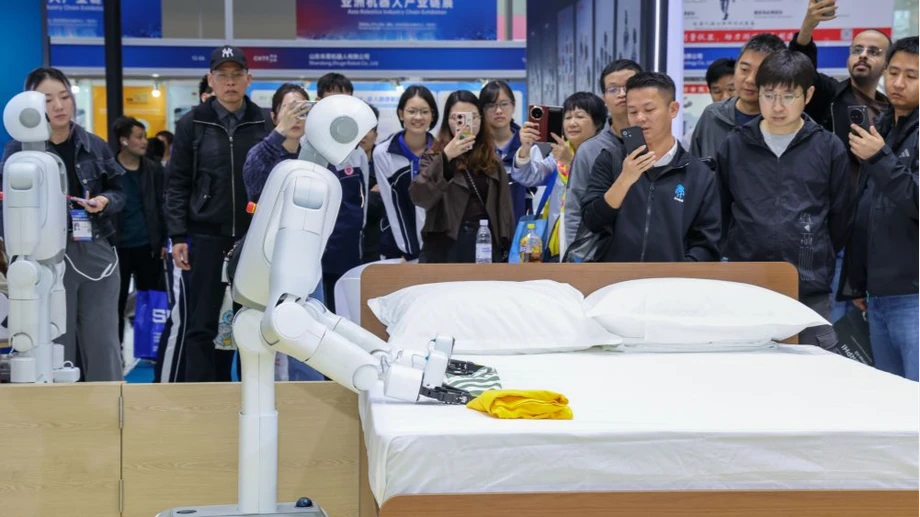
The fair generated significant engagement across specific sectors. The robotics zone, in particular, shifted its focus from concept demonstrations to commercial readiness. Buyers were less interested in the ability of robots to dance on stage and more interested in their capacity to perform autonomous tasks in factories and homes. Chinese companies like Deep Robotics and KNOWIN Robotics showcased quadruped and humanoid robots designed for real-world deployment. Industry executives noted that the critical threshold for home robots is achieving a success rate above 90 percent in complex environments, a target some firms have now met.
Every car model has a different gas cap. We have to train the robot to generalize across various scenarios.
This pragmatic approach defined the atmosphere in the energy and artificial intelligence corridors. Artificial intelligence is no longer just a feature but the core operating system for industries like energy and logistics. Chinese gas companies demonstrated AI-driven safety engines that predict maintenance needs before failures occur. Meanwhile, AI translation earbuds and smart navigation systems for electric bikes drew massive crowds of international visitors eager to adopt new digital tools.
As the fair closed, the narrative moved toward what happens next. The online matchmaking channels remain active, ensuring that the deals discussed in Shenzhen continue to evolve long after the exhibition center doors have shut.
Artificial Intelligence Anchors Industrial Shifts
Artificial intelligence emerged as the primary driver reshaping traditional industries during the Shenzhen exhibition. The technology moved beyond theoretical models to become a practical tool for reducing costs and improving efficiency in sectors like tourism, energy, and logistics.
In the tourism sector, companies like tripAI showcased vertical large models capable of generating customized travel plans instantly. This AI integration allows travel agencies to operate with lower overhead while providing personalized services to customers. The technology demonstrated that artificial intelligence could handle complex decision-making processes that previously required human expertise.
The energy sector witnessed a similar transformation. China Gas presented proprietary engines for safety monitoring and customer service. These systems process vast amounts of data to shift from reactive maintenance to proactive prevention. Industry observers noted that artificial intelligence is fundamentally altering the operational models of legacy energy providers, turning them into agile, data-driven enterprises.
The convergence of artificial intelligence and energy storage also gained prominence. As computing power demands surge, data centers require reliable, large-scale energy storage solutions. Artificial intelligence algorithms now optimize power load balancing in real time, a capability that is becoming essential for next-generation computing infrastructure.
These industrial shifts were visible in the sheer volume of visitor engagement. The exhibition saw over 480,000 visits by professional visitors, including more than 45,000 international attendees. The density of these visitors in the artificial intelligence and robotics zones highlighted a clear appetite for technologies that offer immediate, measurable improvements to business operations.
The fair also facilitated direct interactions between technology providers and end-users. Visitors could test products in live environments, such as navigating a digital map on an electric bike or interacting with a service robot. These hands-on experiences validated the reliability of the technology, building confidence among international buyers who sought to import these solutions to their home markets.
Robotics Move Toward Mass Production
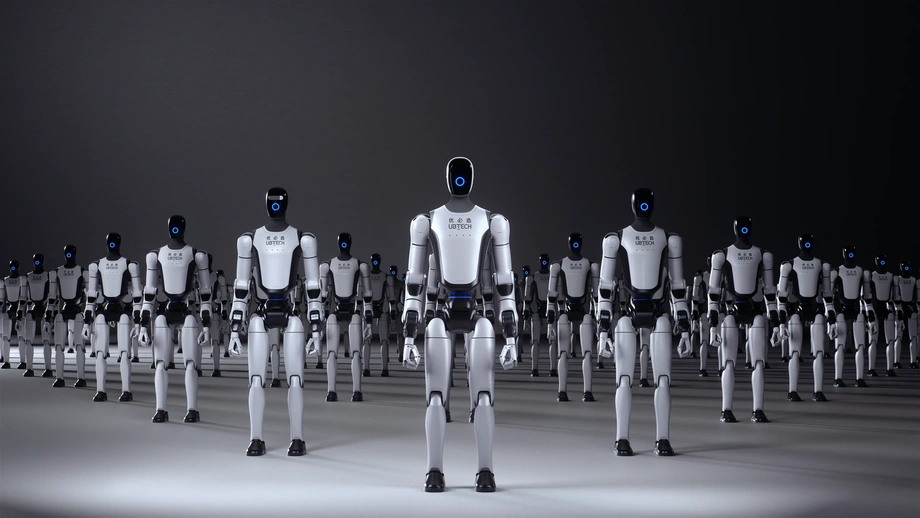
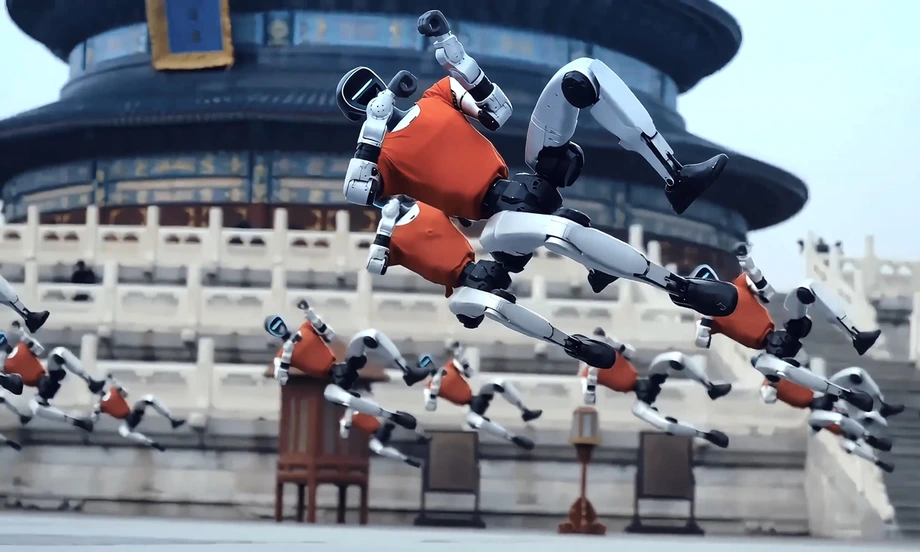
The robotics sector at the 2026 fair signaled a transition from experimental prototypes to mass-produced commodities. Companies displayed folding humanoid robots and highly agile quadruped robots that are ready for commercial deployment.
KNOWIN Robotics, a prominent Chinese firm, highlighted its folding household robot, which is scheduled for mass production in 2027. The company reported ranking first on the RoboDojo benchmark, a unified standard for evaluating robot manipulation policies, with a success rate of 82.3 percent. The target for full domestic deployment is a success rate exceeding 90 percent. The company is refining its brain capabilities and human-robot interaction protocols to meet this benchmark.
Price is becoming a decisive factor in the global robotics market. Many manufacturers are aiming for a price point under 1,400 U.S. dollars for entry-level home robots to lower the barrier for widespread adoption. While the technology is maturing rapidly, the industry is still awaiting a breakthrough moment that will accelerate mass-market acceptance.
International buyers showed strong interest in industrial robots for logistics and production. Purchasers from Australia and Europe focused on automating warehouse operations and manufacturing assembly lines. They sought machines that could integrate seamlessly with existing workflows rather than requiring complete operational overhauls.
The commercial readiness of robots was further validated by the deployment of autonomous service robots in pharmacies and gas stations. These robots handle tasks such as inventory management and vehicle refueling, demonstrating reliability in dynamic, unstructured environments.
Energy and Low-Altitude Economy Take Shape
Energy storage and the low-altitude economy presented distinct trajectories for future growth. The low-altitude economy, which includes electric vertical takeoff and landing aircraft and drone logistics, captured significant attention but remains in the early stages of commercialization.
Manufacturers displayed advanced electric vertical takeoff and landing aircraft and flying motorcycles. These vehicles feature numerous propellers for stability and safety, allowing for potential future use in urban commuting. However, regulatory approvals for airspace management and standardized safety certifications are still required before mass daily use becomes feasible.
In contrast, energy storage is already a foundational element for multiple emerging industries. China's new energy storage installations reached 66.43 gigawatts in capacity in 2025, reflecting rapid adoption. Companies like EVE Energy and CATL are developing high-density batteries specifically for robotics and electric vertical takeoff and landing aircraft.
For the low-altitude economy, the critical technical threshold is battery energy density, which needs to exceed 350 watt-hours per kilogram. Current mainstream batteries operate between 200 and 250 watt-hours per kilogram, creating an opportunity for advanced battery makers to capture the market.
Global investment institutions are increasingly directing capital toward these hard technology sectors. The fair hosted over 200 forums and roadshows where capital and technology projects found precise alignment. Investors expressed a willingness to support long-cycle technological breakthroughs, providing crucial funding for companies that are moving from lab to factory.
Global Procurement and Cross-Border Deals
The fair facilitated extensive cross-border procurement, with international delegations from Russia, the United States, Argentina, Australia, and the Middle East participating actively.
Alexander Manabov, chief executive of Russian firm WEIZ Positron LLC, purchased multiple AI learning cards at the exhibition. He noted that Russia possesses strong foundational computer research, while China excels in industrialization and scale. This synergy allows both nations to benefit from technological exchange.
Buyers from the Middle East and Central Asia sought specific products to address local market gaps. Wael Ali, a visitor from Dubai, expressed his intent to become an exclusive distributor for selected Chinese products. He viewed Shenzhen as the definitive source of technological innovation and committed to annual attendance at the fair to track industry developments.
The procurement process at the fair extended beyond simple product sales. Many international delegations brought detailed technical requirements and sought local manufacturing partnerships. They were interested in establishing joint production facilities in their home countries to reduce costs and adapt products to regional needs.
Domestic regional delegations from provinces such as Shandong, Hunan, and Fujian also leveraged the fair to attract high-quality projects. They presented industrial capacity and innovation strengths to potential investors, securing framework agreements that will lead to future site visits and concrete project signings.
Research Institutions Bridge the Lab-Market Gap
Universities and research institutes played a vital role in connecting academic research with industrial needs. Over 100 new technologies and products were launched, many of which originated from Chinese institutions like Tsinghua University and the Shanghai Jiao Tong University.
Tsinghua University presented an artificial intelligence-assisted multidimensional clinical trial system, while the Shanghai Jiao Tong University exhibited a satellite for lunar exploration. These examples demonstrate how academic institutions are packaging their research into practical solutions for market challenges.
The fair provided a dedicated platform for joint laboratory establishment and horizontal research projects. Companies presented specific technical bottlenecks they faced, and research teams offered targeted solutions on the spot. This direct interaction accelerates the translation of basic science into commercial applications.
Researchers also benefited from the exposure. Many academics found that direct engagement with the market helped refine their research focus toward practical, high-value applications. This mutual benefit strengthens the entire innovation ecosystem, ensuring that scientific advancements lead to tangible economic growth.
Post-Fair Tracking and Future Outlook
While the three-day exhibition concluded, the matchmaking process remains ongoing. An online channel continues to facilitate connections between exhibitors and buyers. The fair organizers have committed to tracking all unexecuted意向 orders to ensure they eventually materialize into formal contracts.
Industry analysts point out that the key metrics for future growth are the conversion of these意向 orders into realized revenue. The robust participation of global tech giants and the deep integration of technologies like artificial intelligence and robotics suggest a sustained period of innovation and investment.
Looking ahead, the technological trends identified at the Shenzhen fair—specifically in home robotics, low-altitude mobility, and artificial intelligence-driven energy storage—are expected to gain momentum in the coming years. These sectors will likely see increased investment and broader consumer adoption as manufacturing costs decrease and technical standards stabilize.
Key Points
- The 28th China High-Tech Fair in Shenzhen concluded with over 175 billion yuan in intended transactions, driven by global procurement demands.
- Events occurred from November 26 to 28, 2026, at the Shenzhen World Exhibition & Convention Center.
- Over 5,000 exhibitors from 120 countries and regions showcased advancements in artificial intelligence, robotics, and energy.
- International buyers from the Middle East and Central Asia secured initial deals, with intentions to establish local distribution channels.
- Robotics companies targeted mass production for household robots by 2027, focusing on affordability and operational reliability.
- The fair facilitated direct exchanges between research institutions and industry, accelerating the commercialization of laboratory innovations.
- Online matchmaking channels remain active to track and finalize the cross-border deals initiated during the exhibition.