Virtual factories become the training ground for Korean robots
Nvidia is expanding cooperation with South Korean manufacturers to train robots in virtual factories before putting them on production lines, while a new agreement with Kakao Mobility extends its technology into plans for autonomous taxis. At Nvidia AI Day Seoul 2026, which opened on November 9 at COEX in Seoul, the company presented projects involving Hyundai Motor Group, Doosan Robotics, LG Electronics, Samsung Electronics and SK Hynix.
Contents
- Virtual factories become the training ground for Korean robots
- What physical AI changes on a production line
- Hyundai tests factory changes without stopping production
- Doosan and LG tackle contact, pressure and parts handling
- Semiconductor factories connect simulation with fault investigation
- Kakao Mobility aims to move from supervised taxis to Level 4
- How the driving system fits together
- Cheaper AI agents and Korean language models support the factories
- Power and platform choices shape the expansion
- What to Know
The projects address specific industrial jobs: testing robot movements in car plants, polishing automotive doors, assembling washing machine components and investigating equipment problems in semiconductor factories. Kakao Mobility, meanwhile, plans to combine its own driving AI with a computing unit containing two Nvidia DRIVE AGX Thor systems for vehicles developed with Kia.
Deepu Talla, Nvidia's vice president of robotics and edge AI, said AI agents could reduce the work of building robot simulation environments from several months involving multiple engineers to less than a week for one engineer. He also described potential acceleration of about 100 times in digital twin development and related robotics workflows.
The November demonstrations build on commitments described in Nvidia's June partnership update. That announcement outlined an LG AI factory, a planned expansion of Naver's GAK Sejong data center to 55 megawatts and eventually gigawatt scale, and an SK Telecom AI Cloud planned at gigawatt scale using Nvidia DSX.
South Korea is therefore taking two connected roles in Nvidia's strategy: supplying memory, electronics and industrial expertise for AI infrastructure, and providing factories and transport services where that infrastructure can be applied. The latest partnerships focus on turning computing capacity into machines that perform useful physical work.
What physical AI changes on a production line
Physical AI allows a machine to use information about its surroundings to decide how to move and act. For a factory robot, that might mean adjusting its grip when a component arrives in a different position or changing the pressure applied to an uneven surface.
Talla contrasted that approach with industrial robots programmed to repeat fixed movements. In his explanation, decades of automotive automation have made repetitive production efficient, while tasks involving frequent changes remain harder to automate.
Talla described the programming problem during his keynote:
In areas where the work environment keeps changing, you can't program every single action.
Nvidia's proposed workflow has three computing stages. DGX systems train AI models, RTX technology supports virtual simulation, and Jetson computers run the resulting software on robots. Isaac provides tools for robot development and training, Omniverse recreates working environments, and Newton simulates physical interactions such as contact between a tool and a surface.
Cosmos, Nvidia's world model platform, supplies another part of that process by generating simulated environments and synthetic data. Synthetic data means examples created by software rather than collected entirely from real equipment. Developers can use those examples to train robots and evaluate how they respond to different situations.
Hyundai tests factory changes without stopping production
Hyundai Motor Group and Nvidia are recreating automotive manufacturing facilities as digital twins, virtual versions of real factories and equipment. Engineers can use them to test robot placement, movements and production sequences while the actual assembly line continues operating.
A proposed change can be tried repeatedly in the virtual plant before workers move machinery or alter a production process. Nvidia described running hundreds or thousands of experiments, with repeated simulations proceeding faster than real time.
AI agents are intended to make those virtual environments easier to build. An agent is software that can plan a task and call other tools to complete it. In this case, agents connect simulation tools and automate parts of the work that engineers and digital artists previously performed manually.
The practical attraction for Hyundai is a shorter route from an engineering idea to a tested production change. Robot behaviour can be examined alongside the wider factory process, rather than treating each machine as an isolated piece of equipment.
Doosan and LG tackle contact, pressure and parts handling
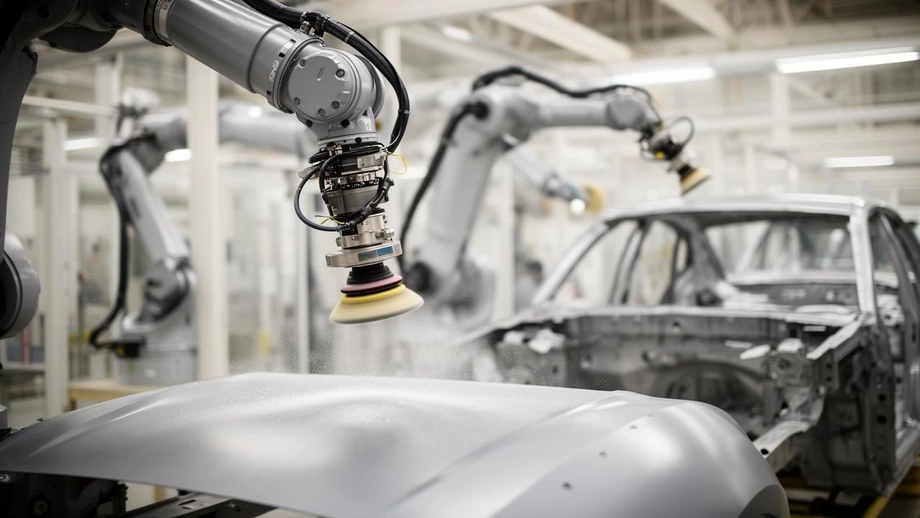
Doosan Robotics is working with Nvidia on precision polishing of automotive doors and appliance surfaces. Polishing requires more than tracing the same route repeatedly: the result depends on the material, the roughness of the surface and the pressure exerted by the robot.
The collaboration uses Isaac Lab and the Newton physics engine to study those interactions. Demonstrations examined surface conditions and polishing pressure, aiming to predict how a robot's movement changes the material it touches.
LG Electronics is applying Isaac Sim and Isaac Lab to appliance production. Robots practise picking up, assembling and positioning components for products including washing machines and refrigerators. Repetition in simulation lets developers adjust movements and test performance before introducing changes around real parts and machinery.
LG's event programme also included a learning and validation system based on Isaac GR00T and examples of factory applications. Its broader partnership with Nvidia links production data and manufacturing knowledge with AI infrastructure, with plans to connect procurement, production, logistics and customer delivery through data and AI.
Smaller developers are part of the network as well. South Korean startup RealWorld is developing DexPinch to evaluate robot manipulation and algorithm accuracy. Krafton was presented as another collaborator, working on robots intended for interaction with people in social care and healthcare.
Semiconductor factories connect simulation with fault investigation
SK Hynix, Samsung Electronics and SK Telecom illustrate how Nvidia's partnerships extend beyond moving robot arms. Their projects use virtual facilities, engineering simulation and AI analysis to examine complex equipment and operating processes.
Digital twins for semiconductor factories support equipment and process monitoring, as well as analysis of standard operating procedures, the instructions workers follow to perform tasks consistently. Nvidia also demonstrated AI agents investigating the causes of equipment anomalies inside virtual facilities.
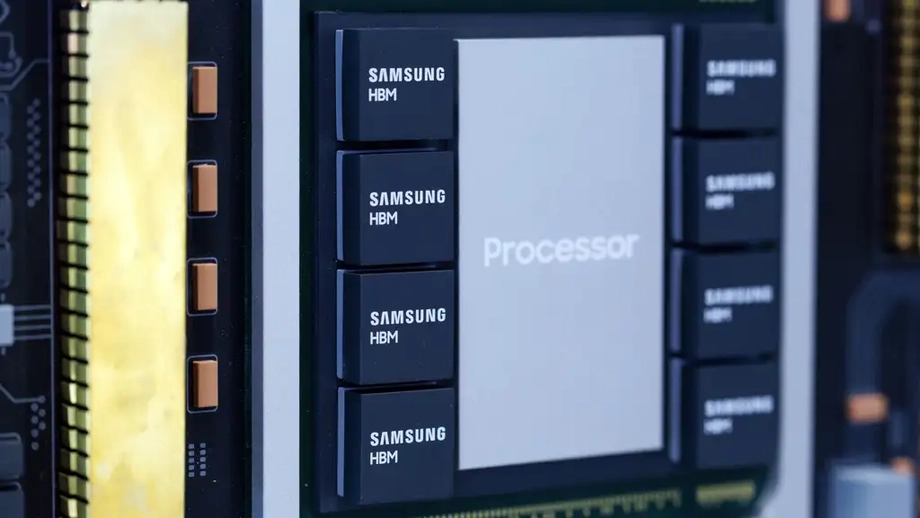
Samsung presented fluid, thermal and structural analysis using PhysicsNeMo, Nvidia's tools for AI models informed by physical behaviour. These tasks examine how liquids or gases flow, how heat moves and how structures respond to forces. Samsung also showed AI assistance for exploring design options.
SK Hynix's programme covered semiconductor device and process simulation using CUDA-X and PhysicsNeMo. Across these projects, the common goal is to let engineers examine possible changes and operating problems digitally, alongside the physical systems they manage.
Kakao Mobility aims to move from supervised taxis to Level 4
Kakao Mobility and Nvidia signed their autonomous driving memorandum of understanding on November 9 at The Westin Seoul Parnas in Gangnam. Participants included Kim Jin-gyu, Kakao Mobility's vice president for physical AI, and Gaurav Agrawal, Nvidia's senior director for automotive business.
Kakao Mobility already operates an autonomous taxi service in Gangnam with safety drivers aboard. The service began with two vehicles in March and expanded to six in August, tripling its fleet. Passengers access the service through Kakao T.
The new cooperation targets Level 4 automation. At that level, a vehicle performs the driving task without relying on a human driver within specified operating conditions, such as a defined service area. Kakao Mobility has not disclosed a commercial launch date or vehicle supply numbers for its planned Level 4 service.
Kakao Mobility will lead development of its own driving AI, while Nvidia supplies computing, sensor integration and safety technology. The companies plan to apply the resulting system first to Kia purpose built vehicles, designed around particular uses such as passenger services.
The agreement follows several connected steps:
- March 2026: Kakao Mobility began its Gangnam autonomous taxi service with two vehicles and safety drivers.
- May 2026: Kakao Mobility partnered with LG Innotek on precision sensing and driving data.
- July 2026: Kakao Mobility and Kia agreed to develop and supply vehicles for autonomous driving services.
- August 2026: The Gangnam fleet expanded to six vehicles.
- November 9, 2026: Kakao Mobility and Nvidia signed their technology cooperation agreement.
- By the end of 2026: Kakao Mobility plans to expand application of its end to end driving AI model.
How the driving system fits together
Kakao Mobility's end to end model connects understanding the vehicle's surroundings with driving decisions through an AI model. The company currently combines AI driving decisions with a safety verification system based on explicit rules.
The planned computing unit will contain two DRIVE AGX Thor systems. Nvidia's Hyperion reference architecture provides a design framework for connecting the vehicle, sensors and computing hardware, while Halos supplies a safety framework for development and verification.
Rishi Dhall, Nvidia's vice president of automotive, described the intended division of responsibilities:
Nvidia Hyperion provides the sensor and computing technology foundation required to implement level 4 autonomous driving, and Nvidia Halos supports a comprehensive safety framework across the entire process, from technology development to application in real services.
The companies intend to develop a system meeting global standards, establish services in South Korea and consider international expansion over a longer period. Their immediate engineering task is to bring Kakao Mobility's software, Nvidia's hardware and Kia's vehicles into a coordinated system.
Cheaper AI agents and Korean language models support the factories
Nvidia also presented ways to reduce the cost of operating AI agents. Jonathan Cohen, its vice president for applied research, described Switchyard, which routes tasks to different AI models according to their difficulty and cost.
In Nvidia's internal tests, that approach maintained an 80% task success rate while reducing costs to about one third of the cost of using a single powerful model. Expressed another way, the reported saving was about two thirds, with the success rate unchanged.
Cohen explained why routing matters:
You don't need to give every task to the most intelligent model.
Naver is participating in the Nemotron Coalition, sharing data and training techniques for open model development. Naver Cloud presented its experience with Nemotron and large scale model training. SK Telecom, LG AI Research and Upstage are also using Nemotron technology and datasets to develop models suited to Korean language and domestic industries.
Nvidia described releasing model weights and training and testing scripts across its open model strategy. Model weights are the learned numerical settings that determine how a model responds. Access to these components gives companies a starting point for adapting systems with their own data and industrial knowledge.
Power and platform choices shape the expansion
AI training, robot simulation and operating services all require computing infrastructure. Nvidia's DSX platform treats GPUs, networks, cooling and electricity supply as parts of a single system that can be managed together.
Nvidia said cloud partner Nscale used dynamic power management to increase GPU deployment capacity by about 37% and token generation by about 50% within the same power budget. Tokens are the small units of text that language models process and produce. The example illustrates the company's focus on producing more useful computation from a limited electricity supply.
NVLink Fusion addresses another infrastructure task: connecting custom AI chips to Nvidia's systems. It is designed to reduce the work chip developers face in building server, networking and rack infrastructure around their processors.
South Korea's expansion already includes a 260,000 chip allocation announced in November 2025, with deliveries planned to begin in 2026. An October 2026 agreement for dedicated substrate production lines at Samsung Electro-Mechanics facilities in Sejong and Busan adds another connection between Korean manufacturing and Nvidia's supply chain.
Nvidia's business role runs through these partnerships. Talla described the company as a provider of platforms and chips rather than a robot manufacturer. Korean partners supply factories, products, operating knowledge and applications; Nvidia supplies much of the shared development infrastructure. Using common tools can simplify integration, while also making compatibility and continued access to those tools important choices for participating companies.
What to Know
- Nvidia presented expanded South Korean manufacturing and robotics partnerships at AI Day Seoul 2026, held November 9 to 10 at COEX.
- Hyundai is testing production processes in digital twins, Doosan is developing robotic polishing, and LG is training robots for appliance manufacturing.
- Samsung, SK Hynix and SK Telecom projects connect factory simulation with engineering analysis, monitoring and operating procedures.
- Nvidia says AI agents can reduce simulation environment development from months to less than a week for one engineer.
- Kakao Mobility plans to combine its driving AI with Nvidia computing and safety technology in Kia vehicles for Level 4 services.
- Kakao Mobility's existing Gangnam fleet has six vehicles with safety drivers. Its Level 4 launch date and vehicle supply volumes have not been announced.
- Data center power management, Korean language models and shared development platforms support the wider industrial effort.