Sejong and Busan factories take a larger role in AI supply
Samsung Electro-Mechanics and Nvidia plan to jointly invest in dedicated production lines at Sejong and Busan in South Korea, securing package substrates for Nvidia AI computing chips and the network switches that connect them inside data centers. Supplies are scheduled to begin in stages from 2026 and continue for several years.
Contents
- Sejong and Busan factories take a larger role in AI supply
- What the two companies will build
- Why the substrate matters as much as its size suggests
- Networking chips are part of the deal
- Tiny capacitors help manage demanding power needs
- What the growth forecast means for Samsung
- Nvidia seeks more capacity across its supplier network
- The milestones through 2028
- Key Points
The partnership, announced on October 21, sets out an expansion that Samsung Electro-Mechanics expects will bring average annual growth of at least double digits in its substrate shipments to Nvidia. By 2028, the company expects Nvidia orders to occupy a substantial portion of its total package substrate production capacity.
Samsung Electro-Mechanics' official partnership announcement, dated October 21, 2026, specifies joint investment in dedicated ABF package substrate facilities at Sejong and Busan, a multi-year supply agreement beginning in 2026 and the shipment forecast through 2028.
Nvidia announced the agreement after chief executive Jensen Huang's keynote at GTC 2026 in Berlin. It is the first formal announcement by Nvidia of a strategic partnership with Samsung Electro-Mechanics, which is already reportedly mass producing substrates for Nvidia's NVSwitch networking chips.
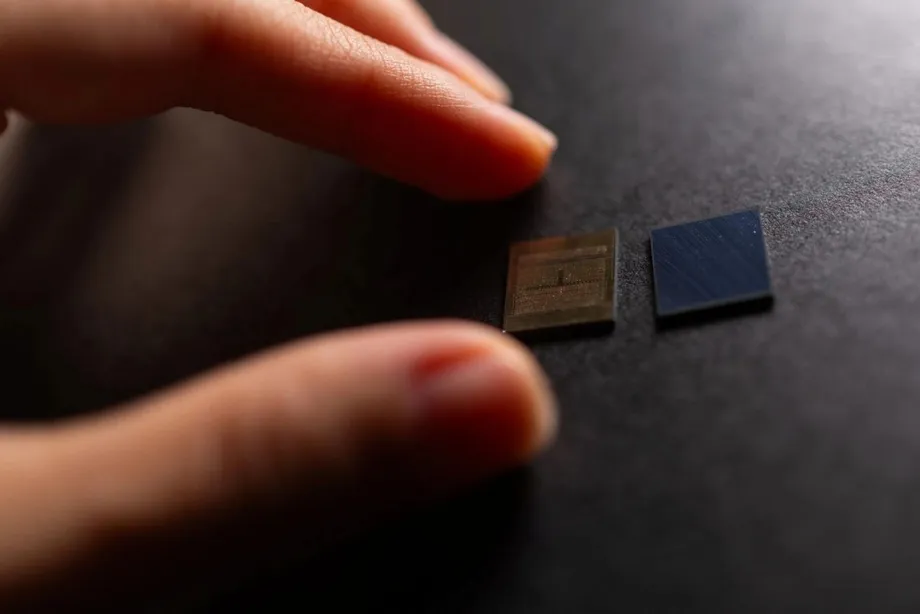
The agreement addresses a less visible part of the AI production chain. A powerful processor needs a package substrate beneath it to carry electrical signals and power between the chip and the surrounding system. Producing enough processors therefore also requires enough substrates that meet demanding standards for precision, flatness and electrical performance.
Samsung Electro-Mechanics brings together two manufacturing businesses relevant to that task: advanced substrates and tiny components that help keep power stable. Nvidia gains additional production capacity for both the chips doing AI calculations and the networking hardware moving data between them.
What the two companies will build
Samsung Electro-Mechanics will expand its Sejong and Busan sites with production lines dedicated to Nvidia. The companies describe the investment as a joint effort, with supplies intended to run over multiple years rather than a single purchasing cycle.
The planned products fall into two groups: substrates for AI computing chipsets and substrates for network switch chips. Both are needed in large AI installations, where many processors must work together and exchange information quickly.
The agreement's investment amount, each company's financial contribution, exact production volumes and individual line completion dates have not been disclosed. Samsung Electro-Mechanics' separate, previously announced investment of 6.78 trillion won covers AI server substrate capacity in South Korea and overseas. That broader spending plan has a different scope from the Nvidia partnership.
For Sejong and Busan, the concrete change is the planned addition of manufacturing lines tied to a major customer over several years. The announcements provide no employment figures or breakdown of how production will be divided between the two sites.
Why the substrate matters as much as its size suggests
Samsung Electro-Mechanics makes FC-BGA substrates, short for flip chip ball grid array. These components connect powerful semiconductors, including AI accelerators, graphics processing units and central processing units, to a system's main circuit board.
A simple way to picture the substrate is as a tightly packed network of electrical routes underneath a chip. Signals travel along those routes, while power reaches the chip through carefully arranged connections. The substrate must fit a very large number of connections into a limited space.
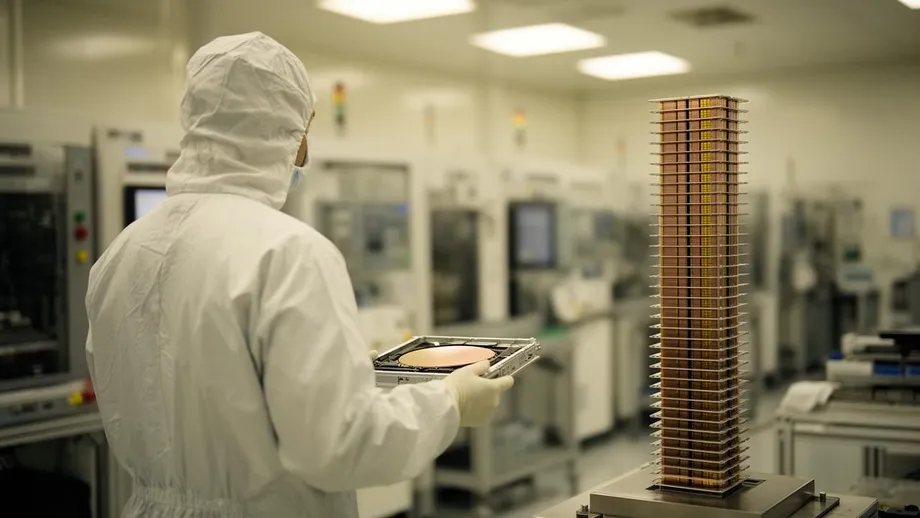
AI chip designs are pushing substrates toward larger areas and more layers. More layers provide room for complicated electrical routing, but also make manufacturing harder. Tiny circuit features must be formed accurately so signals can travel reliably without excessive losses.
Heat creates another problem. A substrate can bend as its materials expand, a condition called warpage. Keeping a large substrate flat helps maintain reliable connections and reduces the number of defective parts. Manufacturers call the share of usable products their yield: a higher yield means more finished substrates from the same production effort.
Networking chips are part of the deal
Nvidia's NVSwitch gives Samsung Electro-Mechanics an existing connection to the company's AI infrastructure business. Samsung Electro-Mechanics is reportedly already mass producing FC-BGA substrates for that product, placing the new agreement alongside an established manufacturing relationship.
The mass production claim draws on industry reports dating from early 2026 about Samsung Electro-Mechanics entering Nvidia's AI data center substrate supply chain. No specific underlying report or source is identified, and Samsung Electro-Mechanics' official partnership announcement does not confirm NVSwitch substrate mass production.
NVSwitch helps connect processors so they can exchange data rapidly. AI work often runs across many processors, making the connections between chips an important part of the system rather than a minor accessory.
The new supply plan covers both computing and networking substrates. For Nvidia, securing these components together supports the production of systems in which processing speed and communication speed must work in balance.
For Samsung Electro-Mechanics, the scope creates room to supply more than one category of Nvidia chip. Its expected growth is tied to the wider AI platform, including the infrastructure that allows groups of processors to operate together.
Tiny capacitors help manage demanding power needs
Samsung Electro-Mechanics plans to combine its substrate technology with multilayer ceramic capacitors, known as MLCCs, and silicon capacitors. These small components store and release electrical energy, helping smooth fluctuations in the power reaching a chip.
Rapid calculations can produce electrical disturbances described as power noise. Keeping that noise under control helps maintain stable operation and improve power efficiency. The manufacturing approach described for advanced substrates includes embedding capacitors directly inside them.
Placing components within a substrate adds another demanding production step. Manufacturers must combine extremely fine circuits, a flat structure and embedded electrical parts while maintaining reliable performance.
Samsung Electro-Mechanics President and CEO Duck-Hyun Chang said the company would bring its substrate manufacturing and capacitor technology together to support deliveries of Nvidia platforms. In the announcement's English text, he said:
"It is a great honor to join NVIDIA, a global leader driving AI innovation, as a key infrastructure partner."
"By combining our advanced FC-BGA manufacturing capabilities with our differentiated expertise in high-reliability MLCC technologies, Samsung Electro-Mechanics will fully leverage its strengths as a comprehensive solutions provider to ensure that NVIDIA's AI platforms are delivered to the market on time with the highest levels of performance and quality," Chang added.
His statement places delivery timing alongside manufacturing quality. For Nvidia, the value of additional capacity depends on substrates being ready when the chips and other parts of an AI platform are ready for assembly.
What the growth forecast means for Samsung
Samsung Electro-Mechanics expects its Nvidia substrate supply volume to grow by an average of at least double digits annually over several years, starting in 2026. Double digit percentage growth begins at 10%, although the company has not specified a precise annual rate.
By 2028, Nvidia orders are expected to account for a substantial portion of Samsung Electro-Mechanics' entire package substrate production capacity. The forecast describes how much factory capacity one customer could require, making Nvidia a potentially large influence on production planning.
The business change is therefore broader than an increase in orders. Dedicated lines and a supply arrangement lasting several years would give Samsung Electro-Mechanics a larger position in advanced AI substrates, where customers require difficult manufacturing processes and dependable production.
Japan's Ibiden and Taiwan's Unimicron are among the leading suppliers Samsung Electro-Mechanics aims to catch up with. The Nvidia agreement gives the South Korean company an opportunity to expand through a major AI customer while putting its circuit precision, warpage control and capacitor technologies into larger scale use.
Nvidia seeks more capacity across its supplier network
Nvidia's aim is to secure a stable supply of advanced package substrates as demand for AI infrastructure grows. The partnership adds production capacity and broadens the network of companies supplying a component essential to finished chip packages.
Debora Shoquist, Nvidia's executive vice president of operations, connected the agreement to the pace of infrastructure construction. In the announcement's English text, she said:
The pace of the AI infrastructure buildout requires us to expand manufacturing capacity on a global scale. Our work with Samsung Electro-Mechanics broadens our network of substrate partners and adds manufacturing capacity to help us scale production and deliver the accelerated computing platforms our customers need.
Shoquist said cooperation with Samsung Electro-Mechanics would expand Nvidia's substrate supplier network and secure additional capacity. Her comments frame the agreement as part of a wider production effort rather than a purchase of a single component for one chip.
The practical challenge is matching the output of several connected industries. AI systems require processors, suitable packages, networking chips and the infrastructure to operate them. Increasing substrate capacity addresses one of those production requirements, while the technical work at Sejong and Busan determines how much usable output the new lines can deliver.
The milestones through 2028
Samsung Electro-Mechanics' plans connect an earlier investment program with the new Nvidia relationship. The main milestones are:
- Before the partnership announcement: Samsung Electro-Mechanics disclosed a 6.78 trillion won investment plan for AI server substrate capacity in South Korea and overseas.
- October 21, 2026: Nvidia announced the strategic partnership after Jensen Huang's GTC keynote in Berlin.
- From 2026: Substrate supplies are planned to begin in stages and continue for several years.
- By 2028: Samsung Electro-Mechanics expects Nvidia orders to account for a substantial portion of its total package substrate capacity.
The timetable puts factory expansion, manufacturing performance and customer demand on the same schedule. Samsung Electro-Mechanics expects rising shipments over several years, while Nvidia is seeking the capacity needed to support expanding AI infrastructure.
For the two South Korean production sites, the agreement brings a defined customer and product focus. For the wider AI industry, it shows why the race to supply powerful computing systems also depends on the precise electrical connections beneath each chip.
Key Points
- Samsung Electro-Mechanics and Nvidia plan joint investment in dedicated substrate lines at Sejong and Busan.
- Supplies will cover AI computing chips and data center network switches, beginning in stages from 2026.
- Samsung expects average annual Nvidia shipment growth of at least double digits over several years.
- Nvidia orders could occupy a substantial portion of Samsung Electro-Mechanics' package substrate capacity by 2028.
- The manufacturing work includes fine circuitry, warpage control and capacitors embedded inside substrates.
- The partnership's investment amount and detailed production targets have not been disclosed.