New Registry Brings Fraud Checks and Fresh Registration Duties
Nearly 3 million Filipinos with persons with disabilities identification cards must register under a unified digital system as the government moves to replace existing cards, trace fraudulent applications and bring local records into one national database. The National Council on Disability Affairs (NCDA) aims to complete registration by December 2027, with old cards possibly phased out by 2030.
Contents
- New Registry Brings Fraud Checks and Fresh Registration Duties
- How the Rollout Reached This Point
- What the Numbers Say About the Task
- Where to Register and What to Bring
- Why Disability Advocates Want Existing Records Transferred
- Lifetime Validity and Five-Year Revalidation
- How the New IDs Will Be Checked
- What Information Will the Government Hold?
- What Cardholders Should Expect Next
- Key Points
The change is already underway. NCDA Executive Director Glenda Relova said on November 4 that about 1,100 of the country's 1,642 local government units had adopted the Unified Persons with Disabilities Identification System (UPWDIS). More than 190,000 people had registered, and over 128,000 digital IDs had been issued.
Existing authentic, valid PWD cards remain usable during the three-year transition. Physical cards will also remain an option under the new system: local governments can print the unified ID on request. The shift is therefore toward a shared digital record, rather than a requirement that every person rely on a phone.
The NCDA's Administrative Order No. 001, series of 2026, sets out the rules. Alongside measures against duplication and fraud, it requires accessible registration, limits the use of sensitive personal information and protects benefits during revalidation.
Disabled and neurodivergent self-advocates have challenged the burden of registering again, particularly for people whose disabilities are not visible. Their concern is concrete: obtaining another medical assessment may require money, travel and access to specialists that many applicants do not have.
How the Rollout Reached This Point
The unified platform grew out of scrutiny of fake PWD IDs following a Senate inquiry in December 2024. Development began in January 2025, followed by pilot implementation and testing in August that year.
The official order is dated June 2, 2026, in Quezon City, although an initial account described it as signed in July. The order says it takes effect upon NCDA Board approval and publication; the rollout announcement places its effectivity in September 2026.
- December 2024: A Senate inquiry examined suspected fake PWD IDs and government revenue losses.
- January 2025: Development of the unified system began.
- August 2025: Pilot implementation and system testing started.
- June 2, 2026: The NCDA administrative order was issued.
- September 2026: The system took effect, according to the rollout announcement.
- December 2027: The NCDA targets completion of registration.
- 2030: Old cards could be phased out, according to Relova.
The December 2027 registration target and possible 2030 retirement of old cards serve different purposes. The first concerns moving people into the database; the second concerns ending use of the previous cards. Relova described 2030 as a possible phaseout date, rather than a fixed nationwide cutoff.
What the Numbers Say About the Task
The NCDA website lists 2,934,987 registered persons with disabilities as of October 21, 2026. An earlier NCDA briefing gave 3.3 million registered people and 2.9 million PWD ID users for the same date. The precise population count therefore still needs reconciliation, although both place the number of cardholders near 3 million.
The adoption figures show that roughly 67% of local governments had joined the platform: about 1,100 out of 1,642. That leaves approximately 542 local governments outside the announced adoption total. For applicants, access to registration will depend partly on how quickly their city or municipality brings its offices onto the system.
The 190,000 registrations represent roughly 6.5% of the 2.935 million people listed on the NCDA website. The agency has described the remaining registration task as about 2.7 million people. Registration and issuance are separate stages, with the announced digital ID total of more than 128,000 below the number already enrolled.
The historical fraud figures also require careful attribution. The December 2024 inquiry cited an estimated 8.5 million IDs in circulation against about 1.9 million people in the national registry. Relova described the earlier concern as involving as many as 8.5 million potentially illegitimate PWDs. NCDA officials now say an earlier estimate of a discrepancy of about 6 million is outdated.
The inquiry also estimated that fraudulent use of PWD privileges caused P88.2 billion in lost government revenue in 2023. Relova said that money could have supported rehabilitation centers, assistive devices and scholarships for students training in occupational therapy and speech therapy.
Where to Register and What to Bring
Local governments remain responsible for issuing IDs. Existing holders should register through their local Persons with Disability Affairs Office (PDAO), or the city or municipal social welfare and development office. These offices check documents, enter information, approve applications and maintain local records that feed into the central registry.
People preparing to register should contact their local office for its current schedule and document requirements. Practical preparation includes bringing the existing PWD ID and a valid government ID or other proof of identity. Some offices may request a recent photograph or supporting medical documents.
The guidance for existing cardholders says those with valid, unexpired IDs generally do not need a new disability certificate, although questionable records may be checked with specialists. Relova's November 4 announcement described certificate requirements more broadly for people with nonapparent disabilities. Local offices need to make clear how they will apply those requirements to existing holders.
New applicants with nonapparent disabilities need a disability certificate from a licensed physician or specialist. For apparent disabilities, Relova said registration may proceed without a medical certificate; the administrative order also allows the PDAO to issue apparent-disability certificates.
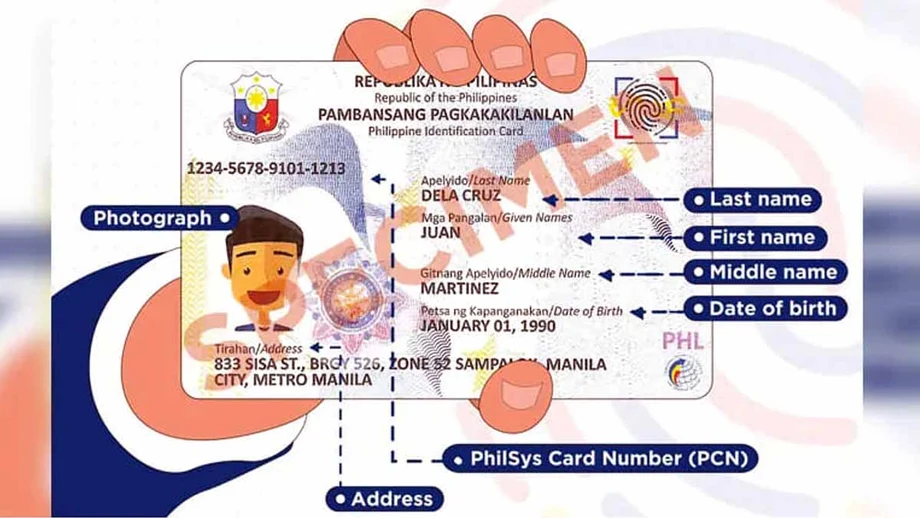
A PhilSys number is not a condition for joining. The order expressly says that its absence cannot prevent eligibility or registration, even though the number appears among the system's data fields.
Why Disability Advocates Want Existing Records Transferred
Disabled and neurodivergent Filipino self-advocates said in a November 5 statement that requiring fresh documents could impose costs on people who already hold valid IDs. Specialist consultations may be difficult to obtain or afford, particularly in rural areas.
The group urged the NCDA, local governments, the Department of Health and the Department of Information and Communications Technology (DICT) to transfer existing records into the new database instead of making individuals submit them again. This would put the work of connecting government records primarily on the agencies that hold them.
The self-advocates also called for genuine consultation with the disability sector throughout implementation. Their objection focuses on how fraud prevention is carried out and who bears the expense of satisfying new checks.
The administrative order already requires mobile and assisted registration. Teams are to serve remote, disadvantaged and underserved areas in coordination with barangays, with clear schedules, assigned personnel and logistical support. Assisted services must also reach people unable to attend fixed registration centers.
For someone who cannot easily travel, these provisions could determine whether registration is accessible in practice. Local contact points and deployment schedules will be as important as the database itself.
Lifetime Validity and Five-Year Revalidation
People with permanent disabilities are to receive unified IDs valid for life, subject to demographic updates or checks for record accuracy. People with nonapparent disabilities are to undergo revalidation every five years, or as specified in implementing guidelines.
The two categories can overlap. A disability may be permanent without being visible to another person. The self-advocates pointed to hearing and neurodevelopmental conditions as examples and challenged an interpretation of permanence that appears to favor visible conditions.
The order directs an interagency group to develop a standardized disability assessment tool. Its application will matter for people whose conditions are both lasting and nonapparent, because the order sets out lifetime validity and periodic revalidation in separate provisions.
The NCDA order places an explicit limit on how revalidation may affect access to support:
No Persons with Disabilities shall have benefits suspended or denied without due process.
Due process means a person must receive a fair procedure before an adverse decision takes effect. The order also requires revalidation to be accessible, nondiscriminatory and free of unnecessary burdens, with reasonable accommodations for the person's needs.
How the New IDs Will Be Checked
Each unified ID carries a unique alphanumeric number and a QR code for verification. The number is generated through the central system, replacing the reliance on different local card designs that the NCDA says are more vulnerable to forgery.
Businesses and government offices will be able to scan the QR code and check the credential against the national database. Previously, verification could involve the Department of Health registry or contacting the issuing PDAO, with incomplete registry updates making checks harder.
The system also records the government personnel involved in each application. The NCDA says it can trace who entered a person's information, who approved registration and who printed the card. This creates a record of official actions that investigators can examine when an ID is questioned.
People who invent illnesses to obtain PWD IDs may face criminal charges, including falsification of public documents. Government employees who assist them may face administrative penalties or criminal charges, including graft. NCDA spokesperson Walter Jason Alava said cases were ongoing, but no individuals had yet been penalized.
Lawyer Romulo Macalintal has urged action against officials who issue IDs to unqualified applicants in exchange for favors. He also said businesses should honor government-issued PWD IDs rather than identification cards issued by disability organizations.
What Information Will the Government Hold?
The unified registry will contain more than a name and photograph. The order lists disability type and severity, cause of disability, functional limitations, dates of issuance and renewal, and contact details for the issuing local government. Indigenous group membership and gender identity are optional fields.
The Department of Social Welfare and Development (DSWD) and NCDA will jointly administer the registry, with technical support from DICT. Local governments will maintain the records that supply it. An interagency working group includes health, local government, trade, statistics and privacy agencies, alongside PDAO representation.
The order requires data minimization, meaning agencies should collect only information needed for registration, verification and services. Access must be limited according to an employee's duties. Formal agreements must define the purpose, scope, duration and responsibilities of data sharing.
Photographs may be used for visual identity checks. The order bars their use for automated facial recognition or biometric profiling, where software analyzes physical features to identify or categorize someone.
Security requirements include encryption, access controls, activity logs and regular assessments. Registrants must be informed of their rights to access and correct information and to object to processing under the Data Privacy Act of 2012. Inactive, canceled and deceased records are to be securely archived for accountability and audit purposes.
What Cardholders Should Expect Next
The next major target is December 2027, when the NCDA aims to have all persons with disabilities registered in the unified system. Reaching it requires further local government adoption, registration assistance and the transfer or checking of millions of individual records.
Existing valid cards remain usable during the transition. Cardholders can prepare by checking their local PDAO's schedule, keeping their current ID and identity documents available, and asking which requirements apply to an existing holder rather than a new applicant.
The rollout brings two practical changes together: a national method for verifying credentials and a new registration obligation for people who already depend on those credentials. Its rules require local offices to carry out that work while maintaining access to benefits, offering assistance and protecting sensitive information.
Key Points
- Nearly 3 million existing PWD ID holders must register under the unified digital system.
- The NCDA targets completion by December 2027; old cards could be phased out by 2030.
- Existing valid cards remain usable during the transition, and printed unified cards can be requested.
- About 1,100 of 1,642 local governments had adopted the system, with more than 190,000 registrations announced.
- A PhilSys number is not required for eligibility or registration.
- The order provides lifetime IDs for permanent disabilities and revalidation every five years for nonapparent disabilities.
- Advocates want existing records transferred without imposing fresh consultation costs on cardholders.
- The rules require accessible registration, privacy safeguards and due process before benefits are suspended or denied.