One ID should settle the identity check
Philippine government agencies should generally accept one valid identification document, especially the National ID, instead of asking people to produce a second card simply to confirm who they are, Anti-Red Tape Authority Director General Secretary Ernesto V. Perez said.
Contents
- One ID should settle the identity check
- What the two laws mean at the service counter
- Which identification documents were mentioned?
- Why banks require a separate explanation
- National ID refusal can carry a financial penalty
- How to raise a complaint with ARTA
- Photocopy charges must appear in the charter
- Public service includes the waiting area and staff conduct
- Key Points
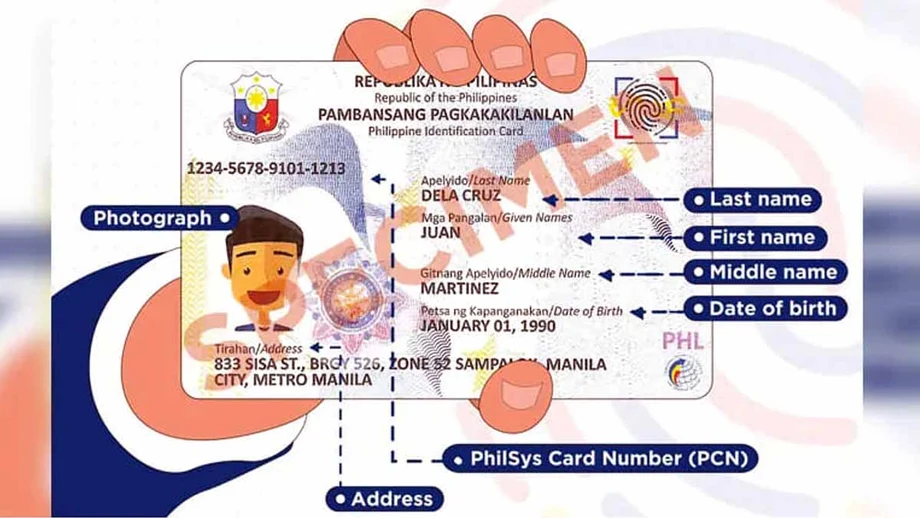
Perez cited Section 12 of Republic Act No. 11055, the Philippine Identification System Act, which provides that a Philippine Identification card, or PhilID, or a PhilSys Number constitutes sufficient proof of identity for government transactions, subject to proper authentication. Authentication means checking that the identity credential is genuine and belongs to the person presenting it.
The guidance covers national government agencies and local government units. For someone applying for a public service, it means that an identity check should not become an extra trip to obtain another identification card when a valid National ID already meets that purpose.
Perez explained the rule in a statement addressing requests for multiple IDs:
"Therefore, where the sole purpose is to establish a person's identity, a government agency should generally not require a second government-issued ID once a valid PhilID has been presented," he said.
Agencies may still need documents showing that an applicant qualifies for a benefit or has permission to act for another person. The requirement should match that separate purpose, Perez said, rather than repeat the same identity check.
Perez also encouraged complaints about institutions, including banks, that demand two IDs. His subsequent explanation, however, specified that the government policy he was describing covers government agencies, including local government units. Banking identification requirements need to be considered under the rules governing financial institutions.
What the two laws mean at the service counter
Republic Act No. 11055 supplies the specific basis for accepting the National ID. Perez also cited Republic Act No. 11032, the Ease of Doing Business Law, in explaining why agencies should avoid unnecessary, excessive or redundant requirements.
A redundant requirement asks a person to provide information that has already been adequately established. If an authenticated National ID has answered the question of identity, asking for another ID for the same reason repeats the task.
Perez said requirements must have a basis in law or appear in the agency's Citizen's Charter. That charter is the published guide explaining how a person obtains a service, including the documents and fees involved. It gives applicants something concrete to check when a counter employee asks for an extra document or payment.
The practical question is what the requested paper is meant to establish. An identity document answers who a person is. Proof of eligibility answers whether that person meets the conditions for a service. Proof of authority answers whether someone may act on another person's behalf.
Perez described how agencies should handle those separate needs:
"In such cases, the additional requirement should be the specific document needed to establish the required information, rather than another valid ID whose purpose is likewise only to establish identity," he pointed out.
Which identification documents were mentioned?
The guidance discussed alongside Perez's remarks cited Bangko Sentral ng Pilipinas Circular No. 608 and its list of acceptable identification documents. The examples extend beyond a passport or driver's license, a useful detail for people who do not hold either document.
The documents listed include:
- Philippine passport, driver's license and Professional Regulation Commission ID.
- National Bureau of Investigation clearance, police clearance, Postal ID, Voter's ID and Barangay Certification.
- Government Service Insurance System e-Card, Social Security System card and Senior Citizen Card.
- Overseas Workers Welfare Administration ID, OFW ID and Seaman's Book.
- Alien Certificate of Registration or Immigrant Certificate of Registration.
- IDs issued by government offices or government corporations, including the Armed Forces of the Philippines and the Home Development Mutual Fund.
The cited list also includes certain disability and social welfare certifications, Integrated Bar of the Philippines IDs, and company IDs issued by private entities or institutions registered with, supervised or regulated by the BSP, Securities and Exchange Commission or Insurance Commission.
Why banks require a separate explanation
Perez's invitation to complain included people asked for two IDs at banks. His later clarification placed the government policy within a specific boundary: government agencies and local government units.
BSP Circular No. 608 provides the banking context mentioned in the coverage of his remarks. A customer dealing with a bank should identify which document the institution is requesting and the reason it gives, particularly when the customer has already presented a National ID.
The distinction matters because a transaction can involve several checks. Confirming a customer's identity is one task; obtaining information or documents needed for the particular service is another. Perez's explanation about government agencies focuses on avoiding repeated requests that serve only the first task.
People reporting a bank or government office can make their complaint more specific by recording whether staff rejected the National ID, demanded another ID for the same purpose, or requested a different document relating to the transaction.
National ID refusal can carry a financial penalty
Akbayan Representative Chel Diokno has reminded the public that refusal to accept the National ID without a valid reason can carry a fine of up to P500,000. He cited Republic Act No. 11055 and Executive Order No. 162.
The phrase "up to" matters: P500,000 is the stated maximum, while a complaint must still be assessed under the applicable rules. The reason given for refusing the ID is therefore an important part of the incident record.
The Philippine Statistics Authority accepts complaints concerning National ID refusal through [email protected] and the PhilSys hotline, 1388. Complainants should provide the establishment's name and address, the date and time of the incident, and the explanation staff gave.
Those details help identify both the office involved and the decision being challenged. A complaint describing the actual request is more useful than one saying only that the transaction was difficult.
How to raise a complaint with ARTA
ARTA accepts complaints through the online form on its website and by email at [email protected]. Perez encouraged people who continue to encounter demands for two IDs in government transactions to report the experience.
Perez issued a direct appeal to applicants facing that situation:
"If an agency still requires two valid IDs, do not hesitate to report them to ARTA so that action can be taken," Perez said.
Some government agencies and local governments also have websites or portals where people can submit complaints during weekends. These channels allow a person to lodge a concern outside office hours, although Perez gave no specific response deadline for those submissions.
People dissatisfied with an agency's AI virtual assistant can email ARTA directly. That provides another route when an automated conversation does not resolve a problem or cannot adequately address the details of a transaction.
A useful complaint should distinguish between the service being sought and the obstacle encountered. For an ID dispute, that means naming the office, describing the identification presented and recording what additional document staff requested.
Photocopy charges must appear in the charter
Perez also addressed complaints about photocopy fees. He said the price per copy must be stated in the agency's Citizen's Charter. If the charge is absent from the charter, the agency should not collect it.
A small photocopy payment can matter to an applicant who has already paid for transport or taken time away from work. A published price gives that person a way to check the charge before paying and a clear basis for questioning an unexplained collection.
The ID requirement and the photocopy fee involve the same practical concern: applicants need to know in advance what an office requires. The Citizen's Charter is the reference point Perez identified for checking both documentary requirements and listed charges.
Public service includes the waiting area and staff conduct
ARTA has also issued a circular directing government offices to provide comfortable, orderly waiting areas, Perez said. Offices should have a public assistance and complaints desk, as well as special lanes for senior citizens and persons with disabilities.
These arrangements affect how people experience a transaction before they reach the counter. An assistance desk gives applicants somewhere to take a question or complaint, while designated lanes provide a service route for people who may need additional accommodation.
Perez said rude treatment by government employees is prohibited under the Code of Conduct and Ethical Standards for Public Officials and Employees. His message was that public service is a citizen's right and that government has an obligation to deliver it properly.
Perez also said the number of fixers had fallen, particularly at the Land Transportation Office. Fixers are intermediaries who offer to arrange or speed up transactions outside the normal process. He gave no figures measuring the decline.
For applicants, the immediate steps are concrete: present the required identification, check the Citizen's Charter when another document or fee is requested, and record the details if a complaint becomes necessary. ARTA's role is to monitor agencies and address obstacles that make public transactions unnecessarily difficult.
Key Points
- One valid ID, especially an authenticated National ID, should generally be sufficient to establish identity in government transactions.
- Perez clarified that the government policy covers national agencies and local government units.
- Agencies may request separate documents establishing eligibility or authority to act for someone else.
- ARTA accepts complaints through its online form and [email protected].
- National ID refusal complaints can also go to [email protected] or hotline 1388.
- Refusing the National ID without a valid reason can carry a fine of up to P500,000.
- Photocopy charges must appear in the agency's Citizen's Charter, according to Perez.
- Government offices should provide orderly waiting areas, complaints desks and special lanes for senior citizens and persons with disabilities.