A Major Expansion of Korea's Computing Power
South Korea has secured more than 260,000 Nvidia Blackwell artificial intelligence processors in an expansion intended to lift its stock of advanced AI chips from roughly 65,000 to more than 300,000. Announced during the APEC gatherings in Gyeongju, the allocation brings together the government and some of the country's largest technology and manufacturing companies.
Contents
- A Major Expansion of Korea's Computing Power
- How the Processors Will Be Distributed
- Naver's Cloud and Korea's Language Models
- Samsung, SK and Hyundai Plan AI Factories
- What Blackwell Changes for AI Workloads
- Sovereign AI Links Local Control With Exports
- Electricity, Water and Land Become Central Constraints
- US Export Rules Shape the Wider Market
- Memory Suppliers and Data Center Builders Stand to Gain
- Networks, Supercomputing and Research Join the Expansion
- Execution Will Determine the Return on Investment
- At a Glance
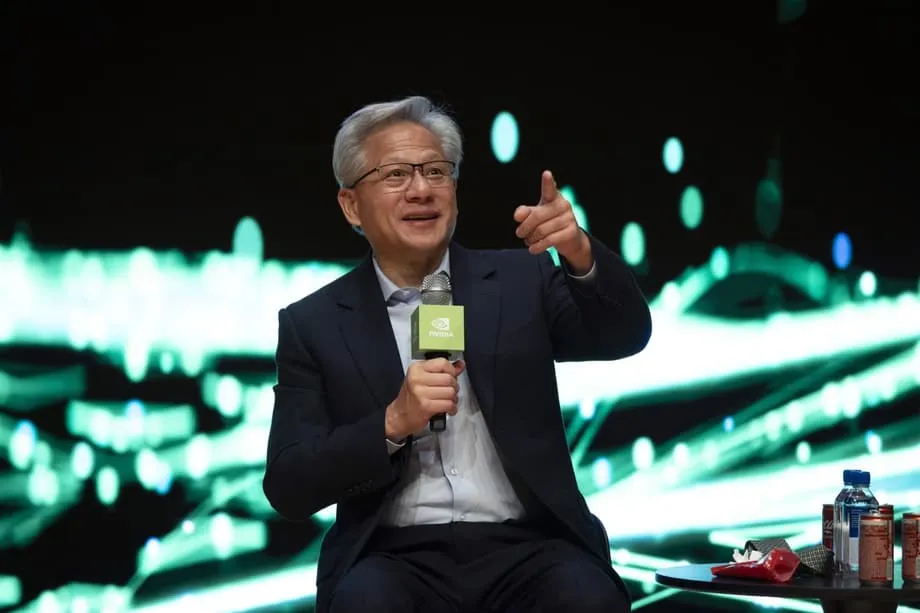
President Lee Jae Myung met Nvidia chief executive Jensen Huang and corporate leaders during the gatherings. Government officials describe the new computing capacity as the foundation for sovereign AI: infrastructure that lets Korean institutions develop and operate important AI systems domestically, instead of depending on foreign cloud services.
Industry estimates put the investment at up to $10 billion over several years. The parties did not disclose a final price or a detailed delivery schedule. Deliveries are set to begin in 2026 and expand in phases, allowing operators time to build facilities, train engineers and develop applications.
The scale is substantial. The allocation of more than 260,000 processors is four times the country's existing stock of roughly 65,000. Executives and policymakers cited a target of third place worldwide for available computing capacity, behind the United States and China, while describing the agreement as the beginning of a larger effort.
The central economic ambition is to turn computing power into products and services that Korea can export. Researchers and startups would gain access to equipment they could struggle to buy themselves, while manufacturers would use AI to improve semiconductor production, develop autonomous driving systems and operate robots. The investment therefore stretches beyond data centers into industries that already form a large part of Korea's export economy.
How the Processors Will Be Distributed
The Ministry of Science and ICT plans to deploy more than 50,000 Blackwell graphics processing units, or GPUs, across the National AI Computing Center and sovereign cloud providers, including Naver Cloud, Kakao and NHN Cloud. GPUs are processors that can perform many calculations at the same time, a capability that makes them useful for AI.
Naver Cloud separately plans to add more than 60,000 GPUs. Samsung Electronics, SK Group and Hyundai Motor Group each intend to install roughly 50,000 units in advanced data centers supporting manufacturing, mobility and robotics. Public infrastructure and corporate AI factories are therefore both central to the deployment.
The National AI Computing Center is intended to give universities, research institutes and startups shared access to advanced computing. Its workloads will include training large language models in Korean, developing models for science and engineering, and running generative AI applications for healthcare, finance and public services. Generative AI produces content such as text or images from patterns learned during training.
Officials say shared access will reduce barriers for small teams that cannot afford their own large clusters of processors. The aim is to speed up experiments and widen access to modern tools, rather than concentrate all the new capacity inside the largest companies.
The announced rollout follows a broad sequence:
- During the APEC gatherings in Gyeongju, the government, Nvidia and corporate leaders outlined the allocation and industrial partnerships.
- In 2026, deliveries are set to begin, with Naver Cloud slated to lead the first wave of installations.
- Through the late decade, phased expansion is intended to match processor deliveries with facilities, trained staff and new applications.
Naver's Cloud and Korea's Language Models
Naver Cloud's first tranche is expected to include about 13,000 Blackwell and other Nvidia GPUs, before scaling toward more than 60,000. Its sovereign cloud will host enterprise applications, digital twins for heavy industry and physical AI, Nvidia's term for systems that combine simulation, robotics and deployment in the real world.
A digital twin is a software representation of a physical object or operation, such as a factory production line. Engineers can use it to test changes before altering equipment. Domestic cloud providers are expected to keep sensitive data inside national borders while offering performance comparable to the largest foreign clouds.
Korea is also backing a consortium that includes Naver Cloud, LG AI Research, SK Telecom, NC AI and Upstage to build foundation language models for Korean users and industries. Foundation models are broadly trained systems that can be adapted for particular tasks. The teams will use Nvidia NeMo and open Nemotron datasets.
The ambition extends beyond translation and chat. Developers want stronger reasoning, retrieval and tool use, alongside a command of technical vocabulary used in shipbuilding, chipmaking, finance and healthcare. Retrieval helps a model find relevant information, while tool use lets it work with other software to complete a task.
The government wants small and medium companies to benefit by renting computing capacity at fair prices. Together with shared public infrastructure, that approach is intended to spread the gains beyond the largest conglomerates and support businesses developing their own models and services.
Samsung, SK and Hyundai Plan AI Factories
Samsung Electronics plans a semiconductor AI factory combining Blackwell GPUs, Nvidia's cuLitho library and Omniverse simulation. The work will target better chip yields, improved lithography steps and software models of entire production lines. Yield means the share of manufactured chips that work as intended; lithography is the process used to create tiny patterns during chip production.
Samsung executives say trained models will be embedded in products ranging from smartphones to appliances. Digital twins will also let the company test changes to factories in software before making them on real equipment.
SK Group is designing an AI factory capable of hosting more than 50,000 Nvidia GPUs for semiconductor research, development and production. Its telecom arm plans a sovereign industrial cloud using Nvidia RTX Pro 6000 Blackwell Server Edition GPUs for robotics.
That industrial cloud is intended to help domestic manufacturers test and deploy robot workflows, machine vision and safety systems in shorter cycles. Machine vision uses cameras and software to interpret what is happening, allowing equipment to inspect products or respond to its surroundings.
Hyundai Motor Group plans to use about 50,000 Blackwell GPUs to train and validate models for autonomous driving, AI inside vehicles and industrial automation. Hyundai and Nvidia also outlined new centers focused on physical AI and regional data infrastructure, with investment commitments of approximately $3 billion.
The companies' projects connect AI development to factory operations and mobility. Samsung and SK are concentrating substantial capacity on semiconductor work, while Hyundai is linking its computing expansion to vehicles, smart factories and industrial automation.
What Blackwell Changes for AI Workloads
Nvidia's Blackwell family is its flagship platform for training and serving very large AI models. GPUs were once best known for gaming graphics, but training a large language model or an autonomous driving system now requires thousands of accelerators working together inside specialized data centers.
Nvidia holds about 92 percent of the data center GPU market by sales. Blackwell combines high computing throughput with stacks of high bandwidth memory, known as HBM3E, placed close to the processor. That memory helps move large amounts of data quickly enough to keep the processors working.
The architecture also uses fast interconnects to link GPUs into a single logical accelerator. In practical terms, many processors can work together as a coordinated system. Engineers can fit larger models on a computing node, reduce delays as data moves between GPUs and finish training runs in days instead of weeks.
Blackwell also targets inference, the stage when a trained model supplies answers or processes new information. Its features reduce the energy needed for each token or image processed. A token is a small unit of text that a language model handles, such as a word or part of a word.
Lower energy use per operation matters when a service responds to millions of users or when robots run AI at the edge, close to where data is collected. Support for both training and inference gives buyers flexibility as workloads move from building models to using them at scale.
For a carmaker, faster computing can mean updating perception models more frequently instead of retraining them every few weeks. For a factory, it can mean creating a digital twin to test a layout or a new tool recipe before changing the production line.
Engineers can also run AI informed by physics, combining simulations with data, then send the best operating policies back to robots or process controllers. The value of the hardware will depend on how effectively those capabilities become part of daily industrial work.
Sovereign AI Links Local Control With Exports
Sovereign AI means the ability to build, train and operate critical models on infrastructure governed by domestic institutions, using local data under local law. Korea's goal is to retain strategic capabilities at home while remaining connected to the global markets where its companies sell products, components and services.
Manufacturers could train models on sensitive production data without sending it overseas. Hospitals and research laboratories could develop medical models with stricter privacy control, while public agencies could apply local safety and auditing rules to generative systems.
Officials expect shared computing to lower startup costs and encourage more experiments and new companies. Large businesses would gain tools for improving yields and planning supply chains. Export revenue could come from software, models and services built around Korean manufacturing knowledge.
Physical AI is closely connected to that industrial base. Engineers train models in simulations that reproduce the physics of factories, warehouses and roads, then deploy them in robots and vehicles. SK Telecom's industrial cloud powered by RTX Pro GPUs and Hyundai's mobility systems are aligned with that process.
Digital twins running on Blackwell clusters would feed information back to the factory floor, where robots and controllers could continue learning from real operations. The commercial ambition is to sell intelligence that upgrades plants and products abroad, alongside Korea's existing exports of cars and chips.
Nvidia chief executive Jensen Huang described that ambition during meetings in Gyeongju, presenting Korean computing capacity as the basis for another kind of export:
Korea can now export intelligence as a new driver of global transformation.
Electricity, Water and Land Become Central Constraints
Data centers housing tens of thousands of accelerators need large sites, high voltage grid connections and specialized cooling. Power consumption depends on the configuration, but demand adds up quickly as multiple facilities begin operating. Water use also rises as operators adopt liquid cooling to manage heat.
South Korea already faces energy security decisions involving nuclear plants, imports of liquefied natural gas and a growing share of renewable energy. The computing expansion will require grid upgrades, electricity contracts covering many years and advanced cooling systems, including loops using warm water and the reuse of heat.
Officials say Nvidia is working with Korean authorities and operators on designs that reduce energy per computation, with the aim of keeping capacity growth from overwhelming local resources. Lower energy use for each calculation is especially relevant when the number of calculations rises sharply.
Operators are exploring coastal facilities cooled with seawater, recycled water systems inland and partnerships that use waste heat for district heating. District heating supplies warmth to multiple buildings through a shared network.
Regulators can encourage strict power usage effectiveness targets, clear permitting and incentives to shift computing loads to hours when electricity demand is lower. Power usage effectiveness measures how much of a data center's electricity goes to computing equipment compared with supporting systems such as cooling.
Communities will judge projects by their effects on the grid, water resources and carbon emissions. Korea's climate goals will press operators to improve efficiency, recover heat and obtain cleaner electricity, while maintaining reliable service for laboratories and factories.
US Export Rules Shape the Wider Market
The agreement comes as United States restrictions on exports of the most advanced AI processors to China reshape global chip sales. Those controls, imposed on national security grounds, have reduced Nvidia's sales in China. Nvidia has responded by deepening partnerships in allied countries, including Japan, India and South Korea.
South Korea is a US treaty ally and is not subject to the bans focused on China for this class of chips. Licenses and technical specifications remain governed by Washington, making export policy part of the wider environment in which the Korean deployment will proceed.
US President Donald Trump signaled a harder line in a recent interview. He said the most advanced Blackwell processors should remain with American buyers, while leaving open the possibility of versions with lower capabilities being sold in China:
We do not give the Blackwell chip to other people.
The debate over access to China helps explain Nvidia's focus on markets such as South Korea. Nvidia has also expressed interest in selling to China if permitted, citing the need to fund research and serve global customers. For now, much of its growth is coming from projects in countries facing fewer restrictions and possessing the industrial capacity to build large AI facilities.
Memory Suppliers and Data Center Builders Stand to Gain
Each Blackwell unit can include up to eight stacks of HBM3E memory. Across the full deployment, that points to demand for more than two million high bandwidth memory modules. Samsung Electronics and SK hynix, leading HBM producers, stand to receive substantial orders.
TSMC will fabricate the core chips and perform advanced packaging, the work that brings processing and memory components together. Packaging capacity remains tight, so coordination among suppliers will be necessary to meet delivery targets.
Construction companies, power equipment suppliers and cooling vendors also stand to benefit as facilities expand. Operators will need local technicians trained in liquid cooling, dense power distribution and GPU cluster orchestration, which means coordinating large groups of processors so workloads run effectively.
The Ministry of SMEs and Startups and Nvidia's Inception initiative are preparing programs to help startups rent cluster time, use toolkits such as NeMo and CUDA, and move proofs of concept into production. These programs connect access to hardware with the software and support needed to turn an early demonstration into a working service.
Networks, Supercomputing and Research Join the Expansion
Samsung, SK Telecom, ETRI, KT, LGU+ and Yonsei University are working with Nvidia on AI radio access networks and 6G features aimed at lower power consumption and higher reliability. A radio access network connects mobile devices to the wider communications network; AI can help manage its operation.
The Korea Institute of Science and Technology Information plans a Center of Excellence connected to the HANGANG national supercomputer. Its work will include connecting quantum processors and GPU systems through the NVQLink open architecture.
These research and telecom projects extend the deployment beyond language models and factory automation. They connect the new computing capacity to scientific work and the development of future communications networks, alongside the industrial cloud and manufacturing projects.
Execution Will Determine the Return on Investment
Delivery schedules could slip if advanced packaging capacity tightens or HBM supplies run short. Changes in export policy could also affect planning. Reliance on a single vendor creates exposure even when that vendor dominates the market, and operators must budget for rapid hardware replacement cycles as new generations arrive.
Electricity and water are the most immediate constraints. Cybersecurity and model safety standards must also keep pace with deployment, especially as systems move into public services, healthcare and industrial operations.
Korea is pursuing phased rollouts through the late decade, more efficient rack designs and a wider set of hardware and software partners. Officials encourage a competitive ecosystem that includes future accelerators, support for open source software and vouchers allowing startups to test ideas on sovereign clusters.
The public and private alliances formed around the agreement provide a structure for coordinating training programs, security baselines and best practices. The central task is to connect the chips with facilities, people and useful applications, turning a large hardware allocation into productive computing capacity.
At a Glance
- South Korea has secured more than 260,000 Nvidia Blackwell processors, with its national AI chip stock expected to exceed 300,000.
- Industry estimates put the investment at up to $10 billion over several years; a final price was not disclosed.
- Public infrastructure will receive more than 50,000 GPUs, while Naver Cloud plans more than 60,000 and Samsung, SK Group and Hyundai each plan roughly 50,000.
- Deliveries are set to begin in 2026, followed by phased expansion through the late decade.
- Shared computing will support universities, laboratories and startups, alongside corporate projects in semiconductors, robotics and autonomous driving.
- Hyundai and Nvidia outlined approximately $3 billion in investment commitments for physical AI and regional data infrastructure centers.
- Electricity, cooling, water, component supplies and trained staff will shape the pace of deployment.
- Korea aims to turn domestic computing capacity and industrial knowledge into exportable AI models, software and services.