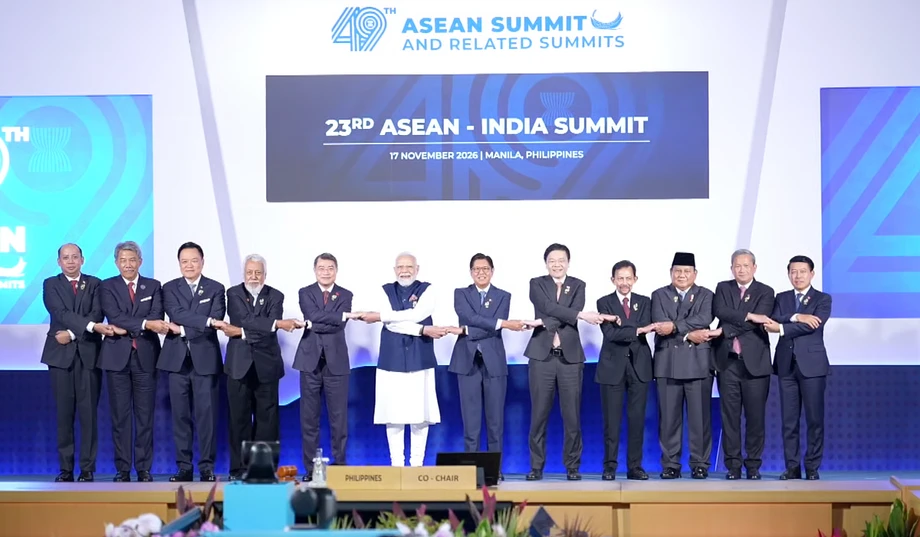
Manila proposal would widen access to India
India has proposed free electronic tourist visas for citizens of all 11 ASEAN countries, extending a travel incentive already available to several Southeast Asian nationalities across the entire regional bloc. Prime Minister Narendra Modi presented the plan at the 23rd ASEAN-India Summit in Manila on November 17, 2026, alongside proposals on maritime cooperation, technology, education and youth exchanges.
Contents
- Manila proposal would widen access to India
- Who would benefit from the offer?
- A free visa still requires an application
- Thailand and the Philippines already have free arrangements
- How much could visitors save?
- The dates behind the regional proposal
- Tourism is part of a much larger connection
- Students, young entrepreneurs and creative industries are also included
- Maritime safety and disaster response frame the wider effort
- Key Points
The offer covers Brunei, Cambodia, Indonesia, Laos, Malaysia, Myanmar, the Philippines, Singapore, Thailand, Timor-Leste and Vietnam. For eligible visitors, it would remove the visa fee while keeping the requirement to apply online and receive approval before travelling.
India's Ministry of External Affairs Secretary (East), Rudrendra Tandon, described the move during a briefing on Modi's visit. He said the prime minister:
unilaterally announced that India would henceforth be issuing gratis e-tourist visas to all citizens from ASEAN member states.
The Prime Minister's Office, however, listed the free visa initiative among nine proposals. An implementation date, the offer's duration, permitted stay, number of entries and detailed application conditions have not been published. Travellers should continue using the arrangements currently available to their nationality until the new rules appear.
Who would benefit from the offer?
ASEAN, the Association of Southeast Asian Nations, brings together 11 countries, including its newest member, Timor-Leste. The proposed benefit is based on citizenship, so its reach would extend across the bloc rather than only to residents of the Philippines, which hosted the summit.
Tourists from countries still paying for Indian e-tourist visas would receive the most direct financial benefit. Visitors already eligible for a free visa would need to check whether the eventual regional rules change their existing terms.
The proposal concerns tourism. Business travellers, students and people seeking medical treatment use separate visa categories and should follow the requirements for their purpose of travel. The summit package includes education and business cooperation, but those initiatives have their own arrangements.
A free visa still requires an application
An electronic visa, usually called an e-visa, is a travel authorisation requested online. Making it free removes the visa charge, while the application and approval process remain in place. Visa-free entry works differently: eligible visitors travel without first obtaining that visa, subject to the destination's entry conditions.
India's existing arrangements for Thai and Filipino tourists show how a fee waiver can operate. Travellers apply through the Indian government's official e-Visa portal and must receive approval before departure. They also remain subject to immigration requirements when entering India.
Earlier Indian embassy guidance for Filipino applicants put processing at 72 hours or longer. A traveller planning a short holiday therefore still needs time for the application, even when no visa fee is payable.
The distinction matters when budgeting and booking. A free tourist visa can lower the administrative cost of a trip, but flights, accommodation and other travel expenses remain. Travellers also need to select the correct visa category and follow its conditions.
Thailand and the Philippines already have free arrangements
Thai nationals can already obtain a free e-tourist visa allowing a stay of 30 days and two entries. That arrangement runs until December 31, 2027, or until further orders. Two entries allow a visitor to enter India, leave and return once within the applicable visa conditions.
Filipino nationals received a similar offer in 2025, following the Philippines' decision to grant Indian tourists visa-free entry from June 8 that year. India's original free visa arrangement ran from August 1, 2025, to July 31, 2026, with a stay of 30 days and two entries.
The Indian Embassy in Manila's visa guidance, updated on November 18, 2026, says the free arrangement for Philippine nationals has been extended. It gives no end date. Filipino applicants should check the terms and fee displayed when submitting their application.
The earlier Filipino scheme also had practical limits: the tourist visa could not be extended or converted into another visa category, and it did not authorise entry into protected or restricted areas. Visitors using that arrangement need to plan their itinerary and departure around those conditions.
How much could visitors save?
India's published e-tourist visa fee table shows that the financial benefit would vary by nationality and visa duration. It lists no charge for Indonesian and Myanmar nationals, and no charge for Malaysian nationals seeking a visa for 30 days.
For Brunei, Cambodia, Laos, Singapore, Timor-Leste and Vietnam, the table lists a fee of US$10 or US$25 for a visa lasting 30 days, depending on the season. Longer visa options can cost more. Removing a US$25 fee would save a family of four US$100 in visa charges if every family member otherwise paid that amount.
The portal also lists a bank transaction charge of 3% on fees and says payment must be completed at least four days before the expected travel date. The fee table is undated, and its Philippine entry differs from the embassy's newer guidance on the free visa extension. Applicants should use the current nationality rules and the amount shown during their application.
A regional waiver would therefore bring different changes to different travellers. Some would see a new saving; others would continue receiving a benefit already available under a national arrangement. For tourism businesses, the broader value would be a simpler message promoting India across Southeast Asia.
The dates behind the regional proposal
India's proposed ASEAN offer follows earlier changes between individual countries. The sequence shows a move from selected national arrangements towards a benefit covering the whole grouping.
- June 8, 2025: The Philippines began granting Indian tourists visa-free entry.
- August 1, 2025: India's initial free e-tourist visa scheme for Filipino citizens began, with an original end date of July 31, 2026.
- November 17, 2026: Modi presented the regional free visa proposal at the 23rd ASEAN-India Summit in Manila.
- November 18, 2026: Updated Indian Embassy guidance in Manila listed an extension of the Filipino arrangement without specifying an end date.
- December 31, 2027: The existing Thai free visa arrangement is scheduled to run until this date, or until further orders.
The wider offer is unilateral, according to Tandon's description. India is offering the benefit without making it dependent on equivalent concessions for Indian travellers. Indian passport holders must continue checking the entry requirements of each ASEAN destination.
Tourism is part of a much larger connection
India already has direct flights to nine ASEAN countries, Modi told the summit. That gives the visa proposal an existing transport network through which it could encourage visits. Direct routes reduce the need for connecting flights, while a fee waiver lowers one part of the cost of preparing a trip.
Destinations such as Delhi, Agra, Jaipur, Goa and Kerala could benefit if easier and cheaper visa arrangements bring more tourists. Additional visitors would create spending opportunities for hotels, restaurants, guides, airlines and local transport providers. The scale of that benefit would depend on how many people travel and where they spend their time.
Modi placed the initiative within India's Act East Policy, its approach to building closer relations with Southeast Asia. He told leaders that India had undertaken more than 100 initiatives to strengthen connections between people since 2014, launched nearly 250 quick impact projects and provided more than 10,000 scholarships for skills development.
Those figures put the visa proposal alongside years of smaller exchanges, training and practical projects. India and ASEAN will mark 35 years of dialogue relations in 2027, giving the travel initiative a place in a wider diplomatic anniversary.
Students, young entrepreneurs and creative industries are also included
Modi's package proposed more scholarships for ASEAN students at Nalanda University and an ASEAN-India Youth Connect initiative. The youth programme would include a summit, exchanges for young parliamentarians and hackathons involving new businesses.
A hackathon brings participants together for a limited period to build an idea, prototype or solution to a defined problem. The proposed ASEAN-India Space Hackathon would apply space technology to areas such as agriculture and resource management, connecting technical cooperation with everyday needs.
India also suggested an ASEAN-India Creative Partnership Pavilion at the World Audio Visual and Entertainment Summit, known as WAVES, in 2027. Alongside tourism, these proposals would create more opportunities for students, entrepreneurs and creative professionals to meet and work together.
Modi's bilateral discussions in Manila covered related practical areas. Tandon said talks with the Philippines included public digital infrastructure and railway cooperation, while discussions with Singapore included investment and skills training.
Maritime safety and disaster response frame the wider effort
India's proposed ASEAN-India Maritime Cooperation Plan would cover port and transport connections, scientific research, disaster management, Coast Guard cooperation, seafarer security and awareness of activity at sea. Maritime domain awareness means using information to understand what is happening in surrounding waters, helping authorities identify risks and coordinate responses.
Leaders adopted the ASEAN-India Joint Statement on Cooperation in Disaster Management. It seeks closer links between India's National Disaster Management Authority and ASEAN's disaster bodies, including work on early warning systems, satellite data, joint training and recovery after disasters.
The summit proposals also covered cyber forensics training, nuclear energy technical exchanges and cooperation on mining and critical minerals. Cyber forensics involves examining digital evidence to investigate crimes. Critical minerals are materials needed for manufacturing and technologies whose supplies governments want to keep reliable.
At the separate 21st East Asia Summit during the same visit, Modi proposed a seafarer safety initiative focused on joint training and emergency response, along with an Indian hosted cybercrime conference. Leaders adopted a statement on online scams and related offences, including cooperation against trafficking and exploitation linked to scam centres.
Tandon said he expected the ASEAN proposals to reach the implementation phase by the next summit. For travellers, the practical milestone will be the publication of visa rules and corresponding changes to the application system. Until then, existing national arrangements determine who can apply for a free tourist visa.
Key Points
- Modi proposed free e-tourist visas for citizens of all 11 ASEAN countries in Manila on November 17, 2026.
- The regional scheme's start date and detailed conditions have not been published.
- A free e-visa removes the fee but still requires an online application and approval before travel.
- Thai and Filipino nationals already have free visa arrangements with specific conditions.
- The proposal is unilateral and gives Indian travellers no automatic new entry benefits in ASEAN countries.
- The offer forms part of a wider package covering tourism, education, technology, maritime cooperation and disaster response.