Two amendments put judicial independence under scrutiny
Pakistan's 26th and 27th constitutional amendments have placed its highest courts under political control and weakened their ability to protect people against rights violations, the International Commission of Jurists (ICJ) concludes in a report examining changes introduced in October 2024 and November 2025.
Contents
- Two amendments put judicial independence under scrutiny
- What changed in the courts?
- How the changes unfolded
- Why international legal standards matter
- Peshawar becomes a test of access to justice
- Security arguments meet demands for hearings
- Imran Khan's medical appeal puts enforcement in focus
- A wider warning from Pakistan's rights commission
- What the new court's first year figures show
- Key Points
The assessment comes as the Federal Constitutional Court completes its first year, with 8,735 cases decided and 6,657 new cases filed. Alongside those figures, disputes over detention in Khyber Pakhtunkhwa and medical treatment for imprisoned former prime minister Imran Khan show the practical stakes: which court can hear an urgent complaint, how quickly it acts and whether its orders are carried out.
The ICJ report, Judicial Capture: Independence of the Judiciary in Pakistan after the 26th and 27th Constitutional Amendments, examines the High Courts, Supreme Court and Federal Constitutional Court against Pakistan's international legal obligations. Its central finding is that the combined effect of the amendments and their implementation has removed essential safeguards of judicial independence.
Santiago Canton, the ICJ's secretary general, described the changes as a transfer of control to the executive, the branch of government responsible for carrying out laws.
"The 26th and 27th amendments have done exactly what we feared: they have placed Pakistan's highest courts under the control of the executive. When the courts are captured, no one is left to hold the government to account, and victims of human rights violations have nowhere to turn," Canton said.
The ICJ is calling for constitutional and statutory changes, including revising or repealing provisions that conflict with international standards. The Human Rights Commission of Pakistan (HRCP) has separately called for both amendments to be reviewed.
What changed in the courts?
The 26th Amendment changed the Judicial Commission, the body involved in selecting judges. The 27th Amendment then created the Federal Constitutional Court and transferred constitutional litigation from the Supreme Court to the new institution.
Constitutional litigation concerns the country's highest legal rules, including whether government actions respect fundamental rights and whether public bodies have acted within their powers. Moving that work changes which judges decide some of Pakistan's most politically sensitive disputes.
The government's stated case for a specialist constitutional court is that separating these disputes from ordinary appeals can speed up justice and ease pressure on the Supreme Court. Critics, including lawyers and opposition figures, argue that the appointment arrangements and redistribution of authority have weakened judicial autonomy.
The changes also formed part of a wider redistribution of state power. The 27th Amendment created the chief of defence forces position and protections for officers holding five star rank. December 2025 coverage of the military and judicial changes described how stronger military command arrangements accompanied the transfer of constitutional cases to the new court.
How the changes unfolded
The dispute has developed over more than two years, from changes to judicial appointments to restrictions on a provincial High Court's ability to hear cases.
- October 2024: Pakistan passed the 26th Constitutional Amendment, changing the institutional framework governing the judiciary, including the Judicial Commission.
- November 2025: The 27th Constitutional Amendment created the Federal Constitutional Court and reassigned constitutional litigation from the Supreme Court.
- November 13, 2025: Supreme Court Justices Syed Mansoor Ali Shah and Athar Minallah resigned after President Asif Ali Zardari signed the 27th Amendment.
- October 12, 2026: The federal government imposed an emergency and governor's rule in Khyber Pakhtunkhwa, followed by military deployment and detentions of PTI workers and leaders.
- November 5, 2026: The Federal Constitutional Court suspended Peshawar High Court proceedings in cases brought under Article 199 on or after October 12.
- November 2026: The constitutional court narrowed that restriction, while the ICJ and HRCP called for changes to the constitutional framework.
The resignations of Shah and Minallah brought opposition from within the Supreme Court into public view. Their departure preceded the later disputes over how the new court would exercise its authority over other courts.
Why international legal standards matter
Pakistan is a party to the International Covenant on Civil and Political Rights (ICCPR). Article 14 requires an independent and impartial tribunal in proceedings covered by its fair hearing guarantees. Article 2(3) requires an effective remedy for violations of rights protected by the treaty.
An effective remedy means a practical way to challenge a violation and obtain appropriate relief. For someone detained by the state, that can involve access to a court able to examine the detention and order action when it is unlawful.
The ICJ concludes that Pakistan's highest courts no longer have the institutional guarantees required by Article 14, the United Nations Basic Principles on the Independence of the Judiciary and other international standards. It connects those structural changes to a reduced ability to secure remedies under Article 2(3).
The organisation also acknowledges longstanding problems inside the judiciary, including opaque appointments and decisions that intruded into the responsibilities of other institutions. Canton said those problems required reform rather than political control.
"Pakistan's judiciary needed reform. Judges were appointed without transparency, and at times the courts overstepped into the domain of other institutions. None of these problems have been fixed. Instead, the Government used people's legitimate frustration with the courts as a pretext to bring them under its full control," Canton said.
Peshawar becomes a test of access to justice
The Peshawar High Court dispute shows how decisions about jurisdiction, meaning a court's legal authority to hear a case, affect people seeking release from detention.
After the October emergency in Khyber Pakhtunkhwa, authorities detained hundreds of PTI workers and leaders under the Maintenance of Public Order Ordinance (MPO). Article 199 of the Constitution provides a route for petitioners to ask High Courts to review the legality of government action.
The Federal Constitutional Court's November 5 order suspended proceedings in Article 199 cases instituted on or after October 12. The Peshawar High Court subsequently stopped entertaining those petitions, prompting objections from lawyers, including the provincial bar.
A bench comprising Chief Justice Amin-ud-Din Khan and Justice Aamer Farooq later modified the order. It allowed the High Court to hear petitions except those challenging governor's rule, the emergency and MPO detention. The provincial bar was also allowed to join the case.
The modification reopened a broad category of litigation while keeping restrictions on the cases most directly connected to the emergency and detentions. The hearing was adjourned indefinitely, with no next hearing date announced.
Security arguments meet demands for hearings
Khyber Pakhtunkhwa authorities asked the constitutional court to maintain the restrictions, citing continuing security threats, terrorist networks and internal disturbances across the province. They said military deployment remained necessary throughout Khyber Pakhtunkhwa and that they did not intend to withdraw the armed forces from any district.
PTI Chairman Barrister Gohar Ali Khan attended the hearing with lawyer Sardar Latif Khosa and sought permission for the Peshawar High Court to hear challenges to the emergency and governor's rule. Gohar also called for hearings for people detained under the MPO.
Speaking after the hearing, Gohar argued that detention must be accompanied by meaningful access to a court.
"Keeping people in jail while depriving them of access to a judicial forum for seeking justice amounts to a violation of fundamental rights," he said.
HRCP also criticised the constitutional court's intervention in the Peshawar High Court's jurisdiction. Its concern links the institutional dispute to a concrete consequence: restrictions on the judicial route available to people challenging state action.
Imran Khan's medical appeal puts enforcement in focus
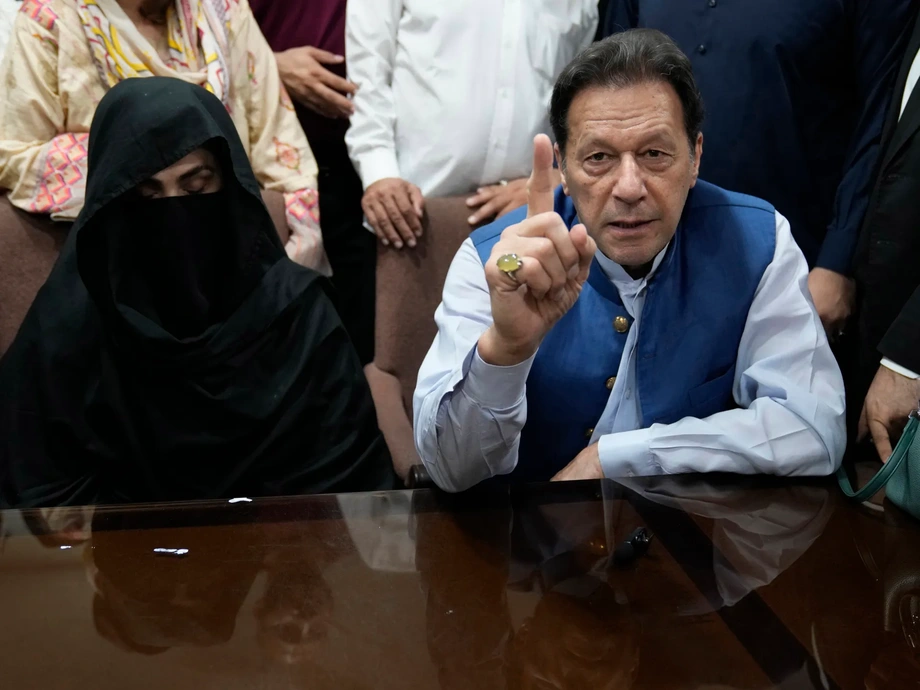
Imran Khan has raised a related complaint about access to judicial relief in an open letter addressed to the chief justices of the Federal Constitutional Court, Supreme Court and Islamabad High Court. His lawyer, Barrister Salman Safdar, shared the letter after meetings with him at Adiala jail on November 2 and November 11.
Khan alleged that his health and that of his wife, Bushra Bibi, had deteriorated, and that restrictions on contact with lawyers and family had impaired their ability to pursue their cases. The government disputes allegations that he has been denied care, saying he receives medical treatment and has been examined at the Pakistan Institute of Medical Sciences eight times.
Khan said the Supreme Court had directed on August 18 that he be shifted to a hospital, examined by a medical board and allowed family interaction. He alleged that the order had not been implemented and that his case was awaiting a hearing at the Federal Constitutional Court.
The former prime minister described what he saw as a narrowing route to relief after the amendments.
"After the constitutional amendments, however, that relief became narrow, and then it closed off altogether," Khan wrote.
His appeal brings two practical issues into the wider judicial debate: the speed of hearings involving health and whether government authorities comply with court orders.
A wider warning from Pakistan's rights commission
HRCP's statement followed its 40th annual general meeting and was issued by Chairperson Asad Iqbal Butt. The commission linked its call to review the amendments with concerns about censorship, surveillance, alleged misuse of criminal laws, enforced disappearances and arrests of political activists.
The commission highlighted the sentences of ten years in prison handed to human rights lawyers Imaan Mazari-Hazir and Hadi Chattha in October 2026. It described the verdicts as a chilling example of people being targeted for exercising constitutional rights.
HRCP also raised concerns about the detention of activists including Mahrang Baloch, Ali Wazir and Idris Khattak. It called for detainees to be brought before competent courts, arbitrary detention powers under the Anti-Terrorism Act to be repealed and internment centres to be abolished.
Its proposed changes extend beyond the two amendments. HRCP called for an end to military trials of civilians, withdrawal of lifetime immunity for public officeholders and genuine agreement across political parties before future constitutional amendments.
What the new court's first year figures show
The Federal Constitutional Court's first anniversary brought an official ceremony, a commemorative stamp, an electronic court launch and figures showing 8,735 cases decided against 6,657 new filings. Decisions exceeded new filings by 2,078 cases, about 31 percent.
The court inherited constitutional litigation from the Supreme Court, giving it an existing caseload alongside new petitions. Its chief justice highlighted limits on the time allowed for arguments and administrative measures intended to accelerate proceedings.
A fuller public assessment would require details about the cases themselves: their age, subject, reasons for adjournment, judgments awaiting release and compliance with final orders. Those measures would help litigants understand how long urgent rights claims take and what happens after a ruling.
The ICJ's proposed response is structural: revise or repeal provisions inconsistent with judicial independence and establish a more transparent, inclusive appointments process. HRCP's review demand points in the same direction. For people seeking release, medical care or protection from unlawful state action, the immediate priorities remain access to a hearing and enforcement of the resulting decision.
Key Points
- The ICJ says the combined effect of Pakistan's 26th and 27th amendments has placed the highest courts under political control.
- The Federal Constitutional Court took over constitutional litigation from the Supreme Court under the 27th Amendment.
- Peshawar High Court petitions challenging the Khyber Pakhtunkhwa emergency, governor's rule and MPO detention remain restricted under the modified order.
- Imran Khan alleges an order concerning his medical treatment remains unimplemented. The government says he receives medical care.
- The constitutional court decided 8,735 cases and received 6,657 new filings in its first year.
- The ICJ seeks constitutional and statutory changes, while HRCP has called for both amendments to be reviewed.