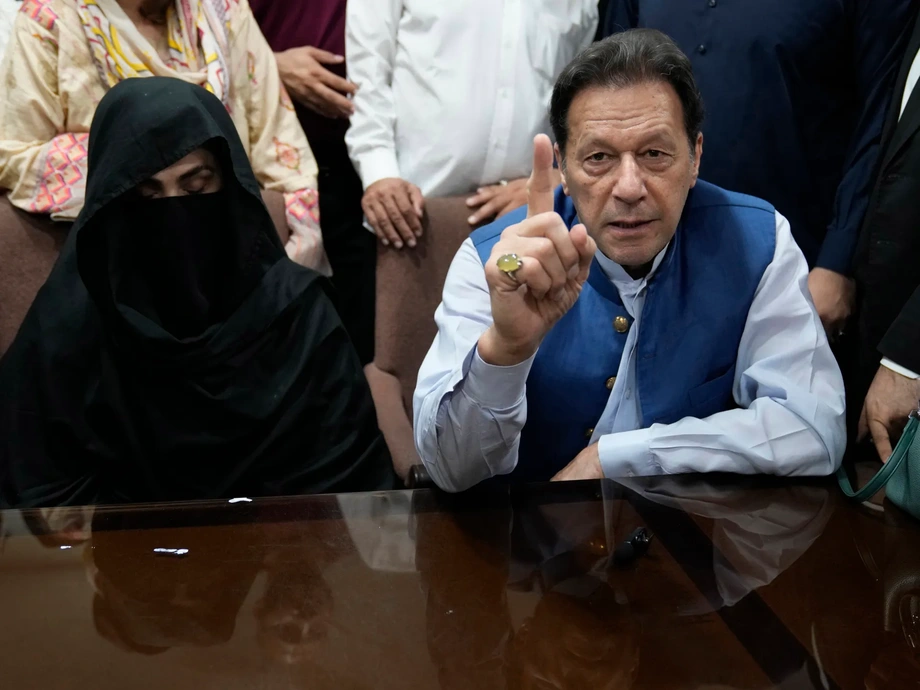
A medical appeal to three chief justices
Pakistan's jailed former prime minister Imran Khan has asked the chief justices of three courts to secure urgent medical treatment for him and his wife, Bushra Bibi, saying an August 18 order to move him to a named hospital remains unimplemented. The government disputes his account of inadequate care and says he has received eight hospital examinations.
Contents
- A medical appeal to three chief justices
- The hospital order at the centre of the dispute
- What Khan says about his health
- The government's account of treatment and visits
- Bushra Bibi seeks records and further eye surgery
- Isolation and access to the outside world
- How the medical dispute developed
- PTI wants courts to secure action
- Why another order may face the same problem
- Key Points
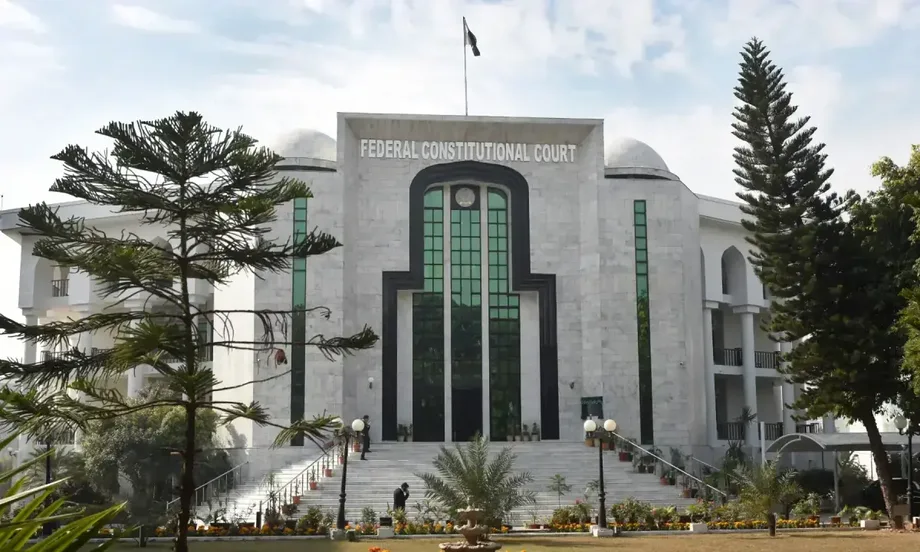
The open letter, released on Monday, November 16, 2026, was addressed to the heads of the Supreme Court, Federal Constitutional Court and Islamabad High Court. Khan, 74, said his blood pressure had risen dangerously and doctors had warned him of a risk of bleeding in the brain and cardiac arrest, when the heart suddenly stops pumping effectively.
Lawyer Salman Safdar said he prepared the letter solely from instructions and notes Khan gave him during a meeting lasting three hours at Central Jail Rawalpindi, commonly known as Adiala Jail, on November 11. Safdar described it as a humanitarian plea for medical treatment.
Khan also said Bushra Bibi needed another eye operation after suffering a retinal detachment in April. Her lawyers separately asked the Islamabad High Court on Monday for her complete medical record and immediate transfer to a specialised hospital.
Khan framed his appeal as a request for treatment and enforcement of court orders. In the letter, the former prime minister connected his health to his ability to continue fighting his convictions:
Today, I ask only that my wife and I be treated. I will only remain able to prove my innocence if I stay alive.
The hospital order at the centre of the dispute
Khan said the Supreme Court ordered on August 18 that he be transferred within two days to Shifa International Hospital in Islamabad and examined by a medical board. His account of the order also included examinations by heart and eye specialists and regular contact with his family.
A medical board brings several doctors together to assess a patient's condition and recommend treatment. For Khan, the requested action involves both the place of treatment and access to specialists who can assess his eye and heart concerns.
Authorities instead took him to the government run Pakistan Institute of Medical Sciences, known as PIMS, and returned him to prison within hours, according to the letter. Khan said the Supreme Court's instructions had not been carried out.
Parliamentary Affairs Minister Tariq Fazal Chaudhry says specialist doctors regularly examine Khan and that he receives the care he needs. The central disagreement is therefore about whether those examinations meet his medical needs and the terms of the court order he cites.
What Khan says about his health
Khan said he had lost 85 percent of the vision in his right eye, a figure Safdar had also raised before the Supreme Court earlier in 2026. He said a lawyer's visit on February 10 brought the extent of the loss to attention.
Government officials denied that account of his vision loss at the time. One of Khan's sisters later said his eyesight had improved substantially following treatment, which authorities say is continuing.
Khan's letter also said his blood pressure had reached 193 during solitary confinement. It gave a single number rather than a complete blood pressure reading. Blood pressure is normally recorded using two numbers, showing the pressure as the heart beats and as it rests between beats.
Khan was taken to PIMS late on November 10 for an eye injection. The hospital described him as "clinically stable", while Khan's appeal described continuing fears about his sight and the risk of a medical emergency.
The government's account of treatment and visits
Chaudhry said Khan had been taken to PIMS eight times for examinations and that tests showed satisfactory health and blood pressure. He accused the former prime minister of seeking political advantage through the allegations.
The minister also said Khan receives meals of his choice, books and television, rejecting claims that those facilities had been withheld. The government maintains that Khan receives medical attention and facilities unavailable to many other prisoners, while saying it is responsible for protecting every prisoner's health and legal rights.
Prime Minister Shehbaz Sharif's administration has rejected allegations that Khan is being held in solitary confinement or denied family contact. It says he has received more than 900 visits since his imprisonment began in August 2023.
Khan's letter describes a much narrower period and category of access: he said he had been allowed to meet his lawyer only four times in 2026, while Bushra Bibi had met hers once. The government's figure covers visits across his imprisonment; Khan's complaint focuses on recent access to lawyers and relatives.
Bushra Bibi seeks records and further eye surgery
Bushra Bibi, who married Khan in 2018, is also serving a prison sentence in a corruption case. She was arrested in January 2025 in connection with that case.
Khan said she suffered a retinal detachment in April 2026 and underwent complicated eye surgery in secrecy. The retina is the layer at the back of the eye that detects light. When it pulls away from its usual position, sight can be seriously damaged and surgery may be needed.
He alleged that she was returned to solitary confinement after the operation and denied access to her doctors and medical records. According to Khan, another operation is needed to prevent permanent loss of sight.
Her lawyers' application asks the Islamabad High Court for two concrete steps: release of her complete medical record and transfer to a specialised hospital. Those requests would give her legal team access to the treatment history and seek further care outside prison. No date for a hearing or further operation was announced.
Isolation and access to the outside world
Khan said he had been held in solitary confinement for up to 22 hours a day since December 20, 2025, when he and Bushra Bibi were sentenced to 17 years in one of the cases against them. At that maximum, he would spend only two hours of a day outside isolation.
His letter alleged restrictions on family visits, meetings with lawyers, calls to his sons, books and television. Khan described those conditions as violations of his constitutional rights, prison rules and entitlements under the jail manual.
The former prime minister described the restrictions in his letter to the judges:
I was totally isolated, disconnected and held incommunicado from the outside world, in torturous solitary confinement for up to twenty-two hours a day, in disregard of every constitutional right and every entitlement the Prison Rules guarantee a prisoner: no family, no lawyers, no call to my sons, no books and no television.
Authorities allowed his legal representatives to visit days before the appeal was published, including Safdar's November 11 meeting. Chaudhry disputes the allegations about books, television and food, while the government rejects Khan's account of isolation.
How the medical dispute developed
Khan's imprisonment began more than three years before the latest letter. His medical complaints and requests for court intervention developed during that detention, alongside further convictions and restrictions he says began in December 2025.
The main dates connect the treatment dispute to the current applications:
- April 2022: Khan was removed as prime minister through a parliamentary vote of no confidence.
- August 2023: His imprisonment began following a corruption conviction.
- December 20, 2025: Khan and Bushra Bibi received sentences of 17 years in another case. He dates his alleged prolonged isolation from this day.
- February 10, 2026: Khan says a lawyer's visit brought attention to the loss of vision in his right eye.
- April 2026: Bushra Bibi suffered a retinal detachment and underwent surgery, according to Khan.
- August 18: The Supreme Court ordered a hospital transfer and specialist assessment, according to Khan's account.
- November 10 and 11: Khan received an eye injection at PIMS, then met Safdar in prison the following day.
- November 16: Safdar released the letter, and Bushra Bibi's lawyers sought her medical records and hospital transfer.
PTI wants courts to secure action
Pakistan Tehreek-e-Insaf, Khan's party, says the convictions against him are politically motivated. The government says he is serving sentences imposed through judicial proceedings rather than being detained under an executive order.
Khan said he had never sought relief on medical grounds or used illness as a tactic. He also wrote that no criminal case had been brought against him during his first 70 years, presenting his current imprisonment against the earlier course of his life.
Sayed Zulfi Bukhari, a senior PTI leader, said the letter reflected the lack of other effective options. He described the party's immediate demand as access to justice and humane treatment:
He is asking for no favours. He is asking for no deal. He is asking for justice and the legal system of Pakistan to work.
Bukhari said PTI wanted courts to hear Khan's cases without repeated postponements and press the government to provide treatment that would protect his life and sight.
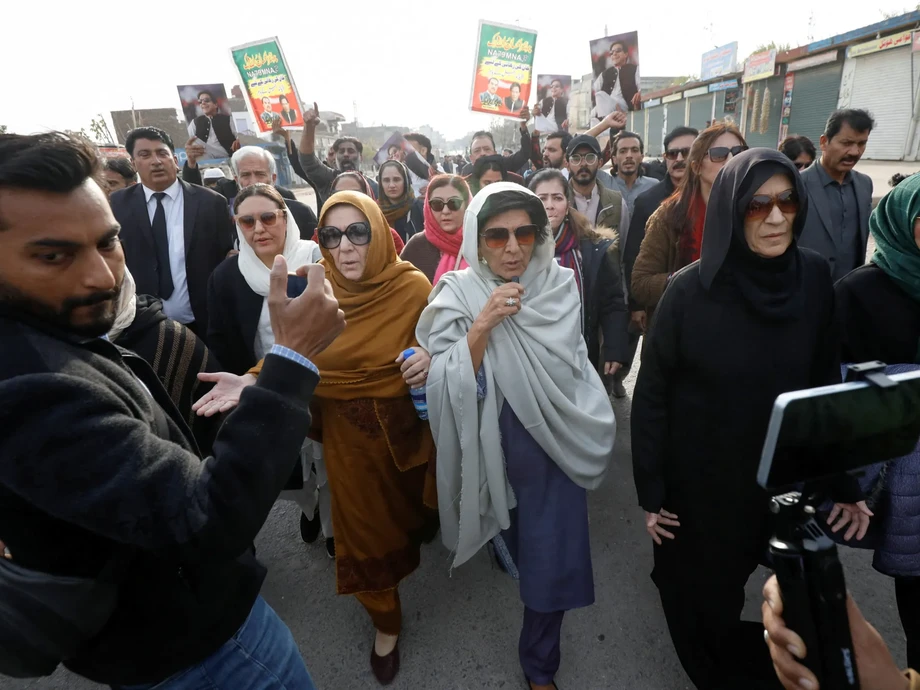
The dispute also comes amid continuing restrictions affecting Khan's family. His sisters Uzma Khan and Noreen Niazi were released from a Lahore jail on November 12 after nearly two months in detention. A third sister, Aleema Khan, remained in jail, according to PTI. The government said their detention concerned a possible threat to public order before a planned September 27 march in Islamabad that did not take place.
Why another order may face the same problem
Mehmal Sarfraz, a political analyst based in Lahore, said concern for Bushra Bibi was central to Khan's appeal. She said he was worried about his wife's deteriorating health and was seeking relief for her.
Habib Akram, another political analyst based in Lahore, described the letter as a request for rights rather than mercy. He pointed to Khan's decision to address courts and cite the jail manual.
Akram was sceptical that another judicial intervention would change prison conditions. He said an Islamabad High Court order permitting visits on Tuesdays and Thursdays, as well as a Supreme Court ruling, had not been followed.
The practical issue now is enforcement. Khan wants judges to secure the hospital transfer, medical assessment and access arrangements he says they already ordered. Bushra Bibi's lawyers are seeking records and a specialised hospital transfer through a separate application. The government continues to defend the care being provided, leaving the courts to address requests that concern both treatment and compliance with their instructions.
Key Points
- Imran Khan appealed to the chief justices of three courts for medical care for himself and Bushra Bibi.
- He says an August 18 order for transfer to Shifa International Hospital and specialist assessment remains unimplemented.
- Khan alleges serious vision loss and dangerously high blood pressure. The government says examinations have shown satisfactory health and blood pressure.
- Minister Tariq Fazal Chaudhry says Khan has received eight examinations at PIMS and has access to books, television and meals of his choice.
- Bushra Bibi's lawyers have asked the Islamabad High Court for her medical records and immediate transfer to a specialised hospital.
- Khan alleges prolonged isolation and restricted legal access. The government rejects those allegations and cites more than 900 visits since August 2023.