Islamabad Talks Put Iran Proposals at the Centre of Regional Diplomacy
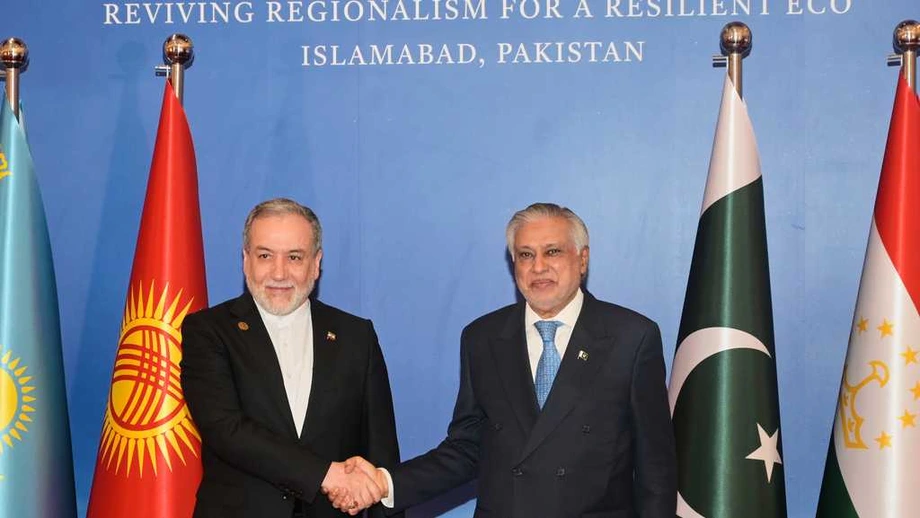
Pakistan is awaiting a United States response to Iranian proposals to reopen the Strait of Hormuz, Foreign Minister Ishaq Dar said on Monday, as he met Iranian Foreign Minister Abbas Araghchi during a regional economic gathering in Islamabad. Tehran has shortened its proposed reopening timetable from seven days to two, while seeking concessions from Washington.
Contents
- Islamabad Talks Put Iran Proposals at the Centre of Regional Diplomacy
- What Iran Is Proposing for Hormuz
- Pakistan Tries to Revive the June Agreement
- How the Diplomacy Reached This Point
- Why a Trade Meeting Became a Security Forum
- Trade, Transport and Energy Lead the Economic Agenda
- Afghanistan's Empty Seat Exposed Another Regional Divide
- Iran Calls for Regional Security Talks and Gaza Aid
- Muscat Is Araghchi's Next Diplomatic Stop
- Key Points
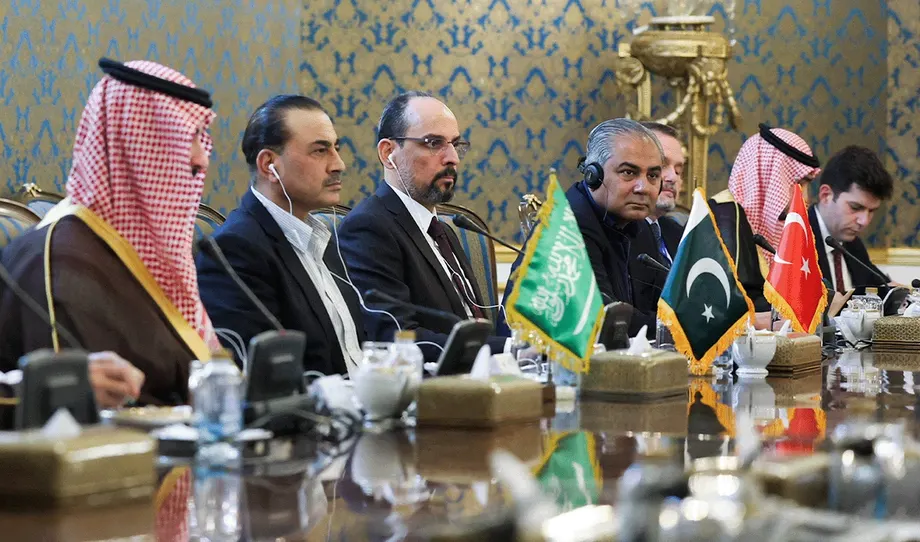
The bilateral meeting took place alongside the 30th Council of Ministers meeting of the Economic Cooperation Organization, or ECO, a group of 10 countries seeking closer trade, transport and energy ties. The gathering brought the region's economic ambitions into direct contact with a conflict disrupting shipping and energy supplies.
Pakistan's Foreign Ministry said Dar, who also serves as deputy prime minister, and Araghchi reviewed relations between their countries and discussed regional and international developments. They agreed to maintain close contact and continue engagement at senior levels.
Dar said dialogue and diplomacy remained the only effective way to resolve outstanding issues between Iran and the United States, prevent further escalation and secure lasting peace. Araghchi thanked Pakistan for hosting the ECO meeting and praised its hospitality, arrangements and constructive discussions.
The visit extended beyond the two foreign ministers. Araghchi also met Prime Minister Shehbaz Sharif and Field Marshal Asim Munir, Pakistan's military chief, before leaving for Muscat after two days in Pakistan. Those meetings placed civilian diplomacy, military contacts and regional economic cooperation within the same effort to reduce tensions.
What Iran Is Proposing for Hormuz
Iran has said it is ready to reopen the Strait of Hormuz within two days if Washington accepts its conditions, replacing an earlier proposal with a timetable of one week. Dar said Pakistan was waiting for the American response to the successive proposals.
Tehran's stated demands include the release of Iranian assets frozen abroad, relief from sanctions and an end to the United States naval blockade of Iranian ports. Frozen assets are money or property that their owner cannot freely access because of legal or financial restrictions. Sanctions can restrict trade, banking and other economic activity.
Iran has blocked the waterway since the start of the war in February. The strait is a vital route for global energy shipments, and its closure has pushed up oil prices and added pressure to Pakistan's already strained economy. Reopening it would restore access for shipping through a route whose disruption reaches far beyond Iran and its immediate neighbours.
Araghchi said ECO members had backed Tehran's proposed reopening plan. He also welcomed language in the meeting's final statement supporting Iran's proposal to end the war. Washington's response, a reopening date and a timetable for carrying out any agreement had not been announced.
Pakistan Tries to Revive the June Agreement
Pakistan hosted direct talks between the United States and Iran in April. The two countries signed an interim agreement in June, known as the Islamabad Memorandum of Understanding, but it collapsed weeks later. A memorandum of understanding records commitments between parties; in this case, Pakistan is seeking to get both governments to carry out the terms of that interim peace arrangement.
Dar described his discussions with the Iranian side as useful, brotherly, candid and constructive. He said Pakistan would keep working towards peace and implementation of the Islamabad agreement, despite diplomatic efforts having stalled in recent weeks.
Speaking to reporters after the ECO gathering, Dar expressed hope that Washington and Tehran would implement the agreement.
"Let's hope for the best, we haven't given up hope," Dar said.
Pakistan's mediation has involved both its political and military leadership. Dar said Sharif and Munir remained closely engaged with regional countries and international partners. Munir visited Iran twice last month to discuss efforts to end the conflict, giving Islamabad another channel for passing messages and proposals.
How the Diplomacy Reached This Point
The Islamabad meetings followed months of war, negotiations and an unsuccessful interim settlement. The main developments show why Monday's discussions focused on both a revised Iranian proposal and an agreement that had already been signed.
- February: The war involving the United States, Israel and Iran began, and Iran blocked the Strait of Hormuz.
- April: Pakistan hosted the first round of direct talks between the United States and Iran.
- June: Washington and Tehran signed the interim Islamabad agreement, which collapsed weeks later.
- Last month: Munir visited Iran twice as part of Pakistan's mediation efforts.
- Monday: Araghchi met Dar and other Pakistani leaders during the ECO gathering, while Pakistan awaited Washington's response to Tehran's latest proposals.
- After the Pakistan visit: Araghchi departed for Muscat, where he was expected to meet Oman's foreign minister.
Iran's change from a seven day proposal to a two day proposal shortened the offered reopening period by five days. The central negotiation concerns the conditions attached to that timetable, including access to Iranian assets, sanctions relief and the blockade of its ports.
Why a Trade Meeting Became a Security Forum
The ECO brings together Afghanistan, Iran, Pakistan, Turkey and several former Soviet republics. Its Islamabad gathering was intended to expand regional commerce through stronger transport routes and trade connections, yet the disruption around Hormuz made security central to those ambitions.
Dar, addressing the gathering as Pakistan's foreign minister, said his country was deeply concerned about regional conflict and instability. He described the effects on the economic activity the organisation is trying to expand.
Their consequences extend beyond national boundaries, disrupting trade routes, energy supplies, investment, and the economic projects of our peoples," he said. "Peace and development reinforce each other.
For Pakistan, higher oil prices increase the cost of imported energy. For businesses across the region, disrupted shipping can make supplies more expensive and deliveries less predictable. Those pressures help explain why ministers discussing commerce also spent time on peace proposals and maritime access.
Dar said Pakistan would continue its diplomatic efforts with support from other regional countries. His message linked the ECO's economic agenda to an immediate task: reducing the conflict that is obstructing trade and investment.
Trade, Transport and Energy Lead the Economic Agenda
Araghchi identified trade, transport and energy as the ECO's three strategic pillars. He welcomed a technical negotiating committee to revise the ECO Trade Agreement, known as ECOTA, placing a specific trade negotiation alongside the broader calls for regional cooperation.
The committee would work on changes to the agreement governing trade cooperation among participating countries. Its practical importance lies in the rules that businesses face when selling goods across borders. Ministers' support for revising the agreement gives that work a place on the regional agenda.
Sharif also called for closer cooperation in trade and investment, transport and transit connections, energy, information and communication technology, and sustainable development. Transit connections allow goods to travel through one country on their way to another, making cooperation between neighbours essential.
Dar and Araghchi reaffirmed their commitment to advancing ECO priorities, particularly regional cooperation and connectivity. Their bilateral statement focused on continued contact and stronger relations, while the wider meeting identified areas where member countries want economic cooperation to grow.
Afghanistan's Empty Seat Exposed Another Regional Divide
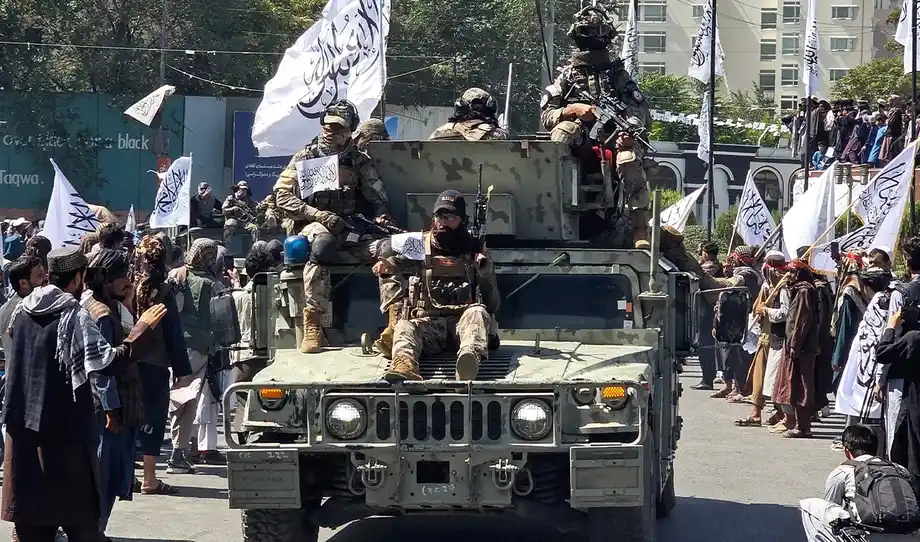
Afghanistan had no diplomat at the Islamabad gathering, and Pakistan did not invite representatives of the Taliban authorities. Its absence left one of the ECO's members outside discussions about expanding the region's trade and transport network.
Dar said Pakistan wanted a peaceful, prosperous and stable Afghanistan, integrated into the ECO and at peace with its neighbours. He tied progress in relations to action by the Afghan authorities on neighbouring countries' security concerns, particularly terrorism.
Pakistan accuses the Taliban authorities of sheltering Tehrik-e-Taliban Pakistan, known as the TTP, along with the Baloch Liberation Army and al-Qaida in the Indian Subcontinent. Kabul denies supporting Pakistani militants. The TTP is a separate organisation from Afghanistan's Taliban, although the two are closely allied.
Repeated border clashes and Pakistani airstrikes have worsened relations this year. The dispute creates a direct obstacle to the economic cooperation discussed in Islamabad: trade routes need borders through which goods can move reliably, while continuing violence makes that movement harder to sustain.
Iran Calls for Regional Security Talks and Gaza Aid
Araghchi used the ECO gathering to argue for an inclusive security dialogue led by countries in the region. He said Iran remained committed to diplomacy and peaceful solutions, while accusing the United States of aggression, threats, targeted assassinations, economic coercion and blockades.
The Iranian foreign minister described those American actions as violations of international law and the United Nations Charter. He blamed the United States and Israel for insecurity in the Persian Gulf and the developments surrounding the Strait of Hormuz. Those accusations formed part of Tehran's case for a regional approach to security.
Araghchi also condemned Israel's actions in Gaza, describing them as genocide, and warned against settlement expansion and the displacement of Palestinians in the occupied West Bank and East Jerusalem. He urged action to ensure unhindered deliveries of food, medicine, temporary shelter and supplies for rebuilding essential infrastructure in Gaza.
His remarks placed humanitarian needs alongside the meeting's trade and security discussions. For civilians in Gaza, the requests concerned immediate necessities: food, medical treatment, shelter and the restoration of basic services.
Muscat Is Araghchi's Next Diplomatic Stop
Araghchi left Islamabad for Muscat after completing his visit to Pakistan and was expected to meet his Omani counterpart. The journey followed a reported attack the previous week on navigation systems on an Omani island in the Strait of Hormuz.
Navigation systems help vessels determine their position and travel safely. The reported attack added another concern around a waterway already affected by war, blockades and the negotiations over reopening it.
Pakistan's immediate diplomatic task remains securing an American response to Tehran's proposals and pursuing implementation of the June agreement. Araghchi's move to Oman continued the regional consultations after Islamabad's meetings, while Dar and the Iranian minister agreed to remain in close contact.
Key Points
- Dar and Araghchi met in Islamabad during the 30th ECO Council of Ministers gathering and agreed to continue close consultations.
- Pakistan is awaiting Washington's response to Iranian proposals, including a conditional offer to reopen the Strait of Hormuz within two days.
- Iran seeks frozen assets, sanctions relief and an end to the United States naval blockade of its ports.
- Pakistan is trying to revive implementation of the June Islamabad agreement, which collapsed weeks after it was signed.
- ECO discussions covered trade, transport and energy, while Afghanistan was absent amid a security dispute with Pakistan.
- Araghchi also met Pakistan's prime minister and military chief before departing for Muscat.