Two approvals completed as Saudi Arabia faces attacks
Pakistan and Saudi Arabia have completed ratification of the Makkah Joint Defence Agreement, bringing a pact signed on August 7, 2026, closer to implementation as Houthi attacks put Saudi security under pressure. Türkiye, the third signatory, is still completing its domestic approval process.
Contents
- Two approvals completed as Saudi Arabia faces attacks
- What the collective defence promise requires
- How the agreement reached this stage
- Türkiye's approval and deployment decisions
- How Houthi attacks test the pact
- Who will manage the partnership
- Intelligence, supplies and joint training
- Defence production and a lasting commitment
- Diplomacy alongside military preparations
- Key Points
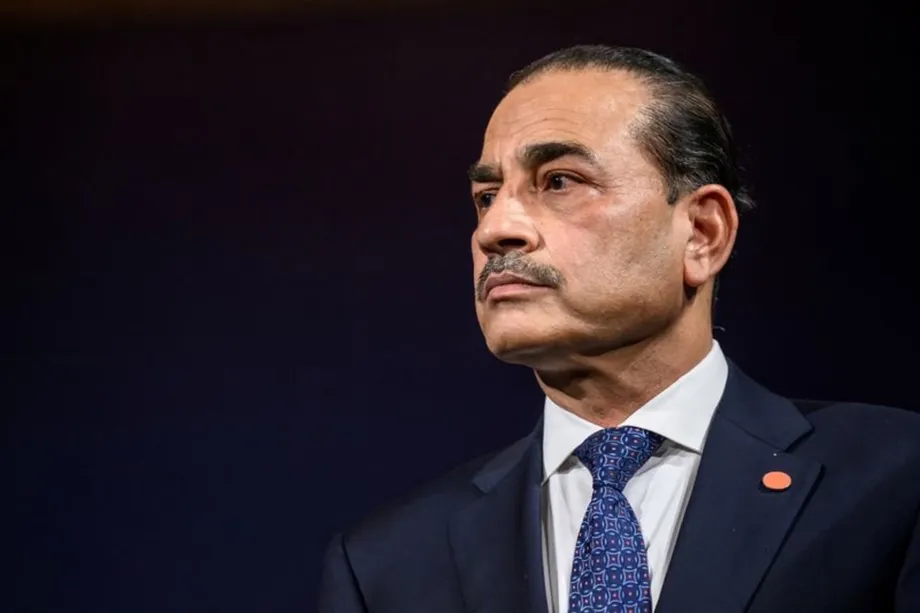
Pakistan's Foreign Office spokesperson, Sajjad Haider Khan, announced the approvals at an October 23 briefing. The agreement treats an external armed attack on any member as an attack on all three, while leaving the countries to decide collectively what assistance a particular situation requires.
The announcement follows an October 5 emergency meeting in Riyadh, where the countries agreed to rapidly deploy military forces and capabilities in Saudi Arabia, subject to their domestic laws. Defence officials are continuing technical discussions about implementation timelines.
Türkiye submitted the agreement to parliament on October 20, with parliamentary consideration expected the following week, including a reported October 27 review date. Approval of the agreement and permission to deploy Turkish troops involve separate legislative procedures.
Khan described Pakistan's position in terms of collective security, while saying the agreement was defensive and directed against no particular country. Turkish Defence Minister Yasar Guler has also said Ankara does not expect its forces to fight the Houthis and would focus any support on deterrence.
The immediate issue is therefore both political and practical: the three governments are building a lasting defence partnership while deciding how to help Saudi Arabia during an active security crisis. Ratification provides domestic approval for the treaty; decisions about forces, equipment and particular operations still require further coordination.
What the collective defence promise requires
Article 2 contains the agreement's central commitment: an armed attack originating outside one member's territory is treated as an attack against all three. It also calls for immediate assistance when a member faces an armed attack or military aggression by another country or group of countries.
The same article gives the governments responsibility for determining the scope and nature of support after assessing what assistance is needed. Cooperation is to take place within their available resources, including military means and capabilities. In practical terms, the shared defence promise is followed by a collective decision about the response.
Khan, explaining how assistance would be determined, said the three countries would assess the circumstances together:
The nature and extent" of any assistance would be determined collectively, "following an objective assessment of the circumstances.
Article 1 also commits the members to cooperate in protecting their independence, sovereignty, territorial integrity and internationally recognised borders. It calls for using all necessary means to eliminate threats or dangers to those interests.
Pakistan has placed these commitments within Article 51 of the United Nations Charter, which recognises the right of individual and collective self defence following an armed attack. Collective self defence means countries helping another country defend itself. Deterrence, another stated purpose of the pact, means making a potential attacker expect a response serious enough to discourage an attack.
How the agreement reached this stage
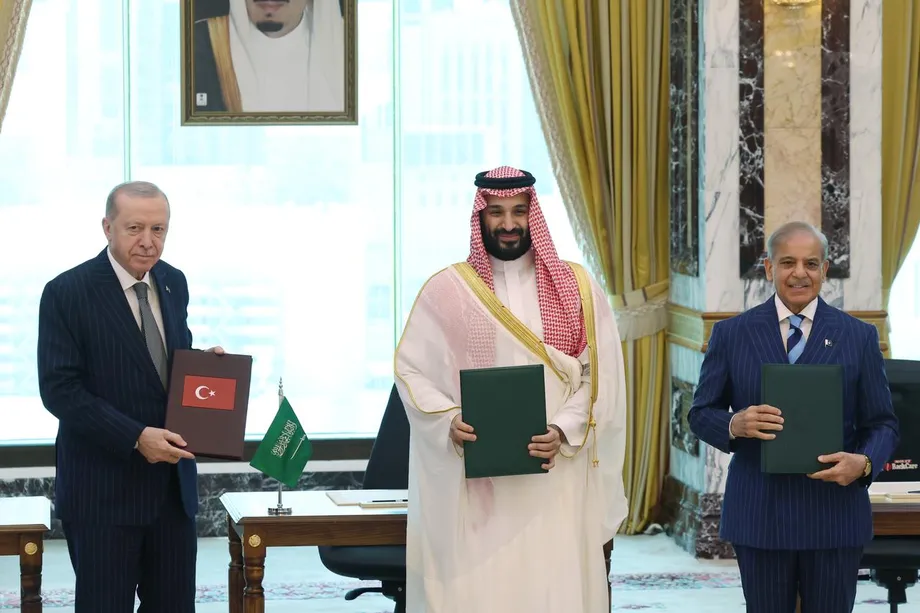
Saudi Crown Prince and Prime Minister Mohammed bin Salman, Turkish President Recep Tayyip Erdogan and Pakistani Prime Minister Shehbaz Sharif signed the agreement at Al-Safa Palace in Makkah. The summit followed an invitation from Saudi King Salman.
The August summit statement described the pact as a means of strengthening collective deterrence and cooperation across defence matters. The October meetings then moved the discussion toward practical assistance and domestic approval.
- September 2025: Pakistan and Saudi Arabia signed a separate mutual defence agreement.
- August 7, 2026: The Saudi, Turkish and Pakistani leaders signed the Makkah Joint Defence Agreement.
- October 5: The Strategic Political and Defence Committee met in Riyadh and agreed on rapid deployment of forces and capabilities to Saudi Arabia, subject to domestic laws.
- October 20: Türkiye submitted the agreement to parliament.
- October 23: Pakistan announced that it and Saudi Arabia had completed ratification, while Türkiye's procedures continued.
- October 27: Parliamentary consideration in Türkiye was expected, although the approval process could extend beyond that date.
Pakistan's Foreign Minister Ishaq Dar has said the new accord does not replace existing bilateral or multilateral agreements. The three countries are adding a shared structure to military relationships that already exist.
Türkiye's approval and deployment decisions
Türkiye's parliamentary process includes consideration by the foreign affairs commission before the agreement advances through the legislature. The ruling coalition needs a simple majority, but parliamentary debate can still affect the timetable.
Guler said Türkiye would assess Saudi requests for military support and determine the scope of assistance after parliament ratifies the pact. Sending troops would require further legislative procedures, making treaty approval one step in a longer decision process.
The Turkish defence minister set out the intended limits of possible support:
The main purpose of our possible military support to Saudi Arabia will be to strengthen deterrence. We absolutely do not foresee entering into any conflict with the Houthis.
Guler also said Türkiye's priority was preventing new tensions and contributing to regional security and stability. His comments give a more concrete picture of Ankara's immediate approach than the treaty's broad promise of mutual assistance.
Turkish presidency communications director Burhanettin Duran described the parliamentary process as a step toward making strategic cooperation between the countries more permanent. He said the partnership aimed to strengthen deterrence, joint defence capabilities and regional security.
How Houthi attacks test the pact
Houthi missile and drone attacks against Saudi Arabia have made the question of assistance urgent. Recent attacks have targeted airports, energy facilities and military sites, with disruptions to air travel and the cancellation or postponement of major events.
Article 2 combines a broad reference to an external armed attack with wording about aggression by another country or group of countries. The Houthis are an armed movement in Yemen rather than a state. Whether and how the partners would invoke the agreement for Houthi attacks remains a decision for the three governments, Khan said when asked about that scenario.
Khan condemned attacks against Saudi Arabia while reiterating Pakistan's support for Yemen's sovereignty and a negotiated political settlement. Pakistan is presenting assistance to the kingdom alongside support for ending the conflict through talks.
Saudi Civil Defence issued danger warnings covering Abha and Khamis Mushait in the southwest before later lifting them. Residents were told to follow safety instructions and avoid gathering or filming in affected areas. Authorities did not specify the nature of the danger in those alerts.
By October 21, Saudi Arabia's allies were providing primarily defensive support as the kingdom sought to protect infrastructure against further attacks. The October 5 deployment decision sits within that immediate need for protection, while the treaty creates a broader framework for future cooperation.
Who will manage the partnership
Article 8 establishes a Strategic Political and Defence Committee bringing together the three countries' foreign ministers, defence ministers and chiefs of general staff. Its responsibilities include setting strategic direction, developing defence and security cooperation, and addressing problems during implementation.
The committee is scheduled to meet twice a year, with hosting rotating among the members. National leaders may also meet annually if they consider it necessary. The October 5 emergency session shows that urgent security needs can require engagement beyond the regular calendar.
A secretariat is to be headquartered in Saudi Arabia, with a Pakistani citizen serving as its first secretary-general. That arrangement gives the partnership a permanent administrative centre rather than relying entirely on occasional summits or separate national ministries.
Khan said Pakistan endorsed the treaty text released through the Turkish parliament and rejected suggestions of undisclosed commitments. He told the briefing:
There are no hidden provisions; the agreement is explicit and clear in its provisions and articles.
The committee and secretariat will have to connect political promises with military planning. Ministers can agree on assistance, but defence institutions must then work through questions such as equipment, personnel, communications and national legal requirements.
Intelligence, supplies and joint training
The agreement's 16 articles cover much more than responses to an attack. Article 9 provides for intelligence sharing through secure channels agreed by the members. Such channels allow sensitive information to move between governments under arrangements designed to protect it.
Article 10 addresses logistical support, including weapons, ammunition, fuel and spare parts. These supplies help determine how long a military operation can continue and whether equipment remains usable when demand rises.
Article 6 encourages personnel exchanges, joint training programmes, exercises and deployments in both peace and wartime. The aim is greater interoperability, meaning that forces from different countries can communicate, coordinate and operate together.
Other provisions call for regular consultations on international security and cooperation against terrorism, including at the operational level. Together, these measures would create continuing work between the armed forces even when no collective defence response is under consideration.
Defence production and a lasting commitment
Article 7 provides for technology sharing, joint development and joint production by defence institutions and companies, subject to mutual agreement. It also covers research projects requiring specialised expertise, technical training and exchanges of experience.
Pakistan brings extensive military experience, Saudi Arabia substantial financial resources and regional influence, and Türkiye a large military and an expanding domestic defence industry. Joint projects would require those different strengths to be matched through specific agreements, rather than through the treaty's general language alone.
The detailed treaty provisions give the agreement an indefinite duration, with withdrawal permitted only after 10 years from its entry into force and with at least three months' written notice. The decade is therefore an initial restriction on leaving the partnership, followed by a formal notice requirement.
The pact also provides a route for other countries to join with the unanimous approval of the founding members. Dar said potential members would need to uphold its principles and settle differences peacefully.
Dar has described the agreement as purely defensive, while Turkish Foreign Minister Hakan Fidan has said it is not aimed at Iran or another country. Those statements place the partnership within the governments' wider diplomacy as they develop its military arrangements.
Diplomacy alongside military preparations
Saudi Foreign Minister Prince Faisal bin Farhan and Pakistan's Deputy Prime Minister and Foreign Minister Ishaq Dar condemned Houthi attacks on Saudi civilian areas during talks in Istanbul. Their meeting took place alongside the Regional Four gathering involving Pakistan, Saudi Arabia, Türkiye and Egypt.
A wider Istanbul meeting, hosted by Turkish Foreign Minister Hakan Fidan, also brought together foreign ministers from Britain, France, Germany and Italy. The eight countries condemned Houthi attacks on Saudi civilians and civilian infrastructure, as well as attacks on commercial shipping in the Red Sea and Bab Al Mandeb strait.
The ministers called for an immediate end to military actions, threats and attacks, and for a return to the political process. Their statement connected protection of Saudi territory with the security of shipping routes and efforts to negotiate an end to Yemen's conflict.
The talks came amid broader regional military preparations. Israel announced large exercises in its northern and central regions for Sunday and Monday, involving the air force and military commands rehearsing responses to surprise attacks and infiltration by air and land.
For the three pact members, the next concrete tasks are completing Türkiye's approval process and settling the timing and form of assistance. Saudi residents and businesses face the immediate effects of attacks, while the governments work to turn a broad defence commitment into coordinated protection.
Key Points
- Pakistan and Saudi Arabia have completed ratification of the Makkah Joint Defence Agreement; Türkiye's approval process continues.
- The pact was signed on August 7, 2026, and treats an external armed attack on one member as an attack on all three.
- The countries will collectively assess the circumstances and determine the nature and scale of assistance.
- An October 5 meeting agreed on rapid deployment of forces and capabilities to Saudi Arabia, subject to domestic laws.
- Türkiye's defence minister said possible support would focus on deterrence and that combat with the Houthis was not expected.
- The agreement covers intelligence, logistics, training, technology sharing and joint defence production.
- The detailed provisions establish an indefinite duration, with withdrawal allowed after 10 years and at least three months' written notice.