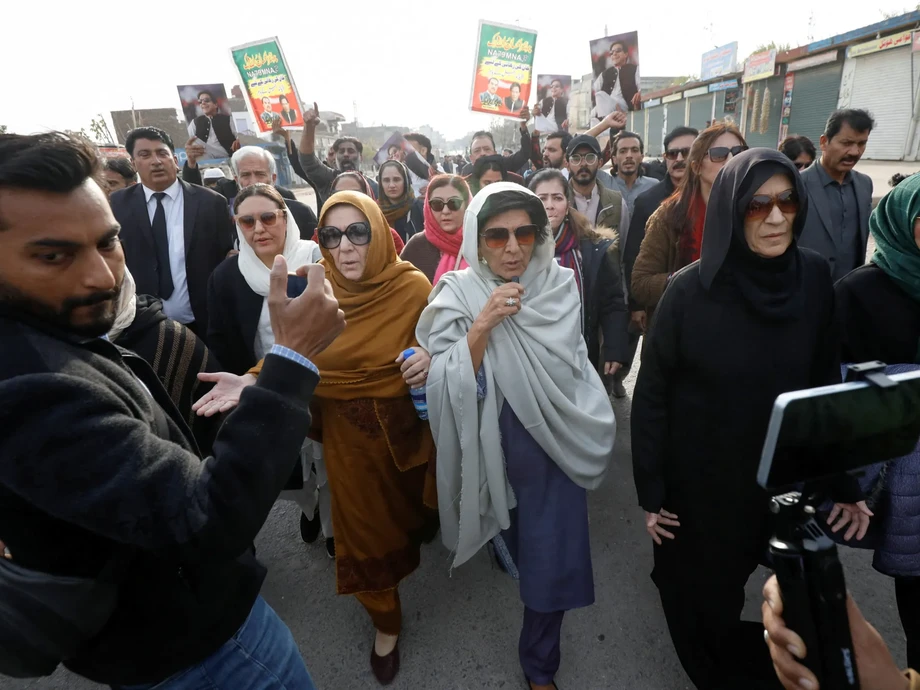
Two sisters return home, while Aleema remains in jail
Two sisters of Pakistan's jailed former prime minister Imran Khan were released from Lahore's Kot Lakhpat prison on Thursday, November 12, after authorities withdrew their detention orders. Their family said they had spent 53 days in custody under a law allowing detention to prevent an anticipated threat to public order.
Contents
- Two sisters return home, while Aleema remains in jail
- Why the government detained the sisters
- A family demand for an explanation
- How the detentions and medical concerns unfolded
- Khan's eye treatment remains central to the campaign
- Lawyers obtain fresh instructions on appeals
- Government rejects talk of a political deal
- Detention challenges extend beyond Khan's family
- Key Points
Uzma Khan and Noreen Niazi left the prison at 2pm, according to their lawyer, Rana Mudassar Umer. Their sister Aleema Khan remained imprisoned under a separate detention order, which lawyers were also seeking to have withdrawn.
Umer confirmed that the two women had reached home in a post on X:
Dr Uzma Khan and Ms Noreen Niazi have been released. They have arrived home safely.
The release followed a legal challenge to their extended detention and came before a scheduled court hearing. PTI leader and former federal minister Moonis Elahi said the Punjab government had withdrawn the orders. Other descriptions of the government's action called it a suspension.
The sisters had been detained in September as Khan's Pakistan Tehreek-e-Insaf party, or PTI, prepared a march towards Islamabad demanding his release. The government said their activities could threaten law and order. The march, planned for September 27, did not go ahead.
Thursday's development brought relief to two members of Khan's family while leaving several disputes unresolved: Aleema's detention, Khan's imprisonment, access to his lawyers and relatives, and the medical treatment he receives in custody. Parliamentary Affairs Minister Tariq Fazal Chaudhry rejected suggestions that the releases reflected a government deal with PTI.
Why the government detained the sisters
The Lahore deputy commissioner's orders placed the sisters in custody under Section 3 of the Punjab Maintenance of Public Order Ordinance, 1960, commonly called the MPO. Their detention was initially authorised for 30 days.
Preventive detention allows officials to hold someone because they believe that person's activities may threaten public safety or order. In this case, the government used administrative orders to prevent anticipated unrest, rather than a prison sentence imposed after a criminal trial.
The deputy commissioner's order cited police and District Intelligence Branch reports. Police accused the sisters of involvement in the May 9 protests and road blockages, encouraging damage to public and government property, and mobilising supporters through social media and public gatherings.
The District Intelligence Committee recommended detention on the basis of the police material. PTI lawyers challenged the government's use of those powers, and the sisters' detention became the subject of proceedings in the Lahore High Court.
After the original detention period expired, the Punjab government told the court that custody had been extended for another 30 days. Umer said authorities subsequently withdrew the joint order covering Uzma and Noreen before their scheduled hearing.
A family demand for an explanation
Wali Khan, a member of the sisters' family, said the women had spent 53 days in custody under Section 3 of the MPO without a charge or trial. He demanded an explanation for both their imprisonment and their release.
Wali described the decisions in a post on X:
Their jailing was arbitrary, and so is their release.
PTI lawyer Taimur Malik also challenged the detention orders and called for others held under the same law to be freed. His demand extended beyond Khan's relatives to party workers caught in the wider confrontation over protests and access to their leader.
Aleema's continued imprisonment reflects the separate paperwork governing her custody. Withdrawing the joint order for Uzma and Noreen allowed those two women to leave prison; lawyers were still pursuing the withdrawal of Aleema's individual order. No date was announced for her release or for a decision on that request.
How the detentions and medical concerns unfolded
The sisters' imprisonment overlapped with growing concern about their own health and Khan's treatment. The main developments stretched from September's protest preparations to Thursday's releases:
- September 20-21: The sisters were detained ahead of the planned Islamabad march. The arrest dates were also described as September 20 for Aleema and September 21 for Uzma and Noreen, while the initial account placed all three arrests on the same day.
- September 27: PTI had planned a march demanding Khan's release. The demonstration did not go ahead.
- October: The sisters challenged their detention in the Lahore High Court, and the Punjab government said custody had been extended for another 30 days.
- October 28: Noreen was taken from Kot Lakhpat prison to the Punjab Institute of Cardiology because of high blood pressure.
- October 29: Prime Minister's adviser on political affairs Rana Sanaullah told the Senate that Noreen was fine and her medical tests were normal.
- November 10-11: Khan received treatment during an overnight visit to an Islamabad hospital before returning to Adiala Jail.
- November 11: Khan's lawyers met him after the Islamabad High Court directed authorities to arrange access.
- November 12: Uzma and Noreen were released after their detention orders were withdrawn.
Noreen's hospital transfer became a particular concern for the family. Her lawyer and PTI said relatives had not been informed about her deteriorating health or the move to the cardiac hospital. Wali said Noreen was in her seventies.
Sanaullah, speaking in his role as the prime minister's adviser, gave the Senate the government's assessment:
As per the information available, she is fine and all her medical tests are normal.
Khan's eye treatment remains central to the campaign
Khan, 74, has been imprisoned since August 2023. His sisters' release followed another hospital visit for a problem affecting his right eye, which has required months of specialist care.
Officials at the Pakistan Institute of Medical Sciences in Islamabad said he received an injection for the eye condition and treatment for blood pressure. He was then returned to Adiala Jail in Rawalpindi.
The overnight eye treatment took place on November 10-11. The hospital said Khan was discharged at about 2:30am after spending approximately 40 to 50 minutes there and remained stable before, during and after the procedure.
Khan has been receiving injections for central retinal vein occlusion, a blockage in the main vein carrying blood away from the retina. The retina is the light sensitive tissue at the back of the eye. A blocked vein can cause swelling and bleeding that damage sight.
His treatment has also become a dispute over where care should take place and who should be involved. An August 18 Supreme Court order directed his transfer to the private Shifa International Hospital in Islamabad. Authorities instead took him to the government hospital and returned him to prison, citing security concerns.
PTI has demanded access for his family, personal doctors and lawyers, along with implementation of the court's hospital direction. The party said relatives and personal physicians were not notified before the latest transfer.
Lawyers obtain fresh instructions on appeals
Lawyers Sardar Latif Khosa and Barrister Salman Safdar met Khan at Adiala Jail on Wednesday following an Islamabad High Court order. The meeting lasted between three and four hours and covered health concerns and legal cases.
Khosa said Khan's blood pressure continued to fluctuate and that his eyesight problems persisted. He also said Khan remained active and determined.
Khosa described the blood pressure concern after meeting the former prime minister:
Blood pressure fluctuates and goes to dangerous levels. However, Khan was active and had determination.
Safdar said both Khan and his wife, Bushra Bibi, had given comprehensive legal instructions. The high court arranged access while hearing their appeals against convictions in the £190 million Al-Qadir Trust case and directed counsel to begin arguments at the next hearing. No date for that hearing was given.
The longer consultation followed a brief November legal meeting, when Safdar had about 40 minutes with Khan after a seven month gap in direct contact. At that time, he said the meeting was too short to cover all the cases requiring instructions.
Khan lost power in a parliamentary vote of no confidence in 2022 and subsequently faced numerous cases, including corruption allegations. All but one of his convictions have been suspended or overturned, with appeals pending. He denies wrongdoing and calls the cases politically motivated; the government rejects that claim.
Government rejects talk of a political deal
Chaudhry dismissed suggestions that private contacts with PTI could produce concessions in Khan's legal cases. His remarks followed accounts of informal discussions involving members of Khan's family and people connected with the authorities.
The parliamentary affairs minister stated the government's position during a television interview:
I strongly reject the notion that there are any back-channel contacts with the PTI that could affect the legal matters currently pending before the courts, or that there is any possibility of leniency, a deal or any concession from the government.
Chaudhry accused PTI lawyers of politicising Khan's health and urged them to concentrate on legal arguments. He also said the government had repeatedly invited PTI to talks, including an invitation from Prime Minister Shehbaz Sharif.
Informal contacts involving Khan's family had been described before the releases, with PTI chairman Barrister Gohar Ali Khan reportedly involved. Gohar declined to discuss the matter publicly. No agreement was announced alongside the withdrawal of the sisters' detention orders.
PTI leader Zulfiqar Bukhari, a close Khan confidant, said the party's demands continued despite the releases:
Aleema Khan remains behind bars. The release of two sisters does not end the injustice or erase the suffering inflicted on Imran Khan's family.
Detention challenges extend beyond Khan's family
PTI's confrontation with the authorities also involves its supporters in Khyber Pakhtunkhwa, where the party had organised the planned protest. The federal government suspended the provincial administration, and an October 11 proclamation imposed emergency and governor's rule.
The wider legal dispute deepened with the suspension of detention hearings at the Peshawar High Court. The Federal Constitutional Court intervened while considering more than 60 appeals against orders granting temporary release to detained PTI workers.
Those proceedings concern Section 3 of the MPO and constitutional restrictions on high court powers when the armed forces assist civilian authorities. For detained workers, the suspension paused a route through which they had been seeking release.
Uzma and Noreen's release therefore sits within a broader set of detention disputes, each requiring its own administrative or court action. PTI lawyers are seeking relief for Aleema and other detainees, while Khan and Bushra Bibi continue their appeals in separate criminal proceedings.
Key Points
- Uzma Khan and Noreen Niazi left Kot Lakhpat prison on November 12 after their detention orders were withdrawn.
- The family said they had spent 53 days in custody under the Maintenance of Public Order law.
- Aleema Khan remained imprisoned under a separate order that lawyers were seeking to have withdrawn.
- The government cited threats to public order ahead of a planned September 27 march; PTI lawyers challenged the detentions.
- Khan received further eye treatment before returning to Adiala Jail, where lawyers later met him for several hours.
- The government rejected suggestions of a deal or concessions for PTI, while appeals and other detention challenges continued.