Two Screens and a Bigger Camera Ambition
Xiaomi unveiled the Xiaomi 18 Pro and Xiaomi 18 Pro Max in Beijing on September 23, 2026, with Chinese starting prices of 5,999 yuan and 6,999 yuan. Both phones combine interactive rear displays with Leica camera systems featuring two sensors of 200 megapixels each. The company also plans to bring the devices to international markets later in 2026.
Contents
- Two Screens and a Bigger Camera Ambition
- What the Rear Display Actually Does
- AI Apps Meet Regional Limits
- Leica Cameras Put Two 200MP Sensors to Work
- AI Processing Changes the Finished Picture
- Different Chips, Shared Display Features
- Batteries, Size and the Price Difference
- What Changes Outside China?
- The Investment Behind the Launch
- Key Points
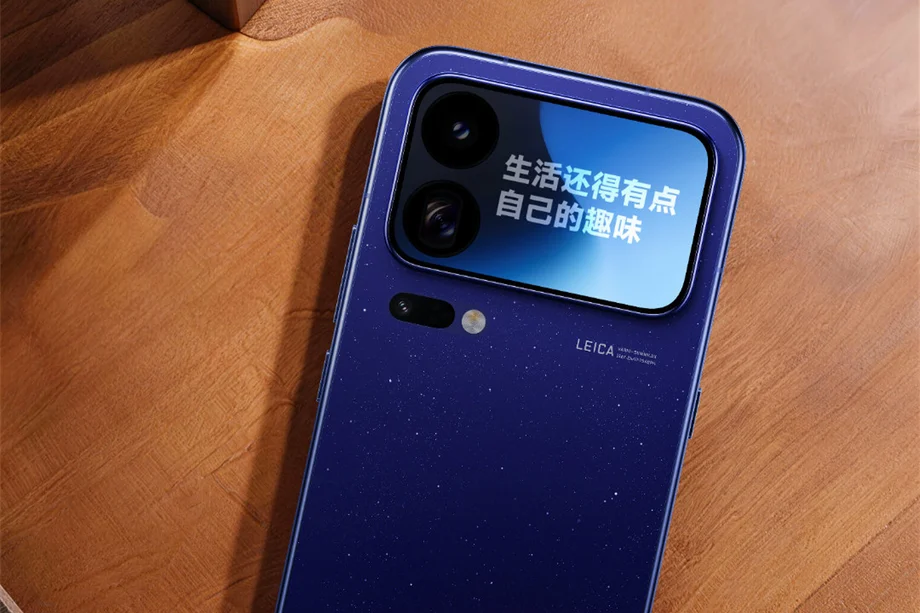
The smaller Pro pairs a main display measuring 6.4 inches with a rear screen measuring about 2.7 inches. The Pro Max increases those sizes to 6.9 inches and about 2.9 inches. Rather than serving only as a decorative panel, the rear screen can show camera previews, incoming calls, timers, notifications and controls for connected home devices.
Xiaomi is also extending artificial intelligence to that smaller screen. Its Xiao assistant supports reminders and the creation of simple custom applications, letting users describe a tool they want rather than write the software themselves. The app creation feature is currently in beta, meaning it is still being developed.
The two models share much of their photographic hardware, but differ in processor, battery capacity, size and weight. In China, the Pro has a battery rated at 7,000mAh, while the Pro Max reaches 8,500mAh. Both list charging at up to 100W through a cable and 50W wirelessly.
For buyers outside China, the key issue is which parts of that package will travel with the phones. International prices, exact release dates and the complete regional feature list have not been announced. Firmware information also points to a smaller battery in the international Pro, making the Chinese specifications only part of the purchasing picture.
What the Rear Display Actually Does
Xiaomi introduced rear displays on the Pro and Pro Max versions of the Xiaomi 17 series. The new generation expands that idea into a second place to manage everyday tasks, particularly when the phone is lying with its main screen against a table.
Incoming calls can appear on the rear panel, where users can accept or reject them. Answering from that screen switches the call to speaker mode. Message alerts can also appear there, although users must first allow the relevant applications to display notifications on the lock screen.
Xiaomi promises more than 100 app cards, which are compact views of information or controls. Examples include weather, step counts, a calendar, music playback and Xiaomi Home controls. A compatible Xiaomi security camera can send its live picture to the small display. A running timer can also show its countdown without requiring the main screen.
The rear screens use OLED panels with refresh rates of up to 120Hz. The detailed specifications list a panel measuring 2.66 inches on the Pro and 2.86 inches on the Pro Max. Their main practical constraint is space: camera controls on the smaller panel have been described as cramped, even though the live preview is useful.
AI Apps Meet Regional Limits
Xiao gives the rear display a more flexible role than a fixed collection of widgets. Users can describe a small application and have the AI generate it. In one published demonstration, editor Omar Belkaab used dictation to create an app that rolls a die with 20 sides for Dungeons & Dragons.
The feature reportedly takes about five minutes to produce an application. That makes a custom counter or game accessory a plausible use for the display, alongside Xiaomi's own timers and reminders. It also gives users a way to build something more personal than a wallpaper.
Regional services remain a practical limit. The Chinese software includes rear display integrations for DiDi and AMap, covering tasks such as tracking an arriving driver or showing navigation instructions. Those services did not work properly during use in France. Xiaomi has not confirmed whether international models will retain AI app creation or which local services will replace the Chinese integrations.
Leica Cameras Put Two 200MP Sensors to Work
Both phones list three rear cameras: a main camera with 200 megapixels, a periscope telephoto camera with 200 megapixels and an ultrawide camera with 50 megapixels. A periscope camera folds the path of light inside the phone, creating room for a longer lens without making the entire device as thick as that lens would otherwise require.
The main camera is specified with a sensor in the 1/1.28-inch format and an f/1.67 aperture. The sensor format describes its size class, while the aperture describes the lens opening. The telephoto camera uses a sensor in the 1/1.56-inch format, an f/2.4 aperture and 3.2x optical zoom. The ultrawide camera covers a field of view of 102 degrees.
The detailed launch listing distinguishes the main sensors as SCC80XS in the Pro and SCC90XS in the Pro Max, while the broader camera description identifies a Light Hunter 960 sensor across both models. Buyers comparing the cameras therefore have a clearer shared specification for resolution and sensor size than for the exact sensor variant.
Xiaomi's camera description also lists LOFIC technology and optical stabilization rated at seven stops under CIPA testing. LOFIC helps a sensor collect bright and dark parts of a scene with more usable detail. Optical stabilization compensates for movement of the phone, helping when hands shake, though a moving subject still needs an appropriate shutter speed.
The rear screen connects those specifications to an immediate use: selfies taken with the main camera. It also lets someone being photographed see the composition and adjust their position. For video creators, the same preview can help frame a shot while facing the rear cameras.
AI Processing Changes the Finished Picture
Xiaomi calls its new image processing system Legendary Moment. The company says it uses AI to reproduce the appearance of traditional professional cameras, including the look associated with older CCD sensors. An Essential mode is also intended to give photographs a classic camera tone at the moment of capture.
The 200MP resolution provides room to crop a photograph or choose a different composition afterward. Final detail will also depend on the lens, light, movement and processing. The telephoto camera is intended for distant subjects as well as small details, giving users another way to compose a picture before cropping.
Some editing tools use cloud processing, including reflection removal, noise reduction and improvements to image clarity. Those jobs send processing beyond the handset, while other AI functions run on the device. For users, that means the AI experience spans both the phone's own processor and remote computing services.
Different Chips, Shared Display Features
The Pro uses the Snapdragon 8 Elite Gen 6, while the Pro Max uses the Snapdragon 8 Elite Extreme Gen 6. Adam Zeng, Xiaomi's senior vice president and president of international business, introduced the series' use of the two chips at the Snapdragon Summit on September 22, a day before the Beijing launch.
Qualcomm positions the standard chip around efficiency and the Extreme version around peak performance. Xiaomi describes the new processor generation as using a manufacturing process of 2 nanometers. That label identifies a generation of chip production technology; battery life still depends on the complete phone, its software and what the owner does with it.
The main screens both support refresh rates of up to 120Hz and advertised peak brightness of 4,000 nits. A nit measures brightness. Peak brightness describes the brightest output under specified conditions, often in a limited part of the picture, rather than a constant level across the entire display.
Xiaomi Privacy Display adds another shared feature. The reported implementation uses location triggers to hide sensitive content, including notifications and floating windows. Xiaomi says details depend on the model and software version. The feature makes screen content another part of the phone's privacy controls, alongside the permissions users choose for alerts.
Batteries, Size and the Price Difference
The Chinese Pro Max has 1,500mAh more stated battery capacity than the Pro: 8,500mAh against 7,000mAh, an increase of about 21%. Capacity is the amount of charge a battery can hold. The larger model also powers a larger screen, so a direct comparison of operating time requires testing under the same conditions.
Both models list 100W wired charging and 50W wireless charging. They also support reverse charging, allowing the phone to supply power to another compatible device. Xiaomi has not supplied charging times in the specifications described here, and the advertised wattage is a maximum rather than a constant rate throughout a charging session.
The standard Pro is listed at 203 grams and 8.46 millimeters thick, compared with 235 grams and 8.39 millimeters for the standard Pro Max. The Max therefore adds 32 grams while remaining slightly thinner. Some finishes change those measurements.
The base configuration for each phone has 12GB of RAM and 256GB of storage. RAM is the working space used by running applications; storage holds photographs, videos and files. The Pro starts at 5,999 yuan, while the Pro Max starts at 6,999 yuan, a premium of 1,000 yuan, or about 17%.
Standard configurations reach 16GB of RAM and 1TB of storage at 8,999 yuan for the Pro and 9,999 yuan for the Pro Max. A transparent red Special Edition with the same memory and storage costs 9,999 yuan and 10,999 yuan respectively. Those are Chinese prices, with no confirmed international equivalents.
What Changes Outside China?
Xiaomi president Lu Weibing has confirmed that the Pro is expected to sell outside China during 2026, and international plans also cover the Pro Max. Europe is among the expected destinations. The Xiaomi 13 Pro was previously sold officially in Europe, giving the new Pro a regional predecessor.
Firmware information indicates that the international Xiaomi 18 Pro will have a 6,000mAh battery instead of the Chinese version's 7,000mAh. That would be a reduction of 1,000mAh, or about 14%. For someone choosing between an imported Chinese handset and a local release, battery capacity is therefore a concrete specification to check alongside supported services and software.
The launch sequence and investment commitments span several dates:
- 2021 to 2025: Xiaomi says it spent more than 105.5 billion yuan on research and development.
- September 22, 2026: Adam Zeng discussed the new processors and Xiaomi 18 Pro series at the Snapdragon Summit.
- September 23, 2026: Xiaomi launched the Pro and Pro Max in Beijing.
- Later in 2026: International sales are planned, with market details still to come.
- 2026 to 2030: Xiaomi plans research and development spending exceeding 200 billion yuan.
The Investment Behind the Launch
Lu Weibing, a Xiaomi partner and group president, describes the series as part of a broad effort to bring AI into the company's smartphones. His account covers system software, chips, imaging and large AI models, rather than treating the assistant as a separate feature.
Xiaomi says it had 25,457 research and development employees in 2025 and more than 47,000 granted patents worldwide. Its planned research spending of more than 200 billion yuan for 2026 to 2030 is close to twice the 105.5 billion yuan reported for the preceding five years.
The company also plans to invest more than 60 billion yuan in AI over the next three years. That work covers smartphones, vehicles and home appliances. On the Xiaomi 18 Pro series, the connection is visible in camera processing, custom rear display apps and controls for devices in the home. International buyers will encounter that strategy through the particular functions Xiaomi brings to their market.
Key Points
- Xiaomi launched the 18 Pro and 18 Pro Max in Beijing on September 23, 2026.
- Chinese prices start at 5,999 yuan for the Pro and 6,999 yuan for the Pro Max.
- Both phones have interactive rear screens and Leica camera systems with two sensors of 200 megapixels each.
- The rear display supports camera previews, calls, timers, home controls and AI app creation in beta.
- Chinese battery capacities are 7,000mAh and 8,500mAh; firmware indicates 6,000mAh for the international Pro.
- International sales are planned for later in 2026, with exact dates, prices and regional features awaiting confirmation.