A factory in China holds the key to an American investment
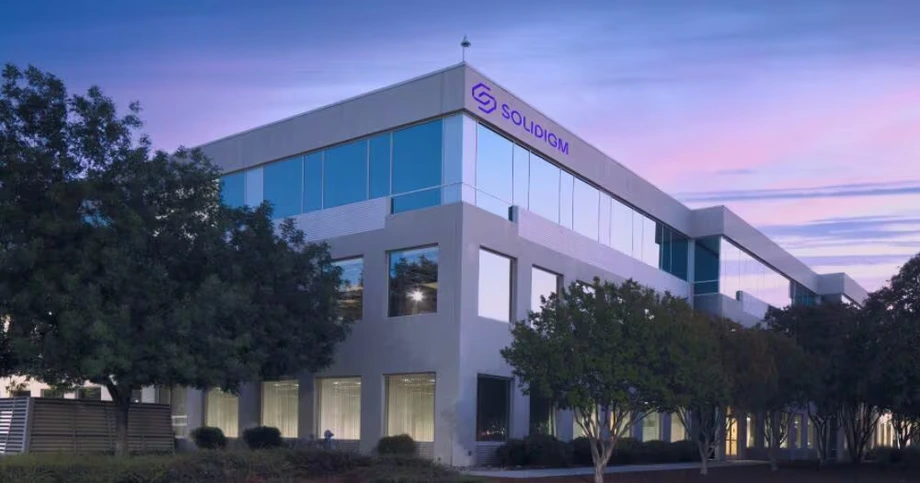
The United States is withholding approval for chipmaking equipment destined for SK Hynix's Dalian factory in China, complicating a proposal by its American subsidiary, Solidigm, to invest about $45 billion in two NAND memory factories in New York state. The negotiations, described on November 3, connect Washington's restrictions on semiconductor production in China with its effort to attract more chip manufacturing to America.
Contents
- A factory in China holds the key to an American investment
- What Solidigm wants to build and sell
- Nearly 10 meetings without approval
- Why an empty cleanroom is central to the dispute
- Competition adds pressure to modernize
- How American controls reach a Korean company
- Treasury and financing create another decision point
- The dates behind the negotiations
- Key Points
Solidigm's executives have held nearly 10 meetings with Commerce Department officials since late August. The company wants equipment that would let Dalian produce more memory and make more advanced products, generating earnings to help finance construction in the United States. Commerce has yet to approve those shipments, although it has not formally rejected the applications.
The proposed American investment could eventually reach about $100 billion. That would be roughly 2.2 times the initial $45 billion proposal, showing how much larger the project might become over time. Both figures describe a possible investment, rather than an approved construction budget.
New York is still a candidate rather than a confirmed destination. The location is also unresolved in the public descriptions: Massena is named in the principal account of the proposal, while another identifies Marcy. Solidigm says it is considering several locations around the world and has not settled on a specific course. No construction timetable or date for a licensing decision has been announced.
For the Trump administration, the immediate choice concerns machinery entering China. For Solidigm, the same decision affects how it could earn the money needed to build factories in America. That connection has turned an equipment licensing negotiation into a test of two competing American industrial priorities.
What Solidigm wants to build and sell
Solidigm, an American business controlled by South Korea's SK Hynix, is examining the construction of two factories producing NAND flash memory. NAND retains information when the power is switched off. It supplies storage for devices and for the drives that hold large amounts of data inside data centers.
The company's argument links its existing Chinese operations to its possible American expansion. More productive facilities in Dalian, making more competitive memory products, would help generate the earnings needed for the New York investment. Washington's reluctance to approve the equipment therefore affects both an operating factory and a proposed construction project.
Chip manufacturing requires far more than a building. A factory needs specialized machines to form, process and inspect extremely small structures on semiconductor wafers, the thin discs on which chips are made. A completed factory space can remain commercially limited if the owner cannot install the tools needed for its intended products.
Nearly 10 meetings without approval
Richard Chin, Solidigm's co-chief executive, was among the executives who met Commerce Secretary Howard Lutnick and Jeffrey Kessler, the under secretary for industry and security, in late August. People familiar with those discussions said American officials showed strong interest in the domestic investment proposal and indicated a willingness to seek a solution.
Subsequent meetings have not produced permission for the requested equipment. At a meeting in the week before the November 3 account, Kessler maintained that additional American tools should not enter China for improvements in technology or increases in production capacity, according to people familiar with the talks.
Commerce's position follows its statement last year that it did not intend to license equipment exports for technology upgrades or capacity expansion at Chinese semiconductor factories. The company is asking Washington to approve shipments within that restrictive policy setting.
Two sets of negotiations are proceeding separately. One concerns the tools sought for Dalian's development. The other concerns equipment needed to maintain the existing factory's operations in 2027. Keeping a plant running and equipping it to produce more advanced chips are separate questions for American licensing officials, even when both involve the same site.
Why an empty cleanroom is central to the dispute
SK Hynix says the Dalian cleanroom that would receive the machinery was already built in 2023. On that basis, the company argues that filling the space with equipment should not count as expanding production capacity.
A cleanroom is a tightly controlled manufacturing area where dust and other contamination are kept extremely low. Tiny particles can damage the microscopic structures being formed on chips. Building that space is a necessary step, but installing machinery is what allows it to produce semiconductors.
Commerce's concern is whether the additional equipment would improve technology or increase what the Chinese factory can produce. The disagreement therefore turns on a practical question: how should Washington classify new productive machinery placed inside a building that already exists?
Dalian's planned technology changes make that question more consequential. SK Hynix was already pursuing a move from NAND with 192 layers to at least 240 layers, as detailed in the October 21 China NAND upgrade plans. That would increase the layer count by at least 25 percent.
Manufacturers stack memory cells vertically to fit more storage into each chip. More layers can mean more stored data from a similar amount of wafer production. For SK Hynix, better products support competitiveness even when the physical factory footprint stays the same. American officials are scrutinizing the equipment that would make those improvements possible.
Competition adds pressure to modernize
SK Hynix's licensing negotiations come as Chinese competitor Yangtze Memory Technologies, known as YMTC, gains ground. Omdia figures cited in the October coverage put YMTC's share of China's NAND market at 38.5 percent in the second quarter of 2026, compared with Samsung's 33.5 percent and SK Hynix's 17 percent.
Those figures put YMTC 21.5 percentage points ahead of SK Hynix in that market. They help explain why the Korean company wants to improve Dalian while competitors continue developing their products.
Samsung is also seeking to modernize an important Chinese manufacturing base. Its Xi'an factory accounts for about 40 percent of its global NAND output, and its reported conversion plan targets memory with 286 layers. The earlier account described both Korean companies as working in consultation with Washington as annual equipment licenses replaced a system of exemptions.
The commercial pressure and the regulatory pressure meet at the same point: access to machinery. SK Hynix wants Dalian to remain competitive enough to support its business and contribute to future investment. Washington wants existing Chinese plants to operate within limits that restrict technological progress and expansion.
How American controls reach a Korean company
The Center for Strategic and International Studies describes the wider policy framework in its export controls analysis. The research institution explains that measures introduced in October 2022 and updated in October 2023 sought to restrict China's access to advanced computing chips and the equipment needed to manufacture them.
A further package announced on December 2, 2024, widened restrictions on semiconductor manufacturing equipment and introduced broader controls on advanced high bandwidth memory, or HBM. HBM supplies data rapidly to processors used for artificial intelligence. NAND serves the storage role at the center of the Dalian and New York proposals.
The 2024 package also expanded the foreign direct product rule. This rule allows American export restrictions to reach certain products made outside the United States when their production depends on specified American technology or equipment. CSIS explains that SK Hynix and Samsung's HBM exports fall within that framework because the chips are manufactured using American semiconductor equipment.
The analysis also says South Korean equipment remained covered by expanded American rules in the absence of equivalent Korean controls. The December package added 140 entities across China, Japan, South Korea and Singapore to the Bureau of Industry and Security's Entity List, which imposes licensing restrictions on listed organizations.
Gina Raimondo, then the American commerce secretary, explained the concern about alternative suppliers during remarks at the Reagan National Defense Forum on December 7, 2024. Her comments, reproduced in the CSIS analysis, described why Washington sought cooperation from other equipment producing countries:
When I set the rules, I have to make damn sure China can't just buy this stuff from Japan or Korea or the Europeans, so that's why we have to work with them.
That approach helps explain why sourcing equipment across borders can still require American permission. The policy follows the technology and manufacturing chain, rather than stopping at the nationality of the factory owner.
Treasury and financing create another decision point
Solidigm's executives have also approached the Treasury Department about an exception to restrictions on outbound investment for equipment purchases connected to the Chinese factory. People familiar with the discussions said Treasury's response was to await Commerce's decision first.
The two departments address different parts of the transaction. Commerce handles the equipment export question. Treasury is being asked to address the investment restrictions affecting the proposed purchases. The company's discussions with both show that obtaining the machinery involves more than a single administrative approval.
SK Hynix has meanwhile paused another possible route to capital. On October 23, it announced that it had stopped considering investment ahead of a Solidigm stock market listing and an initial public offering, citing recent capital market conditions and share price movements.
An initial public offering, or IPO, is the process through which a company first sells shares to public investors. Investment before that listing can provide funding earlier. With those options under review no longer being pursued, earnings from the existing business take on added importance in the company's stated plan to finance American factories.
The dates behind the negotiations
The Dalian dispute brings together a factory space completed several years ago, recent investment discussions and equipment requests for the following year. The key developments are:
- 2023: The Dalian cleanroom at the center of the capacity dispute was completed, according to SK Hynix.
- December 2, 2024: Washington announced a broader semiconductor export control package covering additional equipment and advanced HBM.
- Late August 2026: Solidigm executives met Lutnick and Kessler as discussions about the American investment and Chinese equipment requests continued.
- October 21, 2026: Details emerged of SK Hynix's planned Dalian technology upgrade and Samsung's conversion project in Xi'an.
- October 23, 2026: SK Hynix announced that it had stopped considering Solidigm investment before a listing and an IPO.
- November 3, 2026: The equipment licensing hold and its connection to the proposed New York factories became public.
- 2027: Equipment permissions to maintain existing Dalian operations are being negotiated separately.
For Washington, attracting new factories and restricting advanced production in China are both stated objectives. Solidigm's financing proposal connects them directly: it wants a more productive Chinese operation to help pay for American manufacturing. Resolving that request requires a decision about how much development Washington is prepared to allow at Dalian.
Key Points
- Commerce has withheld approval, without formally rejecting equipment applications for SK Hynix's Dalian factory.
- Solidigm is considering two New York NAND factories costing about $45 billion, with a possible longer term investment of $100 billion.
- The company wants improved Chinese production to generate earnings for American construction.
- The dispute includes whether installing tools in a cleanroom completed in 2023 counts as capacity expansion.
- Equipment licenses to maintain Dalian operations in 2027 are under separate negotiation.
- Solidigm has not finalized a factory location or construction plan, and SK Hynix has paused consideration of a Solidigm IPO.