A new eastern interchange will connect two major rail routes
Singapore will open Bedok South, Xilin and Sungei Bedok MRT stations on December 26, 2026, adding 4.3km of railway and cutting some journeys by up to 25 minutes. Sungei Bedok will connect the Thomson-East Coast Line (TEL) and Downtown Line (DTL), giving passengers another place to switch between two major routes across the island.
Contents
- A new eastern interchange will connect two major rail routes
- Where the three stations will take passengers
- How much time could commuters save?
- More homes within walking distance of rail
- The TEL completes its five planned opening stages
- The dates shaping the next phase of travel
- More rail capacity, alongside incentives to travel earlier
- What will change on the 660 new electric buses?
- Autonomous vehicles will get quarterly public reports
- Key Points
Transport Minister and Second Minister for Finance Jeffrey Siow announced the opening on November 4 at Singapore Urban Mobility Week 2026. The Land Transport Authority (LTA) said the extensions would improve access to Changi Business Park, Tampines Regional Centre and other employment areas in eastern Singapore.
Bedok South and Sungei Bedok form Stage 5 of the TEL. Xilin and the DTL platforms at Sungei Bedok form the Downtown Line Stage 3 Extension. Together, they will bring the TEL to 29 operating stations across 42.8km and the DTL to 37 across 44.6km.
Siow described the practical benefit for passengers travelling through the east:
These new stations will stitch together two major train corridors, and give commuters in the East new routes, and faster journeys.
The opening also creates a longer chain of connections. Eastern residents will be able to travel along the TEL to Woodlands North, where they can change to the Johor Bahru-Singapore Rapid Transit System Link when it opens as scheduled in February 2027. That separate service will take passengers to Bukit Chagar in Johor Bahru.
Where the three stations will take passengers
Bedok South station sits along Upper East Coast Road and will serve nearby homes and schools, including those in the Bayshore precinct. Its opening extends rail access through an area where residents will gain another option for reaching the city centre and northern Singapore.
Xilin will improve access to Changi South industrial estate, Changi Business Park and surrounding employment hubs. For people working there, the extension offers more journeys by rail instead of a combination of trains and buses.
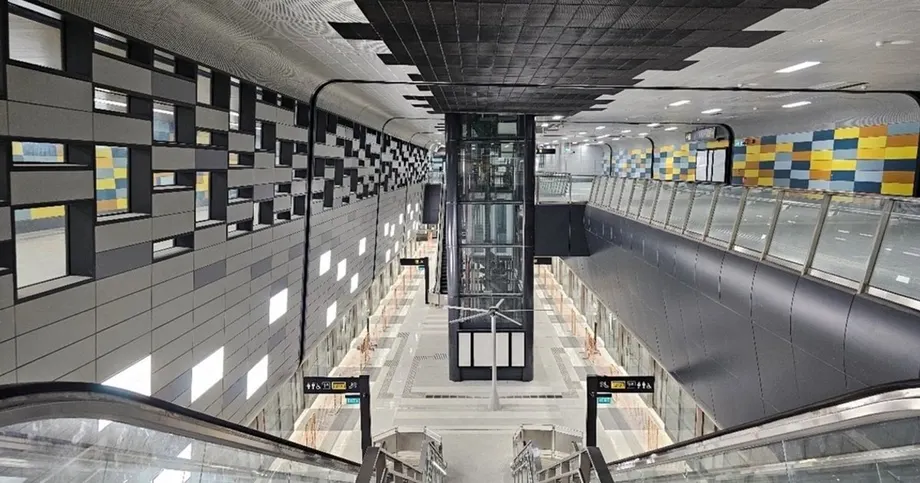
Sungei Bedok is the connecting point. The underground station will become the second interchange between the TEL and DTL, after Stevens. Passengers will be able to change between the lines in eastern Singapore, rather than travelling to their existing interchange to make that connection.
How much time could commuters save?
A journey from Havelock to Changi Business Park currently takes about 70 minutes and involves a bus transfer, according to the LTA. Once the extensions open, the journey using the TEL and DTL is expected to take about 45 minutes, with no bus transfer needed. Passengers using both rail lines will change trains at Sungei Bedok.
The projected saving of 25 minutes is about 36% of the current journey time, calculated from the LTA's figures of 70 and 45 minutes. For a commuter making the same trip in both directions, that could mean up to 50 minutes less travelling each day.
Marine Parade to Tampines journeys using the two lines are expected to become up to 10 minutes shorter. The benefits therefore reach beyond the neighbourhoods immediately around the new stations: passengers at existing stations can also gain a quicker route through the new connection.
Workers heading to eastern business districts gain a rail connection closer to their destination, while residents along the East Coast corridor gain another way to reach Tampines and other parts of the DTL. The time savings depend on the particular journey, with the LTA giving Havelock and Marine Parade as examples.
More homes within walking distance of rail
More than 240,000 households will be within a 10-minute walk of a TEL station after Stage 5 opens, the LTA said. The DTL extension will bring more than 220,000 households within the same walking distance of a station on that line.
These figures describe the reach of each line after the extensions open. They count households along the respective routes, including areas served by existing stations. A home near both lines may be included in both figures.
A station within walking distance can change the first part of a daily journey. Residents who can walk to the train have less need to wait for a feeder bus, while the new interchange gives them more choices once they enter the rail network. Bedok South's location near homes and schools and Xilin's access to workplaces connect both ends of that daily travel pattern.
The TEL completes its five planned opening stages
The TEL began operating in 2020 with three stations in Woodlands. It then expanded in stages through Springleaf and towards Bayshore. The December opening extends the line from Bayshore to Sungei Bedok and completes its planned programme of five opening stages.
The line was initially expected to be completed in 2024. Its timetable was pushed back partly because of the COVID-19 pandemic. Stage 5 will bring the operating route to 42.8km, linking eastern neighbourhoods with the city centre and Woodlands.
The DTL began operating in 2013 and currently connects Bukit Panjang and Expo through the city centre. Xilin and Sungei Bedok will extend its eastern end, taking the route to 44.6km and giving it a second connection with the TEL.
Further growth is planned at both ends of this wider network. The TEL is due to extend to Changi Airport Terminal 5 and is expected by the LTA to serve about one million commuters daily in the longer term. Another three DTL stations are planned to connect Bukit Panjang with the North-South Line by 2035.
The dates shaping the next phase of travel
December's opening is one step in a series of transport changes extending into the 2030s. The nearest milestones cover rail connections, electric buses and public reporting on autonomous vehicles.
- November 4, 2026: Siow announced the station opening at Singapore Urban Mobility Week, held from November 4 to 6 at Suntec and bringing together about 8,000 participants from more than 50 countries.
- December 2026: Quarterly reports on autonomous vehicle deployments, passenger experiences and safety outcomes are due to begin.
- December 26, 2026: Bedok South, Xilin and Sungei Bedok are scheduled to open.
- From the end of 2026: Deployment of 660 new electric public buses is due to begin in stages.
- February 2027: The Johor Bahru-Singapore RTS Link is scheduled to open between Woodlands North and Bukit Chagar.
- Mid-2028: The Jurong Region Line is expected to begin opening.
- The 2030s: The Cross Island Line is scheduled for completion, with the DTL connection to the North-South Line planned by 2035.
For eastern residents travelling to Malaysia, the February milestone would add a connection at the northern end of the TEL. Their journey would involve taking the TEL to Woodlands North and changing to the cross-border RTS service.
More rail capacity, alongside incentives to travel earlier
Singapore's urban rail network currently spans 275km across eight lines, Siow said. He described the MRT as the backbone of land transport and said the government wanted trains to remain the most convenient choice.
The Jurong Region Line is intended to give people in western Singapore quicker access to rail, reducing their reliance on feeder buses. The Cross Island Line will add another major route in the 2030s, while planning is also under way for the Seletar and Tengah lines.
Siow also pointed to measures that spread passenger demand across the day. These include the reintroduction of free morning travel outside peak hours for people entering at selected North East Line stations and Sengkang-Punggol LRT stops.
Account based ticketing, which records journeys against a passenger's payment account, could allow incentives to be directed more closely towards people likely to change their travel times, he said. Passengers with flexible schedules could receive the largest benefits, while those who must travel during the busiest period could gain from less crowded trains.
Road charging is also due to change. Singapore plans to begin upgrading to the satellite based ERP 2.0 system in 2027, with existing physical Electronic Road Pricing gantries to be removed as the new system comes into use.
What will change on the 660 new electric buses?
The LTA will introduce 660 electric buses from four Chinese manufacturers in stages from the end of 2026. Singapore aims to have more than 3,000 electric public buses by 2030, with further electrification beyond that.
The new buses incorporate feedback from commuters, bus captains and operators. Their low floors will have no steps along the main passageway, and lower seating platforms will make boarding, leaving the bus and moving through the vehicle easier.
Full colour electronic displays at the rear will show the service number and destination. From 2027, those displays will also give other road users visual alerts when a bus is stopping, moving off or allowing passengers to board and alight.
Driver assistance equipment will include collision warnings, surround view functions, fatigue monitoring, onboard CCTV and cameras used as mirrors. The LTA said these features would help bus captains keep track of their surroundings and respond to potential hazards.
Longer battery range will also change how the buses can be deployed. Buses with a single deck will travel up to 310km on a charge, compared with 280km previously. Buses with two decks will reach up to 240km, compared with 215km.
Those increases amount to 30km and 25km respectively, or about 11% to 12% more range using the LTA's figures. The authority said the extra distance would allow more flexible and efficient operations between charges.
Autonomous vehicles will get quarterly public reports
Singapore has about 25 autonomous passenger vehicles on its roads, alongside a handful of commercial vehicles undergoing trials. The first autonomous shuttle service opened to the public in Punggol in April 2026.
From December, quarterly reports will set out the scale of deployment, passenger experiences and safety outcomes. The programme follows more than a decade of preparation, including the opening of Singapore's first autonomous vehicle test centre in 2015.
Siow said transparency would accompany the expansion of services:
These reports will cover the scale of autonomous vehicle operations, riders' experiences, and safety outcomes.
The minister said autonomous vehicles could serve places beyond the reach of existing public transport and provide options for safe travel late at night. He also described early passenger feedback as positive, with journeys seen as smooth and comfortable.
Operators and unions are already working with the government to prepare drivers for skilled roles in the industry, Siow said. Although he described no immediate effect on driving jobs, the preparation places workforce changes alongside the technology's expansion. The first quarterly report will give the public a regular account of how these services are operating as more vehicles enter use.
Key Points
- Bedok South, Xilin and Sungei Bedok will open on December 26, 2026, adding 4.3km of railway.
- Sungei Bedok will become the second interchange between the Thomson-East Coast and Downtown lines.
- Havelock to Changi Business Park journeys are expected to fall from about 70 to 45 minutes, without a bus transfer.
- The completed extensions will bring the TEL to 29 operating stations and the DTL to 37.
- The RTS Link to Johor Bahru is scheduled to open in February 2027, connecting with the TEL at Woodlands North.
- Deployment of 660 electric buses will begin in stages from the end of 2026.
- Quarterly reports on autonomous vehicle operations, passenger experiences and safety outcomes will begin in December 2026.