A Sudden Brake on AI Server Deliveries
Nvidia has told Dell Technologies and Super Micro Computer to stop shipping servers containing its chips to Malaysia, Singapore, Thailand and Indonesia, according to people familiar with the matter. The pause covers complete AI servers, the machines that turn Nvidia processors into equipment data centers can install. Nvidia, Dell and Supermicro had not confirmed the step, and no end date had been announced.
Contents
- A Sudden Brake on AI Server Deliveries
- What the U.S. Rule Changes
- Why Remote Computing Became the Target
- A Short Timeline of the Crackdown
- Who Carries the Cost in Server Plants
- Aolani Shows How a Deal Can Unwind
- Billions of Dollars of Financing Are Being Reworked
- Malaysia and Thailand Face the Biggest Build Out Test
- The Huang Factor Turns Export Rules Into a Governance Test
- Where the Compute Could Move Next
- Key Points
For suppliers, the timing matters. Dell and Supermicro are major brands in the AI server market, while the four countries have become centers for building computing capacity. Companies named in connection with the Taiwanese supply chain include Wistron, Compal, Huatai, Nidec Chaun-Choung and Leadtek. A halt at the brand level can change component orders, assembly schedules and delivery dates far from the customer site.
The commercial stake is large. Company accounts show Nvidia booked $104 billion of revenue through its Singapore subsidiary in 2025, up 72 percent from a year earlier. That figure includes some Taiwan and China revenue booked through the Singapore unit, so it is not a simple measure of local demand. The halt still touches one of the company's most important regional gateways.
What the U.S. Rule Changes
The U.S. Commerce Department's Bureau of Industry and Security released an interim final rule on November 16, 2026, with effect from November 19. The bureau said in its interim final rule that it was written by and at the direction of the Department of Treasury and the National Security Council. It targets remote access to advanced computing servers and chips, which the bureau calls super intelligence technology. In plain terms, Washington is no longer looking only at where a chip is shipped. It is also looking at who can use that chip's power from somewhere else.
The rule adds licensing requirements for exports, reexports and transfers of qualifying advanced chips to Malaysia, Singapore, Thailand, Indonesia and Brazil, countries identified as having higher than normal diversion risk. Brazil was included in the rule but was not named in the reported shipment halt. Qualifying American companies and companies with American parent companies are excluded from the destination based requirement if they file the required reports. Existing servers are not being switched off by the reported halt, and the rule is not a blanket import ban.
A second control follows the computing itself. A data center anywhere in the world needs a license if it supplies more than 12 million units of aggregate Total Processing Performance, or TPP, to companies headquartered in China, Macau or other designated jurisdictions. TPP is a measure of combined processing power. Operators already serving such customers have 90 days to apply for a license and must check whether clients are directly or indirectly controlled by restricted parties.
Why Remote Computing Became the Target
Export controls have long limited direct sales of Nvidia's most advanced chips to China. Cloud computing created another route. A Chinese developer can avoid owning a restricted processor by renting time on one installed in a data center in another country. The hardware stays abroad, while the model training happens remotely. Washington's new rule treats that arrangement as a version of the same access problem.
Southeast Asia became central to that route. An October 2026 forecast by the Institute for Progress put the share of China's overseas AI compute in Southeast Asia at about 75 percent by the end of 2026. Another estimate said remote data centers supplied about 24 percent of China's AI computing power. The figures use different bases: one measures China's computing power located overseas, while the other measures remote centers as a share of all Chinese AI compute.
Chinese AI labs still rely heavily on Nvidia processors for flagship models, particularly in the early training stage, when a model is fed enormous amounts of data and needs clusters of processors working together. Jamieson Greer, the U.S. trade representative, said the goal was to block indirect access, including smuggling through Southeast Asia and remote access through data centers in other countries.
A Short Timeline of the Crackdown
The current halt grew out of a longer policy shift. The main dates help explain why chip makers, cloud providers and banks are now moving at once.
- January 15, 2025: The Biden administration issued the AI Diffusion Rule, with compliance requirements set for May 15, 2025.
- May 13, 2025: The Commerce Department announcement rescinded that rule, added licensing requirements for chip exports to Malaysia and Thailand because of diversion, issued guidance on Chinese advanced computing chips including Huawei Ascend chips, and warned about American chips used to train Chinese AI models.
- July 2025: Malaysia required permits to export, transship or move American high performance AI chips in transit.
- October 2025: Malaysian customs officers seized 30 servers with advanced chips at Kuala Lumpur International Airport, the fifth case that year tied to one syndicate.
- November 16 and 19, 2026: The Bureau of Industry and Security issued the interim final rule, which took effect on November 19.
- November 23, 2026: Nvidia's board reinstated Jensen Huang as chief executive.
- November 26, 2026: Dell and Supermicro buyers in four Southeast Asian markets were told their server orders could not ship.
Jeffery Kessler, under secretary of commerce for industry and security, said in May 2025 that the policy aimed to give trusted partners access while keeping advanced technology from adversaries. The bureau said a replacement rule would come later, without giving a date.
Who Carries the Cost in Server Plants
Dell and Supermicro do not make the Nvidia chip itself. They package processors, memory, cooling, power systems and networking gear into servers that data centers can rack and connect. That assembly work supports a wide supplier base, including companies making boards, thermal parts and server components. When shipments stop, the pressure lands on purchase orders already placed and on new orders that may never be accepted.
People in the industry described a possible seesaw in orders. If Southeast Asian deliveries are blocked or delayed, some demand may move to markets not covered by the halt, such as Japan and South Korea. Some server makers have already shifted expansion attention toward those markets. Chinese buyers, meanwhile, have been looking at Advanced Micro Devices' MI series and domestic alternatives, though large scale cluster networking and software support take time to build.
Aolani Shows How a Deal Can Unwind
Aolani, a Singapore based cloud company, is one of the projects caught in the change. It planned to deploy 97 racks of Nvidia GB300 servers in Kuala Lumpur and lease the computing power to ByteDance, the Chinese owner of TikTok. Banks that had agreed to finance the project stopped issuing about $500 million of credit, with the specific paused loan described as $480 million. ByteDance could also leave the arrangement.
An executive at a cloud provider in the region said the rule had arrived without a clear application process. The executive said companies were trying to understand the license system while the clock ran.
There's this new rule but no guidance on execution. No one knows how to apply for this licence while the 90-day clock is ticking. It's causing sheer chaos in the region.
The shock is not limited to one project. Oracle canceled a multibillion dollar chip leasing agreement with Tencent in early November that would have given the Chinese company access to about 100,000 advanced AI chips. Moonshot AI, a Chinese developer, tried to access Nvidia chips through data centers in Europe. Dealers have also listed unusually large numbers of Nvidia GPUs for sale, including thousands of B300 chips originally intended for data centers with Chinese rental customers.
Jack Duhamel, president of AI infrastructure marketplace GPU Mart, confirmed that the secondary market surge followed the new rule. For sellers, a processor that was meant for a contracted data center now needs a new buyer, and that buyer must also fit inside the export rules.
Billions of Dollars of Financing Are Being Reworked
The Aolani case is part of a wider financing problem. About $6.5 billion of GPU related loans in Asia are now under review. The projects include a $3 billion plan by Australia based Firmus Technologies to deploy chips in Indonesia, a $3.1 billion loan for Indonesia's Zankore, the $480 million Aolani facility and a $488 million financing package for Epoch Digital's Malaysian data center.
Banks are studying who will actually use the computing power, not just whose name appears on the contract. A senior Singapore based loan banker said GPU and data center financing in Southeast Asia could slow for at least six to 12 months until the rules are clearer. Even a $100 million loan is hard to approve when the end user question cannot be answered with confidence.
Colette Kress, Nvidia's chief financial officer, warned this month that the company might step back from some financing guarantee arrangements. A financing guarantee is a promise to cover part of a loan if a project cannot pay. Removing that support makes lenders more cautious. Banks including DBS, OCBC and United Overseas Bank have asked clients for more disclosures, and approvals have slowed.
Fitch warned on November 26 that Asia Pacific data center investment would slow. The rating firm said newer cloud providers built around AI computing, often called Neoclouds, face the greatest pressure. These companies rent GPU power to customers and need high utilization to cover costly hardware. If chips arrive late or customers fail compliance checks, cash can run short quickly.
Malaysia and Thailand Face the Biggest Build Out Test
Malaysia has the largest amount of capacity at risk in the region. It had 1,039 megawatts of data center capacity under construction at the end of June, according to Cushman & Wakefield's half year update. Johor alone had 1,110 megawatts already running and a 3,088 megawatt pipeline. Malaysia also approved 123.5 billion ringgit of data center and cloud computing investments across 86 projects between January and September 2026, according to the Malaysian Investment Development Authority.
More than half of Malaysia's data center capacity sits in colocation facilities, where operators provide space, power and cooling for servers owned by customers. Leah Fahy, senior China economist at Capital Economics, said Chinese firms account for a sizeable share of workloads in those facilities. She said limiting overseas cloud access could weaken the case for further expansion and reduce investment from both Chinese and American companies. Goldman Sachs analysts wrote that centers built heavily for Chinese AI training could struggle to lease space and leave power unused, while projects with American cloud, government and enterprise customers are better placed.
Johari Abdul Ghani, Malaysia's investment, trade and industry minister, said foreign rules would shape local projects. He said data center applicants must disclose the operator, the site and the number of GPUs they plan to import.
If you want to be in the game, you have to follow U.S. regulations.
Thailand is also exposed. Bangkok had 859 megawatts under construction at the end of June, up 148 percent in six months, against 134 megawatts in operation. Thai authorities had already halted 49 projects in September and frozen decisions on 117 more because of power and water concerns. Kirida Bhaopichitr, Thailand's vice minister for commerce, told an interview in Manila that the country would scrutinize data centers importing high end chips and would "crack down" on those reexporting them to third countries.
Singapore has a different problem. Its risk sits in trading and routing. Prosecutors charged three men with fraud in early 2025 over Dell and Supermicro servers fitted with Nvidia chips that moved on to Malaysia after false statements about the end user. K Shanmugam, Singapore's law and home affairs minister, said the problem was enforcement rather than the written law.
The issue is not with the law. We have the laws. It's with enforcement, and we are enforcing.
Singapore has also said it plans to negotiate trusted access to advanced AI chips for its companies. That approach tries to preserve Singapore's role as a regulated technology hub while meeting Washington's demand for end user checks.
The Huang Factor Turns Export Rules Into a Governance Test
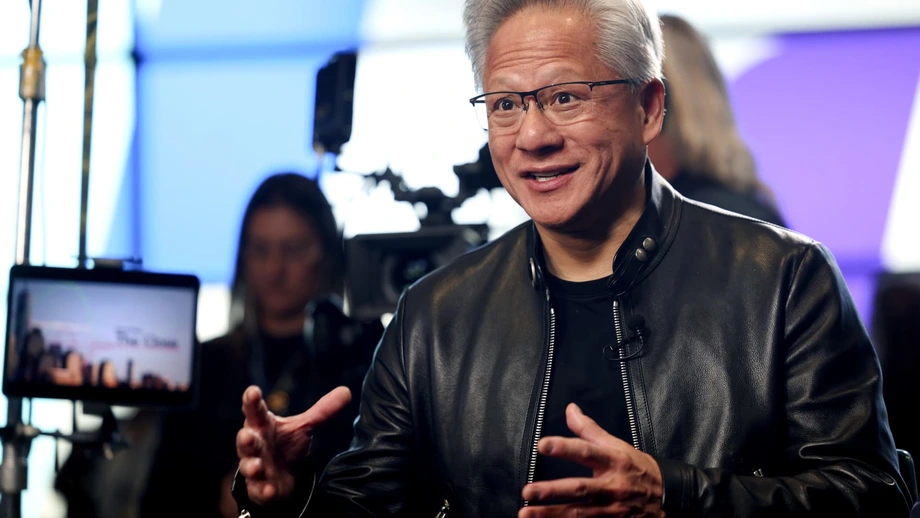
The shipment halt comes after a turbulent month for Nvidia's leadership. Jensen Huang resigned as chief executive following reports of extramarital affairs, including one involving a woman tied to a cloud provider under scrutiny for alleged chip diversion. Nvidia's board reinstated him on November 23. Megaspeed, a Singapore based cloud company and Nvidia partner, has been examined over possible illegal diversion of advanced chips to China. The Commerce Department placed Megaspeed and six related companies on a trade blacklist, which restricts many exports to them. Megaspeed said it complied with U.S. export rules.
Many people in the market had expected Huang's return to soften enforcement. The pause points the other way. It may become the first major supply chain decision after his return, showing that Nvidia is choosing to implement Washington's rules while it works out the compliance process.
Investors also reacted to the governance questions. Nvidia shares closed at $149.30, down 3.91 percent, then added 1.29 percent to $151.22 in extended trading. S&P Global Ratings, the credit rating firm, put Nvidia's "AA" rating on CreditWatch with negative implications and said it might cut the rating by one notch after a 90 day review.
News regarding the CEO and questions regarding potential export control violations have exposed vulnerabilities in Nvidia's management and governance framework, especially in regard to its board structure, composition, and effectiveness.
Moody's Ratings lowered Nvidia's outlook to stable from positive, citing governance concerns. Beijing rejected the policy. Guo Jiakun, spokesperson for China's foreign ministry, said the rule showed Washington stretching national security too far and said China would defend its interests.
yet another case of the US overstretching the concept of national security. China will do what is necessary to firmly safeguard its legitimate rights and interests.
Where the Compute Could Move Next
The rule leaves one narrow route open. Cloud companies based in the United States are exempt from the country licensing requirement if they file reports. That could give American cloud giants a modest advantage, because Chinese developers may keep renting from their data centers. Chris McGuire, a senior fellow at the Council on Foreign Relations and a former National Security Council official, said there was a significant risk that Chinese companies would move from Southeast Asian data centers to centers in Virginia. He urged Washington to close that gap before it is used.
Reema Bhattacharya, head of Asia research at Verisk Maplecroft, said some high end capacity could move to Japan, South Korea and Taiwan, although power and land limits would restrict how much those markets can absorb. Jessica Brandt, a senior fellow for technology and national security at the Council on Foreign Relations, said the rules would make data center building and operation slower and costlier.
For regional operators, the next operational deadline is the 90 day licensing window for covered existing arrangements. The Commerce Department has said a replacement rule will come later, but it has not given a date. The wider AI buildout is likely to continue, yet the economics have changed. A project that once depended on fast chip arrivals and flexible Chinese customers now needs license planning, client screening and financing that can survive a pause.
Key Points
- Nvidia told Dell and Supermicro to stop shipping AI servers to Malaysia, Singapore, Thailand and Indonesia, with no confirmation from the companies and no announced end date.
- The U.S. Bureau of Industry and Security issued an interim final rule on November 16, 2026, effective November 19, covering remote access, data centers and chip exports to five countries.
- Cloud providers serving restricted Chinese customers have 90 days to seek licenses and prove who their end users are.
- Nvidia booked $104 billion through its Singapore subsidiary in 2025, up 72 percent, though the figure includes some Taiwan and China revenue.
- Aolani's planned ByteDance computing deal lost about $500 million of credit, including a $480 million loan, while ByteDance may exit.
- Malaysia and Thailand face the largest project risks because of large data center pipelines and reliance on Chinese demand.
- The pause also adds pressure on Nvidia's governance after Jensen Huang's brief departure and return as chief executive.