A 31 minute final brings Indonesia another title
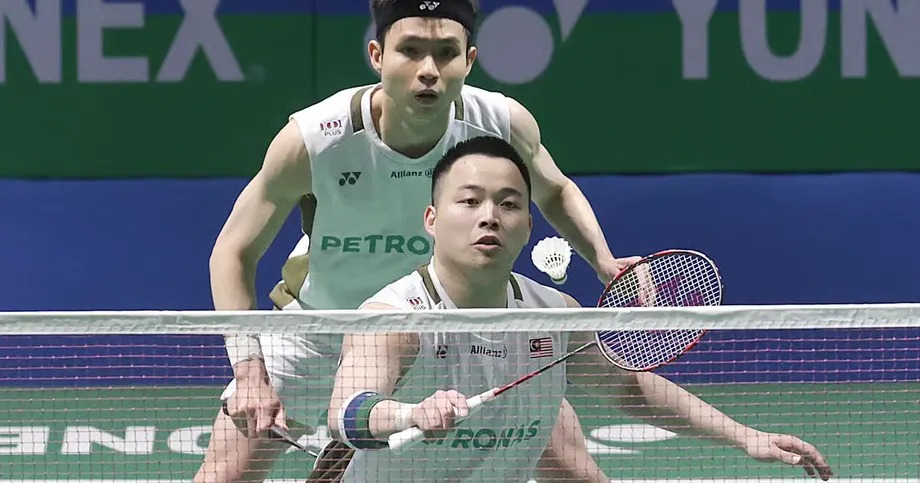
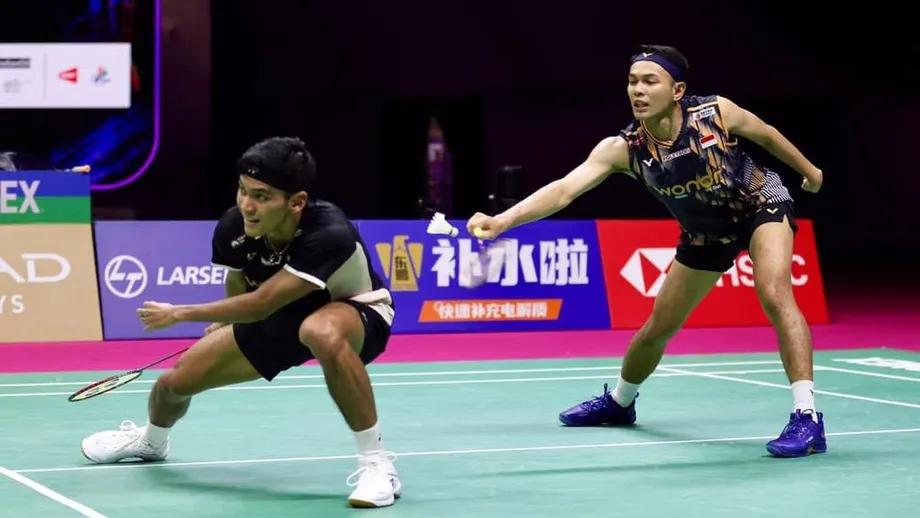
Fajar Alfian and Muhammad Shohibul Fikri won their third title of 2026 on Sunday, October 18, defeating Malaysia's Aaron Chia and Soh Wooi Yik 21-8, 21-11 in the Denmark Open men's doubles final in Odense. The Indonesian third seeds needed just 31 minutes to turn last year's disappointment at the same stage into a championship.
Contents
- A 31 minute final brings Indonesia another title
- An opening game decided by relentless pressure
- Seven straight points overturn Malaysia's best start
- Why Fajar chose to attack from the start
- A harder semifinal prepared the way
- Malaysia's semifinal momentum ends in the final
- Last year's loss and the Asian Games supplied motivation
- Fikri draws confidence from Fajar's experience
- A full day of titles in Odense
- Key Points
The Indonesian Badminton Association, PBSI, confirms the score and identifies the victory as their third title this year in its official victory statement. Fajar and Fikri won the opening game in 11 minutes, then recovered from 0-4 in the second with seven consecutive points.
The victory came at a BWF World Tour Super 750 tournament carrying total prize money of $950,000. The Badminton World Federation's official podium page lists the Indonesians as champions and Aaron and Soh among the podium finishers. It records the tournament dates as October 13 to 18 and lists 49 men's doubles entries from 19 countries.
PBSI's final score is 21-8, 21-11; a conflicting published result gives 21-18, 21-16. BWF identifies the venue as SJF Bank Arena, at Orbaekvej 350, while other coverage uses Arena Fyn or Jyske Bank Arena. The official venue listing places the tournament at SJF Bank Arena in Odense.
An opening game decided by relentless pressure
Fajar and Fikri took control almost immediately. They raced ahead 8-1, extended that advantage to 10-1 and reached the interval leading 11-3. Aaron and Soh had little time to settle into the quick exchanges that had helped them through the semifinal.
The Indonesians continued to score after the break, moving to 19-8 before taking the final two points. Their 21-8 opening game gave them a lead of 13 points, the wider margin of the two games.
Across the final, Fajar and Fikri scored 42 points to Malaysia's 19. That means they collected about 69% of the 61 points played. The figures capture how much of the match they controlled, even though the second game briefly began in Malaysia's favour.
The first game also gave the Indonesians room to respond calmly when their opponents changed the pattern at the start of the second. Aaron and Soh still needed to win two games to claim the title, while Fajar and Fikri needed only one.
Seven straight points overturn Malaysia's best start
Aaron and Soh opened the second game with four consecutive points. At 4-0, the Malaysian fourth seeds had their clearest opportunity to stretch the final and force a deciding game.
Fajar and Fikri answered by drawing level at 4-4. A successful challenge, a request to review a line decision, then gave them a 5-4 lead. They kept scoring until they were ahead 7-4, completing a run of seven points without reply.
The Indonesians reached the interval leading 11-6. Malaysia's early advantage had become a deficit of five points, and Fajar and Fikri had restored the attacking rhythm that worked so well in the opener.
A drop shot followed by a combination of attacking strokes helped take the score to 13-8. Malaysian errors then contributed to a wider gap at 17-9. Aaron and Soh added two points, but the Indonesians moved to championship point at 20-11 and finished the match when Malaysia's service return failed to clear the net.
Why Fajar chose to attack from the start
Fajar's explanation centred on two practical factors: the speed of the shuttlecock and familiarity with the opposition. He said both Indonesians had faced Aaron and Soh frequently, including before Fajar and Fikri became partners, giving them a good understanding of the Malaysian pair's strengths and weaknesses.
Fajar, one half of the winning Indonesian partnership, explained the tactical choice in PBSI's statement. Translated from Indonesian, he said:
The shuttlecock was travelling very fast, so we did not want to play defensively. From the start we kept pressing, kept attacking, so our opponents could not develop their game.
A fast shuttle gives defenders less time to react. By choosing to attack early, Fajar and Fikri aimed to make Aaron and Soh respond to their shots rather than build attacks of their own. The opening lead and the recovery from 0-4 show how successfully the Indonesians regained that initiative when it briefly slipped away.
Fajar's account also explains why experience against these particular opponents mattered. The Indonesians entered the final with an established understanding of the players across the net, then adjusted their approach to the conditions in the arena.
A harder semifinal prepared the way
Fajar and Fikri's final was shorter and more decisive than their semifinal against China's Liang Wei Keng and Wang Chang. On Saturday, October 17, they needed three games to win 21-16, 16-21, 21-16.
That contest required them to recover after losing the second game. Their quarterfinal against Thailand's Peeratchai Sukphun and Pakkapon Teeraratsakul had ended in two games, 21-17, 21-16.
The closing stages of their title run unfolded over three consecutive days:
- October 16: Beat Peeratchai Sukphun and Pakkapon Teeraratsakul 21-17, 21-16 in the quarterfinal.
- October 17: Beat Liang Wei Keng and Wang Chang 21-16, 16-21, 21-16 in the semifinal.
- October 18: Beat Aaron Chia and Soh Wooi Yik 21-8, 21-11 in the final.
Across those three matches, the Indonesians won six games and lost one. Their closest test came immediately before the final, when Liang and Wang forced them to start again in a deciding game.
Malaysia's semifinal momentum ends in the final
Aaron and Soh arrived in the final after beating the top pair, South Korea's Kim Won Ho and Seo Seung Jae, 21-14, 21-18 in 38 minutes. The victory on October 17 brought them within one match of their first World Tour title of the season.
The Malaysian partnership had reunited after their national team tested different doubles combinations. Their semifinal success also gave them a second consecutive victory over Kim and Seo, following a win in the World Championships semifinal in August.
Against the Koreans in Odense, Aaron and Soh had used a run of seven consecutive points to turn an 11-13 deficit into an 18-13 lead in the opening game. In the final, they experienced the reverse: their own 4-0 advantage disappeared during an Indonesian run of seven points.
Malaysia still finished the tournament with a place on the podium, alongside the Indonesian champions and the Chinese and South Korean semifinalists. The title, however, went to a pair who prevented Aaron and Soh from repeating the recoveries that had carried them through Saturday.
Last year's loss and the Asian Games supplied motivation
Fajar and Fikri had lost the Denmark Open final the previous year. Their return to the same stage offered a direct opportunity to improve on that result, while disappointment at the Asian Games provided another reason to push for a stronger performance.
Fajar described that motivation in PBSI's statement. Translated from Indonesian, he said:
Praise be to God, we are very grateful that after failing in the final last year, this time we could win the Denmark Open.
He also connected the victory with their response to the Asian Games:
Our defeat at the Asian Games recently drove both of us to achieve the best possible result again.
For Fajar, the title was a way to build confidence for subsequent tournaments. He also expressed hope that Indonesia's recent results would continue across both senior and junior badminton, with more titles and further progress.
Fikri draws confidence from Fajar's experience
Fikri described a different part of the partnership's progress: learning how to handle a final without becoming overwhelmed by it. He said he had previously struggled to produce his best in title matches and had gained lessons and motivation from Fajar's extensive experience.
Muhammad Shohibul Fikri, Fajar's partner in the winning pair, explained his approach in PBSI's statement. Translated from Indonesian, he said:
My mindset is that I treat every match as a start again, something new again, from zero again. So we should not become satisfied too quickly.
Fikri said he deliberately brought energy to the final, including shouting on court, because he wanted to make up for the sadness of the previous year's defeat. He also linked that determination to the pair's Asian Games disappointment.
His account of growing maturity was practical: think less about everything that might happen and concentrate on effort and prayer. Alongside Fajar's tactical explanation, it gives two reasons for their performance in Odense, a clear attacking plan and a more settled approach to pressure.
A full day of titles in Odense
Fajar and Fikri's match was fourth on the finals programme. The session was scheduled to begin at noon in Denmark, or 17:00 in western Indonesia, with coverage available through Vidio. Their own start depended on the completion of the three preceding finals.
South Korea's An Se-young defended the women's singles title by beating Japan's Akane Yamaguchi 21-23, 21-14, 21-18. An recovered from 5-11 in the deciding game and moved ahead at 13-12, repeating her victory over Yamaguchi in the Asian Games final.
Malaysia won the women's doubles title through Pearly Tan and Thinaah Muralitharan, who defeated Japan's Hinata Suzuki and Nao Yamakita 21-18, 21-11. China's Jiang Zhen Bang and Wei Ya Xin took the mixed doubles title against Feng Yan Zhe and Huang Dong Ping, winning 21-18, 8-21, 21-16 in 55 minutes.
France's Alex Lanier won the men's singles final against Denmark's Anders Antonsen 21-15, 13-21, 21-13. The next tournament date identified was the French Open in Paris from October 20 to 25, where An was scheduled to face India's PV Sindhu in the opening round. Fajar and Fikri's next opponents were not named.
Key Points
- Fajar Alfian and Muhammad Shohibul Fikri won the Denmark Open men's doubles title on October 18, 2026.
- PBSI records their victory over Aaron Chia and Soh Wooi Yik as 21-8, 21-11 in 31 minutes.
- The Indonesians recovered from 0-4 in the second game with seven consecutive points.
- PBSI identifies the championship as their third title of the year.
- Fajar credited attacking play, a fast shuttlecock and familiarity with their opponents.
- Both players said last year's Denmark Open final loss and their Asian Games defeat motivated them.