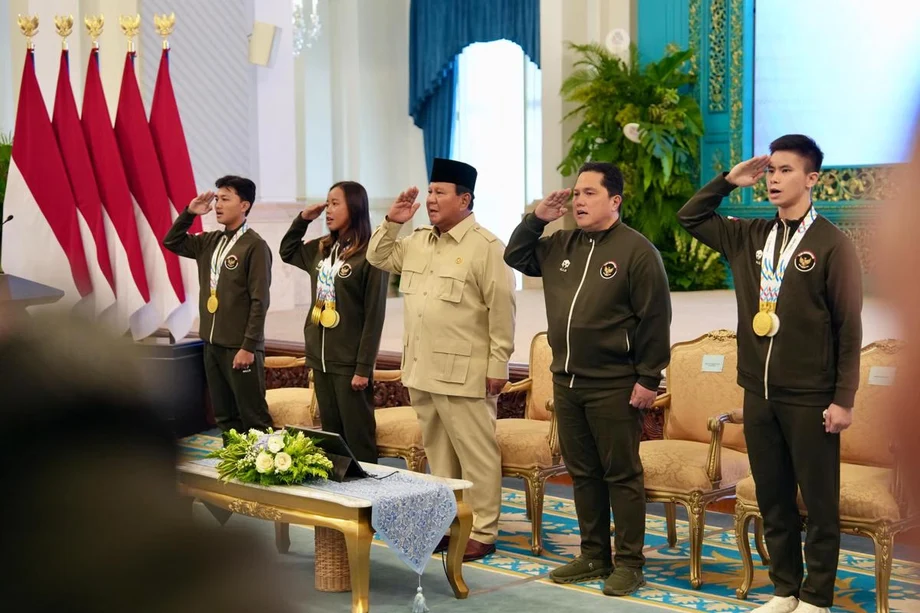
Presidential Diplomacy Breaks Deadlock
Presidential diplomacy between Indonesia and Malaysia has shifted the landscape for the 34th Southeast Asian Games. After months of diplomatic maneuvering, Prime Minister Datuk Seri Anwar Ibrahim confirmed that Malaysia supports the addition of extra sports categories to the 2027 SEA Games in Kuala Lumpur. The breakthrough follows direct discussions between Indonesian President Prabowo Subianto and his Malaysian counterpart regarding the inclusion of key Olympic disciplines.
Contents
Anwar spoke at the launch of the 2026 National Sports Day at the Sepang International Circuit on November 28, 2026. He emphasized that while Malaysia supports the request, the final decision rests with the Southeast Asian Games Federation. The federation must approve all additions based on established mechanisms.
"Recently, there was a bit of controversy over the SEA Games," Anwar said. "President Prabowo asked me whether two or three sports requested could be added. I have no objection." He confirmed that he had consulted with the Malaysian Ministry of Youth and Sports, which also welcomed the proposal. The prime minister noted that the host nation does not wish to stand in the way of participating countries developing their chosen sports.
The statement resolves early concerns that Indonesia might boycott the games. The controversy began when Indonesia lodged objections to Malaysia's decision to remove several traditional sports from the 2027 program. Rumors of a withdrawal spread rapidly on social media platforms like Facebook and TikTok, but officials have since clarified the situation.
Clarifying the Boycott Rumors
Rumors claiming Indonesia had withdrawn from the 2027 SEA Games due to a ban by Malaysia were proven false. Raja Sapta Oktohari, the chair of the Indonesian Olympic Committee, confirmed that the Indonesian contingent will compete as planned. He stated that Indonesia has never withdrawn and has never been banned by Malaysia.
The confusion stemmed from an initial statement by Krisna Bayu, a member of the Indonesian Olympic Committee Executive. Bayu had floated the idea of a boycott in an Instagram post on November 6, 2026. However, he quickly clarified on November 13 that the issue would be resolved through diplomacy rather than a boycott.
Indonesia's protest was formalized through a letter sent by Erick Thohir, the Minister of Youth and Sports. The letter, dated November 13, 2026, was received by the Malaysian Ministry of Youth and Sports the same day. The document requested the inclusion of specific sports and events that had been excluded from the final program.
A Detailed Timeline of Events
The diplomatic process unfolded over several weeks, marking key dates in the negotiation between Jakarta and Kuala Lumpur.
- October 30, 2026: The Olympic Council of Malaysia confirms 473 events across 43 sports for the upcoming games.
- November 6, 2026: Krisna Bayu raises the possibility of a boycott via Instagram.
- November 13, 2026: Indonesia sends its formal protest letter and receives it in Malaysia. Krisna Bayu clarifies the diplomatic stance.
- November 28, 2026: Prime Minister Anwar Ibrahim announces support for the additions at the National Sports Day.
- September 18 to 29, 2027: The 34th SEA Games will take place across Kuala Lumpur, Sarawak, Johor, and Penang.
The initial list of 38 sports was approved in 2025. Following an appeal period and discussions among the 11 member countries, five additional sports were added in July, bringing the total to 43. The selection process was lengthy but agreed upon by all participating nations.
The Contested Sports List
Indonesia is pushing for the return of sports that have historically been strong contenders for its athletes. The specific list includes climbing, rowing, beach volleyball, wrestling, chess, jiu-jitsu, kickboxing, handball, triathlon, and both men's and women's team badminton events.
Badminton holds particular significance for Indonesia. The exclusion of the team events from the main program was a major point of contention. Other sports like climbing and jiu-jitsu are gaining Olympic recognition and are viewed as crucial for regional athletes to prepare for future Asian Games and Olympics.
Malaysia's openness to these additions is not limited to Indonesia. The prime minister noted that Thailand, the Philippines, Singapore, and Malaysia itself have interests in developing these same sports. The host nation supports the additions as long as they follow the federation's procedures.
Erick Thohir's Strategic Role
Minister Erick Thohir has taken a leading role in overseeing the diplomatic efforts. He expressed deep appreciation for President Prabowo's direct intervention in the matter. The minister emphasized that the president's attention to sports is a tangible sign of commitment to national athletic excellence.
Erick stated that he will continue to monitor the progress closely. He has instructed the Indonesian Olympic Committee to optimize its diplomacy through the Southeast Asian Games Federation. The goal is to ensure that Olympic sports, which were previously excluded, are included in the 2027 program.
"We must continue to fight for the opportunity for athletes to compete and achieve results, while respecting the mechanisms in force," Erick said. He highlighted that the coordination between the government and the Olympic Committee will be key to navigating the federation's rules.
Malaysia's Official Response
Dr. Mohammed Taufiq Johari, the Malaysian Minister of Youth and Sports, has been instrumental in the formal response process. He confirmed that the Malaysian ministry respects Indonesia's views and will provide an official response to the letter.
Taufiq clarified that the Indonesian letter was not a threat of boycott but a genuine request for consideration. He reminded stakeholders that the determination of sports categories has undergone a long process. The host nation is committed to maintaining the integrity of the games while being accommodating to neighbor's requests.
The prime minister's statement at the Sepang International Circuit served as a green light for the negotiations. He assured that the host nation will not obstruct the process. The focus is now on the technical evaluation by the federation to approve the proposed additions.
Looking Ahead to 2027
The resolution of this diplomatic issue benefits the athletes from all participating countries. It ensures that the SEA Games remains a vital preparation ground for regional competitors. The inclusion of Olympic disciplines enhances the competitive value of the games.
With the host nation's support secured, the Indonesian Olympic Committee can now focus on logistics and training. The athletes can proceed with their preparations without the uncertainty of potential boycotts or withdrawals.
The diplomatic success is attributed to the proactive approach of President Prabowo and the technical groundwork laid by the Ministry of Youth and Sports. The collaboration between the executive branch and the sports committees has set a positive precedent for future regional sporting events.
The Bottom Line
- Malaysia supports the addition of two to three sports to the SEA Games 2027.
- President Prabowo Subianto directly communicated with Prime Minister Anwar Ibrahim to secure this support.
- Indonesia is not boycotting the games; rumors of withdrawal were false.
- Key sports in contention include climbing, rowing, beach volleyball, and team badminton.
- The final decision rests with the Southeast Asian Games Federation.
- The games will be held from September 18 to 29, 2027, in Kuala Lumpur, Sarawak, Johor, and Penang.