A watch that outlasted its charger
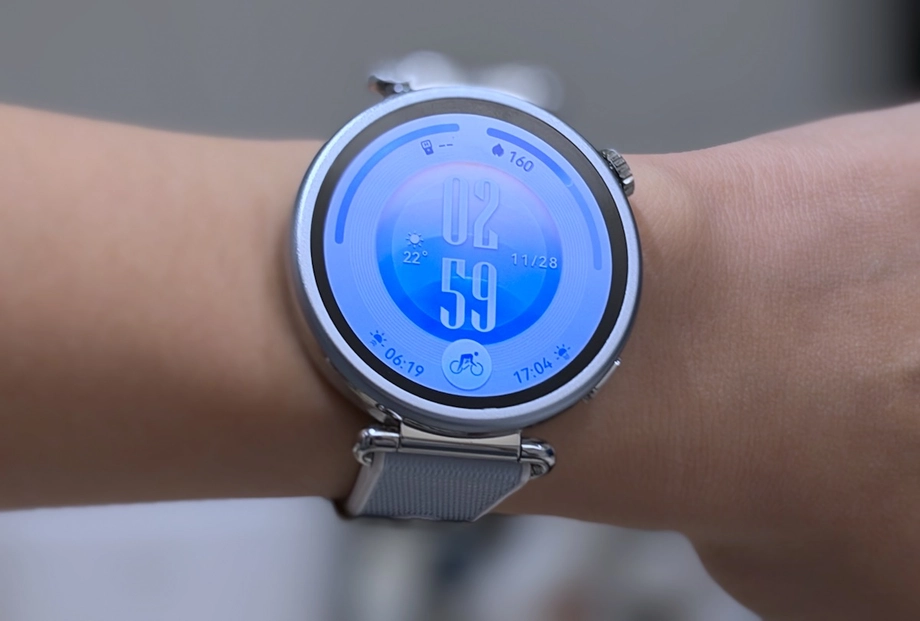
After two weeks of continuous wear, the HUAWEI WATCH GT 7 still held 35% of its battery. The watch had been worn through the day, kept on the wrist overnight to record sleep every night and taken to a gym for a treadmill session of about half an hour. It was never plugged in.
Contents
- A watch that outlasted its charger
- Where the battery life comes from
- Two sizes, two different builds
- Sleep scores now arrive with advice
- From step counts to a heart rhythm warning
- Ski slopes, offline maps and the way back
- Cardiology meetings and a blood pressure fund
- What the watch still cannot do
- Prices, bundles and a 2 December deadline
- Key Points
That number explains why Huawei keeps battery life at the centre of its GT line. A smartwatch that needs a nightly charge competes with a phone for the same socket and the same bedtime ritual. One that runs for a fortnight stops being a device to manage and becomes a device to wear. During the test the battery gauge moved visibly only during the treadmill run, and the watch never reached the point of asking for a cable.
Huawei rates the GT 7 at up to 21 days on the 46 mm case and up to 14 days on the 41 mm version, figures that assume particular screen settings, sensor sampling rates and workout use. A screen that stays lit, continuous heart rate sampling and long satellite tracking sessions all pull those numbers down, which is why lab results and lived results rarely match.
For travellers the arithmetic is simple. A phone, a tablet, a power bank and a tangle of cables already fill a carry on bag. A watch that survives a short trip removes one charger and one nightly check of whether every device has enough power for the next day.
Where the battery life comes from
The Pro model carries an 867 mAh battery built with a stacked internal architecture and an anode with a high silicon content, a chemistry that stores more energy in the same volume than a conventional lithium cell. Huawei pairs it with radio hardware designed to draw less current during wireless traffic and with processor management that trims power when the display, the heart rate sensor and the positioning chip run at once.
Huawei's laboratory figures for the Pro list 21 days of light use, about 12 days of demanding daily use with every sensor active, roughly 7 days with the always-on display switched on and up to 51 hours in trail running mode with satellite positioning and heart rate tracking running together. Charging runs through a 10W wireless dock that fills the 867 mAh cell in about 1.5 hours, or 95 minutes.
Wearing tests have landed close to those claims. A 41 mm unit in white consumed 38% of its charge in just under 56 hours of ordinary use, which points to roughly six days at that pace, and refilled from 30% to 100% in 65 minutes. Another tester finished day eight with 14% left after a week of running, cycling, walking and weight training. A third, who wore the Pro for two months across hikes, gym sessions and travel, reported regularly passing ten days and sometimes close to two weeks.
The trail running figure matters for a specific group. Fifty one hours of continuous tracking covers a 100 km ultramarathon or a multi day adventure race without a charging stop, a gap that has traditionally pushed endurance athletes towards Garmin or Coros.
Two sizes, two different builds
The 41 mm GT 7 measures 41.3 by 41.3 by 9.99 mm and weighs about 37.6 g without a strap. Its 1.32 inch AMOLED screen runs at 466 by 466 pixels and Huawei claims peak brightness of 3,000 nits. A nit is a unit of screen luminance, and a good phone in direct daylight sits somewhere near 1,000 to 1,500, so the claim is about reading a message in full sun without shading the display with a hand.
The case is stainless steel, with 5 ATM water resistance for swimming and an IP69 rating, which covers dust and protection against high pressure water jets rather than depth alone. Bluetooth 6.0, NFC for contactless payments and satellite positioning across two frequency bands, which improves accuracy between tall buildings and under tree cover, are on board. The strap uses Huawei's EasyCross design, which tucks the loose end under the wrist instead of leaving a tail flapping.
The Pro grows to a 1.47 inch AMOLED panel at the same 466 by 466 resolution and changes the materials to a titanium alloy case, a ceramic bezel made with nanotechnology and sapphire crystal over the display. On the wrist, the smaller model reads larger than its millimetre figure suggests because the lugs extend far outward, and the white and green composite leather version looks more like a classic watch than a fitness tracker.
Huawei also sells both in colours that split opinion. A green Pro finish drew an initially hostile reaction from one long term tester who normally wears silver and black, before two months of wear changed his mind.
Sleep scores now arrive with advice
Huawei's TruSleep 5.0 system divides a night into deep sleep, light sleep and rapid eye movement, the phase in which most dreaming happens, then sends the detail to the Huawei Health app together with deep sleep continuity, stable sleep ratio, respiratory quality, average heart rate and average breathing rate.
One week of records, from 16 to 22 November, averaged 7 hours 59 minutes a night and a score of 86 points, which the app placed above 96% of users. Deep sleep averaged 1 hour 20 minutes, or 17% of the total, while light sleep took 57% and REM 26%, both inside the ranges the app treats as normal. Across daily, weekly, monthly and yearly views the same data shows how sleep shifts over months.
The text that comes with the numbers is the more useful part. One night of 8 hours 7 minutes earned 83 points because REM reached 32%, above the app's reference range. The app noted that a high REM share can come with vivid dreams and suggested more whole grains and other quality carbohydrates in the daily diet. For a reader who does not know what a REM percentage should look like, that turns a number into an instruction.
Other wrists show how wide the range runs. A week long test recorded an average of 80 points over 6 hours 23 minutes a night, with an average bedtime of 2:58 a.m., the pattern of someone testing a watch at a trade show rather than sleeping well.
Waking up feeling rested and waking up to a good score are different things. The watch estimates sleep stages from movement and pulse data, so the figures work as a log for daily health decisions rather than as a diagnosis, and a low score after a genuinely fine night is a limit of the sensor, not a verdict on the sleeper.
From step counts to a heart rhythm warning
The GT 7 line supports more than 110 workout modes, from running, walking and cycling to pickleball, badminton, triathlon and golf, where the watch calculates shot distances and pin positions. Huawei says the standard model adds new skiing and cycling modes, and that the series carries the first indoor ski and indoor snowboard modes on the market, built for training inside when the weather closes the slopes.
Heart monitoring moves well beyond a resting pulse. The Pro takes an ECG reading in about 30 seconds when the wearer presses the side button, and runs continuous pulse wave arrhythmia analysis to flag irregular rhythms through the day and night. It also estimates arterial stiffness and assesses diabetes risk by recording around 21 seconds of blood flow signals from the wrist, which artificial intelligence software then cleans and scans for patterns linked to the condition. These analyses are downloaded through the Huawei Health app at no extra cost.
A one tap Health Glance assessment pulls heart rate, heart rate variability (the variation in time between heartbeats, a rough marker of recovery and stress), blood oxygen, arterial elasticity and ECG data into a single report within seconds. Body Readiness turns sleep, heart rate variability and skin temperature into a daily verdict of Excellent, Good or Needs Attention, and Health Insights opens the morning with a one sentence summary of the previous day and a suggestion for the next.
Beyond the numbers, the watch logs emotional state from physiological signals and activity patterns and reports the share of the day spent in each state. That last feature is the weakest: a week of use produced a reading that classified 76% of one tester's emotions as neutral, and the same test found time spent standing tracked inaccurately.
Ski slopes, offline maps and the way back
Winter sports get unusual attention. The watch detects skiing and snowboarding automatically from changes in posture and altitude, even without a satellite signal, and separates descents from rest periods and lift rides so the log reflects actual slope time. It counts turns and their radius, measures the G force generated through sharp carves, and records distance, speed and accumulated vertical drop.
Huawei Health holds maps of more than 3,000 ski resorts worldwide, downloadable to the wrist with piste difficulty ratings and lift locations, so a skier in thick gloves does not need to pull out a phone. A Team Up feature shares location and live performance metrics with companions on the same day out.
Navigation relies on what Huawei calls its Sunflower positioning system, combined with two system GNSS reception for routes in difficult terrain. Offline maps can be prepared in advance for hiking, walking and cycling, and cycling mode shows elevation changes in real time with warnings for sharp bends. Walk back navigation, which guides a user to the trailhead on a return leg, was the feature one hiker rated highest after months of use.
Mapping on the watch is strong. Planning a route is the weak link, since drawing a course in Huawei Health is awkward and most users end up importing a GPX file made in another app. Huawei's Petal Maps also works only on Huawei phones, which keeps Android and iPhone users outside that part of the ecosystem.
Cardiology meetings and a blood pressure fund
Huawei is pushing these sensors towards clinical use. Research involving its wearables appeared at the 19th Asia Pacific Heart Rhythm Society Scientific Session in South Korea and at the 31st International Society of Hypertension Scientific Meeting, held alongside the 17th Emirates Cardiac Society Annual Conference in Dubai, both in November.
At the heart rhythm meeting, a study using watch data to examine links between sleep apnea, arrhythmia, blood pressure and cardiovascular events was cited in the 2026 Asia Pacific Atrial Fibrillation Guidelines. A product cited in a treatment guideline sits differently from a product on a shop shelf: it means clinicians reviewed the data and wrote it into advice for other doctors.
At the hypertension meeting Huawei presented the HUAWEI WATCH D3 and a Wearable Blood Pressure Technology Innovation Fund set up with the International Society of Hypertension. The D3 is registered as a medical device in China and records ambulatory blood pressure, meaning repeated readings taken across set periods in a day rather than a single measurement in a clinic. Huawei also introduced a research initiative with Ruijin Hospital on Minimally Disruptive Ambulatory Blood Pressure Monitoring, which combines continuous optical pulse monitoring, known as photoplethysmography, with airbag cuff readings to cut reliance on inflating a band around the arm.
Professor Wang Jiguang, president of the Chinese Hypertension Association, framed the direction in a statement released with the research.
Innovations like Minimally Disruptive ABPM and environmental monitoring reminders by HUAWEI Watch D3 may be inspiring for shaping a new direction on how future blood pressure management is automated and seamlessly embedded into daily life, via wearable devices.
The gap between a consumer watch and a diagnostic tool stays wide. Blood pressure measurement on the wrist still needs a calibrated cuff, and the diabetes and arterial stiffness features are risk estimates rather than test results.
What the watch still cannot do
The GT 7 series does not run Wear OS or watchOS. It runs Huawei's own HarmonyOS, so the app catalogue is thin compared with an Apple Watch or a Galaxy Watch, and there is no eSIM option for calls without a phone nearby.
iPhone owners hit specific snags. Gmail does not appear among the notification sources in Huawei Health, images attached to WhatsApp messages do not show on the watch, and some emoji render incorrectly. Apple users also cannot install the watch's Spotify control app free of charge in every market, with one regional price listed at P149, and no podcast app exists at all. The camera control app works about as well as a Bluetooth shutter remote, without a live preview.
Setup is quick, but the first hour brings repeated permission requests for sensors, health data and location as each feature is opened. The design is defensible, since nothing is unlocked by default, and it becomes tiring by the sixth prompt.
For runners and cyclists who live inside Strava, there is no native app on the watch. Huawei Health passes activity data to Strava quickly, and the coloured effort interface, which shades from green through yellow and orange to red, communicates intensity without explanation. Auto pause, which stops tracking when a rider stops for coffee mid ride, works well.
Prices, bundles and a 2 December deadline
Huawei prices the 41 mm GT 7 from 299 euros in Europe and the Pro at a list price of $500. Black Friday promotions cut hard. On AliExpress the Pro fell to 290.01 euros and then to 255.01 euros with a coupon code, and the standard GT 7 dropped to 247.48 euros until 2 December, with some models bundling FreeBuds SE 4 earbuds and an extra strap. A 10% coupon brought the 46 mm Yellow and 41 mm Grey versions to 242.10 euros from 299 euros, with 24 months of HUAWEI Care cover valued by the company at up to 200 euros.
In the Philippines, buyers could pay a P500 deposit between 25 September and 1 October for P6,000 off, then use an early bird voucher worth P5,500 off from 2 to 31 October. The local price for the Pro had not been announced when those offers opened.
Colombian packages arrive with FreeBuds SE 3 earbuds and an EasyFit 3 strap: COP 1,399,900 for the Pro, COP 1,099,900 for the 46 mm and COP 1,199,900 for the 41 mm. A trade in programme accepts phones or watches from any brand for a credit of up to COP 300,000. In China, the 46 mm GT 7 sells for 1,434.8 yuan, against 2,539.8 yuan for the Watch D3 and 849.2 yuan for the FIT 5.
Huawei Care terms cover one screen repair, one back cover repair, one battery replacement and, on the 46 mm and Pro models only, crown protection. The battery clause applies when maximum capacity falls below 85%, verified at an authorised service centre.
- 25 September to 1 October: Philippine deposit promotion, P500 down for P6,000 off
- 2 to 31 October: early bird voucher worth P5,500 off in the Philippines
- 13 and 25 November: cardiovascular research presented in Dubai and South Korea
- 27 and 28 November: Black Friday pricing in Spain and a further AliExpress cut to 255.01 euros
- 2 December: end of the European Black Friday offers
Key Points
- A two week test left the HUAWEI WATCH GT 7 with 35% battery and no charge in between
- Huawei rates the 46 mm model at up to 21 days and the 41 mm at up to 14 days, with 51 hours in trail running mode on the Pro
- The Pro carries an 867 mAh battery with a high silicon anode and charges wirelessly in about 1.5 hours
- A week of sleep records averaged 7 hours 59 minutes and 86 points, with written advice attached to the data
- Health tools include ECG in 30 seconds, arrhythmia alerts, arterial stiffness and diabetes risk estimates
- Maps for more than 3,000 ski resorts can be stored on the watch, with turn counts and G force readings on descents
- Huawei wearable research was cited in the 2026 Asia Pacific Atrial Fibrillation Guidelines and shown at two international cardiology meetings
- iPhone users lose Gmail notifications and WhatsApp images, and no eSIM or full app store is available
- Black Friday prices fell to 242.10 euros for the GT 7 and 255.01 euros for the Pro, with offers closing on 2 December