A final curtain call across Victoria Harbour
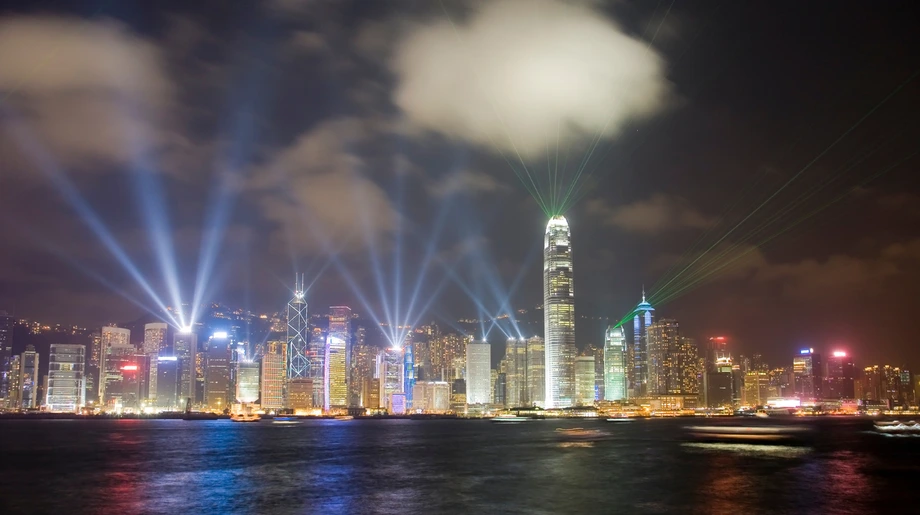
Hong Kong will retire A Symphony of Lights on November 18, 2026, ending a nightly harbour spectacle that began in January 2004 and grew from 18 buildings on Hong Kong Island to 43 buildings across Victoria Harbour. The farewell performance will feature special pyrotechnic effects before the city turns to seasonal displays spread across different districts.
Contents
- A final curtain call across Victoria Harbour
- How the show became a city fixture
- Why familiar lights lost some of their appeal
- What the costs reveal about the decision
- Why the Peak replacement was cancelled
- WinterFest expands to three districts
- The test for shops and restaurants
- A wider push toward seasonal events
- Key Points
Hong Kong Tourism Board chairman Peter Lam Kin-ngok announced the closure at a Tuesday press conference. The final show falls on the same evening that the expanded Hong Kong WinterFest begins, connecting the departure of a familiar attraction with the launch of a broader Christmas programme.
The free show has usually started at 8 p.m. and lasted about 10 minutes, combining searchlights, lasers, building lights and music. For visitors on the waterfront, it offered a simple arrangement: arrive at the harbour in the evening and watch the skyline perform without buying a ticket.
WinterFest will instead operate across Central, Tsim Sha Tsui and Causeway Bay until January 5, 2027. New harbourfront lighting projects are also planned to appear progressively in 2027, although their opening dates and full programme have not been announced.
The change reaches beyond replacing one set of lights with another. Hong Kong is moving from a permanent attraction presented at the same time each night toward events designed around particular places and seasons. Tourism representatives want those events to give visitors a reason to explore neighbourhoods, eat out and shop, while residents are watching how the installations fit into their surroundings.
How the show became a city fixture
A Symphony of Lights began as part of Hong Kong's effort to rebuild tourism after the 2003 SARS epidemic. Its original installation cost more than HK$80 million and used the harbour's existing buildings as a vast stage, presenting the city's commercial skyline as an attraction in its own right.
The first version involved 18 buildings on Hong Kong Island. Buildings in Kowloon joined in December 2005, extending the performance across both sides of the water. The participating buildings eventually increased to 43, more than twice the original number, with two other attractions also involved.
Guinness World Records recognised the production as the largest permanent light and sound show in 2005. That distinction belongs to its history: a display in Jiangxi province took the title in 2015.
The performance changed over the years. Its duration fell from about 18 minutes to roughly 10 minutes, and a major update in 2017 added lighting equipment, 10 LED screens and a new musical score recorded by the Hong Kong Philharmonic Orchestra. Chinese flutes and the erhu, a traditional bowed instrument with two strings, featured in the music.
The main dates trace the attraction's growth and eventual retirement:
- January 2004: The show launches with 18 participating buildings on Hong Kong Island.
- 2005: Guinness recognises the show, and the display expands to Kowloon in December.
- 2017: A major update introduces new lights, screens and orchestral music.
- 2024: The government allocates HK$354 million over three years for a planned redesign and upgrade.
- February 2026: The government announces plans to replace the nightly display with light attractions at different locations.
- Early November 2026: A proposed replacement installation at the Peak is cancelled.
- November 18, 2026: A Symphony of Lights stages its farewell as WinterFest opens.
Why familiar lights lost some of their appeal
Tourists have increasingly compared the harbour performance with displays elsewhere that use building projections, three dimensional effects and more concentrated staging. Some visitors found the lights too subtle against Hong Kong's already bright skyline, while others valued the show as part of an evening by the water.
Timothy Chui, executive director of the Hong Kong Tourism Association, supported replacing the attraction. He said lighting buildings on both sides of the harbour had been an impressive achievement two decades earlier, but cities now had many more ways to stage such performances.
Paul Chan, co-founder and chief executive of tour operator Walk in Hong Kong, identified the show's physical spread as a weakness. With the action scattered across a large harbour, spectators could struggle to feel involved. Smaller settings, he argued, could make the experience more immediate.
Chan explained why the scale could work against the audience:
You don't get the experience that you're part of it.
Public reactions to the retirement reflect that divide. Some social media users welcomed the decision and described the show as overrated. Others expressed sadness at losing an attraction they associated with Hong Kong's energy and identity. For those visitors and residents, the nightly ritual mattered alongside the technology.
What the costs reveal about the decision
A Symphony of Lights involved equipment spread across dozens of buildings, making a substantial redesign more complicated than updating a single theatre or exhibition space. Perry Yiu, a lawmaker who previously represented the tourism constituency, said an overhaul would be costly and logistically difficult because of the number of buildings involved.
The Tourism Commission has put annual expenditure at about HK$6 million, while a maintenance estimate places yearly repairs and upkeep at around HK$5 million. The figures describe different scopes of spending, with maintenance forming part of the wider cost of running the attraction.
The larger financial question concerns the HK$354 million allocated in the 2024 budget over three years for redesigning, renovating and upgrading the show. The government initially aimed to introduce the revised attraction in the first half of 2025, before announcing retirement in 2026.
The status of that planned revamp and the amount of the allocation actually spent remain unclear. The Culture, Sports and Tourism Bureau declined to comment when asked about the upgrade. Ptarmigan Integration, a company involved in earlier versions of the show, said in March 2026 that its most recent involvement had been two years earlier.
Retirement therefore represents a change in spending direction as well as presentation. The policy announced in February favoured attractions at different locations during holidays such as Christmas and Lunar New Year, rather than another permanent version of the same nightly harbour production.
Why the Peak replacement was cancelled
The Peak was intended to be one of the locations for the new approach. The Tourism Board planned a lighting installation around the Lugard Road and Harlech Road walking trails, using a setting already popular for its views over the city and harbour.
Residents, trail users and some lawmakers objected, arguing that the installations would damage the natural character of the walking routes. The Tourism Board cancelled the project in early November after considering changes and concluding that the expected results no longer justified proceeding.
The cancellation leaves a practical lesson for the next projects: a place valued for its scenery and quiet walking routes has different needs from a commercial district built around shopping and evening entertainment. Moving an attraction to a famous location also changes the experience of people who already use that space.
Hong Kong has adjusted its harbour entertainment plans before. Authorities proposed monthly pyrotechnic and drone performances from the second quarter of 2024, then reduced the programme to selected festivals. The latest plans continue that move toward occasions with distinct themes rather than a repeated monthly or nightly formula.
WinterFest expands to three districts
WinterFest provides the first major expression of the new strategy. Beginning on November 18, the festival will feature themed installations and light performances in Central, Tsim Sha Tsui and Causeway Bay, extending its main festive attractions across both sides of Victoria Harbour.
Hongkong Land is partnering with the Tourism Board on the Central attraction. Prudential Hong Kong will sponsor the Tsim Sha Tsui event, while Hysan will collaborate on installations and light shows in Causeway Bay. Each location is intended to have a different visual theme.
Lam pointed to the previous Central programme as the basis for the expansion. In a statement announcing the festival, the Tourism Board chairman described its reception:
Last year, we partnered with Hongkong Land for the first time to present Hong Kong Winter Wonderland in Central, along with an immersive light show staged in collaboration with a number of Central landmarks, which proved hugely popular with locals and visitors alike,
Tourism chief Rosanna Law had also cited positive feedback for the earlier Central audiovisual display, which projected imagery onto eight buildings, including the HSBC Main Building and the Court of Final Appeal. That approach placed spectators within a more concentrated setting than the harbour show.
More than 100 seasonal promotions, including discounts, dining deals and local souvenirs, are planned alongside the coming festival. The Quality Tourism Services Association and Alipay are among the commercial partners involved. The programme combines entertainment with opportunities to spend at participating businesses.
The test for shops and restaurants
Sara Leung, a tourism consultant with the Federation of Hong Kong Trade Unions, welcomed the idea of staging events in different districts. She said that approach could help visitors get to know more of Hong Kong, but argued that the value should reach nearby businesses.
Leung set out that priority during a Wednesday radio discussion:
But the most important thing is that whatever fireworks show or event you organise, it can drive business for the local districts and shops. I think that is the most meaningful thing.
Her point gives the new programme a concrete economic test. A crowd watching a display is one result; visitors also eating at neighbourhood restaurants or shopping nearby is another. The dining deals and retail promotions attached to WinterFest are designed to connect the two.
Leung also suggested restoring retired fishing boats to bring more local character to the harbour. That remains a proposal rather than an announced project, but it points toward an experience built around Hong Kong's maritime setting instead of relying entirely on lighting equipment.
Yiu likewise suggested fireworks and drone shows with themes that change by season. He argued for keeping costs controlled while creating distinctive events that support catering, retail and the wider economy. Both representatives placed the benefit to the surrounding city at the centre of the replacement strategy.
A wider push toward seasonal events
Hong Kong's recent October campaign offers another example of this approach. The Tourism Board's first Halloween Month extended activities beyond a single night, with events across multiple districts throughout October. It used an established festival to encourage visits to different parts of the city.
WinterFest takes that approach into Christmas, with three commercial districts rather than one central festive hub. For visitors, the change means a choice of locations and themes. For businesses, it creates opportunities tied to a festival calendar instead of depending on one harbour performance every evening.
The Tourism Board also plans to expand the New Year's Eve fireworks display. Its theme will look ahead to the 30th anniversary of the establishment of the Hong Kong Special Administrative Region in 2027, adding another major seasonal event to the programme.
A Symphony of Lights will close with extra pyrotechnics on November 18, ending a familiar daily appointment at the waterfront. The programme taking its place will be less uniform: Christmas installations in three districts first, followed by new harbourfront projects in 2027. Its success will depend on whether those changing attractions give people reasons to return and bring worthwhile business to the places hosting them.
Key Points
- A Symphony of Lights will hold its final performance on November 18, 2026, with special pyrotechnic effects.
- The free nightly attraction began in January 2004 and expanded from 18 buildings to 43.
- Annual expenditure is about HK$6 million; the status of a planned HK$354 million upgrade remains unclear.
- A proposed lighting installation on walking trails at the Peak was cancelled after objections from residents and trail users.
- WinterFest will run from November 18 to January 5 across Central, Tsim Sha Tsui and Causeway Bay.
- New harbourfront lighting projects are planned progressively for 2027, while tourism representatives want events to support nearby shops and restaurants.