A shopping change with limits
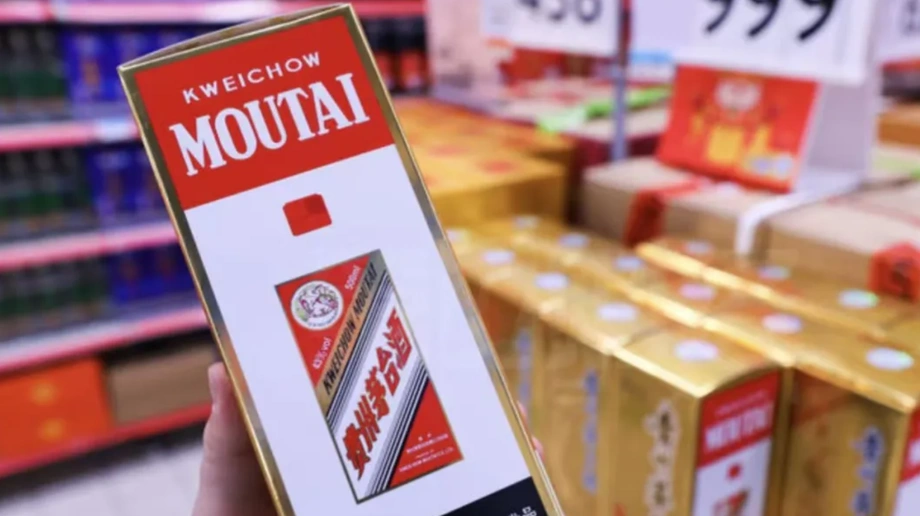
Kweichow Moutai began replacing timed rush purchases with daily sales for 16 products on its i Moutai platform on November 11, 2026, taking another step toward selling according to actual drinking demand rather than the prospect of resale profits. The most closely watched bottle, the standard 500 milliliter Feitian Moutai with 53% alcohol, remains under the previous rush purchase system.
Contents
- A shopping change with limits
- Which bottles become easier to buy?
- How the sales overhaul developed
- The resale premium is getting smaller
- Official prices face competition too
- Dealers move from holding stock to providing service
- The accounts show a channel reversal
- Higher volumes meet weaker demand
- Production and overseas sales face restraint
- Key Points
The change followed a November 10 investor briefing at which Wang Li, a company director performing the general manager's duties, outlined a broader overhaul of how China's premium liquor producer reaches customers. The platform announced the first batch of changes that evening, introducing replenishment throughout the day instead of requiring buyers to compete at a fixed release time.
The financial stakes are substantial. In the first nine months of 2026, i Moutai generated 58.562 billion yuan in liquor revenue excluding tax, an increase of about 360% from a year earlier. During the same period, the company's total operating revenue rose just 1.82% to 133.284 billion yuan, while net profit attributable to shareholders fell 0.25% to 64.467 billion yuan.
Moutai is therefore changing where and how it sells much faster than its business is growing. Buyers are gaining more opportunities to purchase selected bottles, while dealers increasingly face a different job: serving customers for a fee rather than buying stock and earning the difference between wholesale and retail prices.
Which bottles become easier to buy?
The first 16 products include premium Moutai, aged editions designated 15 and 30 years, Horse Year classic editions and gift boxes, cultural editions, smaller bottles and a Feitian version with 43% alcohol packaged with cups. Smaller formats include 100 milliliters, 200 milliliters and packs of five bottles containing 50 milliliters each.
Dynamic replenishment means the platform can add stock throughout the day as it adjusts supply to demand. A buyer has more opportunities to find an available bottle, although popular products can still sell out.
The standard Feitian bottle with 53% alcohol remains subject to rush purchases, and Moutai has given no timetable for moving it or the remaining products to dynamic replenishment. Certain Feitian editions packaged with cups and the one liter format retain releases at 9 a.m. and 8 p.m. The Horse Year premium edition follows its previously announced schedule.
Moutai's approach is gradual rather than a simultaneous opening of every product. Premium editions and smaller formats enter the new system first, while the bottle attracting the most concentrated demand stays under tighter release arrangements.
How the sales overhaul developed
i Moutai launched on March 31, 2022. Its role expanded sharply during the consumer focused reforms begun in early 2026, when Moutai widened the products available through the platform and opened its own stores more broadly to public purchases.
The main steps show how the company has moved from occasional releases toward more regular access:
- January 1, 2026: Standard Feitian Moutai first appeared on i Moutai at 1,499 yuan a bottle, with an announced daily limit of 12 bottles per person.
- July 18: The platform's retail price for that bottle increased to 1,639 yuan.
- September 9: Six Feitian editions packaged with cups moved from releases on three dates each month to daily sales sessions at 9 a.m. and 8 p.m.
- November 10: Wang outlined the daily sales strategy, followed by the platform's announcement covering 16 products.
- November 11: Replenishment throughout the day began for the first batch.
- By November 13: Prices for several products sold through dealers under consignment arrangements had been reduced to match i Moutai.
The platform already has a large audience. By the end of the first half of 2026, it had about 96.91 million registered users, approximately 29.41 million active users and more than 4.12 million users who had completed purchases.
Wang also said i Moutai would become the launch platform for new products and a central service platform working with physical stores. Its intended role extends from selling bottles to coordinating the customer's relationship with Moutai and its local outlets.
The resale premium is getting smaller
Moutai's sales changes coincide with a narrowing gap between official prices and prices in resale markets. Some resellers on secondhand platforms have been seeking markups of only 50 to 60 yuan a bottle for products bought through i Moutai.
A Feitian bottle changing hands for about 1,690 yuan would cost just 51 yuan more than the platform's 1,639 yuan price, a premium of roughly 3.1%. That leaves a much smaller potential reward for buying a bottle purely to sell it again.
Wang addressed the meaning of scarcity at the investor briefing. She argued that difficulty buying bottles caused by stockpiling and speculative price increases had distorted perceptions of Moutai's availability:
Treating the inability to buy caused by hoarding, speculation and speculative premiums in distribution as scarcity is a misunderstanding of Moutai liquor's scarcity.
Cai Xuefei, general manager of Zhiqu Consulting, expects daily sales to develop gradually around consumers buying modest quantities for actual use. He said demand based releases, authenticity tracking and regular fulfillment could direct more bottles toward drinking occasions rather than storage for resale.
The platform also gives Moutai a closer view of purchasing behavior. Transactions recorded directly by the producer can help it decide which products to release, where demand is strongest and how much stock particular channels need.
Official prices face competition too
Moutai's own platform is becoming easier to access at a time when other shopping channels can offer lower prices. Promotions around the November 11 shopping festival produced discounts on several bottles included in the move toward daily sales.
Premium Moutai was listed at 2,359 yuan a bottle on i Moutai, compared with 2,339 yuan on JD.com and an equivalent of 2,320 yuan per bottle when bought by the case. The aged 15 edition was 4,279 yuan on i Moutai and 3,820 yuan on JD.com, a difference of 459 yuan, or about 10.7% of the official platform price.
The aged 30 edition showed a gap of 250 yuan, with prices of 12,999 yuan and 12,749 yuan respectively. The Huang Xiaoxi Chi Wanfan cultural series was priced at 2,499 yuan on i Moutai and 2,127 yuan on JD.com, a difference of 372 yuan.
Many of the JD.com prices combined immediate discounts with PLUS membership coupons or government consumption vouchers. The price a customer could actually obtain depended on eligibility for those reductions.
Dealer prices have also moved closer to the platform's prices. Channel participants described reductions before November 13 that brought consignment prices for premium Moutai from 2,410 yuan to 2,359 yuan a bottle and Horse Year zodiac Moutai from 1,951 yuan to 1,899 yuan. Those cuts were 51 yuan and 52 yuan respectively.
For customers, the practical change is a market in which availability, coupons and the final checkout price matter more. For Moutai, coordinating prices across its own platform and dealer network becomes a larger part of managing the brand.
Dealers move from holding stock to providing service
Moutai's distribution reform reaches beyond the sales screen. Under its consignment model, ownership of the bottles stays with Moutai, customers complete purchases through i Moutai and participating dealers receive service fees. Dealers pay a contractual performance deposit rather than purchasing the inventory outright.
Finance director and board secretary Yu Siming said the company began implementing this arrangement in April 2026. Wang described its operation as stable and sales as meeting expectations, while acknowledging that the model remained at an exploratory stage and needed improvement.
The financial incentives differ from conventional wholesale distribution. A dealer buying stock normally earns money from the gap between the purchase price and the eventual selling price, while carrying the cost and risk of unsold bottles. Consignment ties the dealer's earnings more directly to providing the agreed service.
Moutai is also using regional sales and inventory data to decide allocations through its wider distribution network. Instead of collecting money far ahead of demand and shipping stock into dealers' warehouses, it arranges payment shortly before allocation.
Independent liquor commentator Xiao Zhuqing said management's statements reinforced a move away from pushing inventory into channels and toward supplying products according to actual sales to consumers. Wang said future cooperation with dealers would cover product sales, promotion, brand communication and customer service.
The accounts show a channel reversal
Direct sales revenue rose 32.79% to 73.774 billion yuan in the first nine months of 2026, while wholesale and agency revenue fell 21.58% to 57.120 billion yuan. A year earlier, the corresponding figures were 55.555 billion yuan and 72.842 billion yuan.
Direct sales consequently increased from about 43.27% to 56.36% of those channel revenues, a rise of 13.09 percentage points. i Moutai alone generated about 79.4% of direct sales revenue, calculated from its 58.562 billion yuan contribution.
The company reported operating revenue of 130.971 billion yuan, up 1.96%, alongside the broader total operating revenue figure of 133.284 billion yuan. Third quarter operating revenue reached 40.267 billion yuan, up 3.08%, while quarterly net profit was 19.951 billion yuan, up 3.78%.
Advance payments changed sharply too. Contract liabilities, which include money received before the related goods are delivered, stood at 2.084 billion yuan, down 73.97% from the end of 2025. Wang said advance receipts were no longer the main gauge of supply and demand because direct purchases, consignment and later payment schedules had changed how money enters the business.
Operating cash flow rose 120.07% to 84.059 billion yuan. Yu attributed most of that increase to the group's finance company receiving more deposits from member companies and recovering interbank deposits at maturity. Cash flow from the liquor business itself increased only slightly and broadly matched its business performance.
The dealer network also contracted. Moutai ended the period with 2,285 domestic dealers and 124 overseas dealers, a combined net reduction of 70. Most of the domestic reduction involved dealers handling its broader range of liquor products.
Higher volumes meet weaker demand
Wang said the liquor industry remained in a deep adjustment, with weak consumer demand and fewer occasions for drinking. Both flagship Moutai and the company's wider sauce aroma liquor range faced pressure. Baijiu is a Chinese distilled spirit, and sauce aroma describes the style associated with Moutai.
The company's gross profit margin declined slightly because sales volumes increased while average revenue per metric ton fell. Production and other operating costs consequently rose faster than revenue. Selling more liquor at a lower average price helped move bottles, but reduced the share of revenue left after direct costs.
The wider liquor range showed uneven results. In the first half, Guizhou Moutai Sauce Aroma Liquor Marketing Co. recorded revenue of 12.661 billion yuan, down 7.41%, and net profit of 2.711 billion yuan, down 27.84%. The broader series liquor segment then recorded third quarter revenue of 5.034 billion yuan, up 22.14%.
Wang linked the improvement to closer control of allocations, inventory and pricing, alongside sales during the holiday period. Plans for 2027 include continued development of Moutai 1935 and Moutai Prince, support for other products and particular attention to new Huamao liquor products.
Production and overseas sales face restraint
Moutai said it added no new base liquor capacity for the 2027 production cycle after reviewing market conditions. Base liquor is the spirit produced before later storage and blending into finished products, so production decisions shape supply beyond the immediate sales period.
A technical renovation project announced at the end of 2022 was expected to add 19,800 metric tons of annual capacity. Only two brewing workshops entered production in 2025, with most of the planned additional capacity yet to begin operating. Wang said future releases of capacity would take account of demand, environmental limits in the protected production area and the time required to train workers.
Overseas operations face their own pressures, including weak demand, distribution networks poorly matched to customers, differences in taste and culture, regulation and logistics costs. Moutai is adjusting shipments and addressing exported bottles that return to the domestic market, where they can disrupt local pricing and distribution.
Shareholders also have a near term financial decision to watch. Yu said the board was preparing the 2026 interim profit distribution plan under the company's 2024 to 2026 cash dividend framework, with the distribution scheduled for completion before the end of 2026.
Moutai's immediate task is to make broader access work alongside restrained supply and a changing dealer network. Consumers can buy selected products more routinely, while the company takes greater responsibility for matching inventory, prices and service to actual purchases.
Key Points
- Sixteen i Moutai products moved to replenishment throughout the day on November 11, 2026.
- Standard 500 milliliter Feitian Moutai with 53% alcohol remains under rush purchase arrangements.
- i Moutai generated 58.562 billion yuan in liquor revenue excluding tax in the first nine months.
- Direct sales rose to 56.36% of channel revenue as wholesale and agency sales declined.
- Consignment dealers earn service fees while Moutai retains ownership of the stock.
- Selected dealer prices were reduced to match i Moutai, while some shopping festival offers were lower.
- Moutai added no new base liquor capacity for the 2027 production cycle.