A $10 billion agreement for Lukoil's business outside Russia
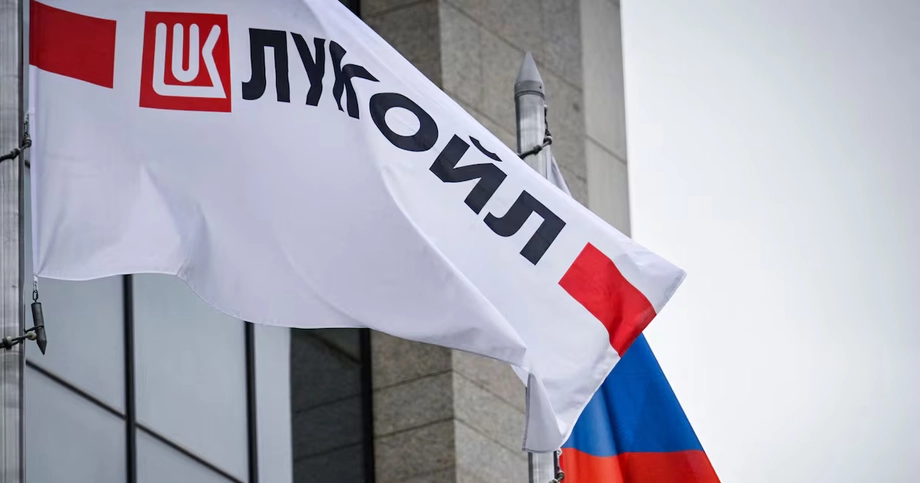
American billionaire Todd Boehly, a former co-owner of Chelsea Football Club, announced on November 25, 2026 that his Eldridge investment firm had signed an agreement to acquire Lukoil's international energy assets. The consortium, which includes the US International Development Finance Corporation (DFC), would exchange $10 billion of Lukoil securities for the portfolio instead of making a direct cash payment. Completion still requires approval from the US Treasury Department.
Contents
- A $10 billion agreement for Lukoil's business outside Russia
- How the securities exchange would work
- What the consortium would acquire
- Why Kazakhstan's position remains unclear
- How the earlier Carlyle sale attempt collapsed
- Why Washington says the acquisition would benefit the US
- Why Meeks and other lawmakers are challenging it
- How sanctions policy led to this approval test
- The deadline, the license and what remains undecided
- Key Points
Two people familiar with the portfolio estimated its value at about $16 billion. Its assets produce roughly 350,000 barrels of oil per day across 11 countries and include refineries and filling stations as well as oil and gas production. Boehly said the final valuation would depend on forecasts for oil prices, meaning that neither the scale of the operations nor the securities figure alone settles what the portfolio is ultimately worth.
Kazakhstan is among the countries with reason to examine the agreement closely. Lukoil holds interests in two major production ventures and the Caspian Pipeline Consortium there, but the announcement did not identify which Kazakh holdings, if any, are covered. That omission is especially important because an earlier attempt to sell the international portfolio explicitly excluded Kazakhstan.
How the securities exchange would work
The transaction is built around financial instruments whose history stretches back to Russia's 2022 invasion of Ukraine. Lukoil shares held by international investors were subsequently frozen, and investors reduced their recorded value. The consortium acquired Lukoil securities from American and British funds and from depository banks in the United States. These banks hold securities and administer investment interests on behalf of their clients.
The $10 billion and $16 billion figures describe different parts of the arrangement. The first is the amount of Lukoil securities that the consortium expects to exchange. The second is an estimate of the value of the energy portfolio, based on information from two people familiar with it. There is no second cash payment of $16 billion in the announced structure.
One person familiar with the arrangements said the securities intended for the exchange would be placed in an escrow account in the United Arab Emirates. Escrow is a mechanism under which a third party holds money or assets until agreed conditions are satisfied. In this transaction, those conditions include the required sanctions approval.
Eldridge is joined by Xtellus Partners, an American bank, and Catena Investment Holding, which is based in the United Arab Emirates. The DFC gives Washington an ownership interest and representation on the governing board of the acquired business. Private investors would first recover their investments and receive an agreed return. Washington would then participate in profits through the DFC.
What the consortium would acquire
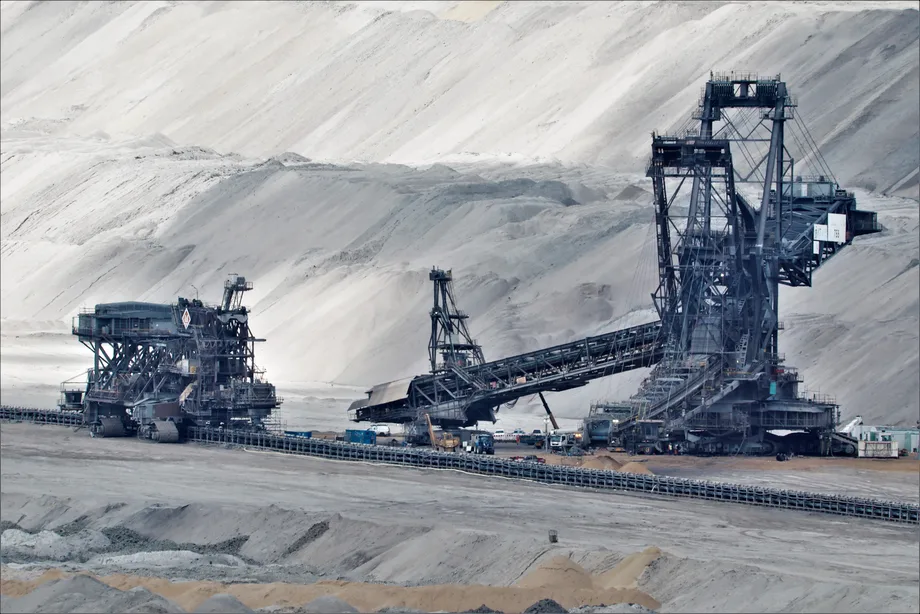
Production of about 350,000 barrels per day would give the consortium a substantial international oil business. Lukoil's upstream operations, meaning the parts of the industry that find and produce oil and gas, extend across 11 countries. They serve markets around the Black Sea, in the Balkans and in northwestern Europe.
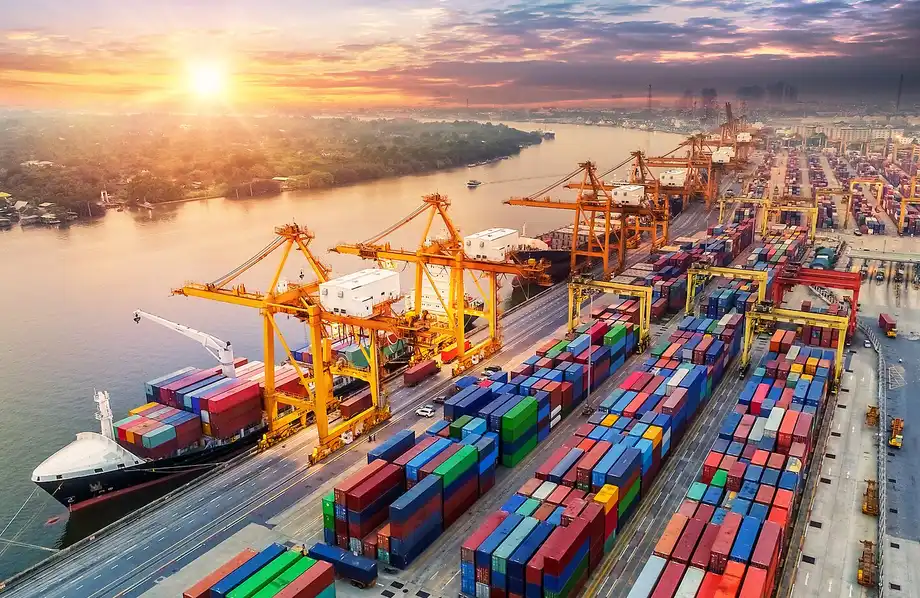
The physical network extends well beyond production fields. The portfolio includes refineries in the Netherlands, Bulgaria and Romania, along with filling stations in the United States, Europe and Asia. Oil and gas interests in Bulgaria, Romania, Africa and the Middle East are also part of the proposed transfer. The operations supply diesel and other petroleum products to countries allied with the United States.
This combination helps explain why Washington is treating the acquisition as more than a financial investment. Production ventures generate revenue and oil supplies, refineries turn crude into usable fuels, and filling stations connect those fuels to consumers. Control of the portfolio would therefore cover several stages between production and sale, although the detailed list of assets transferring to the consortium has not been published.
Why Kazakhstan's position remains unclear
Lukoil owns 13.5 percent of the Karachaganak project in West Kazakhstan Region and 5 percent of Tengizchevroil in Atyrau Region. It also holds 12.5 percent of the Caspian Pipeline Consortium. The first two interests connect the Russian company to major Kazakh oil and gas production, while the pipeline holding gives it a stake in important export infrastructure.
The Boehly agreement did not say whether any of these three interests would change hands. The earlier agreement with Carlyle Group, announced in January 2026, left Kazakh assets out. The new announcement provided no comparable country list, so it did not establish whether Kazakhstan has been added, excluded again or divided between different parts of the transaction.
Kazakhstan's national oil company, KazMunayGas, also has a separate partnership with Lukoil. Its chairman, Askhat Khasenov, said on October 23 that Lukoil remained a strategic partner. KazMunayGas and Lukoil each own 50 percent of Kalamkas-Khazar Operating, which is working on a project on Kazakhstan's shelf in the Caspian Sea.
Sanctions have left that venture without functioning bank accounts, according to Khasenov. KazMunayGas has consequently been examining ways to finance the project. This creates two distinct issues for Kazakhstan: the ownership question surrounding Lukoil's better known holdings, and the immediate banking and financing difficulty affecting the joint shelf venture. The signed agreement has not publicly resolved either issue.
How the earlier Carlyle sale attempt collapsed
Carlyle Group announced an agreement with Lukoil in January 2026 to buy the company's foreign assets. The arrangement did not prevent Lukoil from continuing discussions with other potential buyers. It also excluded Kazakhstan. By late July, the agreement had expired without the required Treasury license, and Carlyle confirmed in October that it had stopped working on the acquisition.
The main events leading to the Boehly agreement are:
- October 2025: The United States sanctioned Lukoil and Rosneft. Lukoil subsequently began looking for a buyer for its business outside Russia.
- January 2026: Lukoil and Carlyle announced their purchase agreement, which did not include Kazakh assets.
- Late July 2026: The Carlyle agreement expired after the Treasury did not issue the necessary license.
- October 2026: Carlyle confirmed that it had ended its work on the purchase.
- November 25, 2026: Boehly announced that the Eldridge consortium had signed its agreement with Lukoil.
- December 19, 2026: The latest Treasury license permitting negotiations is scheduled to expire.
Carlyle's experience demonstrates why signing the new agreement is only an intermediate step. A buyer can agree on terms with Lukoil and still be unable to complete the purchase without a sanctions license.
Why Washington says the acquisition would benefit the US
The DFC is the United States government's international investment arm. A DFC official said the portfolio mattered to American energy security and to that of US allies, and argued that government participation would protect American interests during the transfer and operation of the assets.
The LIG [Lukoil] portfolio holds assets that are both critical to our allies' economic and energy security, as well as our own.
The official said DFC involvement would reduce the risk of adversaries acquiring or influencing the operations while protecting their value over time. The official also said the transaction would support reliable energy supplies for American families and businesses and was expected to return billions of dollars to American taxpayers.
Another DFC representative described the transfer of strategic energy infrastructure into American or allied hands as one of the administration's principal priorities. Boehly said the United States would receive a share of future profits if the acquisition proceeds. He also presented the agreement as supporting efforts to prevent Russia from financing its war against Ukraine.
Why Meeks and other lawmakers are challenging it
Congressman Gregory Meeks, the leading Democrat on the House Foreign Affairs Committee, demanded on November 25 that the Trump administration immediately stop US government involvement. He called the transaction a shameful deal and argued that it would circumvent congressional restrictions, strengthen Moscow and weaken Ukraine.
Congress banned the DFC from investing in Russia less than a year ago, yet this Administration is circumventing that restriction by buying $10 billion in energy assets from Russia's largest oil company, a corporation the US sanctioned precisely to pressure Moscow to end its war in Ukraine."
"I call on the Administration to put an immediate stop to this shameful deal.
Meeks introduced legislation in October seeking to bar the DFC from transactions involving energy assets owned by Russian entities, regardless of whether those assets were inside or outside Russia. His argument reaches beyond the location of the fields and refineries. In his view, acquiring an overseas portfolio from a sanctioned Russian company still raises the restrictions that Congress placed on investment involving Russia.
Concern has not come solely from Democrats. In an October 6 letter to Secretary of State Marco Rubio and Treasury Secretary Scott Bessent, Democratic Senator Jeanne Shaheen and Republican Senator Roger Wicker warned that congressional restrictions on new American investment in Russia were directly relevant to the proposed acquisition. Their intervention placed a Republican voice alongside Democratic scrutiny before the agreement was signed.
An analysis by the Center for Strategic and International Studies said presidential envoys Steve Witkoff and Jared Kushner were directly involved in shaping terms intended to secure financial benefits for Washington. Democratic Senator Jon Ossoff criticized both men at an October 17 rally in Georgia, objecting to negotiations over billions of dollars of Russian energy assets for politically connected investors. His remarks concerned the proposed transaction before Boehly announced the signed agreement.
How sanctions policy led to this approval test
The Treasury sanctioned Lukoil and Rosneft in October 2025 to reduce the oil revenue available to Moscow. Treasury Secretary Scott Bessent explained the decision by pointing to President Vladimir Putin's continuation of the war against Ukraine.
Given President [Vladimir] Putin's refusal to end this senseless war, Treasury is sanctioning Russia's two largest oil companies that fund the Kremlin's war machine.
Treasury policy has also had to respond to oil prices. Beginning in March, temporary waivers allowed the release of sanctioned Russian crude that was already aboard vessels. The aim was to limit rising prices during the Iran war. Those waivers addressed specific oil cargoes while the sanctions on the companies remained part of American policy.
The Treasury must now consider a transaction that its critics and supporters describe in opposite terms. The administration says moving the assets into American or allied ownership would reduce Moscow's influence and protect energy supplies. Meeks argues that acquiring the portfolio from Lukoil weakens the pressure that the sanctions were designed to create.
The deadline, the license and what remains undecided
The Treasury's Office of Foreign Assets Control (OFAC) administers American sanctions and can issue licenses permitting transactions that would otherwise be prohibited. The Boehly consortium needs such approval to complete the acquisition. The latest license covering negotiations expires on December 19, while Boehly estimated that the wider approval process could take as long as a year.
No closing date was announced. The public description also leaves the final asset schedule incomplete, including the treatment of Karachaganak, Tengizchevroil and the Caspian Pipeline Consortium. The valuation remains sensitive to oil price forecasts, and the timing of any American profit share depends on private investors first recovering their money and receiving their agreed return.
For Kazakhstan, the immediate position is therefore more limited than a change of ownership. Lukoil remains KazMunayGas's partner in Kalamkas-Khazar Operating, the national company is still examining financing options, and there is no public confirmation that Boehly's group would acquire any of Lukoil's three established Kazakh holdings. The next firm milestones are the publication of transaction details, the December 19 negotiation deadline and an eventual OFAC decision.
Key Points
- Todd Boehly's Eldridge consortium signed an agreement on November 25, 2026 to exchange $10 billion of Lukoil securities for international energy assets.
- The DFC, Xtellus Partners and Catena Investment Holding are participating, with Washington receiving an ownership interest, board representation and a later share of profits.
- Two people familiar with the portfolio valued it at about $16 billion, with production of roughly 350,000 barrels per day across 11 countries.
- Lukoil owns 13.5 percent of Karachaganak, 5 percent of Tengizchevroil and 12.5 percent of the Caspian Pipeline Consortium, but the agreement does not identify which Kazakh assets are included.
- KazMunayGas and Lukoil each own half of Kalamkas-Khazar Operating, which has lost functioning bank accounts because of sanctions.
- Carlyle's earlier purchase agreement excluded Kazakhstan and expired in July without Treasury approval.
- OFAC must license the new transaction, the current negotiations license expires on December 19, and Boehly said approval could take up to a year.
- Gregory Meeks has demanded an immediate halt to US government involvement, while Jeanne Shaheen and Roger Wicker have also raised concerns about congressional investment restrictions.