Two mines, $1.6 billion in potential loans and no approval
A tungsten venture in Kazakhstan backed by President Donald Trump's administration is preparing for a US stock market listing while $1.6 billion in potential financing from two American government lenders remains unapproved. Its next major technical milestone, a definitive feasibility study for Northern Katpar, is expected before the end of 2027.
Contents
- Two mines, $1.6 billion in potential loans and no approval
- What the lenders are assessing
- Who owns the deposits?
- The study that will shape the financing
- How much tungsten could the mines supply?
- Kazakhstan wants processing, not just extraction
- A larger price tag and a smaller equity commitment
- The Trump family connection and a new listing route
- Commercial pressure meets political scrutiny
- The dates that matter next
- Key Points
The proposed package comprises up to $900 million from the Export-Import Bank of the United States (EXIM) and $700 million from the US International Development Finance Corporation (DFC). Both issued preliminary letters of interest. Cove Kaz Capital says it has not submitted formal applications for construction financing and will do so after the study establishes the project's costs and economics.
The lenders' position is less encouraging. A DFC representative said the agency was not currently pursuing the transaction; a further statement attributed to the agency said it would not proceed because the project had not passed the first stage of its review, including customer checks. EXIM's letter expired in August, and the company requested an extension. A person familiar with the US position said EXIM would not continue consideration, while the bank declined to comment publicly.
Cove Kaz says it has received no notification that government support has ended and that private capital covers its current work. The company plans to list as Kaz Resources in the first half of 2027, following a conditional $32 million investment commitment announced on November 2.
The stakes extend beyond one mining company. Washington wants tungsten supplies outside China, Kazakhstan wants factories that process its minerals at home, and Donald Trump Jr. and Eric Trump are expected to hold an indirect interest of less than 1% in the venture. Those interests meet in a project whose construction financing and final investment decision are still ahead.
What the lenders are assessing
US financing officials have expressed concerns about the venture's commercial prospects and geopolitical risks, including Kazakhstan's location between China and Russia. For a lender, the central commercial question is whether future sales will generate enough money to operate the mines and repay borrowing.
DFC uses a process with four stages. Its initial customer checks, commonly called Know Your Customer or KYC, examine the people and organisations behind a proposed transaction. The agency has not publicly detailed the specific issue that kept this project from advancing. Cove Kaz maintains that formal financing applications belong later in the development process.
EXIM and DFC letters of interest outline possible support while leaving further assessment and approval ahead. Cove Kaz chairman Pini Althaus says the company does not currently need borrowed funds and expects to apply after the feasibility study is finished.
The immediate task is therefore to finance technical work while preparing a much larger construction package. Cove Kaz says it is considering project debt, strategic investors, commercial financing and agreements with future customers. An agreement to buy future output, known as an offtake agreement, can help a mine demonstrate expected demand to prospective lenders.
Who owns the deposits?
Cove Kaz holds 70% of Severniy Katpar LLP, the joint venture developing Northern Katpar and Upper Kairakty in Kazakhstan's Karaganda region. Tau-Ken Samruk, the national mining company owned by sovereign wealth fund Samruk-Kazyna, holds the remaining 30%.
Cove Kaz's August 3, 2026, SEC-filed project announcement dates the acquisition of its controlling interest to April 29, 2026. The transaction was valued at $114.8 million. The company places the two deposits about 25 kilometres apart; an older Tau-Ken Samruk plan described the distance as 30 kilometres.
The partnership emerged from agreements reached during President Kassym-Jomart Tokayev's November 2025 visit to Washington and a White House gathering of Central Asian leaders. Kazakhstan's wider package of agreements with American businesses totalled $17.2 billion, including $4.2 billion for 300 Wabtec locomotives.
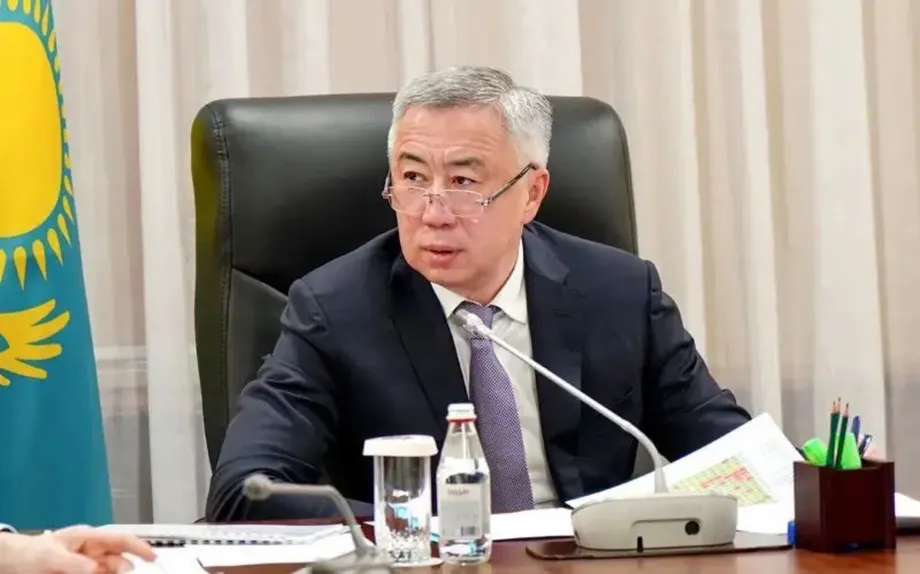
Kazakhstan's industry and construction minister, Yersaiyn Nagaspayev, has defended the commercial arrangement, saying Tau-Ken Samruk considers it a good deal. He explained that the specialised mining company is responsible for finding investors and negotiating terms.
The study that will shape the financing
Northern Katpar's definitive feasibility study began in July 2026. It is intended to establish the mine plan, processing design, capital spending, operating costs and expected financial returns before the partners decide whether to build.
Cove Kaz's August announcement named DRA Global as the preferred lead contractor, also responsible for mineral processing. ERM was selected for geology, mine planning, technical programmes and environmental and social frameworks. Knight Piésold was chosen for ground engineering, water studies and storage of tailings, the material left after ore processing. The appointments were subject to final agreements.
Dominic Heaton, Cove Kaz's chief executive, said the work would use earlier studies by the Kazakh partner:
We anticipate the DFS to be completed before the end of 2027 and it will be supported by extensive historical work by JSC Tau-Ken Samruk, the national mining company of Kazakhstan and our 30% partner in Severniy Katpar LLP,
Site preparation began in July, including surveying, temporary access roads, drilling areas and field facilities. Detailed engineering would follow the study, with major construction envisaged from 2028. Kazakhstan's planning has included commissioning from 2029, while Cove Kaz has targeted mining in 2030 and deliveries to US customers from 2031. Commissioning is the period when equipment and facilities are tested before regular production.
How much tungsten could the mines supply?
Studies completed in April 2023 estimated that the deposits contain mineral resources totalling 1.4 million tonnes of tungsten trioxide, according to Cove Kaz's official announcement. Existing studies indicate potential annual production of about 5,000 metric tonnes at Northern Katpar and 7,000 at Upper Kairakty.
The combined 12,000 tonnes would equal about 15% of current global tungsten mine production, the company says. That share is a projection for planned capacity, which will depend on the technical study, financing and successful construction.
Earlier studies cited by Tau-Ken Samruk also put reserves at about 410,000 tonnes of tungsten trioxide. Resources describe an estimated mineral deposit; reserves are the portion assessed as economically mineable under specified conditions. JORC, the reporting framework used for these estimates, sets standards for describing geological evidence and mining prospects.
Tungsten trioxide is a compound containing tungsten and oxygen, so its weight includes both elements. Readers should keep that measurement in mind when comparing deposit estimates with figures for tungsten metal or processed products.
Tungsten's hardness, density and resistance to heat make it useful in cutting tools, mining equipment, electronics, aviation and military equipment, including missiles and artillery shells. China is the leading producer, and its February 2025 tightening of controls on selected tungsten exports and related technologies added urgency to efforts to develop alternative supplies.
Kazakhstan wants processing, not just extraction
Kazakhstan's industrial goal is to keep more processing inside the country. The venture envisages two plants that concentrate tungsten from ore and a metallurgical facility, with extracted material processed domestically. The agreement includes restrictions on exporting unprocessed ore and intermediate material.
The Northern Katpar refinery is designed to produce ammonium paratungstate, or APT. This is a purified tungsten compound used to make oxides, powders, tungsten carbide and other industrial materials. Turning ore into APT requires more equipment, technology and skilled work than simply digging and exporting rock.
The deposits have previously attracted a different international partner. In an earlier Tau-Ken Samruk project plan, the state company identified China's Xiamen Tungsten as the strategic investor for the same deposits. That proposal envisaged plants handling 2.6 million and 6 million tonnes of ore annually, alongside a chemical processing complex.
The older plan put construction at about $755 million and targeted operating starts in 2023 and 2025. It forecast more than 2,500 jobs and about $1 billion in tax revenue. It also identified a central technical problem: Kazakhstan lacked ore enrichment technology suited to these deposits. The current venture is again seeking to combine foreign investment with processing expertise.
Newer estimates put employment during construction and production at around 2,000. Both employment projections belong to their respective project plans. The present study will determine the facilities and operating arrangements for the current development.
A larger price tag and a smaller equity commitment
The current project's investment estimates have risen from roughly $1.1 billion to $1.6 billion. In September 2026, Heaton said total spending on both deposits, infrastructure and processing facilities could approach $2 billion. The definitive feasibility study is expected to settle the capital requirement.
Heaton has also explained that the earlier $1.1 billion figure represented estimated development needs. Cove Kaz says it has financed its controlling stake acquisition, site preparation, drilling and feasibility work.
The conditional American Ventures commitment announced on November 2 covers four million shares at $8 each, totalling $32 million. Cove Kaz says that price implies an equity valuation of about $1.97 billion, 76% above the valuation used in its previous Skyline arrangement.
A $1.97 billion equity valuation is the implied value of the company's shares. The proposed $32 million investment is the money associated with this particular share purchase. Even if completed in full, it would equal 2% of the $1.6 billion discussed with the government lenders, illustrating the different scale of funding needed for development work and construction.
The Trump family connection and a new listing route
Donald Trump Jr. and Eric Trump's investment connection runs through transactions involving Skyline Builders and structures associated with Dominari. The brothers acquired an interest in Skyline in August 2025, and Skyline obtained a 20% interest in Kaz Resources LLC that November.
Cove Kaz and Skyline announced a proposed business combination on April 30, 2026. Under that arrangement, the combined business would have operated as Kaz Resources and traded on Nasdaq. The companies mutually terminated the agreement on November 2.
Cove Kaz now plans to become a Delaware corporation named Kaz Resources Inc. and pursue a direct listing on a major US exchange in the first half of 2027. A direct listing allows shares to begin trading without completing the previously proposed merger. The company will still need to satisfy the applicable regulatory and exchange requirements.
The brothers are expected to hold an indirect stake of less than 1% through the investment arrangements. Their representative says they have no management role, and Cove Kaz says they were not involved in executing the Kazakhstan project.
Congressional scrutiny has nevertheless focused on potential conflicts involving politically connected minerals businesses. Senator Elizabeth Warren is among lawmakers who have questioned arrangements involving Kaz Resources and other companies. Kaz Resources says it has worked with US officials since 2023 and welcomes questions from officials.
Commercial pressure meets political scrutiny
Kazakhstan's 30% ownership gives its state partner a share of the venture's returns, while Cove Kaz holds the controlling stake and responsibility for international sales. The economic benefit to Kazakhstan will depend on operating costs, sales terms, taxes and the profits available for distribution.
Sergey Tronin, an associate professor specialising in finance and investment management, has warned that sales through related companies at prices below the market could leave more profit outside Kazakhstan and reduce dividends for Tau-Ken Samruk. He also identified possible price pressure from Chinese producers as a threat to the project's profitability.
Political analyst Nikita Mendkovich has argued that congressional pressure on Trump family business interests could make financing harder. Other assessments focus more directly on investment delays. Pavlo Verkhniatskyi, managing partner at corporate intelligence firm COSA, described that risk:
Investigations and political controversy could complicate financing, delay investment decisions, and slow strategically important initiatives.
The wider US minerals programme shows how far announcements can precede spending. Tom Moerenhout, who leads the critical minerals initiative at Columbia University's Centre on Global Energy Policy, put projects where money had begun disbursing at $8 billion out of roughly $30 billion announced, about 27% of the total. Cove Kaz's prospective government financing remains at an earlier stage, while its immediate work continues with private capital.
The dates that matter next
Cove Kaz's schedule puts the proposed stock market listing before completion of the study needed for its major financing applications. Investors considering shares in early 2027 would therefore be assessing a project whose final construction costs and financing structure are still being developed.
- November 2025: The tungsten partnership was announced during Tokayev's Washington visit.
- April 29, 2026: Cove Kaz acquired its 70% controlling interest, according to its official announcement.
- July 2026: Site preparation and the Northern Katpar feasibility study began.
- November 2, 2026: Cove Kaz announced the conditional $32 million equity commitment and ended its Skyline merger agreement.
- First half of 2027: The company targets a direct US stock exchange listing.
- Before the end of 2027: The Northern Katpar feasibility study is expected to finish, followed by formal financing applications.
- From 2028: Major construction is envisaged, with mining targeted for 2030 and US deliveries from 2031.
Kazakhstan's opportunity is to build a domestic tungsten processing industry around two large deposits. Washington's opportunity is a future supply outside China. Turning those plans into operating mines now depends on the technical study, commercial contracts and a construction financing package large enough to carry the project through several more years of development.
Key Points
- Up to $1.6 billion in prospective EXIM and DFC financing remains unapproved.
- Cove Kaz says current work is privately funded and formal construction financing applications will follow the feasibility study.
- The venture is owned 70% by Cove Kaz and 30% by Kazakhstan's Tau-Ken Samruk.
- Planned combined output is about 12,000 tonnes annually, equivalent to roughly 15% of current global tungsten mine production.
- A conditional $32 million equity commitment implies a company valuation of about $1.97 billion.
- Donald Trump Jr. and Eric Trump are expected to hold an indirect interest below 1% and have no management role, their representative says.
- The company targets a US listing in early 2027, study completion by the end of 2027 and US deliveries from 2031.