Six more months of restrictions on gasoline and diesel
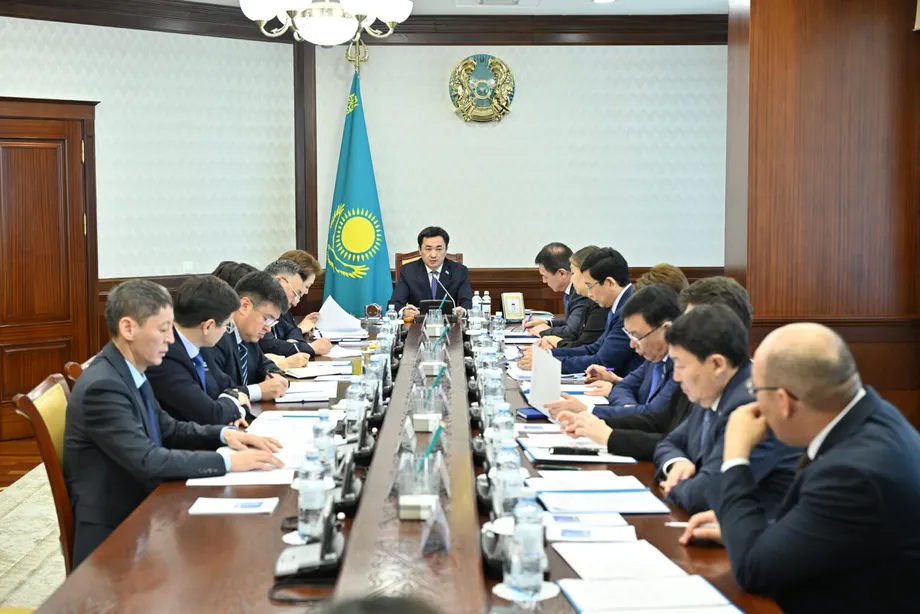
Kazakhstan will extend restrictions on gasoline, diesel and certain other petroleum exports from November 22, 2026, to May 22, 2027, including shipments to fellow members of the Eurasian Economic Union (EAEU). Energy Minister Erlan Akkenzhenov signed the order on October 30, keeping domestic fuel supplies ahead of most export sales.
Contents
- Six more months of restrictions on gasoline and diesel
- Which dates matter?
- What changes for road shipments and drivers?
- Rail exports retain a route for approved gasoline
- Research fuel and humanitarian aid need approval
- Exports beyond the EAEU face a separate product list
- Why a major oil producer still limits fuel exports
- Oil forecasts and regional trade put the decision in context
- Bitumen relief remains conditional
- Key Points
Order No. 397-н/қ sets different conditions for road and rail shipments. It preserves exceptions for fuel in vehicles' original tanks, specified lubricating oils, aviation fuel used for research and testing, approved gasoline deliveries by rail and humanitarian assistance authorized by the government.
A further restriction covering exports outside the EAEU customs territory lists January 1 to June 30, 2027, as its operating period. That measure covers light distillates, aviation kerosene, diesel, gas oils, toluene, xylene and petroleum bitumen.
The decision continues an existing policy rather than reopening exports and then closing them again. The previous restriction runs through November 21, with the new road and rail measures beginning the following day. Kazakhstan has repeatedly renewed fuel export controls over several years to protect domestic supplies and address price differences with neighboring countries.
Which dates matter?
November 16 is the stated date when the ministerial order takes legal effect. The individual restrictions have their own schedules, so businesses need to distinguish the date the document becomes effective from the dates assigned to particular export bans.
The timetable also contains a discrepancy concerning exports outside the EAEU: January 1 is the start specified in the detailed schedule, while November 16 has also been given as the start of that restriction. Exporters affected by that difference need confirmation of the applicable date before arranging deliveries.
- October 30, 2026: The energy minister signs the extension order.
- November 16, 2026: The order is scheduled to take legal effect.
- November 21, 2026: The previous export restriction reaches its final day.
- November 22, 2026, to May 22, 2027: The new road and rail restrictions apply.
- January 1 to June 30, 2027: The detailed schedule assigns this period to the separate restriction on exports outside the EAEU customs territory.
The order also specifies that it becomes effective 10 days after its first official publication. For shipment planning, the central point is that road and rail controls continue without a gap after November 21.
What changes for road shipments and drivers?
Road exports face restrictions on gasoline, diesel and other products identified by EAEU customs codes 2709 00, 2710, 2902, 3403, 3811 and 3826 00. Customs codes are numerical labels used to classify goods at the border. A product's precise classification helps determine which restriction or exception applies.
Specified lubricating oils remain exempt. The exemption is tied to listed product codes, making the exact type of oil relevant to whether a commercial shipment can leave Kazakhstan.
Drivers may still leave the country with fuel in a tank installed by the vehicle manufacturer, but that exception can be used no more than once a day. The wording concerns the movement of fuel in the vehicle's original tank, rather than a general allowance for carrying additional fuel for sale abroad.
The daily limit matters in border areas where cheaper fuel can encourage repeated trips. Kazakhstan has previously recorded illegal fuel exports linked to differences between domestic prices and those in neighboring countries. The renewed rule keeps an allowance for ordinary vehicle use while limiting repeated movements of fuel under that exemption.
Rail exports retain a route for approved gasoline
Rail restrictions apply to petroleum products under EAEU customs code 2710 12. Certain gasoline deliveries can continue under supply plans approved by the Energy Ministry, giving authorized shipments a route through the restrictions.
The permitted grades include AI-98, AI-95, AI-92 and AI-80. The numbers refer to octane ratings, which describe gasoline's resistance to premature ignition inside an engine. Eligibility depends on the approved supply plan as well as the product category.
The rail exception lists customs codes 2710 12 412 0, 2710 12 413 0, 2710 12 450 0 and 2710 12 490 0. Those details give suppliers a more precise basis for checking a proposed shipment than the broad description of a gasoline export ban.
Humanitarian deliveries may also move by rail when Kazakhstan's government authorizes them. Road and rail therefore have different exceptions: vehicle tanks and specified lubricating oils feature in the road provisions, while approved gasoline supply plans are central to the rail provisions.
Research fuel and humanitarian aid need approval
Aviation fuel intended for research, testing and preparations for industrial production can qualify for an exemption. The activities covered include laboratory and qualification testing of samples.
Organizations using this exception need approval from the authorized body responsible for petroleum product production. They must also have a contract with the organization conducting the work and documents specifying the required quantities of fuel and samples.
Those requirements connect the permission to a defined research or testing activity. A company planning such a delivery needs to establish the purpose, recipient and volume before export.
Humanitarian assistance follows a different approval process. Petroleum products can be exported as aid when the Government of Kazakhstan decides to authorize the shipment. The exception applies to government approved assistance under both the road and rail provisions.
Exports beyond the EAEU face a separate product list
The restriction scheduled for January through June 2027 covers shipments outside the EAEU customs territory. Kazakhstan's partners in the union are Russia, Kyrgyzstan, Belarus and Armenia. The road and rail restrictions also cover deliveries to these countries, so membership in the same customs grouping does not provide a general exemption.
The external export list extends beyond familiar vehicle fuels. Light distillates are relatively light products separated during oil refining. Gas oils are another group of refinery products that includes fuels used in diesel applications. Toluene and xylene are chemicals used in industrial production, while petroleum bitumen is widely used to bind road surfaces.
The listed classifications include 2713 20 000 0 for petroleum bitumen and specified codes within the 2902 group for toluene and xylene. For businesses, the combination of destination, transport method, product code and any approved exception determines which provision applies.
Why a major oil producer still limits fuel exports
Kazakhstan produced about 99.6 million tonnes of oil in 2025, yet its domestic fuel market still relies partly on imports. Crude oil taken from the ground must pass through refineries before it becomes gasoline, diesel or aviation kerosene. The amount of crude produced and the amount of usable fuel available locally are different measures.
According to Energy Ministry figures, Kazakhstan's refineries processed 18.4 million tonnes of crude in 2025 and produced about 15.5 million tonnes of petroleum products. That output covered more than 90% of domestic needs, leaving gaps in particular products.
Kazakhstan imports about 300,000 tonnes of aviation kerosene annually from Russia under an agreement allowing imports without customs duties. For 2025, it also had provision to receive up to 450,000 tonnes of Russian diesel without duties. The diesel figure describes the amount that could be supplied under the arrangement.
Authorities have linked repeated export restrictions to domestic supply needs and lower retail prices than in neighboring markets. Seasonal demand adds pressure during agricultural planting and harvesting, as well as the heating season. Keeping more fuel inside Kazakhstan is intended to make supplies available to those domestic users.
Oil forecasts and regional trade put the decision in context
Kazakhstan forecasts oil production of 96 million tonnes in 2026, compared with about 99.6 million tonnes in 2025. That would be a decline of roughly 3.6%. The 2027 target is approximately 99 million tonnes, an increase of about 3.1% from the 2026 forecast.
Production in 2026 was affected by attacks on infrastructure, temporary suspensions of shipments through Caspian Pipeline Consortium terminals and technical problems at Tengiz, the country's largest oil field. Kazakhstan also forecasts gas production of 64.5 billion cubic meters in 2026.
The fuel restrictions operate within a much wider trading relationship. Bureau of National Statistics figures put Kazakhstan's trade with EAEU members at $20.99 billion in January through August 2026, up 7.3% in nominal terms from a year earlier.
Exports to those partners totaled $6.64 billion, down 0.2%, while imports reached $14.35 billion, up 11.2%. Imports were therefore about 2.2 times exports. Russia accounted for 87.3% of Kazakhstan's EAEU trade, followed by Kyrgyzstan at 8.3%, Belarus at 4% and Armenia at 0.4%. These figures cover trade in all goods.
Bitumen relief remains conditional
Kazakhstan is considering lifting restrictions on exports of road bitumen once domestic demand has been fully met. That would give suppliers an opportunity to sell remaining volumes abroad after local requirements are covered.
Petroleum bitumen is still included in the external export restriction scheduled through June 30, 2027. No date has been given for removing it from the restrictions. Companies involved in road construction and bitumen supply therefore face both a stated intention to allow exports and a continuing restriction in the announced schedule.
The immediate practical change is continuity: most restricted road and rail shipments stay controlled until May 22, while the separate external export schedule runs to June 30. Drivers retain the original tank allowance, and businesses with qualifying research, humanitarian or approved rail deliveries retain specific routes for permission.
Key Points
- Kazakhstan's renewed road and rail export restrictions run from November 22, 2026, to May 22, 2027.
- Deliveries to other EAEU members are also covered.
- Fuel in manufacturer installed vehicle tanks may leave Kazakhstan under the exemption no more than once a day.
- Approved gasoline supply plans, specified oils, qualifying aviation research fuel and government authorized aid have exceptions.
- The detailed schedule places separate restrictions on listed exports outside the EAEU from January 1 to June 30, 2027.
- Domestic supply needs, price differences and remaining reliance on imported fuels underpin the policy.
- Possible relief for bitumen exports depends on meeting domestic demand, with no removal date announced.