A Historic Result Without a Place in the Top 30
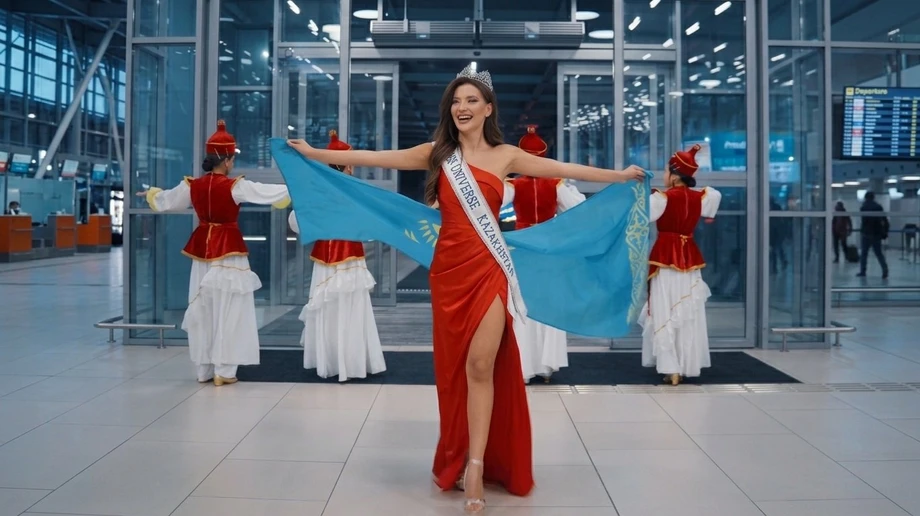
Alina Ri left the 75th Miss Universe final without a place among the 30 semifinalists, but she achieved Kazakhstan's best result in the competition's special categories. The model from Shymkent, aged 22, reached the top 15 in the national costume ranking at the José Miguel Agrelot Coliseum in San Juan, Puerto Rico. The final on 24 November brought together 116 contestants from countries and territories around the world.
Contents
- A Historic Result Without a Place in the Top 30
- Ri Says Two Years of Work Were Worth the Tears
- What Went Into the Golden Eagle Costume?
- Why Did the Wings Cause an Argument?
- Jennifer Barreto's Rapid Rise to the Crown
- The Woman Behind the Stage Name
- Three Central Asian Stories on One Stage
- How This Fits Kazakhstan's Pageant History
- An Anniversary Contest Shaped by Disputes
- Key Dates in the Campaign
- From San Juan to a Cat Named Jessie
- What to Know
Ri also celebrated reaching the top five during audience voting in her social media post after the final. The final account of her special category result placed her in the top 20 for Miss People's Choice. Neither figure represented a placement in the main contest. Ecuador received the People's Choice Award, while the Best National Costume winner was still listed as to be determined when the final results were compiled.
Public voting through the MU Fan application opened on 16 October, giving viewers a role in the contest for a semifinal place and in the special nominations. Ri's supporters helped produce an unprecedented result for Kazakhstan, even though it did not carry her into the main semifinal. The Miss Qazaqstan directorate said she had represented the country with dignity and earned high praise from viewers and judges. In a statement thanking those who voted, the directorate described the achievement as a source of national pride.
We are proud of Alina and her achievements. This is a special pride for Kazakhstan and the beginning of new bright victories for Alina.
Ri Says Two Years of Work Were Worth the Tears
Ri, whose full name is Alina Ekaterinecheva, said her journey to the international stage had taken two years of persistent work, anxiety and sleepless nights. She acknowledged that events had not unfolded exactly as her team had dreamed, but said the experience and the support from Kazakhstan and abroad had left her deeply grateful.
Writing after the final, Ri explained why she regarded the costume and voting results as a breakthrough rather than a consolation.
I am incredibly happy that I made it into the top 15 national costumes and the top five in voting! I became the first representative of Kazakhstan to achieve such a result at Miss Universe. I am proud that we were able to do this!
She said she felt that she had taken Kazakhstan to a new level at the anniversary contest and that this mattered more to her than a numerical ranking. Ri also told supporters that their affection and recognition were more valuable than any position in a table. Her farewell message captured the emotion of the moment.
I am writing this with tears on my face. Thank you to everyone. We made history anyway!
What Went Into the Golden Eagle Costume?
The costume at the centre of Ri's achievement was titled Golden Eagle: The Spirit of Kazakhstan. Created by the fashion brand SV Muse, it weighed about 30 kilograms and was valued at more than 5 million tenge. Its mechanical golden wings opened on stage to a span of 4.5 metres. More than 10,000 decorative stones were added through embroidery and ornamentation done by hand, alongside natural feathers, gold lace and a train five metres long. Jewellery for the appearance came from Amilio Brand.
Work began in April and continued for more than six months. Ri proposed the central concept herself after winning Miss Qazaqstan 2025. The design drew directly from Kazakhstan's flag, combining blue and gold, a sun, an eagle and traditional ornamental patterns. A crown shaped like a golden sun completed the headpiece, while the moving train was intended to suggest an eagle flying above the steppe.
After presenting the costume on 21 November, Ri explained the meaning that she wanted an international audience to see.
Blue, the golden sun and a soaring eagle are symbols of our freedom, independence and strength of spirit.
The eagle also represented power and independence, while the gold decoration conveyed wealth and abundance. The sheer weight of the construction made the appearance a physical performance as well as a fashion presentation. Ri had to move, pose and operate within a costume whose wings extended well beyond her body on both sides.
The appearance attracted extensive attention on social media and among pageant commentators. Ri's photograph subsequently appeared on the cover of a major Puerto Rican newspaper. Before the semifinalists were announced, some international pageant observers had included her among their favourites, raising hopes in Kazakhstan that she might also reach the top 30.
Why Did the Wings Cause an Argument?
The enthusiasm was accompanied by an online dispute over whether Ri's wings resembled the costume worn by Kyrgyzstan's Mary Kuvakova at Miss Universe 2025. Kuvakova had appeared as an eagle, an important symbol in Kyrgyz culture, in a gold and bronze design with large wings decorated with feathers and ornamental details.
Ramina Ibragimova, director of Miss Qazaqstan, rejected suggestions that the Kazakh design had been copied. She said wings were widely used in pageant costumes and argued that the two appearances had different designs, visual identities and silhouettes. She also pointed out that Kazakhstan had presented a costume with golden wings in 2018.
They are completely different costumes, with zero similarity apart from the wings. If you look, wings are used by almost every country because it is popular symbolism. The costumes have totally different identities, even the silhouettes.
Some social media users in Kyrgyzstan supported that position, saying that wings belonged to no single country and urging people to encourage the contestants rather than pit them against one another. Others who defended Ri said the blue and gold composition immediately made them think of Kazakhstan's flag.
Ibragimova later announced the costume result on Threads, treating it as a moment of national pageant history.
We officially made the top 15 for national costume! I do not believe it! We made history. For the first time in Kazakhstan's history!
Jennifer Barreto's Rapid Rise to the Crown
Puerto Rico's Jennifer Barreto won the international title on her home island. Fátima Bosch of Mexico, the winner in 2025, placed the crown on her. Barreto, 27, became the first married woman and mother to win Miss Universe, three years after organizers opened participation to married contestants and women with children. She and her husband have a daughter named Penelope, aged seven.
Barreto's victory was Puerto Rico's sixth Miss Universe title and its first since Zuleyka Rivera won in 2006. The next four contestants, in descending order, were Melissa Núñez of the Dominican Republic, Clara Vegas of Venezuela, Bea Millan-Windorski of the Philippines and Georgia Waddington of New Zealand.
The winner had entered pageantry only months earlier. She had no pageant experience before 2026 and completed her first runway appearance in February, before winning Miss Universe Puerto Rico and then the international crown. Her academic background includes a bachelor's degree in psychology and master's degrees in psychology and social work.
Barreto began working within the United States Department of Defense system in Texas in 2021. Her roles included teaching and crisis counselling, supporting military families, working on domestic violence prevention and participating in programmes concerned with child protection. She later became a prevention specialist. That professional record gave her a very different route to the crown from contestants who had spent years moving through national and international pageants.
The anniversary crown, named Radiance of an Eternal Legacy, had been presented on 12 November. Barreto received it at the end of a final that began on 24 November in Puerto Rico and was broadcast in Kazakhstan in the early hours of 25 November.
The Woman Behind the Stage Name
Alina Ekaterinecheva, known professionally as Alina Ri, won Miss Qazaqstan 2025 in December of that year. She began dancing at the age of three and received her first modelling opportunities at 14. Her subsequent work included fashion shows, photography and advertising projects, appearances at New York Fashion Week and collaborations with international brands including Damiani and Guess.
Ri also has a legal education. Alongside modelling, she hopes to develop a career in fashion design and eventually establish her own clothing label. Her decision to devise the central idea for the national costume offers an early indication of that ambition.
Those experiences help explain why the costume project occupied such a large place in her Miss Universe campaign. It combined her modelling background, an interest in design and a deliberate effort to make Kazakh symbols legible to viewers who might know little about the country.
Three Central Asian Stories on One Stage
Ri was one of three contestants from Central Asia whose national costumes drew on distinct cultural traditions. Uzbekistan's Ziedakhon Sharipova, 34, appeared in a traditional women's outfit distinguished by 40 braids. She said the hairstyle symbolised the beginning of a new chapter in her life.
Sharipova was born in Samarkand and is an entrepreneur based in Dubai. She holds an MBA and founded Zieda Beauty Lounge and Zieda's Clinic, businesses working in beauty, wellness and healthcare. Her interests include women's health and regenerative medicine, and she arrived at Miss Universe with an established business career rather than a long record of pageant participation.
Kyrgyzstan's Medina Ermekova, 18, drew on the legend of Bughu Ene, the sacred Mother Deer. Her costume featured antlers carrying a beshik, a traditional cradle. The elements represented maternal protection, compassion and the continuation of generations. In the legend, Bughu Ene rescues two orphaned children after a tragedy and raises them as her own.
Designer Tolgonai Baira and her team at BAIRA Fashion House created Ermekova's outfit with Kyrgyz ornaments and traditional decorative features. Ermekova, who comes from Bishkek, previously pursued rhythmic gymnastics, earned the title of International Master of Sports and competed internationally.
The three costumes therefore told very different stories. Ri used national symbols and stage machinery, Sharipova used a traditional hairstyle to mark personal change, and Ermekova turned a story about care and survival into a theatrical design.
How This Fits Kazakhstan's Pageant History
Kazakhstan has participated in Miss Universe since 2006, but none of its contestants had reached the main semifinal before the 2026 edition. Ri's absence from the top 30 continued that record, while her costume and audience voting results established a separate first for the country.
The previous high point for Kazakhstan at Miss Universe came in 2008, when Alfina Nasyrova reached the top five in the Best Ao Dai special nomination in Vietnam. The category concerned the best presentation in the ao dai, a traditional Vietnamese dress. Ri's top 15 appearance in an official national costume ranking and her place among the leaders in audience voting added a different kind of achievement to that history.
Kazakhstan's best result across the four major international pageants still belongs to Margarita Kravtsova, who reached the final top five at Miss World 2000. The group commonly called the Big Four consists of Miss Universe, Miss World, Miss International and Miss Earth.
An Anniversary Contest Shaped by Disputes
The 2026 field of 116 contestants was four smaller than the 120 who took part in Bangkok in 2025. Saint Martin and Uganda made their debuts, while Jordan returned for the first time since 1960 and Tunisia for the first time since 1971. Several other countries and territories withdrew.
A franchise disagreement affected Indonesia, Laos, Malaysia, Singapore, Thailand and Vietnam. JKN Global Group challenged agreements held by Miss Universe Eastern, a company owned by Thai businessman Nawat Itsaragrisil. Itsaragrisil maintained that the agreements remained valid, but on 21 October he announced that none of the franchises under his organisation would send delegates.
Puerto Rico's preparations also involved a dispute over public financing. Governor Jenniffer González-Colón had confirmed an allocation of $9 million to support hosting, with the Puerto Rico Tourism Company and Discover Puerto Rico handling the arrangement. On 18 December 2025, tourism company director Willianette Robles Cancel suspended payments while seeking discussions over unresolved issues and new requirements.
The pause followed irregularities surrounding the previous edition and a Mexican investigation into Miss Universe president Raúl Rocha over allegations involving drugs, fuel and arms trafficking. By March 2026, the parties had agreed to continue with the event in Puerto Rico. One condition was that Rocha withdraw from organising this edition to protect Puerto Rico's image. The government completed its payments in April.
Key Dates in the Campaign
Ri's result developed over several months, from her national victory to the final night in San Juan.
- December 2025: Ri wins Miss Qazaqstan 2025 and secures the right to represent Kazakhstan internationally.
- April 2026: Work begins on the Golden Eagle costume, based on Ri's own central concept.
- 16 October: Public voting opens for a place in the top 30 and for special nominations.
- 12 November: The anniversary crown, Radiance of an Eternal Legacy, is presented.
- 21 November: Ri presents her national costume in San Juan. The broadcast begins at 04:00 Astana time on 22 November.
- 22 November: Contestants take part in the preliminary round in swimwear and evening gowns. Those appearances and closed interviews contribute to the selection of the top 30.
- 24 November: The final takes place at the José Miguel Agrelot Coliseum. Kazakhstan watches the crowning ceremony at 05:00 on 25 November.
From San Juan to a Cat Named Jessie
The costume's influence continued after the pageant through an unexpected tribute in Kazakhstan. A designer named Askar created a miniature version for his cat, Jessie, also known as Djessica. He formed a crown from ordinary plastic cable ties and decorated it with artificial stones. The wings had been bought several years earlier, and he already had the small Kazakh costume used in the appearance.
Askar said the materials for the project cost only 300 to 400 tenge, compared with more than 5 million tenge for the original stage costume. Jessie posed in the miniature outfit for photographs that circulated on social media, where users praised her regal expression and bearing. Ri responded by praising the cat's beauty.
The tribute offered a light-hearted measure of how far the Golden Eagle image had travelled. What began as an elaborate construction designed for a few minutes on a San Juan stage had become a recognisable symbol at home, inspiring affectionate imitation as well as debate about Kazakhstan's place in international pageantry.
What to Know
- Alina Ri missed the 30 contestant semifinal at Miss Universe 2026 but reached the top 15 in the national costume ranking.
- Ri said she reached the top five during voting; the final special category summary placed her in the top 20 for Miss People's Choice.
- Her Golden Eagle costume weighed about 30 kilograms and had mechanical wings spanning 4.5 metres.
- SV Muse spent more than six months creating the costume, which cost more than 5 million tenge and included over 10,000 decorative stones.
- The result was Kazakhstan's first achievement of its kind at Miss Universe, where the country has competed since 2006.
- Puerto Rico's Jennifer Barreto, 27, became the first married woman and mother to win the title and secured her country's sixth crown.
- Margarita Kravtsova's top five finish at Miss World 2000 remains Kazakhstan's best result across the four major international pageants.