An apology for a character Kazakhstan never recognized
Sacha Baron Cohen has publicly apologized to the people of Kazakhstan for Borat, the fictional journalist whose first film in 2006 attached the country's name to an invented world of offensive customs and absurd behavior. Speaking with American journalist Josh Horowitz on the Happy Sad Confused podcast, the British actor said the character had nothing to do with the real country.
Contents
- An apology for a character Kazakhstan never recognized
- How the character acquired a nationality
- The accent and appearance were inventions
- Who was supposed to be the joke?
- From diplomatic threats to a cinema dispute
- Why a tourism campaign borrowed Very Nice
- The sequel brought protests and awards
- Borat returns even as Cohen says sorry
- Key Points
The apology comes as Borat appears again in promotion for Cohen's new Ali G project, Ali G: Who Iz I? It also follows two decades of sharply different reactions: diplomatic complaints, protests against the films, a tourism campaign borrowing Borat's catchphrase and continuing objections from people who find the character insulting.
Cohen introduced his remarks as his first apology to Kazakhstan. In comments reproduced in Russian, he said:
I want to apologize to the people of Kazakhstan for the first time, because Borat has nothing to do with Kazakhstan.
Cohen also expressed respect for the country's people and culture and said he had not wanted to hurt anyone. The date of the podcast recording was not specified.
His explanation returns to the central dispute surrounding Borat: Cohen says the joke targets people willing to believe outrageous stories about an unfamiliar country. Critics object that Kazakhstan and its people carry the insult, even when the intended target is an American interview subject or Western prejudice.
How the character acquired a nationality
Borat's identity developed through several television versions rather than through an attempt to portray Kazakhstan. Cohen described changing the character's name and nationality as he moved between broadcasters and negotiated projects.
Before Borat Sagdiyev became familiar to cinema audiences, Cohen played a Moldovan character, Alexi Krickler, on FSF on Granada Talk TV. An Albanian version, Kristo Shki ptari, appeared on BBC Two's Comedy Nation in 1998. The Ali G Show launched on Channel 4 in 2000 and later reached American viewers through HBO.
Cohen linked the choice of Kazakhstan to the project's move to HBO. He wanted a country that he believed American viewers knew little about, allowing the character to tell increasingly ridiculous stories without immediately being challenged.
Some descriptions of the character's development call Albania his first intended nationality. The fuller television history also includes the earlier Moldovan version. Cohen's own explanation centers on the same practical point: the identity changed with the broadcaster, while the comic device remained a supposedly foreign interviewer asking provocative questions.
For Kazakhstan, that production decision had a lasting consequence. A nationality selected for its unfamiliarity became attached to a globally recognizable character, leaving real people to answer for a fictional personality they had no role in creating.
The accent and appearance were inventions
Cohen acknowledged that he does not know how people in Kazakhstan actually sound. He described his knowledge of Central Asian accents as limited, despite continuing to use Borat's familiar voice.
The actor also recalled complaints from Kazakhstan's embassy about the character's appearance, including his prominent mustache. According to Cohen, diplomats told him that people in Kazakhstan did not look like Borat. He now accepts that the complaint had merit.
The embassy's objections reached him around the first film's release. Accounts place the contact either after its announcement or after its release, and describe both a complaint and a letter. Cohen said he did not take the criticism seriously at the time.
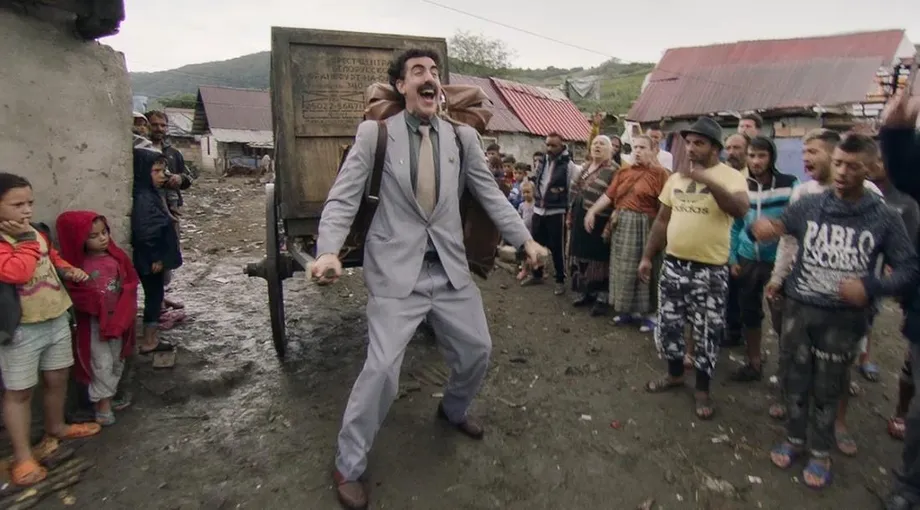
The films' supposed Kazakhstan scenes added another layer to the dispute. Romanian residents were presented as Kazakh people, and residents involved in the filming believed they were participating in a documentary. For viewers unfamiliar with the region, the country's name, the invented accent and the images appeared together as a single portrayal.
Cohen's admission about the voice explains why the apology concerns more than an exaggerated performance. The accent was part of a character built without knowledge of the people whose national identity he used.
Who was supposed to be the joke?
The 2006 film follows Borat, a fictional Kazakh journalist, as he travels across the United States to make a documentary. It uses a mock documentary format, presenting staged comedy and encounters with people through the style of factual filmmaking.
Cohen says the humor depends on his interlocutors accepting absurd claims about a place they know little about. Their willingness to believe him becomes the subject of the scene, exposing ignorance or prejudice through their reactions.
He offered essentially the same defense when the first film appeared in 2006: the laughter, he said, was directed at people who could believe his invented Kazakhstan existed. His recent remarks combine that longstanding explanation with a personal apology to the people whose country supplied the name.
Kazakh critics have focused on the experience at the other end of that joke. The audience may remember Borat's supposed nationality more readily than the American attitudes a scene seeks to expose. A fictional character can become the best known reference to a real country, particularly when the comedy itself depends on viewers knowing very little about it.
Reactions within Kazakhstan have therefore remained mixed. Some people see satire aimed at Western ignorance. Others see a humiliating depiction of their country and culture. Those responses help explain why official tourism promotion could later borrow the catchphrase while activists continued demanding an apology.
From diplomatic threats to a cinema dispute
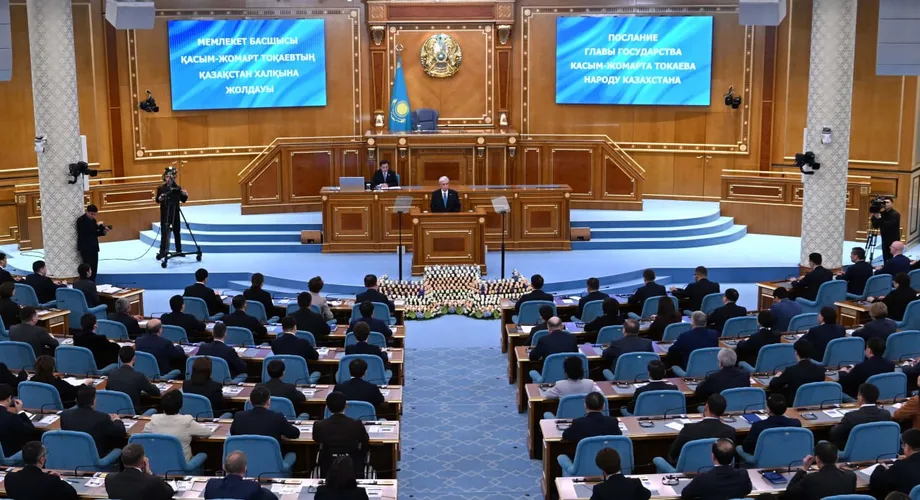
Kazakhstan's government challenged Cohen before the first feature film reached audiences. In 2005, the Foreign Ministry threatened legal action and suggested that his television appearances were part of a political effort to damage the country's international reputation.
Before the film's release in 2006, authorities paid for a supplement spanning four pages in The New York Times and the International Herald Tribune. It presented Kazakhstan's achievements in the 21st century, offering a different introduction to a country many prospective viewers barely knew.
The original film was not formally banned in Kazakhstan, but it did not receive a theatrical release there. A major cinema chain declined to screen it. In Russia, the film did not receive the distribution certificate required for a cinema release.
The main developments unfolded across more than two decades:
- 1998: Cohen appeared as an Albanian character on BBC Two's Comedy Nation.
- 2000: The Ali G Show launched on Channel 4, before its later American run on HBO.
- 2005: Kazakhstan's Foreign Ministry threatened legal action over Cohen's portrayal.
- 2006: The first Borat film was released internationally.
- 2017: Czech tourists were fined in Astana after appearing in Borat costumes.
- 2020: The sequel prompted protests, while Kazakh Tourism adopted the phrase "Very Nice!"
- 2026: Cohen's apology and Borat's appearance in promotion for his new Ali G project renewed discussion.
Why a tourism campaign borrowed Very Nice
Kazakh Tourism took a different approach in 2020, using Borat's signature phrase, "Very Nice!", in an official campaign promoting the country. The organization responsible for tourism promotion chose to use the character's recognition rather than simply reject it.
The timing mattered. Borat's sequel was drawing international attention, bringing the country's name back into entertainment coverage. The slogan gave tourism promoters a familiar phrase that they could attach to Kazakhstan on their own terms.
A smaller episode had already shown a less confrontational response. In 2017, Czech tourists in Astana received minor fines after walking around dressed as Borat. Cohen offered to pay those fines.
The tourism campaign and the fines show how responses changed from the legal threats of 2005. They also came from different people and institutions. A tourism body seeking visitors, authorities responding to public behavior and citizens concerned about their national image had different decisions to make.
Borrowing the catchphrase allowed a promotional organization to redirect attention toward the country. For people who regarded the character itself as degrading, that commercial use left their objections intact.
The sequel brought protests and awards
Borat's second feature film arrived in 2020 and renewed opposition among Kazakh activists and members of the diaspora in the United States. Protesters outside the US consulate general in Almaty demanded that the sequel be banned.
The Kazakh American Association urged Amazon to cancel the release, arguing that the film encouraged racism and xenophobia. Xenophobia means hostility toward people perceived as foreign. In November 2020, the association also called for the sequel to be excluded from consideration for the Oscars, Golden Globes and other awards.
The sequel nevertheless received a Golden Globe. Its success in entertainment circles and the objections from Kazakh campaigners developed at the same time, showing the gap between acclaim for the comedy and the experience of people who felt targeted by its imagery.
Public sensitivity continued beyond the sequel's release. In July 2026, Kazakhstan's menswear brand Shoqansuits faced calls for a boycott after publishing advertising featuring Borat. The reaction showed that using the character in a domestic commercial campaign could still provoke opposition, six years after the tourism slogan appeared.
The apology now addresses a demand that activists had made during earlier protests. Cohen's stated respect for Kazakh culture speaks directly to that grievance, while his explanation of the comedy remains much the same as it was in 2006.
Borat returns even as Cohen says sorry
Cohen discussed the character while promoting Ali G: Who Iz I?, a project centered on another of his established comic identities. Borat appears in its second trailer, speaking on behalf of invented Kazakh institutions and calling for a boycott of Cohen's work.
The promotional appearance turns the history of official objections into another joke. It also means the apology accompanies continued use of the same fictional nationality, rather than the character's retirement.
During the podcast appearance, Cohen mixed his apology with humor directed at Kazakh people in the audience, joking about anyone who might have arrived on a special mission. He then said he had intended no harm and respected their people and culture.
The change is therefore specific: Cohen has added an explicit apology and acknowledged the distance between Borat and Kazakhstan. The country still serves as the fictional character's home, while its citizens continue to hold different views about whether his fame is useful, offensive or both.
Key Points
- Sacha Baron Cohen apologized to Kazakhstan on Happy Sad Confused, saying Borat has nothing to do with the real country.
- He said the character's nationality changed between television projects and that he chose Kazakhstan because he believed audiences knew little about it.
- Kazakhstan challenged the portrayal before the first film's release in 2006; the film did not reach its cinemas.
- Kazakh Tourism used "Very Nice!" in 2020, while activists and diaspora groups opposed the sequel.
- Borat has returned in promotion for Ali G: Who Iz I?, keeping the character in circulation as Cohen acknowledges the criticism.