A December Decision Under Inflation Pressure
On November 26, Naoki Tamura stood before business leaders in Kofu, Yamanashi Prefecture, and made a case for moving Japan's monetary policy faster than the market's base case. Tamura, a former commercial bank executive and one of the clearest hawks on the Bank of Japan's board with nine members, said inflation risks were building from higher raw material costs, the Middle East war, a weak yen and demand for goods linked to artificial intelligence. A basis point is one hundredth of a percentage point, so a 25 basis point rise means 0.25 percentage points.
Contents
- A December Decision Under Inflation Pressure
- What Naoki Tamura Said in Kofu
- How Hot Are Prices Right Now?
- How Much Room Is Left to Raise Rates?
- What Is Scheduled Before and After the Vote?
- How Certain Are Markets About December?
- Why the Yen May Need More Than One Hike
- What Bond Markets Are Saying
- What Could Change the Decision?
- What Changes for Households and Companies?
- Key Points
The timing matters. The bank is due to end a meeting lasting two days on December 18, with investors widely expecting it to lift its policy rate to 1.5% from 1.25%. Tamura did not say the decision was settled. He said a faster move, including a 50 basis point increase, could become necessary if price risks strengthen. That possibility has turned a widely expected rise of 0.25 percentage points into a test of how aggressively Japan will leave years of easy money.
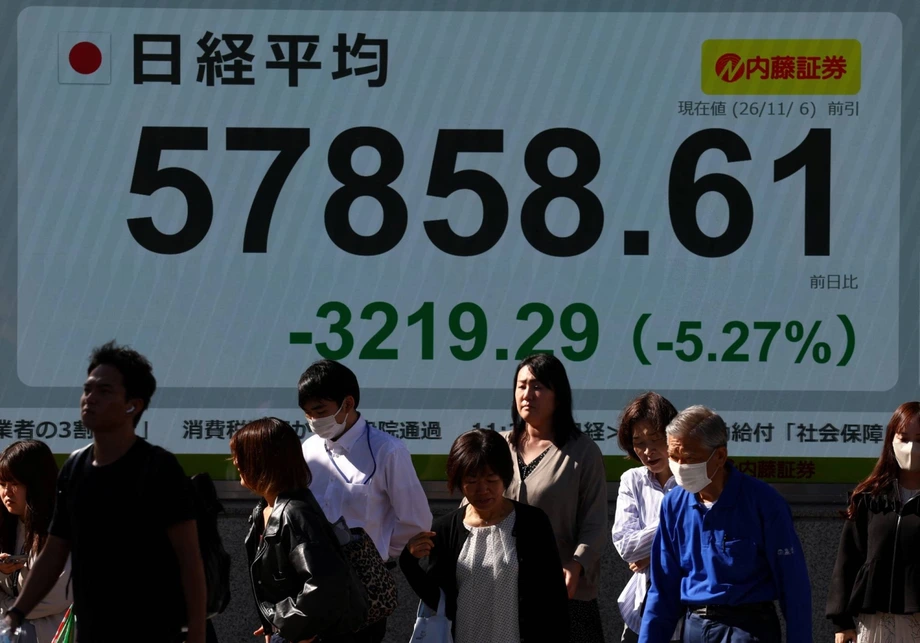
The Bank of Japan has already raised rates three times in 12 months, including increases in June and September. The June and September moves came closer together than the roughly twice a year increases seen in 2024 and 2025. The September rise came after a pause in October, when the board said underlying inflation had roughly reached its 2% target. Consumers have not felt calm: Tokyo inflation accelerated again in November, the yen stayed close to 160 per dollar, and global technology shares have swung sharply.
What Naoki Tamura Said in Kofu
Tamura told the gathering that price pressures were no longer isolated. The board member said higher crude oil prices, linked to the war by the United States and Israel against Iran, had lifted costs for many goods. He put the message plainly.
Recent price developments suggest further upside risks to inflation.
He said a weak yen raised import costs, while still strong AI demand kept pressure on goods and electricity. Pass through, in plain language, is the process by which a company's higher costs eventually appear in the price a shopper pays.
The board member, who along with former bond strategist Hajime Takata is viewed as a hawk, said borrowing conditions were still too loose. Hawk is the word used for an official who leans toward higher rates to stop inflation before it becomes broad.
Given that financial conditions remain accommodative, I believe the BOJ needs to bring its policy rate to a level deemed neutral to the economy soon.
At his news conference, Tamura described a path of repeated but measured rises. He said careful study of data did not mean waiting passively.
My case is for the BOJ to raise the rate by a quarter of a percentage point every few months. We need to thoroughly assess the situation, but that doesn't mean slowly.
Tamura then addressed the larger move that has drawn market attention. He said stronger inflation pressure could justify acting faster.
If upside price risks still exist, a 50-basis-point rate hike may become necessary.
Tamura said household spending had shown weak signs and technology shares had been sold off, but he regarded domestic consumption as resilient and global AI demand as likely to stay strong. He joined the board in 2022 and has voted against holding rates, including in April.
How Hot Are Prices Right Now?
The data give Tamura's warning a numerical edge. The Bank of Japan's gauge that excludes fresh food and special factors, such as subsidies for gasoline and utilities, rose 3.5% in October from a year earlier. That was the fastest since September 2023, after a 3.2% rise in September. The measure is designed to show price pressure less distorted by temporary government steps.
Services also added pressure. Prices charged among businesses rose at the fastest pace in 36 years. The government's consumer price index excluding fresh food rose 2.2% in October, a lower figure because it does not strip out subsidies. The Ministry of Internal Affairs and Communications reported that Tokyo's consumer price index excluding fresh food rose 2.9% in November from 2.6% in October, the highest since July 2025. The gauge excluding fresh food and energy reached 2.5%, and the headline index rose 2.8%.
Utility subsidies explain part of the jump. Electricity prices rose 9.5% from a year earlier and 14.2% in a month, while city gas bills increased by almost 14% after summer support ended. Yoshiki Shinke, senior executive economist at Daiichi Life Research Institute, said the end of utility support was a main driver and companies still showed a strong desire to pass on costs.
The impact of the end of utility measures was the biggest force for the core CPI to rise.
Food sent a mixed signal. Rice prices fell almost 34%, the largest decline in records going back to 1971, after being a major source of inflation in 2025. Processed food prices accelerated. Teikoku Databank said companies planned to raise prices on 1,477 food and drink products in November, almost ten times the number a year earlier.
Consumer service prices rose 2.1% from a year earlier, little changed from the month before. That matters because services are a test of whether higher costs have become part of regular price setting rather than a burst driven by energy.
How Much Room Is Left to Raise Rates?
Tamura repeated that Japan's neutral rate is around 2%. That is the level at which policy neither cools nor overheats growth. From 1.25%, that leaves 75 basis points of increases, equal to three rises of 25 basis points.
Former Bank of Japan board member Makoto Sakurai said three more rises could take the rate to 2% through the middle of next year, a level not seen since 1993. Another view among former board members put 2% around mid-2027. The bank's staff place the neutral rate in a range from 1.1% to 2.5%. At 25 basis points a step, the upper end would allow five more rises; the lower end would allow none.
Tamura's reason for moving with urgency is that Japan's inflation expectations are less firmly anchored than in other economies. An anchored expectation means households and companies broadly believe prices will rise near the target, so a temporary shock is less likely to change behavior over many years. He said weak anchoring made Japan more exposed to outside shocks.
In my view, the BOJ therefore must respond to shocks more swiftly and strongly than would be necessary if underlying inflation were anchored more firmly.
Governor Kazuo Ueda has taken a more measured public stance. He told parliament on November 19 that a weak yen adds to inflation and has said the bank will judge timing by watching the economy, prices and financial conditions. The October Outlook Report said inflation, with temporary price moves stripped out, was broadly consistent with the 2% target.
What Is Scheduled Before and After the Vote?
The Bank of Japan's Monetary Policy Meetings page confirms that the December 2026 meeting runs on December 17 and 18. It lists policy statements, meeting minutes and the Outlook for Economic Activity and Prices. Under its release schedule, The Bank's View from the Outlook Report appears immediately after relevant meetings, the full text follows at 2:00 p.m. on the next business day, and the Summary of Opinions and minutes are released at 8:50 a.m.
- November 26: Tamura speaks in Kofu and holds a news conference.
- November 27: Tokyo inflation data show core CPI at 2.9%.
- November 30: Ueda is scheduled to speak in Nagoya, a possible clue to the December debate.
- December 9: The Federal Reserve announces its decision, nine days before the BOJ decision.
- December 17 and 18: The BOJ holds its meeting and announces the decision on December 18.
- December 18: Nationwide November inflation figures are also due.
- December 23 and 28: The Outlook Report and Summary of Opinions are due, with minutes on January 27, 2027.
The official calendar also sets 2027 meetings for January 21 and 22, March 17 and 18, April 27 and 28, June 10 and 11, July 21 and 22, September 21 and 22, October 28 and 29, and December 16 and 17. Those dates matter because a December rise would be the start of a path, not the end of one.
How Certain Are Markets About December?
Market pricing has leaned strongly toward a rise. Overnight index swaps, contracts that bet on interest rates over coming months, put the chance of a December increase at about 70%, while another measure using those swaps placed it near 80%. In a poll taken November 11 to 18, 61 of 71 economists expected the rate to go from 1.25% to 1.50%. A currency speech tracking measure scored Tamura's remarks at 8.4, the same as his historic average.
Expectations beyond December are less firm. Pricing has the rate at 1.56% after the March meeting and 1.75% by October 2027, which implies one further rise after December. Nearly 60% of the economists polled expected 1.75% by the end of March. Takashi Fujiwara, lead fund manager at Resona Asset Management, said market expectations were converging around an end point of 1.75%.
Those expectations have moved before. On November 19, pricing put December odds near 85% and the October 2027 rate near 1.85%. By late November, the expected end point had fallen to around 1.75%. The shift followed data showing prices excluding fresh food and energy rising 2.2% in October, down from 2.4%, and the economy contracting in the third quarter.
Uichiro Nozaki, an economist at Nomura Securities, said the inflation assessment still pointed to a December rise.
The assessment that upside risks to inflation remain high hasn't changed, so there is a strong likelihood of a rate hike in December.
Taro Kimura, an economist, kept the same baseline while warning about market turbulence.
We maintain our baseline call for a 25-basis-point rate hike in December.
Kimura said recent stock market turbulence argued for caution on rapid tightening and called a December move a close call.
Why the Yen May Need More Than One Hike
The yen traded around 159.2 to 159.3 per dollar early on November 26 and 27, close to the 160 level that has drawn official concern. Finance Minister Satsuki Katayama warned on November 13 about the currency and said Tokyo would coordinate with the US Treasury, which joined Japan in buying yen on July 31. She described the recent moves in plain terms.
The yen's moves were one-sided and rapid.
The finance ministry spent ¥27.1 trillion on six trading days in 2026. It also spent a record ¥15.4 trillion, about $96 billion, between July 30 and August 26, including the first joint operation with the United States in 28 years, after the yen fell close to 164. No official has promised action at exactly 160.
The reason a 25 basis point rise may not change the currency much is simple. Money tends to move toward the currency paying more interest. The Federal Reserve's target range is 3.75% to 4%, against 1.25% in Japan, a gap of about 2.6 percentage points when measured from the middle of the Fed range. The Fed announces its next decision on December 9, and CME FedWatch put the chance of a rise to 4% to 4.25% at around 98%. A matching move by the BOJ would leave the gap unchanged.
Fed Governor Christopher Waller said he could support a larger rise of half a percentage point unless the Fed signaled another increase in January. Beyond December, one market view allowed for at least two Fed cuts later, which would narrow the gap over a longer horizon. For the yen, the speed after December matters more than the size of the first step.
Recent history supports that caution. After the December 19, 2025 rise to 0.75%, the dollar climbed to about 157 yen. June's rise to 1.00% left the yen roughly where it was. After September's rise to 1.25%, with two board dissents, the dollar rose 1.2% to 157.897 while Ueda spoke to reporters.
The yen's best autumn stretch came without a rise. In early September it gained roughly 4.5% against the dollar in less than a week after Ueda said the board would discuss a rise at every meeting and Waller indicated he was inclined to hold US rates steady if inflation kept cooling. The Ministry of Finance later reported no purchases during that period.
Traders also watch technical levels, prices where buying or selling often increases. One market note placed resistance near 160.30 and support near 158.90, 158.70 and 157.50. Scotiabank analysts favored a short Australian dollar and long yen position as protection against a deeper fall in technology stocks, citing worries about AI credit and spending.
A carry trade means borrowing yen cheaply to buy assets with higher returns elsewhere. Higher Japanese rates raise the cost of that funding. The Bank for International Settlements has estimated yen borrowing by foreign nonbanks at roughly ¥40 trillion, or $250 billion, while noting that deals outside balance sheets can make the total larger. Futures data from November 17 showed hedge funds net short about 23,800 yen contracts, down from almost 138,000 at the end of June. Net short means the net bet was that the yen would weaken. The June figure included options, so the two counts are not identical. A broader noncommercial group was net long about 116,000 contracts, meaning it was positioned for a stronger yen.
Risk assets have already been volatile. The Nasdaq 100 fell 10.4% in the week to November 20, and bitcoin traded near $61,400 after dropping below $60,000 the day before. Data from SoSoValue showed US spot bitcoin funds lost a net $5.39 billion in November through Wednesday. If a sharp yen rise forces carry trades to close, portfolios already under pressure could feel it.
What Bond Markets Are Saying
Japanese government bond yields moved as inflation expectations firmed. The yield on JGBs maturing in two years rose 0.5 basis point to 1.745%, a second straight session of gains, because that part of the curve reacts strongly to BOJ expectations. The yield on JGBs maturing in five years held at 2.050%. The yield on JGBs maturing in 10 years fell 1 basis point to 2.625% as markets further out took their own view.
The curve has changed sharply since September. The yield on JGBs maturing in 10 years reached 3.115% in September, the highest in 30 years, then fell to 2.61% in early November. The yield on JGBs maturing in five years fell to 2.025% from a record 2.43% in September. A swap contract beginning in two years and lasting one month fell to 1.926% from a record 2.5% in September.
Falling energy prices and worries about AI spending have cooled some longer horizon bets. Brent crude futures were about 24% below their October 30 peak. Concerns that AI investment might slow could reduce demand for semiconductors, electricity and related infrastructure, which would affect activity and prices. That matters for Prime Minister Sanae Takaichi's growth strategy, which relies heavily on technology investment.
Government borrowing plans add another twist. A Finance Ministry official told primary dealers that issuance of debt maturing sooner could rise in fiscal 2027 if borrowing increases. Treasury bills were described as the most flexible tool, with room for more JGBs maturing in two and five years. A bond strategist at Mitsubishi UFJ Morgan Stanley Securities said more supply in the middle of the curve could pressure prices there. Bond prices fall when yields rise.
US Treasury Secretary Scott Bessent urged Ueda to raise rates, adding an external voice to the debate. Elsewhere, the yield on German government bonds maturing in 10 years rose about 5 basis points to about 3.27%, while US Treasury markets were closed for Thanksgiving.
What Could Change the Decision?
Tamura left room for data to change the call. He said about three weeks remained before the meeting and wanted to examine releases before deciding.
There's still about three weeks until our December policy meeting, so I would like to scrutinise various data coming out by then.
Stock market volatility is the clearest test. Tamura said weak household spending and the technology share selloff were not enough by themselves to block a rise, while also saying AI share corrections could affect corporate and household decisions and the real economy. He said the bank would assess price trends, economic data and unstable financial markets before making its decision.
Consumption is not strong. Real wages have risen every month in 2026, but household spending has contracted for two quarters through September, and the government downgraded its assessment of consumption this week. Prime Minister Sanae Takaichi plans to reinstate utility subsidies for three months from December and cut the sales tax on food from April 2027, while scaling back gasoline subsidies. Those steps ease household bills but make it harder to see the price trend the BOJ is trying to judge.
The politics of the board matter too. Tamura and Takata, the two strongest voices for faster rises, have terms ending in July 2027. Takaichi's two appointees voted against the September hike. The prime minister will choose the replacements, which could shape how long tightening continues after December.
What remains undecided is the vote count and the language about the pace after December. A rise already expected may say less than the statement and Ueda's news conference. Investors will look for a reason to expect the next move by March, because pricing already points to 1.56% after the March meeting while many economists expect 1.75% by the end of that month. Investors also remember September's two dissents. Two more dissents would show that doubts remain, and a third would matter more than the rise itself.
What Changes for Households and Companies?
Higher policy rates do not immediately raise every price or every loan, but they change the cost of borrowing across the economy. Banks may eventually charge more for loans, companies may face higher financing costs, and savers may earn more on deposits. For households already facing higher electricity, gas and processed food prices, the immediate issue is the cost of living. For companies, the issue is whether they can pass on costs without losing customers.
The weak yen works on both sides. It makes imports such as fuel and raw materials more expensive, feeding into household bills. It also helps exporters earn more when they convert foreign sales back into yen. Tamura's argument is that the inflation risk from the weak yen and higher import costs now outweighs the risk of slowing growth too soon.
Global investors have a separate concern. Low interest rates in Japan made the yen a common funding currency for trades across borders. As rates rise, those trades become more expensive and can unwind quickly if the yen jumps. That is why a decision in Tokyo can affect technology shares, bitcoin and other assets far from Japan.
The December meeting will show whether Tamura's urgency has spread through the board or whether gradualists still hold sway. The incoming data, Ueda's November 30 speech and the Federal Reserve's December 9 decision will shape the final tone. A 25 basis point rise is the central expectation; the bigger story is whether the BOJ signals that more rises are coming quickly.
Key Points
- Naoki Tamura said inflation risks could justify faster rate rises, including a 50 basis point increase.
- The BOJ meeting ends on December 18, with markets expecting a rise from 1.25% to 1.50%.
- The BOJ's underlying inflation gauge rose 3.5% in October, and Tokyo core CPI rose 2.9% in November.
- Tamura puts the neutral rate near 2%, leaving 75 basis points of possible increases.
- Swap pricing put December rate rise odds around 70% to 80%; a poll found 61 of 71 economists expected a rise.
- The yen remains near 160 per dollar, and the Fed's December 9 decision could offset much of a BOJ rise.
- The vote count and any signal about future pace will matter as much as the decision itself.