A Japanese consortium takes over Dhaka airport's Terminal 3
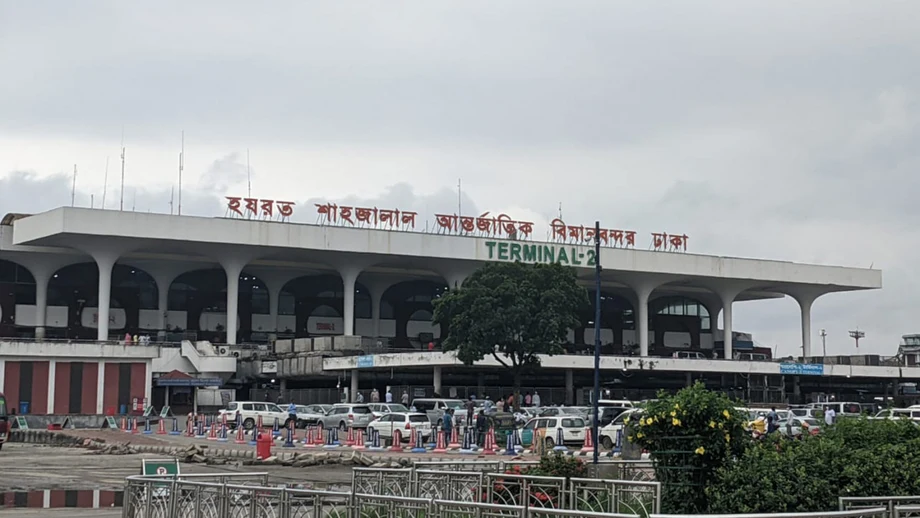
Bangladesh has cleared a concession agreement that gives a Japanese consortium the right to operate and maintain the third terminal of Hazrat Shahjalal International Airport (HSIA) in Dhaka for 15 years. The Cabinet Committee on Economic Affairs approved the proposal on 23 November 2026, according to the Finance Ministry, at a meeting in the Cabinet Division's conference room at the Bangladesh Secretariat. A concession is the right to operate an asset for a set period.
Contents
- A Japanese consortium takes over Dhaka airport's Terminal 3
- What the cabinet committee approved
- The money: upfront payment, revenue sharing and new passenger fees
- Who is in the Japanese consortium and who runs what
- Why Terminal 3 has sat unused for nearly two years
- A timeline of missed deadlines and renewed talks
- December 16 opening and the long ramp to full capacity
- The 100 kilometre airport restriction and other contested terms
- What changes for passengers, Biman and the airport's capacity
- What is not yet settled
- Key Points
The committee, chaired by Finance and Planning Minister Amir Khosru Mahmud Chowdhury, endorsed a proposal from the Ministry of Civil Aviation and Tourism. The project is titled 'Operation and Maintenance of Third Terminal at HSIA' and will run under the public private partnership (PPP) model through the Bangladesh Investment Development Authority, also called the Invest Bangladesh Authority in the proposal. The meeting was the committee's 19th in the fiscal year 2026/27 and its 38th in 2026.
Civil Aviation and Tourism Minister M Rashiduzzaman Millat said the government hopes to sign the agreement with the consortium by 30 November. Partial operations at the terminal are planned for 16 December, Victory Day, with four flights. The terminal has been nearly complete for about two years but has not handled commercial flights because the two sides could not settle management and revenue terms.
What the cabinet committee approved
The concession gives the Japanese side the right to operate, repair and maintain Terminal 3 and its allied facilities at its own expense. That includes the multilevel car park and new export and import cargo terminals. The Civil Aviation Authority of Bangladesh (CAAB) keeps control of airside operations: runways, taxiways, aprons, air traffic control, airport fire and rescue, aviation security and screening. The government will manage immigration control, customs checks and health checks.
The proposal from the Ministry of Civil Aviation and Tourism was submitted under the public private partnership model. Invest Bangladesh scrutinised the Japanese company's financial proposal and completed negotiations. The draft concession agreement was vetted by the Legislative and Parliamentary Affairs Division under the Ministry of Law, Justice and Parliamentary Affairs. It was finalised after taking views from the Finance Division and the National Board of Revenue.
Under the terms, the concession period is 15 years. The government will receive an upfront payment of US$8.1 million, equivalent to around Tk100 crore. It will also receive a share of revenue from passenger and cargo handling. For passenger handling, the government gets either 27 percent of total revenue or $2.1 per passenger. For cargo, it gets either 27 percent of total revenue or $11.5 per tonne. The embarkation fee at Terminal 3 is set at $12.50 per departing international passenger.
The agreement also sets out roles for Biman Bangladesh Airlines. Biman will carry out up to 50 percent of the ground handling activities for international airlines, under the oversight of the Japanese consortium. The consortium will be responsible for appointing a second ground handler for the terminal.
The money: upfront payment, revenue sharing and new passenger fees
The upfront payment of $8.1 million is small next to the project's cost. The expansion project was approved on 24 October 2017 at Tk13,610 crore and revised on 29 September to Tk22,213.09 crore. A CAAB estimate put the cost at Tk21,398 crore. The upfront payment represents about 0.45 percent of the project's estimated cost of more than Tk22,213 crore, according to the Finance Ministry statement.
Revenue sharing was the hardest part of the talks. Civil Aviation and Tourism Minister Afroza Khanam said in July that the Japanese side would get 73 percent of the terminal's revenue and Bangladesh 27 percent. The previous government had agreed to a 15 percent revenue share for Bangladesh, and the current administration raised it to 27 percent through negotiations, according to Civil Aviation and Tourism Minister M Rashiduzzaman Millat.
Passengers will pay more to leave the country from Terminal 3. An embarkation fee is a charge added to the price of a departing ticket. The fee there is $12.50, which is around Tk1,550 at an exchange rate of 124 taka per dollar. The existing fee is Tk500, or about $4. For other terminals at HSIA and other airports, CAAB has proposed replacing the Tk500 international fee with a $6 charge per departing passenger. The domestic embarkation fee would rise from Tk25 to Tk100. These charges are added to ticket prices with other taxes and fees.
Who is in the Japanese consortium and who runs what
The consortium is led by Sumitomo Corporation and includes Japan Airport Terminal Company, Nippon Koei and Narita International Airport Corporation. An earlier CAAB statement listed Sojitz Corporation in place of Nippon Koei. An earlier CAAB description included a broader group of six Japanese organizations, including two public bodies, the Ministry of Land, Infrastructure, Transport and Tourism and the Japan International Cooperation Agency (JICA). JICA is Japan's overseas development aid agency.
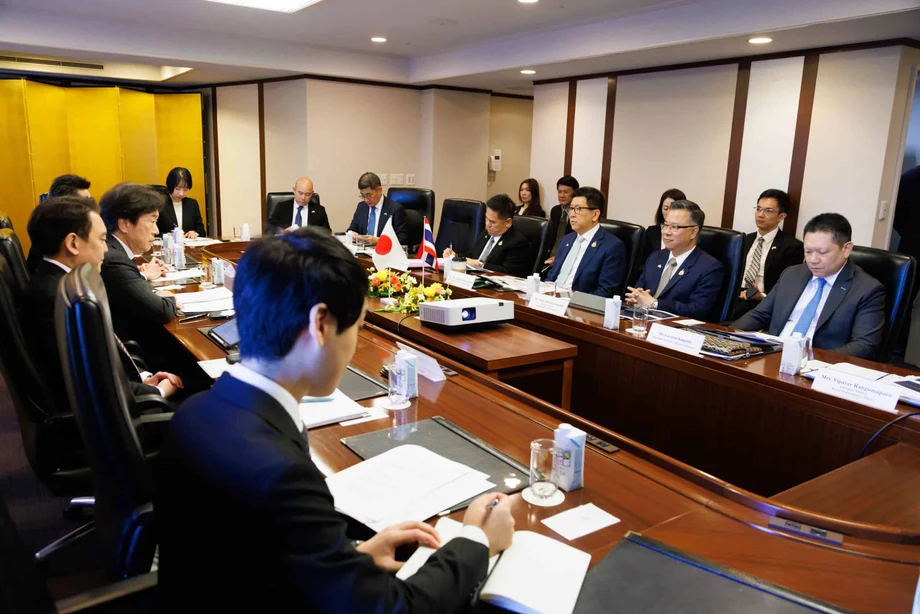
The proposal describes the Japanese side as a working group under the Invest Bangladesh Authority, while the operator is a specialized company formed by the consortium. The operating company will take over the terminal within 15 days after the agreement is signed, according to the final draft. The operational period commencement date, or OPCD, is set for eight months after the handover. At that point, the consortium will begin commercial operations with about 25 percent of flights using Terminal 3. The capacity milestone date is 14 months after the handover, when 100 percent of international flights would be handled at the terminal.
Under PPP rules, the consortium had up to 42 days to respond to the Request for Proposal. CAAB officials said preparations could take six to eight months after signing before commercial operations. The concessionaire will collect embarkation fees, passenger boarding bridge fees and rentals from shops, lounges, multilevel car parks and advertisements.
CAAB Chairman Mohammad Mostafa Mahmood said the authority would hand over the terminal soon after signing. 'So soon after the agreement signed, CAAB will hand over the terminal to the Japanese side as all preparations for it have been going on,' he said. He also said the government wanted the national carrier, Biman Bangladesh Airlines, to operate the inaugural flights because of the country's special occasion.
Why Terminal 3 has sat unused for nearly two years
Construction of Terminal 3 is more than 99 percent complete. The terminal covers 542,000 square metres, with a passenger terminal floor area of more than 226,000 square metres, a 5,900 square metre VVIP compound, a 41,200 square metre cargo building and a multilevel car park with a tunnel. The project was built with JICA support. Construction was completed in 2024, but commercial operations could not start without an operator.
The delay lasted about two years. CAAB officials said the terminal remained idle for around 23 months because of disagreements over management arrangements and revenue sharing. An earlier CAAB statement put the idle period at about 18 months. The terminal had a soft launch on 7 October 2023, before the 12th national election, when about 90 percent of construction was done. The building is now fully ready, but no operator meant no commercial flights.
The deadlock involved more than money. Four disputed conditions were accepted by Bangladesh: revenue sharing, Biman Bangladesh Airlines' contractual standing, liability for changes in law, and liability for construction defects. CAAB had objected to those conditions, but the ministry accepted the Japanese side's position. The government says the deal protects national interests and will bring international standard management to the airport.
A timeline of missed deadlines and renewed talks
The project has moved through several deadlines. The expansion project was launched on 1 July 2016 and is scheduled to run until 30 June 2027. The Executive Committee of the National Economic Council approved it on 24 October 2017. Construction was awarded in December 2019 to a consortium of Mitsubishi Corporation, Fujita Corporation and Samsung C&T Corporation. The soft launch took place on 7 October 2023.
Talks with the Japanese consortium resumed after Prime Minister Tarique Rahman instructed authorities to restart negotiations. That led to a meeting at the Ministry of Foreign Affairs on 13 March. Bangladesh and Japan held a bilateral meeting on 3 April, but no final agreement was reached. In June, State Minister for Civil Aviation and Tourism M Rashiduzzaman Millat said the agreement would be signed by 19 July. That deadline passed, along with targets at the end of October and on 15 November.
- 13 March: Meeting at the Ministry of Foreign Affairs after the prime minister's instruction.
- 3 April: Bilateral meeting on operation and maintenance, no final agreement.
- 19 July: Earlier signing deadline announced by the state minister.
- 22 July: Tripartite meeting on the terminal.
- 31 July: Bid submission date announced by the CAAB chairman.
- 25 August: Japanese side submitted its proposal with a 27 percent revenue share offer.
- 29 September: Project cost revised to Tk22,213.09 crore.
- 10 November: CAAB board approved the draft agreement.
- 23 November: Cabinet committee approved the concession and trial operations began.
- 30 November: Target date for signing the agreement.
- 16 December: Planned partial opening with four flights.
CAAB Chairman Air Vice Marshal Md Mafidur Rahman said in an earlier round that discussions had covered the main terms. 'We've been in discussions with them for about a month now. We've already sent them the Request for Proposal and the concession agreement. We've also finished discussing the key terms with them,' he said. He said the agreement was in its final stages and that the terminal could be operational within five to six months after signing if plans held.
December 16 opening and the long ramp to full capacity
Partial operations are planned to start on 16 December 2026, Victory Day. The date marks Bangladesh's victory in the 1971 liberation war. The first phase will handle four flights. Biman Bangladesh Airlines is scheduled to operate the first flight, and Singapore Airlines and other carriers will be included in the initial operations. The inaugural schedule involves two departures and two arrivals, with routes from Malaysia and Dubai, and Bangkok and Singapore.
The terminal will not jump to full capacity. Minister M Rashiduzzaman Millat said the terminal is initially expected to operate at 25 percent capacity, but the consortium could not reach that level immediately. The government therefore decided to start with four flights and add more gradually. Operations at full scale could take up to 14 months from 16 December, he said. The agreement sets the capacity milestone at 14 months after handover, when all international flights would move to Terminal 3.
The existing international terminal will remain available. It could continue handling international flights during the next 14 months. The government plans to shift existing international airlines to the new terminal. The old terminal could later be used for domestic flights, Hajj flights and other airlines, depending on capacity and operational needs. The two sides will discuss alternative uses at a later stage.
The 100 kilometre airport restriction and other contested terms
The concession includes a condition that no new airport can be operated within a radius of 100 kilometres from Terminal 3 for 15 years. Minister M Rashiduzzaman Millat said a feasibility study found no need for another airport in the area during that period. He also said building and opening a new airport generally takes 10 to 15 years, so the restriction is not a major concern at present.
Other terms have drawn scrutiny. There was no alternative bidder at the table, which narrowed Bangladesh's options. The government's position is that it negotiated to protect national interests and that the Japanese consortium will bring international standards. The four disputed conditions accepted by Bangladesh covered revenue sharing, Biman's contractual standing, liability for law changes and construction defects.
Biman's role is one of the sensitive points. The national carrier will handle up to half of international airlines' ground handling, but it will do so under the Japanese consortium's oversight. The consortium will appoint a second ground handler. That arrangement keeps Biman in the terminal's operations while giving the operator control over the ground handling system.
What changes for passengers, Biman and the airport's capacity
Once Terminal 3 is fully operational, HSIA's annual passenger capacity is expected to rise from around 8 million to between 16 million and 22 million. CAAB officials said the terminal will be able to handle an additional 12 million to 16 million passengers each year. The airport's passenger limit was declared saturated in 2020, when it was handling about 8 million passengers a year. A CAAB statement put the passenger capacity at more than 24 million.
Cargo capacity will also grow. CAAB officials said cargo handling will increase by about 500,000 tonnes from 250,000 tonnes annually. A CAAB statement put the current cargo capacity at 200,000 tonnes. Another CAAB statement put the cargo design capacity at nearly 900,000 tonnes. The terminal is meant to support Bangladesh's ambition to become a regional aviation and logistics hub. For passengers, the main change will be a larger terminal and higher embarkation fees.
The airport will keep its old terminals. The government plans to move international airlines to Terminal 3 as capacity grows. The old terminal could take domestic flights, Hajj flights or other airlines. Cox's Bazar International Airport is also preparing to open. The minister said preparations are complete and the inauguration will take place after a suitable date is received from the prime minister. It will not be inaugurated on 1 December.
What is not yet settled
The agreement had not been signed as of the cabinet approval on 23 November. The target is 30 November, but the government has not said the target is guaranteed. The exact lower revenue share the operator will pay during partial operations has not been disclosed, nor has the period for which that lower rate will apply. The full operations date depends on the handover and the milestone of 14 months.
Several details remain open. It is not yet known how many flights will be added after the first four or when. No final date has been given for when all international airlines will move to Terminal 3. The use of the old international terminal will be discussed later. The date for Cox's Bazar airport's inauguration depends on the prime minister's schedule. The concession's effect on ticket prices will depend on how airlines pass on the new embarkation fees and other charges.
Key Points
- Bangladesh's Cabinet Committee on Economic Affairs approved a concession of 15 years for a Japanese consortium to operate and maintain Terminal 3 at Hazrat Shahjalal International Airport.
- The consortium is led by Sumitomo Corporation and includes Japan Airport Terminal Company, Nippon Koei and Narita International Airport Corporation.
- The government will receive $8.1 million upfront, about Tk100 crore, plus 27 percent of revenue or fixed per passenger and per tonne fees.
- The embarkation fee at Terminal 3 will be $12.50 per departing international passenger, around Tk1,550, compared with the current Tk500.
- Signing is targeted for 30 November 2026, with partial operations planned for 16 December 2026, Victory Day, starting with four flights.
- Operations at full scale could take up to 14 months, with the capacity milestone set 14 months after handover.
- Biman Bangladesh Airlines will handle up to 50 percent of international airlines' ground handling under the consortium's oversight.
- The deal bars new airports within a radius of 100 kilometres for 15 years, a condition the government says a feasibility study supports.
- Passenger capacity is expected to rise from about 8 million to between 16 million and 22 million a year, and cargo capacity by about 500,000 tonnes from 250,000 tonnes.