Bangladesh Economy Faces Crucial Turning Point Amid Revenue Shortfalls
Bangladesh stands at a critical economic crossroads as structural challenges constrain growth across multiple sectors. The economy has experienced a slowdown since 2023, driven by a combination of weak domestic revenue collection, financial sector vulnerabilities, and deepening energy constraints. Economic growth is projected to reach 3.4 percent in fiscal year 2026 and 2027, before improving to 3.9 percent in fiscal year 2028 if reforms gain momentum. This follows an earlier recovery period and reflects persistent pressures from elevated inflation and subdued private investment. To understand gross domestic product, or GDP, readers can think of it as the total value of all goods and services produced in a country over a specific period, serving as the main yardstick for measuring economic health. When GDP growth slows down, it generally means fewer jobs are created and businesses earn less money, which directly affects everyday households.
Contents
- Bangladesh Economy Faces Crucial Turning Point Amid Revenue Shortfalls
- Public Finance Review Outlines Path to Trillion Dollar Economy
- Energy Subsidies and Fiscal Pressures Strain Public Finances
- Poverty Rates Rise While Social Safety Networks Face Gaps
- Infrastructure and Education Investments Lag Behind Peers
- Chronology of Recent Economic Developments
- What Remains Unresolved in the Reform Agenda
- At a Glance
Jean Pesme, World Bank Division Director for Bangladesh and Bhutan, emphasised the immediate need for structural changes to protect vulnerable populations and generate employment. Speaking on the necessity of prompt administrative action, he highlighted the stakes for the national workforce.
To avert economic downturn and return to an inclusive growth path, driven by private investment, fast and bold reforms are needed in banking sector, domestic revenue mobilization, and energy sector. The country needs to respond with urgency and speed up the reforms essential for protecting the poor and creating more and better jobs. The time to act is now.
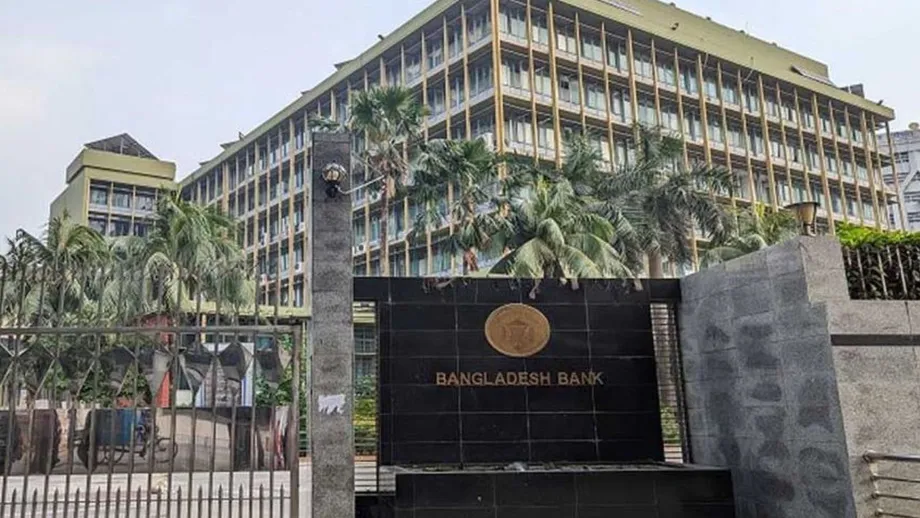
The financial sector has faced severe stress, with nonperforming loans increasing significantly. The ratio of nonperforming loans climbed to 33.2 percent in June 2026, up from 30.6 percent in December 2025. These problem loans represent money borrowed from banks that businesses or individuals have stopped repaying, which weakens the entire financial system and reduces the amount of credit available for new business ventures. Capital adequacy in aggregate fell below the regulatory minimum, leaving several financial institutions with limited loss-absorbing capacity. These banking strains follow earlier developments addressed through financial agreements, such as when Bangladesh signed a $450 million World Bank deal to protect depositors and repair banks in late 2026 to strengthen deposit protection and supervisory oversight.
Public Finance Review Outlines Path to Trillion Dollar Economy
Comprehensive fiscal reforms could raise Bangladesh's average annual economic growth to 5.7 percent during the period spanning fiscal year 2027 through fiscal year 2035, compared with 4.2 percent under a limited-reform scenario. These projections appear in the World Bank's report on Bangladesh development needs, which was released in Dhaka. Achieving these gains is essential to the government objective of transforming the nation into a trillion-dollar economy by 2034. Under full reform implementation, the total revenue-to-GDP ratio could reach 14.4 percent by fiscal year 2035, up from 8 percent in fiscal year 2025. Concurrently, the tax-to-GDP ratio could rise to 12.6 percent from 6.8 percent, creating necessary fiscal space for vital public investments in human capital and infrastructure.
Revenue mobilization in Bangladesh remains among the lowest in the world, severely constraining public spending on education and healthcare. Tax revenue stood at just 6.8 percent of GDP in fiscal year 2025, which is less than half the level observed in comparable developing economies. Administrative inefficiencies, a narrow tax base, poor compliance, and extensive tax exemptions contribute heavily to this shortfall. Revenue forgone through tax exemptions and concessions reached 6.9 percent of GDP in fiscal year 2022, nearly matching the entire amount of tax revenue collected that year. Many of these exemptions were granted through special orders without parliamentary oversight, creating policy uncertainties and economic inequalities.
Energy Subsidies and Fiscal Pressures Strain Public Finances
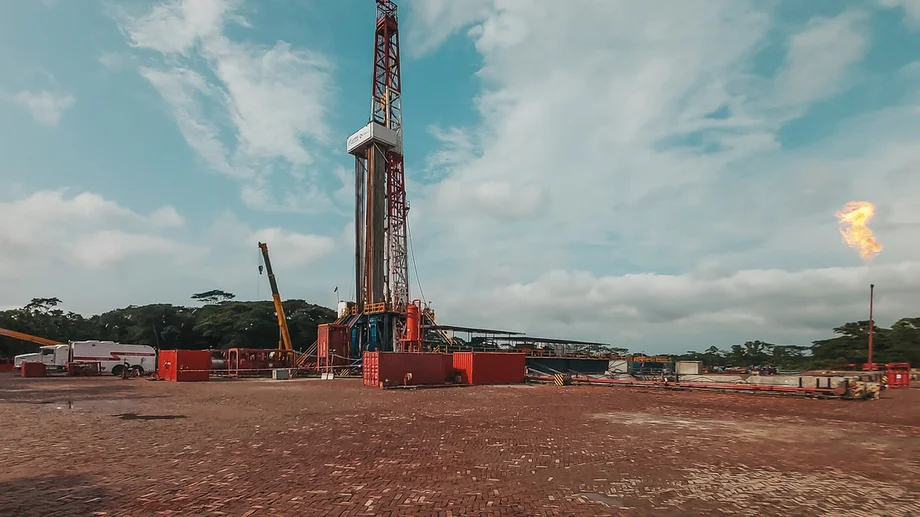
Energy subsidies have emerged as a massive drain on public finances, driven by the widening gap between electricity generation costs and selling prices, fuel shortages, ageing power plants, and excess generation capacity. Combined electricity and gas subsidies surged from 72 billion taka in fiscal year 2018 to 836 billion taka in fiscal year 2025. Of the revised fiscal year 2025 allocation, 71 percent was earmarked for the Bangladesh Power Development Board, including payments for outstanding dues and capacity charges paid to power plants whether they produce electricity or remain idle.
To alleviate this fiscal pressure, the World Bank recommends introducing an automatic, cost-reflective electricity pricing mechanism and regularly reviewing gas prices while strengthening the independence of the Bangladesh Energy Regulatory Commission. These pricing reforms must be paired with robust social protections to shield low-income households from sudden utility price spikes. Such measures connect directly with broader initiatives to expand reliable industrial infrastructure, much like how Bangladesh economic zones draw nearly $300 million and create 42,000 jobs through targeted public investments in land, roads, and utilities.
Poverty Rates Rise While Social Safety Networks Face Gaps
Economic difficulties have exacerbated poverty and inequality across the country. The national poverty rate increased to 22.5 percent in 2026, up from 18.7 percent in 2022, leaving millions of additional individuals struggling to meet basic daily needs. Job creation has stalled, and labor force participation has declined, with women experiencing disproportionate job losses. Approximately three in five working-age women remain outside the formal labor force, and 84 percent of all workers are employed in the informal sector without standard labor protections or job security.
Current social protection programs help cushion vulnerable households, but coverage gaps remain wide. About half of the poorest households currently remain entirely outside of social protection programs. The World Bank recommends implementing and scaling up the Dynamic Social Registry, an integrated digital system designed to enable evidence-based targeting and continuous enrollment. Consolidating multiple food subsidies and combining the Family Card platform with better targeting of existing cash programs could lift millions of additional people out of poverty by ensuring that limited public resources reach the households that need them most.
Infrastructure and Education Investments Lag Behind Peers
Capital spending and public investment have experienced sharp reductions as the government cuts development expenditures to contain budget deficits amid weak revenue collection. Capital spending fell from 4.9 percent of GDP in fiscal year 2022 to 2.8 percent in fiscal year 2025, representing roughly half the level seen in comparable emerging economies. Public spending on education and health remains critically low. Education spending stood at just 1.5 percent of GDP in fiscal year 2025, while health expenditure hovered at 0.3 percent of GDP, lagging far behind regional peers.
Debt-servicing costs have also risen substantially, adding further constraints to the national budget. Interest payments increased from 1.5 percent of GDP in fiscal year 2017 to an estimated 2.6 percent in fiscal year 2026. Heavy government borrowing from domestic commercial banks has crowded out private sector credit, making it harder for private businesses to borrow money for expansion. Remedying these imbalances requires shifting public expenditures toward productivity-enhancing investments, supported by transparent planning, rigorous project appraisal, and improved procurement processes.
Chronology of Recent Economic Developments
- April 2026: The World Bank releases a development update noting that Bangladesh's economic growth is slowing down amid persistent inflation and banking sector stress.
- June 2026: The nonperforming loan ratio in the banking sector climbs to 33.2 percent, highlighting deepening financial vulnerabilities.
- October 2026: Government officials negotiate multi-billion-dollar financing frameworks and emergency support packages with international financial institutions during annual meetings.
- November 2026: The World Bank and the Policy Research Institute jointly publish a comprehensive public finance review outlining pathways to achieve 5.7 percent GDP growth by fiscal year 2035.
What Remains Unresolved in the Reform Agenda
Several crucial policy details and legislative timelines remain unfinalized following the release of the public finance review. The specific schedule for submitting tax policy separation legislation to parliament has not been formally announced by lawmakers. While international lenders and government officials agree on broad policy objectives, exact implementation deadlines for individual energy tariff adjustments and subsidy replacement mechanisms have yet to be settled. Furthermore, the precise timeline for deploying the nationwide Dynamic Social Registry and expanding the Family Card platform to cover all vulnerable households remains subject to administrative capacity and upcoming budget allocations.
The broader financing framework supporting these structural adjustments also involves ongoing discussions rather than finalized disbursements. Negotiations regarding comprehensive multi-year assistance packages continue between national authorities and international development partners. The ultimate success of these reform initiatives will depend on sustained political stability, rigorous administrative execution, and the ability of policymakers to balance fiscal consolidation with effective protection for the most economically vulnerable segments of the population.
At a Glance
- Projected economic growth stands at 3.4 percent for fiscal year 2026 and 2027, with potential to reach 5.7 percent by fiscal year 2035 under full structural reforms.
- The tax-to-GDP ratio dropped to 6.8 percent in fiscal year 2025, while total revenue collection remained at 8 percent of GDP.
- Combined electricity and gas subsidies rose significantly from 72 billion taka in fiscal year 2018 to 836 billion taka in fiscal year 2025.
- The national poverty rate increased to 22.5 percent in 2026, up from 18.7 percent in 2022.
- Nonperforming loans in the banking sector increased to 33.2 percent in June 2026 from 30.6 percent in December 2025.