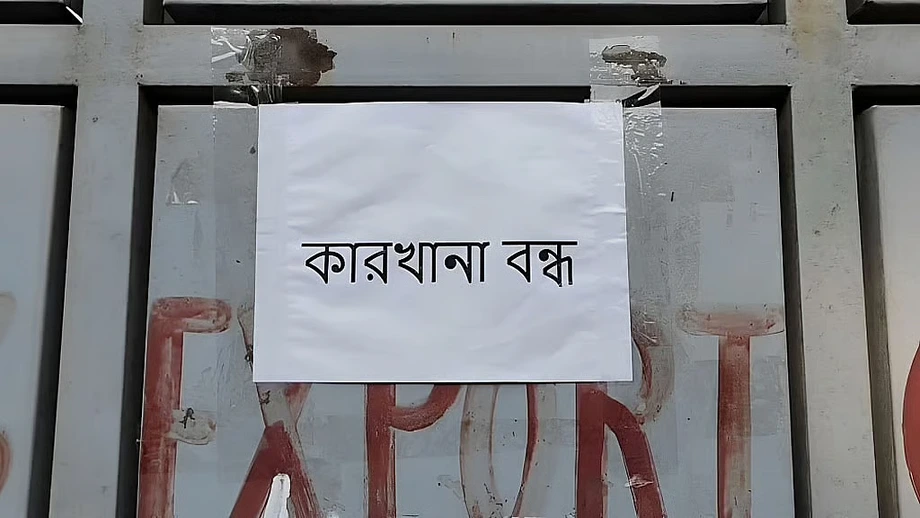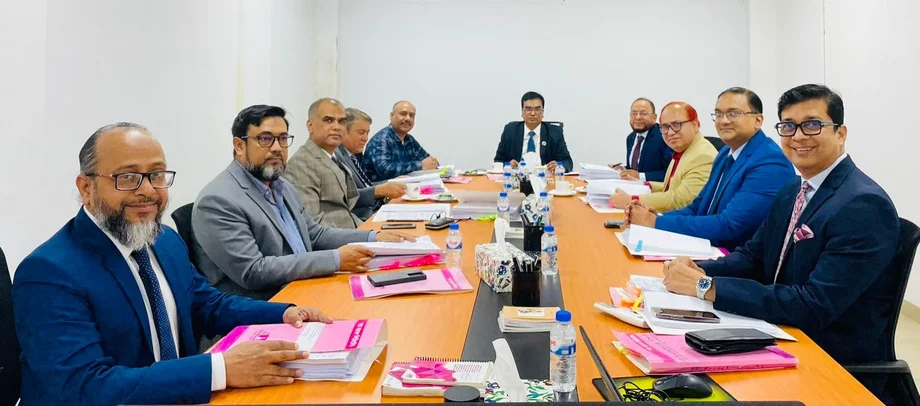
Regulator takes control of the next rescue decision
Bangladesh Bank approved bringing Padma Bank under resolution on November 17, 2026, opening the way to restructuring, a merger, fresh capital or liquidation after years of failed rescue efforts. Around Tk6,100 crore in deposits remains unpaid, while the bank's financial troubles have also restricted salary withdrawals for its 850 employees.
Contents
- Regulator takes control of the next rescue decision
- What happens to the board and management?
- How severe is the loan crisis?
- Depositors and employees face restricted access
- The law behind the resolution process
- What liquidation would involve
- How earlier public rescues fell short
- A stalled merger and a new route
- Accountability and the cost of another intervention
- Key Points
The central bank's board, chaired by Governor Md Mostaqur Rahman, instructed its Bank Resolution Department to prepare a proposal and report back at the next board meeting. Bangladesh Bank spokesperson and Executive Director Arief Hossain Khan confirmed the decision.
"The Board of Directors of Bangladesh Bank has decided to bring Padma Bank under resolution," he said.
No resolution method, repayment timetable or date for the next board meeting has been announced. The department's proposal will return to the board for approval, with an external audit and an assessment of the bank's assets expected to guide the choice.
For depositors, the immediate concern is access to money they have already placed in the bank. For the government, the decision reopens a costly problem: four banks owned by the state and the Investment Corporation of Bangladesh (ICB) have already invested public money in Padma without restoring its financial health.
Resolution gives the regulator a formal process for deciding which parts of a troubled bank can survive, how losses should be addressed and whether another institution should take over its business. Padma's case now moves from repeated attempts at recovery to a decision about its future structure.
What happens to the board and management?
Bangladesh Bank is expected to appoint an administrator to manage Padma Bank, replacing its existing board. The administrator and the resolution department will oversee operations while the bank's financial position is examined.
An external audit will review the accounts, while an asset quality assessment will examine the value and recoverability of loans and other assets. A loan recorded in the accounts may be worth much less if the borrower cannot repay or the property pledged as security cannot cover the debt.
A senior Bangladesh Bank official said the review would also seek to identify those responsible for the bank's condition. Further action would follow the audit's recommendations.
The possible outcomes extend beyond combining Padma with another lender. They include injecting fresh capital, transferring assets and liabilities, placing the business under another bank's control, or closing the institution through liquidation. Each route requires decisions about funding, deposit obligations and the losses already built into the accounts.
How severe is the loan crisis?
Bangladesh Bank figures cited for June 2026 put defaulted loans at Tk4,932 crore out of Tk5,539 crore disbursed, or about 89 percent. Another account citing central bank data gives Tk5,538 crore in classified loans, around 90 percent of outstanding lending, while the account accompanying the resolution announcement puts the default share at 92 percent.
The differences matter for calculating the funding needed, making the forthcoming asset review central to the rescue decision. Across those figures, roughly nine out of every 10 taka lent by Padma is classified as troubled.
Padma also has negative capital, a critical shortage of accessible cash and negative interest income. Capital is the cushion that absorbs losses; negative equity means recorded liabilities exceed recorded assets. Liquidity is the money available to meet immediate payments, including withdrawals.
A presentation using June 2025 figures recorded negative equity of Tk4,533 crore, deposits of Tk6,347 crore and loans of Tk5,598 crore. Of those loans, Tk5,131 crore, or 91.66 percent, were nonperforming. The presentation also recorded an operating loss of Tk341.42 crore and Tk683 crore payable to Bangladesh Bank, including penalties and shortfalls against required reserves.
Padma's loan problems are much deeper than the national average. Bangladesh Bank's June 2026 figures, discussed during the governor's bank recovery funding proposal, put the banking sector's default ratio at 32.78 percent. Padma's reported range of 89 to 92 percent is about 2.7 to 2.8 times that level.
Depositors and employees face restricted access
Thousands of depositors have struggled to withdraw savings, and the bank has failed to repay customers for years despite financial support. Its unpaid deposits total around Tk6,100 crore, equivalent to Tk61 billion. One crore equals 10 million taka.
Public institutions are among the large depositors waiting for repayment. The amounts owed include:
- Tk722 crore to the Bangladesh Climate Change Trust Fund.
- Tk182 crore to Chittagong Port Authority.
- Tk153 crore to ICB.
- Tk109 crore to Bangladesh Jiban Bima Corporation.
- Tk80 crore to the Bangladesh Infrastructure Finance Fund.
- Tk68 crore to Mongla Port Authority.
- Tk58 crore to Titas Gas Transmission & Distribution.
Those seven amounts total Tk1,372 crore, about 22.5 percent of the reported unpaid deposits. The obligations connect Padma's financial problems to institutions responsible for climate funding, ports, insurance, infrastructure and energy.
Padma's 850 employees have been receiving salary credits in their accounts since August 2025 but have been allowed to withdraw the money only in phases. A salary appearing in an account therefore provides limited help when the employee needs the full amount for household bills.
The bank continues to operate from its Finance Square head office in Gulshan-2, Dhaka, at a reported rent of Tk60 lakh a month. That equals Tk7.2 crore a year, adding a continuing expense while customers wait for their money.
The law behind the resolution process
The November decision is being taken under the Bank Resolution Act, 2026. The government's published 2025 resolution ordinance, issued on May 9, 2025, explicitly states that it was repealed by the 2026 act, Act No. 88 of 2026.
The earlier ordinance set out the framework that preceded the current law. Its stated purposes included maintaining essential banking services, protecting depositors, limiting calls on public funds, preserving asset values and maintaining confidence in the financial system.
It identified financial conditions relevant to a bank's viability, including failures to meet capital or liquidity requirements, insolvency and inability to pay depositors. It also provided for transfers of shares, assets and liabilities, temporary bridge banks, capital increases, and reductions or conversion of eligible liabilities.
The options described for Padma under the 2026 act include recapitalisation and bail-ins. Recapitalisation means adding capital to absorb losses and support the bank. A bail-in uses eligible claims against a bank to absorb losses, for example by reducing them or converting them into shares. The treatment of particular claims depends on the governing law and the approved plan.
What liquidation would involve
Liquidation would mean closing the bank's business, realising its assets and distributing available money according to the legal order of claims. A merger or transfer would instead seek to move some or all of the business into another institution.
The government's published former liquidation chapter shows how the repealed 2025 ordinance structured that process. It allowed Bangladesh Bank to initiate liquidation where resolution tools could not achieve the required objectives, where assets and liabilities had been partly transferred, or where effective resolution was no longer feasible.
Under that former framework, the central bank would cancel the licence and apply to the High Court Division. The court was required to set a hearing date within five working days of the application and issue its order within 30 working days. A liquidator would then prepare a detailed plan within three months.
That plan had to address asset sales, recovery of claims, unlawful conduct by directors or officers, compensation efforts, employment arrangements and payments to creditors. Those provisions belong to the repealed ordinance; Padma's approved process will proceed under the 2026 act.
How earlier public rescues fell short
Padma began operations as Farmers Bank in 2013 under the chairmanship of Muhiuddin Khan Alamgir, a former home minister and Awami League leader. Questions arose over offices and recruitment before regulatory approval, followed by allegations of serious lending irregularities.
Bangladesh Bank detected major irregularities in 2015 and 2016, with allegations that more than Tk3,500 crore had been siphoned off within three years of establishment. Alamgir resigned in 2017 as the bank's condition deteriorated.
In 2018, Sonali, Janata, Agrani and Rupali banks, together with ICB, invested Tk715 crore for an initial 60 percent stake. Their combined holding was later put at around 68 percent. They also supplied support through subordinated bonds and fixed deposits, with the additional investment reported at around Tk1,000 crore.
Chowdhury Nafeez Sarafat became chairman in January 2018. Farmers Bank was renamed Padma Bank in 2019 in an effort to restore confidence, but losses continued. Sarafat resigned in January 2024, citing health reasons.
By September 2025, Padma was seeking another Tk3,500 crore in liquidity support. Md Shawkat Ali Khan, managing director of Sonali Bank and chairman of Padma as a strategic investor, said at the time that the bank was receiving no new deposits and could not repay earlier depositors. Loan recoveries were being used to meet salaries and rent.
A stalled merger and a new route
A March 2024 plan would have merged Padma with EXIM Bank. The lenders signed a memorandum of understanding at Bangladesh Bank's headquarters, but the process was halted after the fall of the Awami League government.
The principal developments have unfolded over more than a decade:
- 2013: Farmers Bank was established.
- 2017: Muhiuddin Khan Alamgir resigned as chairman amid the financial crisis.
- 2018: Four banks owned by the state and ICB provided Tk715 crore in equity support; Sarafat became chairman.
- 2019: Farmers Bank was renamed Padma Bank.
- March 2024: Padma and EXIM Bank signed a merger memorandum that was later halted.
- October 2025: Bangladesh Bank's Department of Off-site Supervision recommended resolution under the prompt corrective action framework.
- November 17, 2026: The central bank's board approved bringing Padma under resolution.
Prompt corrective action is a regulatory process requiring a bank and its board to address deteriorating finances within a reasonable period. The October 2025 recommendation moved Padma's case toward the department responsible for formal resolution.
Bangladesh has already used resolution to combine five troubled lenders into Sammilito Islami Bank, with the government taking full ownership through investment. Padma's next step will depend on its own asset review, funding needs and the proposal submitted to the central bank's board.
Accountability and the cost of another intervention
The planned audit comes alongside a criminal investigation involving former chairman Sarafat. In November 2025, the Criminal Investigation Department filed a money laundering case against him, family members and an associate, alleging laundering of more than Tk1,613 crore.
The CID alleged that money from mutual funds managed by Race Asset Management was invested in Farmers Bank to help the accused obtain board positions. Investigators also alleged that funds moved through entities and investments for personal benefit. Those accusations are part of the criminal case.
Padma's resolution must address both the recovery of money and the cost of keeping essential obligations funded. Public institutions already hold most of its shares, and another capital injection would require a decision about who supplies the money and how much can realistically be recovered from borrowers and other assets.
The next concrete step is the resolution department's return to the Bangladesh Bank board. Its proposal, supported by the external audit and asset assessment, will determine whether Padma continues in a changed form, moves under another bank or enters liquidation.
Key Points
- Bangladesh Bank approved Padma Bank's entry into resolution on November 17, 2026.
- The resolution department must prepare a proposal for the board's next meeting.
- Restructuring, fresh capital, asset transfers, a merger and liquidation remain possible.
- Around Tk6,100 crore in deposits remains unpaid, and employees face phased salary withdrawals.
- Reported default ratios range from 89 to 92 percent, with an external asset review expected.
- Earlier public investment and the planned EXIM Bank merger failed to produce a lasting recovery.