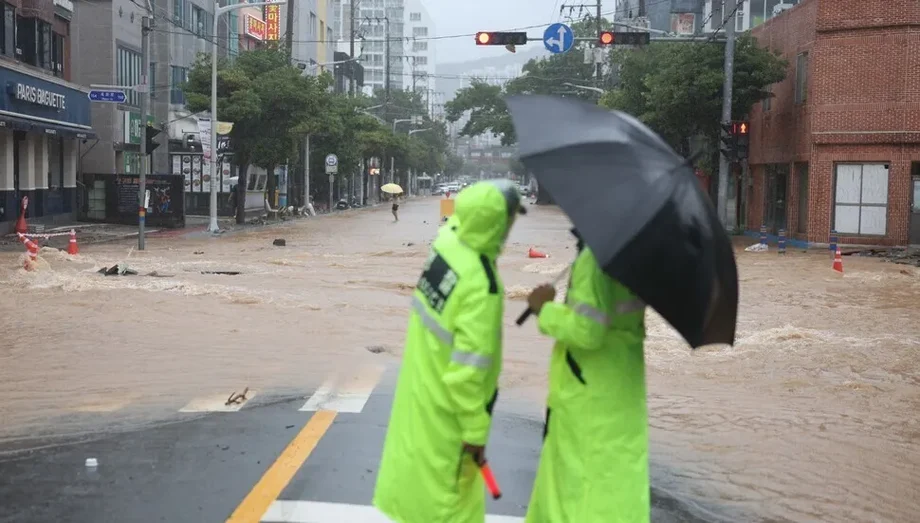
Annual typhoon losses could more than double by 2100
South Korea's average annual typhoon damage could rise from about 540 billion won today to 1.13 trillion won by 2100 if cuts in greenhouse gas emissions are delayed, according to a report released on November 17, 2026, by climate and energy research organisation NEXT. The main reason is heavier rain, even as the number of typhoons is expected to fall.
Contents
- Annual typhoon losses could more than double by 2100
- Why a model built around wind missed Korean losses
- Fewer storms, but more rain from each one
- How large could the losses become?
- Coastal exposure meets a costly autumn pattern
- Factories and electricity systems face overlapping risks
- Government plans move toward future rainfall
- The next milestones for flood protection
- Connecting climate projections to financial decisions
- Key Points
The report, whose title translates as Fewer Typhoons, Greater Damage, finds that rainfall is more closely connected to South Korea's recorded typhoon losses than wind speed. Its findings put drainage, river management and flood protection at the centre of preparations for future storms.
The financial stakes extend beyond the average year. Under a scenario involving delayed emissions reductions, damage from an extreme typhoon with an estimated annual occurrence probability of 1% could rise from roughly 4 trillion won today to 14 trillion won. Such a storm is often described as a once in a century event, although that probability applies each year.
The government announced a related response on the same day: plans to update dam design standards using rainfall projections through 2100, rather than relying mainly on historical weather.
NEXT's calculations hold the assets exposed to storms and the level of disaster protection constant. They leave out future growth in asset values, changes in typhoon tracks, and damage from strong winds and storm surges. The estimates describe how changing storm frequency and rainfall could affect today's exposure and defences.
Why a model built around wind missed Korean losses
NEXT's researchers examined 38 typhoons between 1998 and 2020. They found that damage amounts were more closely associated with daily rainfall than with the highest daily wind speed.
That finding mattered because the standard version of CLIMADA, the international climate risk modelling tool used in the analysis, relied on a relationship between wind and damage developed from United States hurricane data. Applied directly to South Korea, it produced average annual losses equal to only 12% of the recorded amount.
The researchers replaced that relationship with one based on rainfall and adjusted it against damage records in South Korea's disaster yearbooks. In simple terms, they changed the model's rule for turning storm conditions into a financial loss estimate so it better matched Korean experience.
An earlier building loss study, published in the academic journal Sustainability in 2020, also examined how changes in typhoon intensity and frequency could affect South Korea. It used a Korean typhoon vulnerability function employed by insurers, reinsurers and catastrophe modelling businesses. A vulnerability function estimates how much damage a building or other asset might suffer at a given level of hazard.
The two studies address related financial risks at different levels. The 2020 research focused on buildings, while NEXT's analysis uses national disaster records to capture the strong connection between typhoon rain and recorded losses.
Fewer storms, but more rain from each one
The climate assumptions used by NEXT draw on a World Meteorological Organization task team assessment of tropical cyclones and climate change. At 2°C of global warming above the level before industrialisation, the central estimate puts North Pacific typhoon frequency 10.3% lower.
The uncertainty range stretches from a decrease of 30.4% to an increase of 17.2%. Storm numbers therefore have a less certain direction than rainfall intensity.
Typhoon rainfall intensity rises by 16.5% in the central estimate. Even the lower end of its uncertainty range shows an increase of 6.3%. Heavier rain is the consistent signal across that range.
NEXT found that a calculation considering only declining storm frequency produced falling losses as warming increased. Adding stronger rainfall reversed the result: the damage caused by wetter storms outweighed the benefit of fewer storms.
The International Energy Agency's Korea climate resilience assessment describes a broader shift toward wetter conditions and more extreme rainfall, especially in summer. Under continued growth in emissions without mitigation, it says average annual precipitation in 2071 to 2100 could be 172.5 millimetres higher than in 1981 to 2010. That annual total provides wider context for the typhoon rainfall projections.
How large could the losses become?
NEXT's projection of 1.13 trillion won in average annual damage under delayed emissions reductions is about 2.1 times the current estimate of 540 billion won. Average annual damage spreads the losses from both quiet years and disastrous years across a long period.
The report also calculated an upper estimate that allows for the possibility of more typhoons affecting the Korean Peninsula. Under that assumption, average annual losses in 2100 reach 739.7 billion won along a carbon neutrality pathway, about 1.4 times today's level.
The corresponding estimate under delayed emissions reductions is 1.85 trillion won, about 3.4 times today's level. Comparing those two upper estimates gives a difference of approximately 1.11 trillion won a year.
The extreme storm calculation shows a sharper financial shock. Damage of 14 trillion won under delayed reductions would be 3.5 times the current estimate of 4 trillion won for an event of similar rarity.
The scenarios give planners two connected tasks: prepare for larger losses over time and preserve the capacity to handle a very expensive single disaster. They also show that lower emissions reduce the scale of the projected increase, while leaving a continuing need for flood protection.
Coastal exposure meets a costly autumn pattern
South Korea's southeastern coast, southern coast and Jeju account for the largest projected losses across NEXT's scenarios. With greater greenhouse gas emissions, areas facing substantial damage extend into inland Chungcheong and Honam, as well as North Gyeongsang.
NEXT's earlier seasonal analysis helps explain why counting typhoons alone gives an incomplete picture of the financial burden. Of 236 typhoons affecting South Korea since observations began in 1951, 178 arrived in summer, from June through August, and 55 in autumn, from September through November.
Autumn storms made up about 23% of that historical total, yet accounted for 4.3887 trillion won of the 4.6363 trillion won spent on typhoon recovery during 2013 to 2022. Their share of recovery spending was approximately 95%.
Among the typhoons examined using disaster yearbook asset damage records, 72% of autumn storms caused recorded damage, compared with 47% of summer storms. Recovery spending and asset damage measure different costs, but both figures show the importance of the autumn season.
The seasonal analysis reported that autumn's share of typhoons had risen from about 20% historically to 33% in a more recent period. NEXT principal researcher Song Kang-hyun called for particular caution as climate change increases the prospect of strong autumn storms.
Warm seas supply energy to typhoons, and the sea retains summer heat into September. Autumn storms can also arrive after summer rain has already damaged infrastructure and saturated the ground, leaving communities more exposed to another downpour.
Factories and electricity systems face overlapping risks
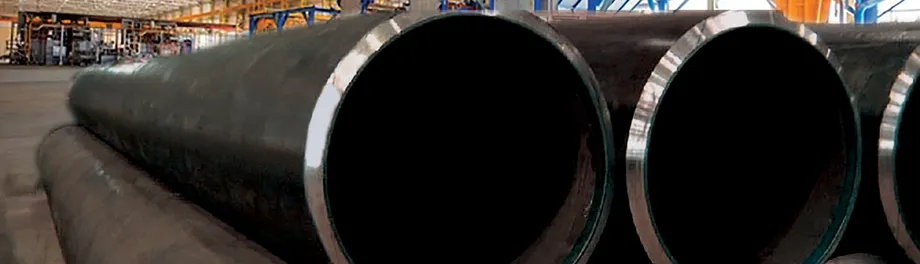
Typhoon Hinnamnor flooded POSCO's Pohang steelworks in 2022. Estimated losses involving POSCO and its suppliers reached the range of 2 trillion won, compared with the government's official damage tally of 244 billion won, roughly a tenfold difference. The figures cover different scopes of loss, showing why financial planning needs to account for industrial disruption alongside recorded disaster damage.
Electricity failures can spread disruption across homes, schools, public offices and businesses. The IEA assessment records 676 outages during three successive tropical cyclones over two weeks in August and September 2020. More than 300,000 households were affected, with restoration taking ten hours on average.
Typhoon Maysak alone left 290,000 households without electricity after damaging poles and high voltage lines. It also triggered electrical faults that halted six nuclear reactors. Haishen, which struck four days later, temporarily shut down two reactors.
Solar and wind generation also suffered during that storm season. Cloud cover reduced the sunlight available to solar panels, while winds exceeding operating limits interrupted wind generation.
Rising summer temperatures add another pressure on the grid by increasing demand for cooling. The IEA assessment describes a power system that must prepare for heavier summer demand while protecting equipment and generation against extreme weather.
Government plans move toward future rainfall
The Ministry of Climate, Energy and Environment presented its water management improvement plan to the cabinet on November 17, 2026. It contains nine tasks across infrastructure, forecasting and monitoring, and management of vulnerable areas and ageing facilities.
Dam design rainfall data previously relied on records through 2003. The planned revision will incorporate extreme rainfall observations through 2024 and projections through 2100. Design rainfall is the amount of rain engineers use to decide how much water a structure must safely handle.
The ministry's figures illustrate the difficulty of managing both water shortages and sudden floods. Nationwide summer rainfall in 2026 totalled 558 millimetres, just 76.1% of normal. Yet Geoje recorded 124.5 millimetres in one hour, exceeding its previous maximum of 104 millimetres by almost 20%.
The government also plans to create more space for floodwater by releasing water from agricultural reservoirs and dams used for power generation before heavy rain. In cities, deep rainwater tunnels near Gangnam Station and Gwanghwamun, together with an underground flood diversion channel at Dorimcheon, are scheduled for completion before the 2029 flood season.
Water supply measures accompany the flood projects. An emergency channel carrying Seomjin River water to Dongbok Dam is planned by 2029. By 2030, proposals for treated wastewater reuse would supply 330,000 tonnes a day in southern Gyeonggi and 200,000 tonnes a day for semiconductor industrial complexes in Honam.
The next milestones for flood protection
South Korea's infrastructure changes extend across several years. The timetable combines stronger construction standards with earlier warnings and controls on access to places where rapidly rising water can trap people.
- December 2025: The government removed the upper limit in embankment design standards.
- June 2026: Design standards for sewer pipes and pumping stations moved from events with recurrence intervals of 10 to 30 years to those of 30 to 50 years.
- November 17, 2026: NEXT released its typhoon loss projections, and the ministry presented its water management plan to the cabinet.
- 2027: The system recommending access restrictions at bridges and underpasses during heavy rain is scheduled to expand from 22 pilot flood forecasting locations to 223 nationwide.
- Before the 2029 flood season: The Gangnam Station and Gwanghwamun rainwater tunnels and Dorimcheon diversion channel are scheduled for completion.
- First half of 2030: Urban flood forecasting is scheduled to expand from a pilot in six Seoul districts to six metropolitan cities.
NEXT recommends carrying the same approach into river and drainage design: use expected future rainfall when setting protection standards. The government's timetable makes construction, forecasting and local access management practical tests of that approach.
Connecting climate projections to financial decisions
NEXT report coauthor and senior research fellow Myung Haena said the model could provide a common starting point for financial sector climate stress tests, disaster prevention standards and disaster budgets. A climate stress test examines how banks, insurers or other institutions might cope with losses under a specified climate scenario.
The IEA assessment identifies an earlier planning gap that helps explain the need for coordination. South Korea's third National Climate Change Adaptation Plan, covering 2021 to 2025, named industry and energy as priority areas and proposed stronger facility standards, monitoring, storage and maintenance.
The third Energy Basic Plan, covering 2019 to 2040, and the ninth Basic Plan for Electricity Supply and Demand lacked adaptation measures, according to that assessment, despite using climate scenarios to model energy demand. The gap concerned preparing assets for changing weather, alongside efforts to reduce emissions.
NEXT's findings bring those responsibilities together. Emissions reductions limit the projected rise in storm losses, while investment in drainage, electricity reliability and flood protection changes how much damage a wet typhoon can cause to a community or factory.
Key Points
- NEXT projects average annual typhoon losses of 1.13 trillion won by 2100 under delayed emissions reductions, compared with about 540 billion won today.
- Rainfall was more closely associated with Korean typhoon losses than wind speed in an analysis of 38 storms.
- An upper estimate reaches 1.85 trillion won annually if more typhoons affect the peninsula under delayed reductions.
- The southeastern and southern coasts and Jeju face the largest projected losses, with substantial risk extending inland as emissions rise.
- Autumn typhoons accounted for about 95% of typhoon recovery spending during 2013 to 2022.
- The government plans to incorporate rainfall projections through 2100 into dam design and complete major urban flood projects before the 2029 flood season.