Pakistan Accelerates Conventional Missile Testing Across Multiple Domains
Pakistan has significantly increased its missile testing activity, conducting a series of launches involving land-attack cruise missiles, ballistic weapons, anti-ship systems, and air-to-air hardware to expand its conventional strike capabilities across multiple military branches. This testing push has gathered momentum since April 2026, when the newly established Army Rocket Force Command began announcing successive weapon trials. The military's media wing, the Inter-Services Public Relations, reported that these tests involve advanced guidance technology and domestic manufacturing efforts. Analysts from international research bodies note that the expanding inventory of diverse weapon systems presents new surveillance challenges for regional observers and defense planners.
Contents
The Pakistan Navy initiated the year on January 10, 2026, with the live firing of an LY-80(N) surface-to-air missile from a Tughril-class frigate during an exercise in the North Arabian Sea. On April 16, the Navy announced the successful test of an indigenously developed ship-launched anti-ship missile, followed five days later by the air-launched Taimoor cruise missile. While the Navy described both tests as successful, it withheld detailed technical specifications and maximum range figures. These maritime trials reflect efforts to engage hostile vessels using both ship-based and airborne platforms, building on capabilities demonstrated during submarine cruise missile tests conducted in nearby waters.
The Fatah Family of Surface-to-Surface Missiles
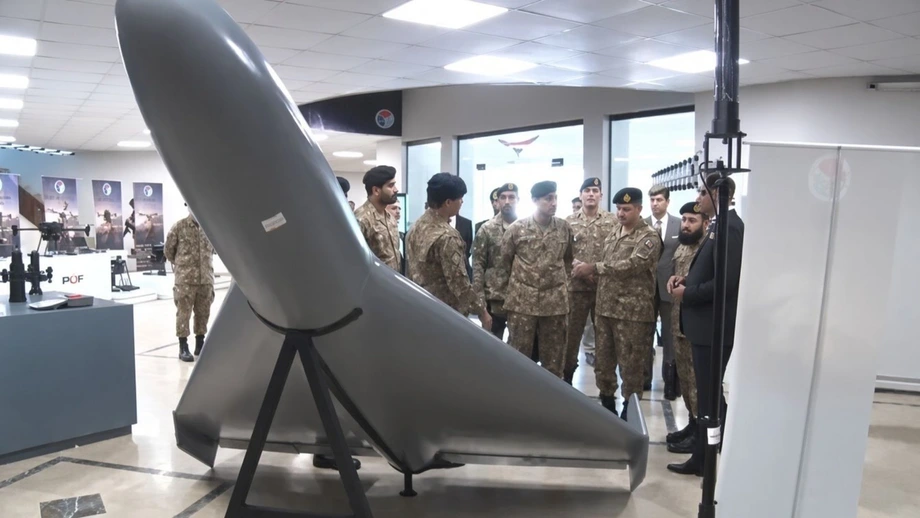
The Pakistan Army's ground-launched strike program centers on the Fatah family of surface-to-surface missiles, which are designed for precision conventional attacks over extended distances. The Fatah-1 is a 301 millimetre guided multiple launch rocket system with a range of 140 kilometres, while the Fatah-2 is a 600 millimetre ballistic missile with a baseline range of 400 kilometres. Building on these foundations, the military tested the Fatah-2 extended-range version, which features advanced avionics and manoeuvrability designed to challenge enemy missile defense systems. Military authorities reported that the extended-range variant was witnessed by the Commander of the Army Rocket Force Command, senior officers, and participating scientists and engineers.
Following the successful launch, Pakistan's President Asif Ali Zardari, Prime Minister Shehbaz Sharif, the Chief of Army Staff and Chief of Defence Forces, and the various service chiefs congratulated the technical workforce. The Fatah-4 ground-launched cruise missile was officially revealed on August 12, 2025, and underwent a training launch on September 30, 2026, as announced by the Army Rocket Force Command. According to official specifications, the Fatah-4 has a cruise speed of Mach 0.7, a warhead weight of 330 kilograms, a total mass of 1,530 kilograms, a minimum flight altitude of 50 metres, and an accuracy within five metres circular error probable. A circular error probable is a statistical measure of a weapon system's precision, defining the radius of a circle centered on the target that contains half of the landing points.
Introduction of the Fatah-3 Supersonic Cruise Missile
Pakistan announced the successful test-firing of the Fatah-3 supersonic cruise missile on November 18, 2026, adding a high-speed weapon to its land-based inventory. Military statements described the Fatah-3 as being equipped with advanced navigation and propulsion systems capable of engaging targets at long ranges at supersonic speeds. Supersonic speed means traveling faster than the speed of sound, which typically falls around 1,235 kilometres per hour at sea level. This high velocity is intended to shorten the interval between detection and impact, leaving defenders less time to classify threats and allocate interceptors.
Independent defense analysts have noted that circulating estimates place the Fatah-3 speed between Mach 2.2 and Mach 3.5, with provisional ranges estimated between 290 and 450 kilometres. Published specification tables suggest an estimated weight of roughly 2,000 to 2,200 kilograms, a length of about 8.3 metres, a diameter of approximately 375 millimetres, and a warhead weight of around 240 kilograms. A Belgian outlet reported that the missile uses ramjet propulsion, an air-breathing jet engine type that uses the forward motion of the vehicle to compress incoming air without a rotating compressor. Analysts compare the strategic intent to regional systems like India's BrahMos, although verifiable operational data and production scales remain undisclosed by military authorities.
Air Force Capabilities and Domestic Production Push
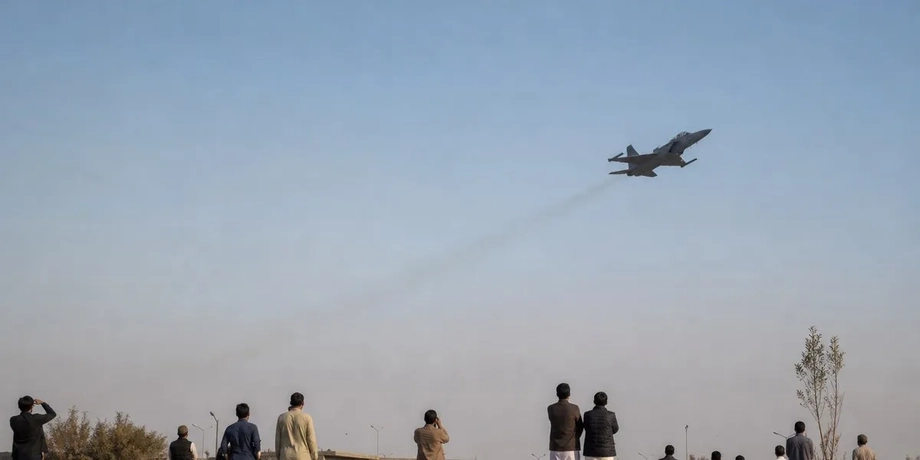
The Pakistan Air Force tested its first domestically developed air-to-air missile, named Fa'az, on November 3, 2026, as detailed in the coverage of the Fa'az test. Released footage showed the missile being launched from a JF-17 fighter, connecting the new weapon with an aircraft already operated by the air force. The Inter-Services Public Relations described the weapon as an indigenous system equipped with a state-of-the-art terminal guidance system to engage enemy aerial targets at longer ranges. Terminal guidance refers to the final phase of a missile's flight, during which onboard sensors direct the weapon precisely toward its moving target.
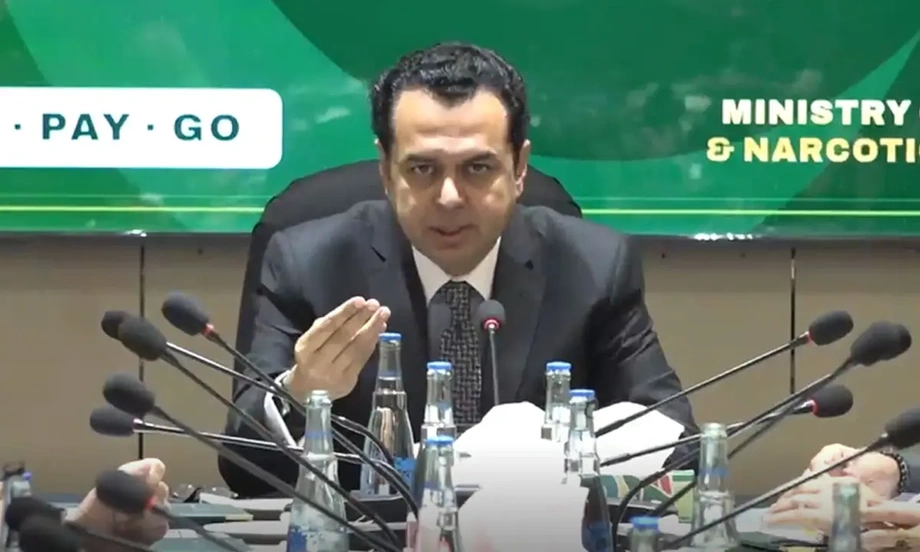
Interior Minister Mohsin Naqvi posted a statement on X calling the successful Fatah-3 test a major advance in the defense sector, echoing congratulations offered by national leaders. These domestic developments follow a broader pattern of military modernization, including the testing of the Fatah-II ER missile, which demonstrated similar claims regarding manoeuvrability and enhanced reach. Defense analysts point out that while flight tests indicate technological progress, establishing an operational capability requires sustained maintenance, secure communications, and verifiable deployment readiness under field conditions.
Strategic Implications and Verification Challenges
The rapid cadence of missile tests has drawn attention from international research organizations regarding regional stability and escalation control. The International Institute for Strategic Studies highlighted infrastructure associated with solid-fuel rocket motor development in a February 2025 assessment, while a March 2026 United States Congressional Research Service report examined longer-range programs like Shaheen-III and Ababeel. Furthermore, the James Martin Center for Nonproliferation Studies and the Nuclear Threat Initiative have noted that existing bilateral missile-test notification agreements do not cover cruise missile launches, complicating crisis management between India and Pakistan.
Skepticism persists among independent observers due to the reliance on military-released footage and the absence of independent tracking data or technical disclosures. Past incidents, such as disputed claims surrounding naval and submarine tests, illustrate the contested nature of the regional information space where rival claims are frequently exchanged. Without verified deployment data, production rates, and operational reliability figures, defense analysts continue to evaluate these weapons as developmental programs rather than fully integrated service capabilities.
The Essentials
- Pakistan test-fired the Fatah-3 supersonic cruise missile on November 18, 2026, featuring advanced navigation and propulsion systems.
- The Fatah-4 ground-launched cruise missile was tested on September 30, 2026, boasting a 750-kilometre range and a cruise speed of Mach 0.7.
- The Pakistan Air Force successfully tested the homegrown Fa'az air-to-air missile from a JF-17 fighter on November 3, 2026.
- International institutes have highlighted infrastructure developments and raised questions regarding escalation control and the absence of cruise missile notification pacts.
- Official claims concerning extended ranges, hypersonic performance, and missile defense penetration remain unverified by independent technical data.