Two deadlines will change how Islamabad pays
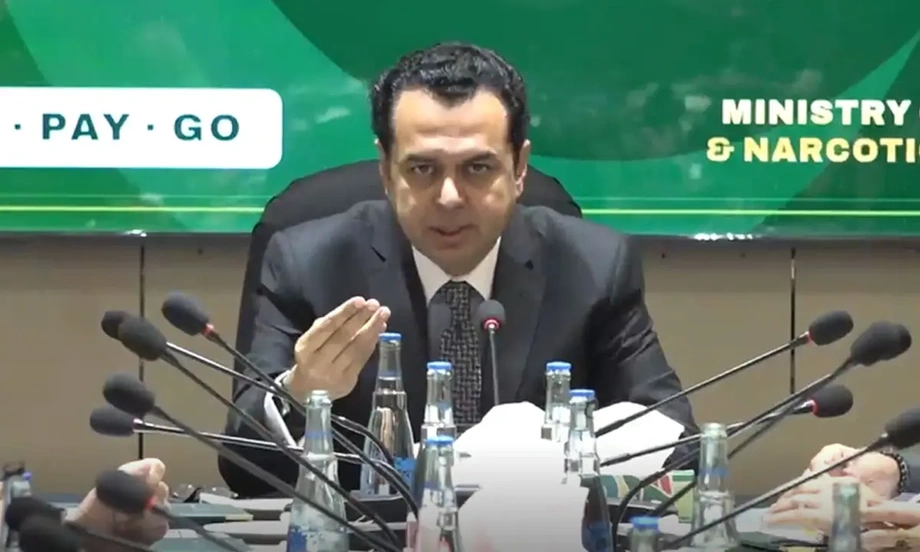
Islamabad plans to connect every merchant to digital payments by December 31, 2026, with an earlier deadline for government counters: departments of the Islamabad Capital Territory administration and the Capital Development Authority will stop accepting cash after November 30. Around 26,000 merchants in the capital have already joined the digital payment system, according to Minister of State for Interior Talal Chaudhry.
Contents
- Two deadlines will change how Islamabad pays
- What changes at offices and shops?
- The dates driving the transition
- How Raast QR connects the changes
- Who pays the cost of accepting digital money?
- Merchant numbers have quadrupled nationally
- Officials want to measure use, value and reach
- Internet access and complaints need attention
- Banks and public agencies share the next tasks
- Key Points
Chaudhry announced the targets while chairing a meeting on November 13 attended by CDA Chairman Sohail Ashraf, banking representatives and other officials. The government wants Islamabad to become Pakistan's first fully cashless city, extending payment facilities from street vendors to major business centres.
The capital's plan sits within a wider national campaign that officials say has increased the number of active merchants accepting digital payments from 500,000 to 2.03 million. Raast QR payment codes now appear on more than 45 million gas and electricity bills, while all National Database and Registration Authority centres have been equipped to accept payments through Raast QR.
Residents face two distinct changes. The November deadline changes the payment methods accepted at ICT and CDA departments. The December target concerns bringing all merchants into the digital system. Together, the measures seek to make electronic payments a routine option across public services and everyday shopping.
Chaudhry said the programme was being implemented on instructions from Prime Minister Shehbaz Sharif and Interior Minister Mohsin Naqvi. He also relayed Naqvi's ambition for Islamabad to become the world's first cashless capital, extending the government's stated goal beyond its domestic rollout.
What changes at offices and shops?
ICT administration and CDA departments have the clearest operational instruction: stop taking cash after November 30. Someone paying those departments will therefore need an accepted digital payment method once the change takes effect.
Chaudhry, the minister responsible for announcing the capital's deadlines, described the instruction in direct terms:
After Nov 30, no cash payment will be accepted in any department of the Islamabad Capital Territory administration and the Capital Development Authority (CDA).
For businesses, the announced task is to connect every merchant by December 31. The government has not published the total number of merchants it needs to reach, the detailed payment arrangements at each department, or the penalties and exceptions that might accompany implementation.
Banking representatives assured the meeting of their cooperation. Their involvement matters because merchants need functioning payment services, while customers need a reliable way to send money and receive confirmation that a bill or purchase has been paid.
The dates driving the transition
The Islamabad deadlines follow national decisions on government payments, merchant charges and access to digital services. The main dates set out by officials are:
- November 6: Prime Minister Shehbaz Sharif chaired a Cashless Pakistan meeting and called for a national roadmap with specific targets and timelines.
- November 13, 2026: Chaudhry chaired the Islamabad meeting announcing the capital's deadlines.
- November 15 and 16: Officials told the prime minister that cheque payments from Asaan Assignment Accounts would be discontinued from November 15, with all payments from those accounts processed through Raast nationwide from November 16.
- After November 30: ICT administration and CDA departments are to stop accepting cash.
- December 31: Islamabad aims to have all merchants connected to the cashless system.
For the broader government programme, officials also told the prime minister that payments in most federal and provincial institutions were expected to be fully digital by December 2026. Islamabad's merchant target therefore runs alongside a wider effort to change how public institutions receive and make payments.
Shehbaz instructed all federal ministries and government institutions to ensure full implementation of the cashless economy plan.
How Raast QR connects the changes
Raast, Pakistan's instant payment system, is central to the programme. A QR code is a square pattern that a compatible banking or payment application can scan to obtain payment details. For a customer, it can replace typing a recipient's account information before making a transfer.
Officials say Raast QR codes have been placed on all gas and electricity bills, covering more than 45 million bills. Customers can use those codes to pay digitally from home. Shehbaz directed authorities to run a media campaign encouraging consumers to use them.
NADRA centres have also been equipped with Raast QR facilities, extending the same payment approach to identity services. Officials told the prime minister that all Benazir Income Support Programme payments were being made through digital wallets, electronic accounts used to receive and manage money.
These measures put digital payments into several recurring activities: buying goods, paying utility bills, obtaining government services and receiving public support. Islamabad's merchant expansion would add more places where residents can spend money electronically, alongside the existing channels for bills and government transactions.
Who pays the cost of accepting digital money?
The State Bank of Pakistan has been instructed to prepare a working paper for approval of a Raast QR Merchant Discount Rate scheme. Minister of State for Railways and Finance Bilal Azhar Kayani issued the direction during a follow-up meeting at the Finance Division.
A merchant discount rate, usually shortened to MDR, is a charge associated with accepting a digital payment. For a shopkeeper, that cost affects how much of a customer's payment the business ultimately receives. A subsidy covers some or all of the charge under the rules of the particular scheme.
In a meeting with banking executives, Kayani said the prime minister had decided to continue the subsidy on MDR charges for Raast QR payments. The stated aim was to maintain merchant adoption while officials refined the framework supporting the programme.
The two steps address different parts of the same policy: the prime minister's decision supports continuation of the subsidy, while the State Bank's working paper is intended to process approval of the scheme. Keeping acceptance affordable is especially relevant as Islamabad seeks participation from small vendors as well as larger businesses.
Merchant numbers have quadrupled nationally
Officials reviewing Cashless Pakistan said active merchants accepting digital payments had risen from 0.5 million to 2.03 million. Using those figures, the increase amounts to 1.53 million merchants, or about 306 percent. The latest total is just over four times the earlier figure.
The government also said the number of digital payments nationwide had doubled in one year. That measures transactions, meaning individual payments, rather than the amount of money transferred. A bill payment and a small shop purchase each count as a transaction even when their values are very different.
Islamabad's 26,000 connected merchants provide a starting point for the city programme. National figures describe a much broader expansion across Pakistan, while the capital now has a specific deadline for reaching every merchant.
The practical test in Islamabad will be whether the growing network becomes usable in ordinary transactions. A vendor needs to receive a payment successfully, and a customer needs to complete a purchase without an unresolved delay or complaint.
Officials want to measure use, value and reach
Kayani's Finance Division meeting discussed improving the government's monitoring dashboard so it records payment values and unique account users alongside transaction numbers. Each measure answers a different question about the shift to digital money.
Transaction numbers show how often a system is used. Payment values show how much money moves through it. Unique account users help show how widely the service is being used, since repeated payments from the same account can increase transaction totals without adding another user.
Kayani also asked the State Bank to assess including the value of payments processed through real time gross settlement, or RTGS, as a share of gross domestic product. RTGS settles transfers individually as they are processed. GDP measures the value of goods and services produced in the economy.
Comparing RTGS payments with GDP would give policymakers a measure of payment activity relative to the size of the economy. It would sit alongside the more immediate indicators needed for Islamabad, such as merchant participation and the use of digital government payments.
Internet access and complaints need attention
Shehbaz has directed authorities to improve internet connectivity across Pakistan and make technology easier for the public to access. Officials also told him that work was under way on a digital payment system for areas without internet access.
For residents, access involves more than having a nearby merchant display a QR code. A payment also depends on the customer being able to use an account or wallet, the service working when needed and any payment problem being resolved.
The prime minister addressed that last point during the national review. Speaking about difficulties experienced by people using digital payments, he said:
The issues faced by users in the digital payments system should be resolved immediately.
Chaudhry said Islamabad's programme was intended to improve financial transparency, tax monitoring and transactions. Digital records can help authorities follow money moving through participating services. For customers and merchants, reliable confirmations and prompt complaint handling will be the most visible parts of that change.
Banks and public agencies share the next tasks
Kayani planned discussions with bank presidents and chief executives in Karachi to encourage a larger banking role in Cashless Pakistan. The banking consultations also brought together chief digital officers, State Bank officials, Raast's chief executive and Karandaaz.
The State Bank was directed to hold detailed consultations with bank digital officers, Raast and Karandaaz to develop recommendations for the prime minister's Cashless Committee. Their work is to focus on improving the experience of using digital payment methods, including QR payments, and supporting wider adoption.
The Finance Division review involved the Ministry of Information Technology and Telecommunication, NADRA, Easypaisa Digital Bank, JazzCash, Bank Alfalah, JS Bank and Karandaaz Pakistan. Drawing and Disbursing Officers had already been trained for the Asaan Assignment Account payment change.
Islamabad's immediate task is to turn those national arrangements into working payment options at public counters and businesses. November 30 brings the first major service change, followed by the December 31 target for merchants across the capital.
Key Points
- Islamabad aims to connect all merchants to digital payments by December 31, 2026.
- ICT administration and CDA departments will stop accepting cash after November 30.
- Around 26,000 merchants in the capital are already connected.
- Nationally, active merchants accepting digital payments increased from 500,000 to 2.03 million.
- Raast QR codes appear on more than 45 million utility bills, and all NADRA centres have QR payment facilities.
- The prime minister has decided to continue the Raast QR merchant charge subsidy, with the State Bank tasked with preparing the scheme's approval paperwork.
- Officials are working on payment monitoring, internet access and faster handling of customer complaints.