47 projects put Vietnam at the centre of Lao power expansion
Laos is advancing 47 electricity projects with a combined capacity of 8,260 megawatts to supply Vietnam, with 13 plants already operating and the remaining 34 expected to be completed before 2030. The expansion brings wind power into an export business long dominated by hydropower, while placing new pressure on both countries to build the transmission connections needed to deliver electricity reliably.
Contents
- 47 projects put Vietnam at the centre of Lao power expansion
- Vietnam raises its ambition as imports grow
- What the capacity figures mean
- Monsoon gives Laos a new source of export power
- Transmission lines determine how much power reaches buyers
- More wind proposals follow the first operating projects
- Jobs, royalties and the terms of investment
- Solar and a larger China connection widen the network
- The milestones leading to the 2030 target
- Key Points
Aphisid Sengsourivong, director general of the Department of Enterprise Management under the Lao Ministry of Industry and Commerce, outlined the programme during a meeting with Lao and international journalists organised by the Asian Development Bank during a visit to the Monsoon Wind Power Project.
According to the ministry, all 47 projects have concession agreements with the Lao government, Vietnamese approval for electricity imports and power purchase agreements. A concession authorises a developer to build or operate a project under agreed government terms. A power purchase agreement sets the terms under which a buyer will pay for its electricity.
The operating plants have an installed capacity of 2,763MW, while projects awaiting commercial operation account for 5,497MW. That means roughly two thirds of the planned capacity still needs to enter service. A further 16 proposed projects, totalling about 10,618MW, are undergoing feasibility studies, with investment, technical assessments and agreements with buyers determining which proceed.
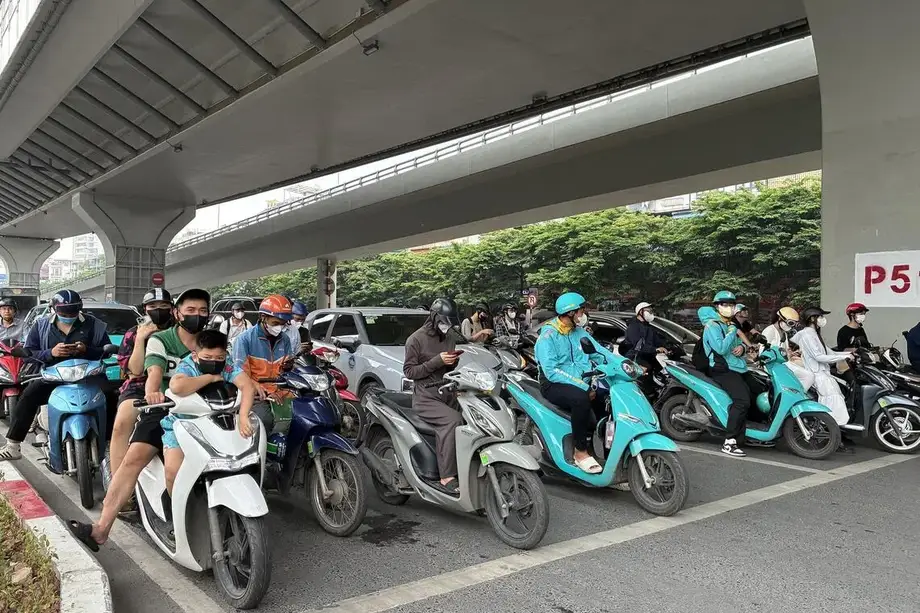
Vietnam is already taking substantially more electricity from its neighbour. Vietnam Electricity, known as EVN, put imports from Laos at 2.92 billion kilowatt-hours in the first quarter of 2026, compared with 1.33 billion in the same period of 2025. The increase of 1.59 billion kilowatt-hours shows how quickly the trade is growing before most of the planned capacity is operating.
Vietnam raises its ambition as imports grow
EVN said the two governments agreed in January 2025 on a minimum import target of 8,000MW from Laos by 2030, up from an earlier target of 5,000MW. The revised minimum is 60 percent higher. The 8,260MW project programme would put approved capacity slightly above that threshold if all the plants reach commercial operation.
The earlier electricity cooperation framework included a goal of 3,000MW by 2025 and 5,000MW by 2030. Those figures describe an earlier stage of planning; the January 2025 agreement raised the ambition for the end of the decade. Longer term projections put potential imports from Laos at about 11,000MW by 2050, producing an estimated 37 billion kilowatt-hours annually.
Laos supplied 3.8 percent of Vietnam's total electricity output in the first quarter of 2026, according to EVN. That is a modest share of the Vietnamese system, but its rapid growth makes the connection increasingly useful as Vietnam seeks electricity for expanding industry, digital infrastructure and its wider economy.
What the capacity figures mean
EVN put the combined capacity of Lao plants commercially supplying Vietnam at 2,379MW in 2025, up from 1,700MW in 2024. Aphisid's more recent ministry account places operating capacity at 2,763MW. The figures trace an expanding group of operating projects, while the 8,260MW total includes plants that have yet to start commercial service.
Megawatts measure how much power a plant can produce at a given moment. Kilowatt-hours measure how much electricity it actually supplies over time. A wind farm's annual delivery depends on wind conditions and its ability to send electricity through the grid; a hydropower plant also depends on available water. Buyers therefore need both generating capacity and dependable deliveries.
The practical task for Laos is to turn the remaining 5,497MW into electricity Vietnam can use. Construction schedules, operating approvals, transmission access and agreed prices all affect when that happens.
Monsoon gives Laos a new source of export power
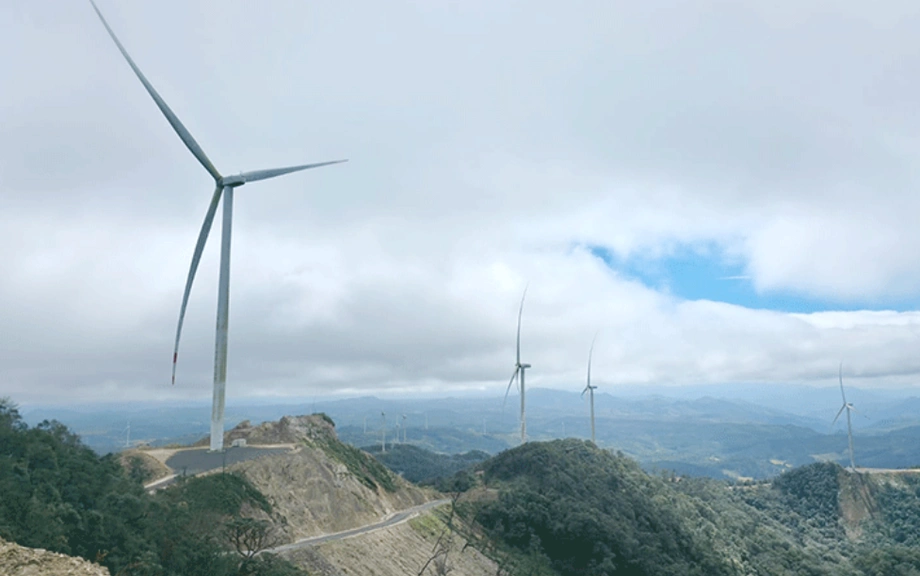
The 600MW Monsoon Wind Power Project began commercial operations on August 22, 2025, becoming Laos' first wind farm. Its 133 turbines span Dakcheung district in Xekong province and Sanxay district in Attapeu province, supplying Vietnam under a power purchase agreement with EVN lasting 25 years.
The Asian Development Bank arranged a financing package worth US$692.55 million for the project. Aphisid said demand from Vietnam was central to making the development possible. Describing Vietnam's willingness to buy the electricity, the ministry official said:
"Vietnam market is opening up".
The ministry said hydropower has historically accounted for 80 to 90 percent of Lao electricity exports. Reduced water availability during the dry season can limit generation. Adding wind and solar gives Laos more sources of electricity, although the contribution each makes throughout the year depends on local weather and grid conditions.
Monsoon also required authorities to work through unfamiliar approval questions. Aphisid, explaining the difficulties of preparing and negotiating Laos' first wind development, said:
"We don't have really specific regulations or procedures," he said.
The government is using that experience to consider how future wind projects should be assessed. For developers following Monsoon, more detailed procedures would help clarify the studies and decisions required before construction.
Transmission lines determine how much power reaches buyers
Aphisid said the Lao government was assessing grid capacity, seeking faster project approvals and negotiating transmission connection points and electricity prices. Each issue affects whether an operating plant can deliver power when Vietnam needs it.
A transmission line is the bulk transport route for electricity. If the connection cannot carry enough power, adding generating equipment alone will not deliver the intended volume to the buyer. Laos' export programme therefore requires investment in plants and in the network linking them to Vietnam.
One recent addition is the 220kV Tuong Duong–Do Luong line, which entered service in November 2025. Developed by Vietnam's National Power Transmission Corporation, the line stretches nearly 81 kilometres and helps carry Lao hydropower into Nghe An province and the wider Vietnamese grid.
EVN attributed the rise in imports to new renewable energy projects entering operation in Laos during 2025, alongside stronger transmission connections across the border. The first quarter figures show the combined effect: more generation became available, and upgraded infrastructure helped move it to customers.
More wind proposals follow the first operating projects
The first phase of the Savan 1 wind farm began operating in late December 2025. Developed by Savan 1 Wind Power Co., Ltd., a subsidiary of Vietnam's T&T Group, the project is expected to supply about 0.9 billion kilowatt-hours annually to Vietnam's national grid.
Other developments under study include projects linked to Truong Son, Savan and Xekong. Vietnamese investors are also pursuing the proposed 495MW Savan 2 wind farm in Savannakhet province. These proposals would extend the role of wind beyond Monsoon, subject to the investment and approval work needed to proceed.
Danish renewable energy developer Copenhagen Infrastructure Partners and Vietnamese contractor and developer Fecon have proposed studying another wind farm in Savannakhet, with a capacity of 1,000MW. The companies outlined an intended electricity export period between 2026 and 2028. Their proposal still requires feasibility assessments, regulatory procedures and investment decisions.
The two companies are evaluating a broader renewable energy portfolio of about 2.5 gigawatts, equivalent to 2,500MW, across Laos and Vietnam by 2030. Copenhagen Infrastructure Partners said it plans to allocate around US$3 billion to Vietnam by that year, including projects associated with importing wind power from Laos.
The partnership is also studying standalone battery energy storage systems. Batteries can store electricity for later use, helping grid operators manage changes in wind and solar output. Their usefulness for these proposals will depend on the size, location and operating arrangements chosen during project development.
Jobs, royalties and the terms of investment
Aphisid said Monsoon employed around 300 people, about 70 percent of them Lao nationals. That works out to roughly 210 Lao workers. Developers were being encouraged to train employees for technical and management roles, which would give local staff a wider part in operating the industry.
The project also paid more than US$600,000 in royalties during its initial operating period in 2025, according to figures Aphisid provided. Royalties are payments made under the terms governing a project's use of resources or operating rights. For Laos, they provide a source of public revenue alongside employment and investment.
The push for more generation connects with a wider effort to attract Vietnamese capital. Viet Lao Energy Investment and Development Joint Stock Company and its affiliates previously announced plans for major investment of US$10 billion to US$15 billion in Laos over five years, while requesting faster approvals and special tax incentives. The company also received a development agreement for the Truong Son 3 Project.
The government faces linked decisions about speed and returns. Faster approvals can help construction begin sooner, while concession terms, tax arrangements, royalties and training commitments determine what Laos receives as projects operate. The Monsoon figures offer an early example of employment and revenue from a plant already selling electricity.
Solar and a larger China connection widen the network
Laos is expanding its electricity relationships beyond Vietnam. In Oudomxay province, China General Nuclear Power Group began operation of a 1,000MW solar development. Its first phase, part of the Northern Laos Clean Energy Connection Base in Xay and Namor districts, was connected to the grid on April 7.
The solar development is expected to produce about 1.65 billion kilowatt-hours annually. Its stated annual emissions reduction is about 1.3 million tonnes of carbon dioxide. Those are projected results, with actual electricity production depending on operating conditions.
Laos and China also opened a 500kV power line on April 20, increasing electricity exchange capacity from 50MW to 1,500MW. That is a thirtyfold increase. Expected annual transmission is about 3 billion kilowatt-hours, with a stated annual carbon dioxide reduction of about 2.5 million tonnes.
Vietnam remains the intended buyer for the 47 projects in the 8,260MW programme. The China connection adds another large route for electricity exchange, while the Oudomxay development broadens a generating mix previously dominated by hydropower.
The milestones leading to the 2030 target
The expansion has moved through a series of government agreements, plant openings and network upgrades. The main milestones show why electricity deliveries have already risen, even as much of the approved generation remains under development.
- January 2025: Laos and Vietnam agreed on a minimum electricity import target of 8,000MW by 2030, according to EVN.
- August 22, 2025: The 600MW Monsoon Wind Power Project began commercial operations.
- November 2025: The nearly 81 kilometre Tuong Duong–Do Luong transmission line entered service.
- Late December 2025: The first phase of the Savan 1 wind farm began operating.
- January to March 2026: Vietnam imported 2.92 billion kilowatt-hours from Laos, compared with 1.33 billion a year earlier.
- Before 2030: Laos expects the remaining 34 plants in the approved programme, totalling 5,497MW, to be completed.
The ministry has given a completion horizon for the remaining plants, but no schedule for each project. The next measures of progress will be commercial operating dates, completed transmission connections and the volume of electricity delivered through them.
Key Points
- Laos has 47 projects totalling 8,260MW approved to supply Vietnam; 13 plants with 2,763MW are operating.
- The remaining 34 projects account for 5,497MW and are expected to be completed before 2030.
- Vietnam imported 2.92 billion kilowatt-hours from Laos in the first quarter of 2026, nearly 120 percent more than a year earlier.
- The 600MW Monsoon wind farm is operating under a purchase agreement with EVN lasting 25 years.
- New wind projects, transmission upgrades and proposed battery storage could support more reliable deliveries.
- Another 16 proposed projects totalling about 10,618MW remain under feasibility study.