Laos wins trade relief, with safeguards still required
The CITES Standing Committee lifted its recommendation to suspend trade in protected animal species from Laos on November 4, 2026, while requiring safeguards before the country can approve exports of live long-tailed macaques. The decision also directs Laos to pursue the organizers and financiers of wildlife trafficking networks, rather than concentrating only on sellers and smugglers.
Contents
- Laos wins trade relief, with safeguards still required
- What changed between sanctions and the Geneva decision?
- Shop closures and seizures helped Laos make its case
- Why conservationists wanted the suspension maintained
- Tourism helped create a market for illegal wildlife
- Monkey exports depend on controls at breeding facilities
- Wild macaque estimates are sharply contested
- Companies still need individual export approval
- Tiger farms and trafficking finances remain under review
- Key Points
Meeting in Geneva, the committee praised progress by Laos but kept the country under review. Its November 4 meeting summary requires a comprehensive report, with supporting documents, at least 90 days before the committee's 82nd meeting. The summary gives no calendar date for that next meeting.
The decision follows sanctions imposed in 2023 over failures to control illegal wildlife networks and regulate facilities keeping tigers and bears for commercial exploitation. It creates a route back to international commerce while leaving Laos responsible for investigating trafficking, managing captive tigers and controlling the origins of monkeys destined for export.
CITES, the Convention on International Trade in Endangered Species of Wild Fauna and Flora, regulates international trade in listed animals and plants through permits and other controls. Removing a countrywide suspension recommendation allows trade applications to move forward under those rules. For long-tailed macaques, the committee specifically requires additional protections to be working before any exports receive approval.
Somvang Phimmavong, director-general of Laos' Department of Forestry, acknowledged that enforcement must continue after the suspension is lifted.
"We recognize that sustained progress requires continued investigations, prosecutions, demand reduction and effective oversight of wildlife facilities," Somvang said.
Conservation organizations accept that authorities have acted against illegal wildlife outlets. Their disagreement with the committee concerns whether that progress is strong enough to justify removing trade pressure now.
What changed between sanctions and the Geneva decision?
Laos' case moved from a broad trade suspension toward continued supervision with specific conditions. The November decision recognizes enforcement gains while carrying forward requirements on criminal investigations, regional cooperation, consumer demand and captive wildlife.
The main developments span several years:
- 2023: Laos faced wildlife trade sanctions over failures involving trafficking networks and facilities keeping tigers and bears.
- 2024: A National University of Laos study estimated 30,586 wild long-tailed macaques, a figure later challenged by conservationists.
- 2025: Investigators documented wildlife shopping sites linked to Chinese package tours in Vientiane and Luang Prabang.
- July 2026: Investigators described an expanded shopping network, identifying as many as 35 suspected sites.
- August 2026: People monitoring the trade estimated that only six or seven shops remained operational after closures. An ivory seizure in Bolikhamxay province exceeded 1,755 kilograms.
- November 4, 2026: The CITES Standing Committee withdrew its trade suspension recommendation and adopted continuing requirements for Laos.
The committee's decision followed proposals from Germany and the United Kingdom. Germany sought language directing investigations toward criminal organizers, financiers and other key actors. The United Kingdom supported lifting the suspension while seeking safeguards before exports of macaques bred in captivity resume. Both proposals were accepted.
Shop closures and seizures helped Laos make its case
Somvang said authorities inspected 25 shops, ordered six to close and detained 27 foreign nationals. People monitoring wildlife sales described a broader reduction in operating outlets by August 2026, estimating that six or seven remained open.
Investigators had identified as many as 35 suspected shopping sites across Vientiane and Luang Prabang, including 22 in Luang Prabang. The detailed chronology placed up to 21 sites in July 2025 and 35 later; a subsequent account placed the 35 sites in 2025. The larger network was described as expanding by July 2026, before the later closures.
Laos also submitted an annual illegal trade report to CITES. A document prepared for the Geneva meeting described 13 seizures between December 2024 and June 2026, followed by the seizure of more than 1,755 kilograms of ivory in Bolikhamxay in August.
Other enforcement accounts described nearly 50 kilograms of suspected illegal wildlife products seized during inspections of 17 unnamed locations in November and December, and more than 57 kilograms at another location on June 13. Somvang declined to release the annual report immediately, saying it needed review for sensitive information.
Why conservationists wanted the suspension maintained
The Environmental Investigation Agency, or EIA, argued before the meeting that retail enforcement had not yet been matched by sufficient action against the businesses and networks behind the trade. Its Geneva meeting statement cited sales of pills purported to contain rhino horn, trafficking from tiger farms, and online and retail sales involving tigers and pangolins.
EIA said the CITES Secretariat had found insufficient information from Laos to demonstrate investigations into organized wildlife crime crossing national borders. It also said recommendations concerning tiger farms had not been fully implemented. The committee subsequently praised progress while retaining requirements in both areas.
Debbie Banks, EIA's campaigns manager, said enforcement against shops needed to lead to lasting changes in the way trafficking businesses operate.
"It's not that nothing's happened, but it's too early to say whether that's performative enforcement or whether it's truly transformative enforcement, and that's what we need to see," Banks said.
Banks said EIA had shared intelligence about trafficking networks with Laotian authorities for years while those networks continued operating. She urged action against companies and people directing syndicates, alongside arrests and seizures.
Kristina Amerhauser, head of the Mekong Observatory at the Global Initiative Against Transnational Organized Crime, had similarly argued that small seizures were insufficient to disrupt the shopping network. The Lao Conservation Trust for Wildlife said 7.5% of wildlife crime tips it received in 2025 resulted in seizures.
Tourism helped create a market for illegal wildlife
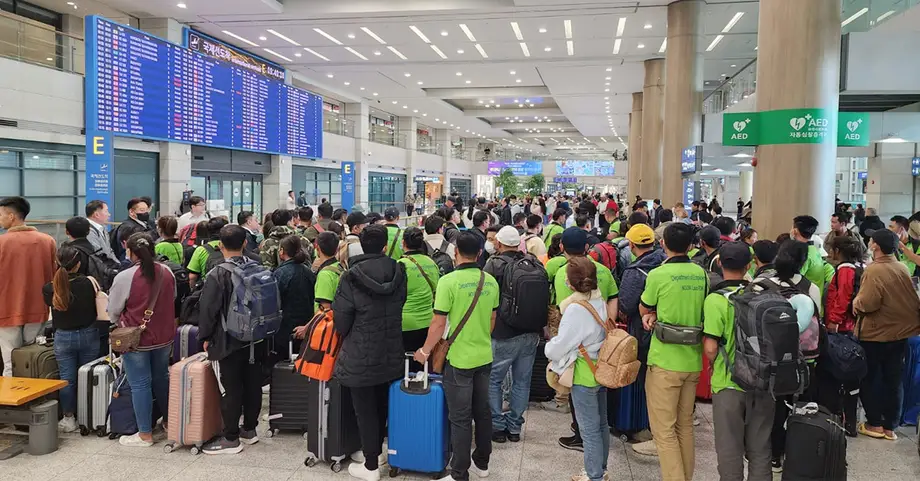
Vientiane and Luang Prabang became centers for shopping operations embedded in inexpensive tours aimed at Chinese visitors. Investigators described venues presented as cultural centers, restaurants or jewelry stores, with access often limited to Chinese nationals arriving on organized tours.
Products identified in these operations included ivory, rhino horn, pangolin scales, tiger bones and bear bile. Investigators also described pressure on visitors to make purchases. One shopping site in Luang Prabang appeared to have expanded to about 10,000 square meters, according to satellite imagery.
Chinese visitor numbers rose from 641,000 in 2023 to 1.15 million in 2025, an increase of about 79%. Investigators identified the China-Laos Railway as a factor supporting the growth of the tourism trade and the shopping routes attached to it.
Investigators estimated that 20% to 30% of the tour groups they examined paid to eat pangolins, with groups consuming six or seven animals. Pangolins reportedly sold for $100 to $200 each at Dongmakkhay Market. These findings connect the trade to restaurants and travel arrangements as well as shops displaying wildlife products.
Naomi Doak of the Wildlife Conservation Society called for a coordinated regional response to prevent the business model from relocating elsewhere. The committee's decision addresses that concern by asking Laos to work with enforcement agencies in Cambodia, China, Malaysia, Myanmar, Singapore, Thailand and Viet Nam, including on illegal wildlife trade associated with tourism.
Monkey exports depend on controls at breeding facilities
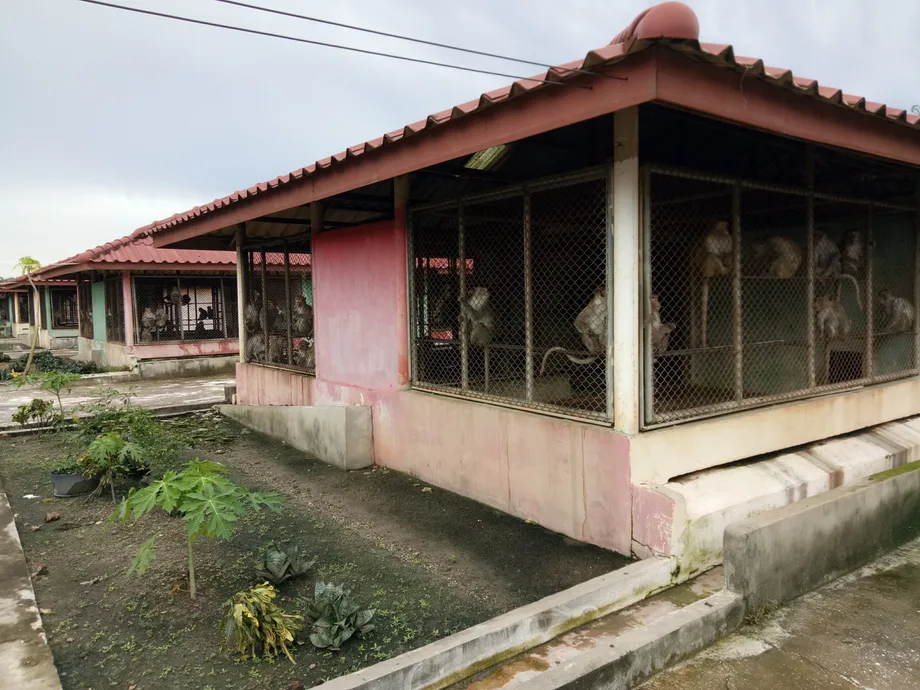
Long-tailed macaques, used in biomedical research, are a central commercial interest in the decision. At least 10 facilities breeding the species have been identified across Laos, while the committee's export safeguards refer specifically to three registered breeding facilities.
Breeding operations in Laos and elsewhere have repeatedly been found passing monkeys captured from the wild into trade as animals born in captivity. The distinction matters because authorities need to verify where an animal came from before approving its export.
The committee requires five main protections to be operating before Laos approves exports of live long-tailed macaques:
- Annual export quotas for the three registered breeding facilities.
- Reliable marking of individual animals and systems that track their origins and movements.
- Checks matching facility records with the animals held.
- Verification before export.
- Compliance with rules for transporting live animals.
Stock reconciliation means checking whether a facility's animal numbers agree with its records of births, deaths, arrivals and departures. Individual marking helps inspectors connect each monkey to those records. Together, these measures give authorities a way to examine claims that exported animals were born at a breeding facility.
Somvang said monkey exports would wait until the safeguards were fully operational. Annual quotas will set the number of animals permitted for export from the registered facilities, while verification must address their legal origin and status as animals bred in captivity.
Wild macaque estimates are sharply contested
The National University of Laos estimated a wild population of 30,586 long-tailed macaques in a 2024 study. Estimates from 2022 had put the population at only 300 to 500. The university figure is roughly 61 to 102 times those earlier estimates, a gap that has drawn objections from conservationists.
Mark Jones, head of policy at the animal rights organization Born Free, challenged the larger estimate while addressing the Standing Committee.
"Available field evidence suggests wild populations may be substantially lower than figures cited in support of further quotas, with surveys indicating that the species is absent from many habitats, and that only a few hundred individuals may remain nationwide," Jones said.
For authorities checking breeding facilities, the population dispute sits alongside the practical task of tracing each animal. A small wild population would make the removal of monkeys especially damaging. Reliable facility records and checks on legal origin are therefore central to preventing wildlife captured outside breeding centers from entering the export chain.
The committee's decision sets safeguards for exports but leaves Laos responsible for making them operational. Conservationists want those checks to withstand commercial pressure as the country seeks to resume trade.
Companies still need individual export approval
Somvang was asked whether Vannaseng Trading, Sookvannaseng Integrated or Laos Acer Biotechnology would receive export permits in 2027. He said he could not confirm permits for any of them.
Vannaseng has long faced allegations of involvement in illegal trade involving lions, tigers, bears, monkeys and ivory. Its role among the companies potentially interested in monkey exports adds to scrutiny of how Laos will assess applicants and verify animal origins.
Somvang said applications would have to satisfy national law, CITES requirements and the safeguards adopted in Geneva. Those checks include verification of legal origin and whether animals were bred in captivity.
The next commercial step is therefore an application and verification process. Companies seeking access to international markets must provide animals and records that meet the conditions, and authorities must have the required controls in place before approving shipments.
Tiger farms and trafficking finances remain under review
The Standing Committee also required Laos to fully operationalize its National Tiger Management System Framework and National Tiger Management Database. It directed the country to continue measures limiting captive tiger numbers to a level supportive only of conserving wild tigers.
EIA has warned that trade in parts from captive tigers sustains demand and complicates enforcement protecting wild animals. Its premeeting statement described trafficking in skins, bones, teeth and claws, with products from captive and wild big cats moving through connected online trade chains.
The committee's criminal enforcement requirements extend beyond animal facilities. Laos must provide results of investigations and legal proceedings, including arrests and prosecutions, with supporting information where possible. Organizers and financiers are expressly named as priorities.
EIA also proposed expanding Laos' existing ivory action plan into a National Ivory and Rhino Action Plan, citing links to both ivory and rhino horn trafficking. The organization sought investigations into supply chains and financial flows, alongside penalties against businesses involved.
Laos' next comprehensive report must give the CITES Secretariat enough documentation to assess implementation before the 82nd meeting. The central test will be whether shop closures, seizures and new facility controls are followed by sustained investigations and enforceable oversight of the businesses supplying the trade.
Key Points
- CITES lifted its wildlife trade suspension recommendation for Laos on November 4, 2026, while continuing its compliance review.
- Live long-tailed macaque exports require functioning quotas, identification, traceability, stock checks and verification before approval.
- Laos reported inspections of 25 shops, six closure orders and the detention of 27 foreign nationals.
- Conservation groups want stronger action against trafficking organizers, financiers and businesses.
- Wild macaque estimates range from 300 to 500 in 2022 to a disputed university estimate of 30,586 in 2024.
- Laos must submit a comprehensive implementation report at least 90 days before the Standing Committee's 82nd meeting.