A new missile takes flight from a Pakistani fighter
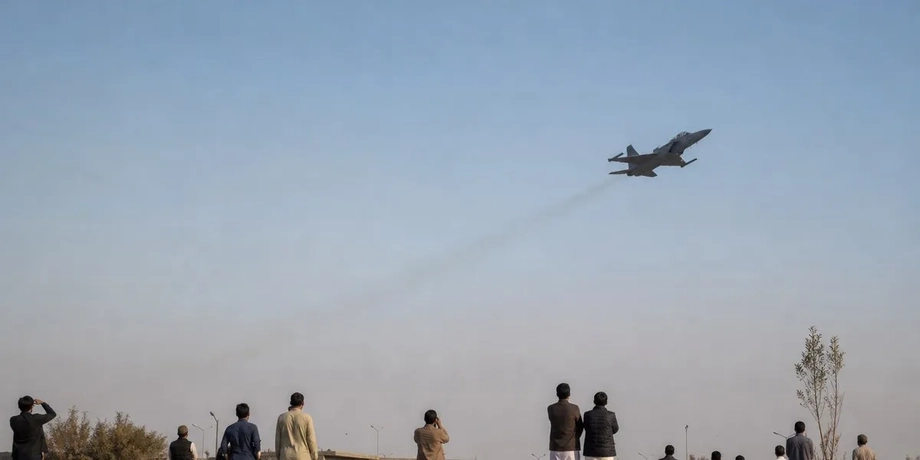
Pakistan tested its first domestically developed air-to-air missile, Fa'az, on November 3, 2026, according to the military, adding an airborne weapon to a series of missile trials conducted this year. Released footage shows the missile being launched from a JF-17 fighter, connecting the new weapon with an aircraft already operated by the Pakistan Air Force.
Contents
- A new missile takes flight from a Pakistani fighter
- What the military announced
- Why the JF-17 launch matters
- Two ways to find an aerial target
- Advertised performance and the longer range ambition
- From exhibition mockups to flight testing
- A year of tests across different missile roles
- What domestic production could change
- Key Points
The Inter-Services Public Relations (ISPR), the military's media wing, described the flight test as successful and said the missile uses advanced terminal guidance to engage aerial targets at longer ranges. Terminal guidance is the final stage of a missile's flight, when its guidance system directs it toward the target.
Fa'az matters to Pakistan because its air force currently uses American and Chinese air-to-air weapons, including the AIM-120 AMRAAM, PL-15 and other missiles in the Chinese PL family. A domestic weapon could give Pakistan more control over future supplies, maintenance and upgrades, provided development progresses into production and service.
The military did not disclose Fa'az's tested range, speed, payload or detailed interception results. The precise variant flown also remains unconfirmed, and no date was announced for production or entry into service. Those details will determine how the new missile eventually fits into the air force's existing weapons inventory.
What the military announced
ISPR said senior officers of the Pakistan Armed Forces watched the test alongside scientists and engineers involved in developing the weapon. Its statement, issued late Tuesday, presented the launch as evidence of growing technical capability and greater independence within Pakistan's defence industry.
The military's media wing described the missile's intended capability in these words:
Equipped with a state-of-the-art terminal guidance system, it can engage enemy aerial targets at longer ranges.
President Asif Ali Zardari, Prime Minister Shehbaz Sharif, Field Marshal Syed Asim Munir, identified as Chief of Army Staff and Chief of Defence Forces, and the service chiefs congratulated the development teams. Interior Minister Mohsin Naqvi also welcomed the test as progress for domestic defence manufacturing.
The announcement places the immediate focus on flight testing and guidance technology. For the Pakistan Air Force, the practical objective is to gain another weapon that can be matched to its aircraft and operational requirements, with national engineers involved in its development.
Why the JF-17 launch matters
The released video shows Fa'az leaving a JF-17, although the military's written announcement did not identify the launch platform. The aircraft has been identified in descriptions of the footage as serial 09-109, reportedly a Block-1 version of the fighter.
Launching a missile from an aircraft requires several systems to work together. The weapon must be carried safely, receive the information needed for its mission and separate from the aircraft under the conditions chosen for the test. Aircraft equipment and software also have to communicate with the weapon.
The JF-17 therefore gives the programme a practical connection to Pakistan's fighter fleet. Engineers can use testing to develop the relationship between the aircraft, its targeting equipment and the missile, rather than treating the weapon as an isolated project.
Descriptions of the programme also mention possible integration with the J-10CE. The announced flight test, however, centres on the JF-17 shown in the footage. Compatibility with another fighter would require its own engineering work and qualification before operational use.
Two ways to find an aerial target
The Fa'az family has been presented with two different types of terminal seeker, the sensor that helps the missile find its target during the final approach. Fa'az-RF uses active radar guidance, while Fa'az-IIR uses imaging infrared guidance.
An active radar seeker sends out radar signals and uses their reflections to locate a target. An imaging infrared seeker detects infrared energy and forms an image that helps it track the target. These approaches give designers different options for finding an aircraft during an engagement.
The tested weapon has been tentatively identified by analysts as Fa'az-IIR, reportedly using imaging infrared guidance with a detection range of about 40 kilometres. Official confirmation of the variant is pending. That identification comes from assessments of its appearance, while ISPR's announcement referred more broadly to advanced terminal guidance.
The distinction matters because each seeker uses a different kind of information. Radar relies on reflected radio signals; imaging infrared relies on the target's infrared signature. Their usefulness depends on factors such as the target's position, surrounding conditions and defensive measures.
Programme descriptions also discuss navigation and possible data updates before the terminal seeker takes over. In simple terms, a missile may first be guided toward the area where a target is expected to be, then use its own seeker to complete the approach. The military has released little detail about how that sequence worked during this trial.
Advertised performance and the longer range ambition
Specifications attributed to Global Industrial and Defence Solutions (GIDS), which markets the Fa'az family, give the proposed Fa'az-RF a projected range exceeding 100 kilometres and a maximum speed of Mach 3.5. Mach 3.5 means about three and a half times the local speed of sound, which changes with atmospheric conditions.
Some descriptions of Fa'az-1 put its reach above 120 kilometres. A longer range Fa'az-2 is reportedly under development, with an intended reach described as about 180 kilometres and, in other programme descriptions, 180 to 200 kilometres or more. These are advertised or intended performance figures; the military kept the November test's flight measurements private.
A missile's useful reach also depends on the engagement. Launch altitude, aircraft speed, target direction and target manoeuvres all affect how far it can travel while retaining enough energy to intercept. A target flying toward the launching aircraft presents a different problem from one moving away.
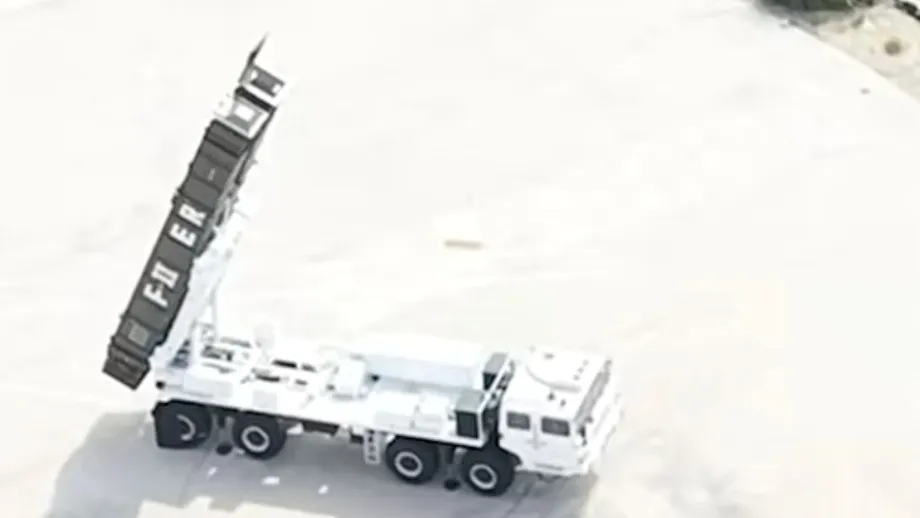
The family has also been described as including a proposed version launched from the ground, with a range of roughly 20 to 25 kilometres. That would give related technology a different task: defending an area from the surface rather than being carried into an engagement by a fighter.
From exhibition mockups to flight testing
Fa'az-RF and Fa'az-IIR mockups first appeared publicly at the 2023 International Defence Industry Fair in Istanbul. GIDS chief executive Asad Kamal described the weapons displayed there as mockups, placing that appearance at an earlier stage of the development process.
The programme is attributed to the Air Weapons Complex under the National Engineering and Scientific Commission, commonly known as NESCOM. GIDS markets the missile family. Together, those details connect Fa'az's public promotion with Pakistan's domestic weapons development organisations.
The November launch gives the programme a new milestone after its exhibition debut. A displayed model communicates a design and intended capability; a flight trial brings the aircraft, missile and test organisation together for an actual launch.
For Pakistan, the industrial opportunity extends beyond producing the missile body. Developing guidance, aircraft interfaces and testing expertise could give national teams greater influence over later modifications. The operational benefit will depend on the weapon's eventual performance, production scale and support arrangements.
A year of tests across different missile roles
Fa'az follows other Pakistani missile announcements in 2026, covering weapons launched from aircraft and from the ground. Their roles differ: Fa'az is intended to engage aerial targets, while the Taimoor cruise missile is designed to attack targets on land and at sea.
The main milestones described during the year were:
- January 2026: The Pakistan Air Force tested the domestically developed Taimoor cruise missile, launched from an aircraft and reported to have a range of 600 kilometres.
- Early October 2026: Pakistan announced a test of an extended version of the Fatah-IV, also written Fatah-4, cruise missile launched from the ground.
- October 13, 2026: Pakistan reported testing the Fatah-2 Extended Range ballistic missile, described as a hypersonic weapon.
- November 3, 2026: Pakistan conducted the Fa'az air-to-air missile flight test.
The baseline Fatah-4 has a reported range of around 750 kilometres, while the army did not disclose the extended version's range. The October cruise missile trial was intended to validate improvements in subsystems, particularly those associated with accuracy and survivability.
The Fatah-2 Extended Range announcement described a precision strike weapon equipped with advanced navigation and avionics, the electronic systems used to guide and control flight. Its ballistic flight profile differs from that of a cruise missile, which uses powered flight through the atmosphere toward its target.
What domestic production could change
Pakistan's existing reliance on American and Chinese air-to-air missiles explains the interest in Fa'az. A locally developed weapon could allow national teams to make changes according to air force priorities and plan replenishment with more domestic involvement.
Aircraft integration is especially relevant. Decisions about a missile's guidance, interfaces and future upgrades affect how a fighter can employ it. Greater domestic control over those decisions could give the air force more choices when maintaining or modifying its fleet.
The programme is now moving through the practical work that connects a design to an operational weapon. Further testing, aircraft qualification, manufacturing and support arrangements will shape how widely Fa'az can be used. The November launch is the latest concrete step in that process, alongside Pakistan's broader effort to develop missiles for several military roles.
Key Points
- Pakistan says it successfully tested its first domestically developed air-to-air missile, Fa'az, on November 3, 2026.
- Released footage shows a launch from a JF-17 fighter.
- ISPR said the missile uses advanced terminal guidance to engage aerial targets at longer ranges.
- The Fa'az family includes advertised radar and imaging infrared variants, with Fa'az-2 reportedly under development.
- Analysts tentatively identify the tested missile as Fa'az-IIR, with a reported detection range of about 40 kilometres; official confirmation is pending.
- Published specifications describe a projected range exceeding 100 kilometres and a maximum speed of Mach 3.5 for the proposed Fa'az-RF; the military withheld detailed test measurements.
- The launch follows Pakistani tests of Taimoor, Fatah-4 and Fatah-2 Extended Range during 2026.
- Domestic production could give Pakistan greater control over missile supplies and upgrades as development progresses.